My journey along the Jiangsu section of the Grand Canal wasn't a single visit, but a series of moments strung together like barges on a rope. It’s the hidden protagonist connecting many sites—the lifeblood of this region for 2,500 years.

In Suzhou, I saw it as a bustling urban artery. I walked along the Pingjiang Road canal, where tourist boats glided past, but also watched a modern barge, stacked impossibly high with bricks, chugging stubbornly south, its diesel engine puttering. The captain’s wife was cooking lunch on a small stove on deck, a line of laundry fluttering above. This was no relic; it was a working, breathing highway.
In Yangzhou, the canal felt grander, more historical. At the China Grand Canal Museum (a phenomenal, modern institution), I learned of the grain tributes that flowed north to feed empires. Later, I stood on the ancient Slender West Lake dyke, which was originally built for canal water control, realizing that even that beauty was born from pragmatic engineering.
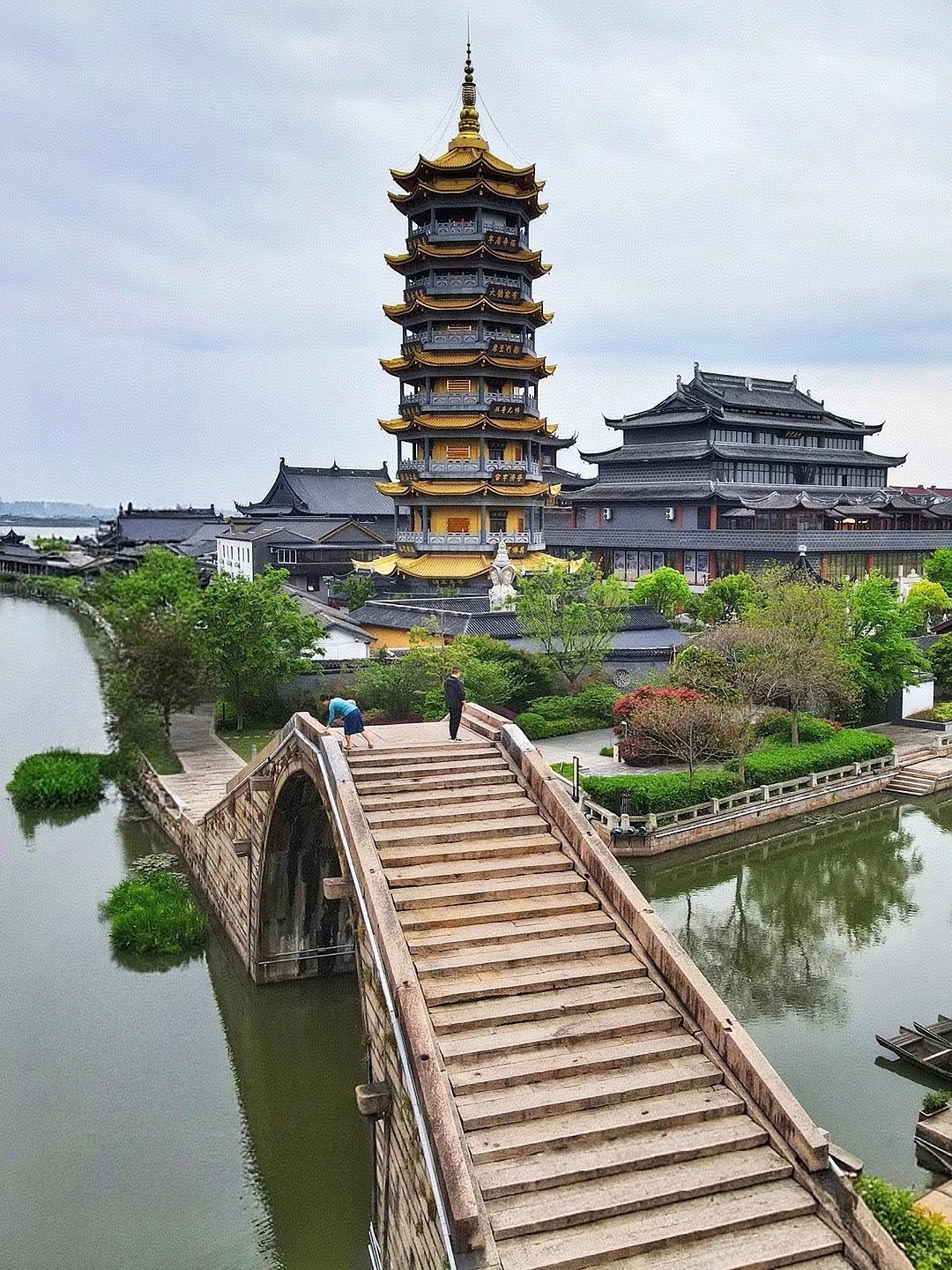
But the most profound moment was in Tongli. Waking before sunrise, I walked to the edge of town where a wider canal connected to the greater network. In the pearly half-light, a long convoy of sand barges materialized from the mist, moving with a silent, heavy grace. There was no fanfare, just the deep thrum of engines and the swirl of propellers in the tea-colored water. This was the pulse of the Chinese economy—slow, massive, and continuous—on the same waterway that once carried imperial taxes.
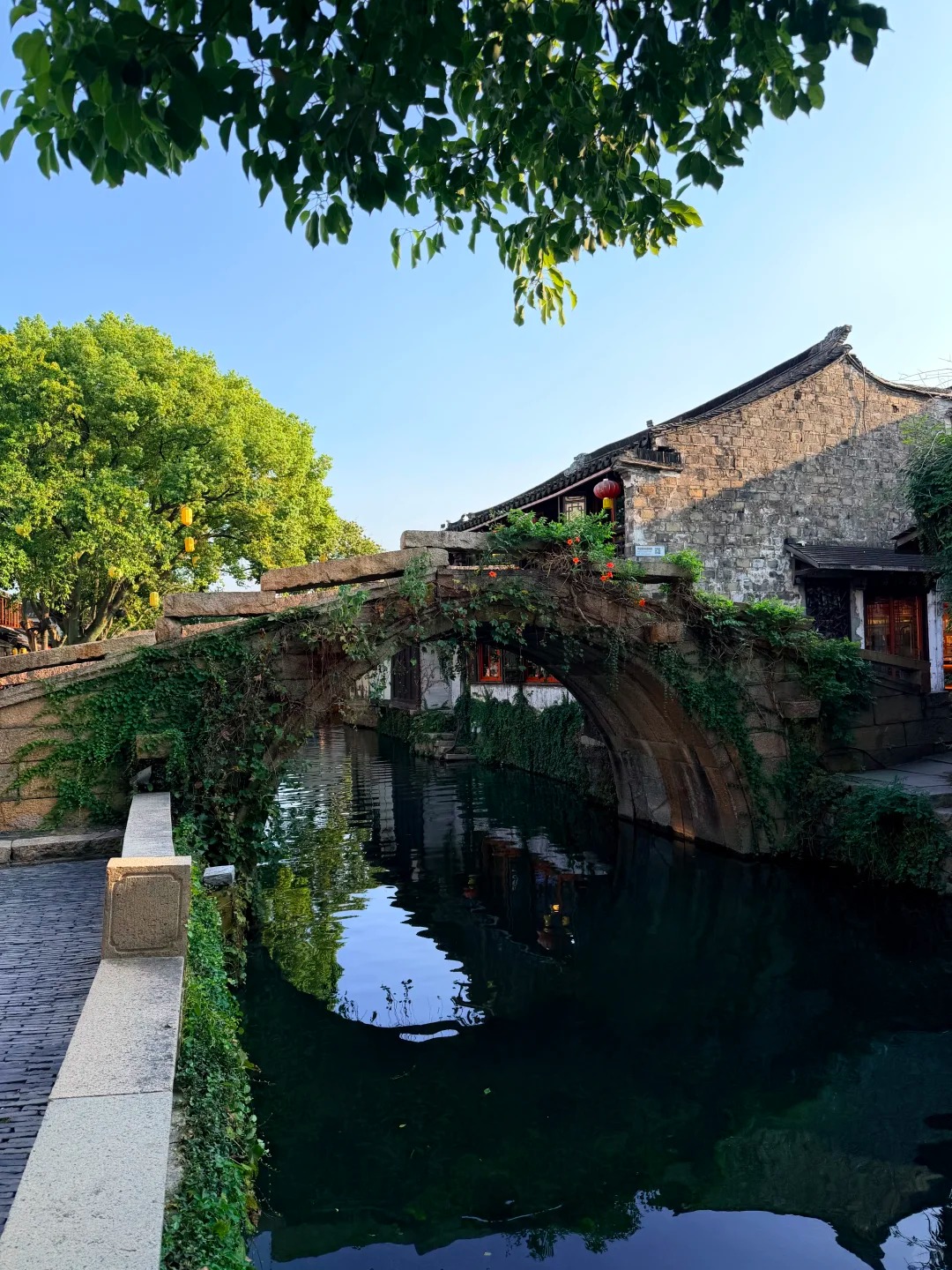
The Grand Canal isn’t just a water feature beside these towns; it’s their reason for being. It shaped their layout, their wealth (from the salt merchants of Yangzhou to the silk traders of Suzhou), and their culture. It’s a linear museum of Chinese civilization, where every kilometer tells a story of logistics, power, and survival.
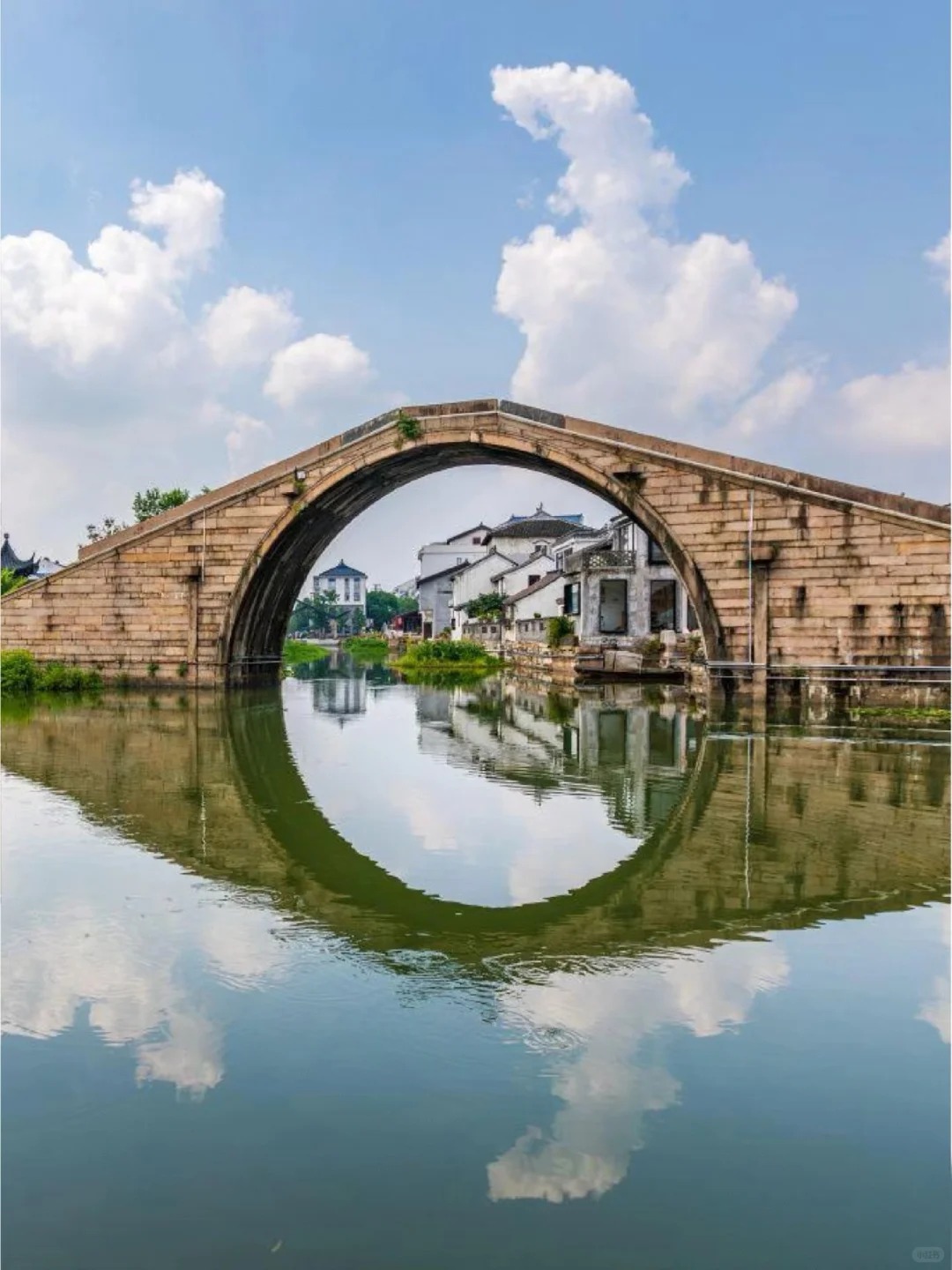
To travel here is to witness two canals: the picturesque, willow-lined canals of the old towns, and the mighty, still-vital Grand Canal that birthed them. Understanding that relationship—between the delicate capillary and the great artery—is to understand the true history and enduring energy of Jiangsu.