The first time I saw a photo of Fanjingshan, I thought it was fake. A thumb of rock splitting the sky, balancing two temples on a precarious summit connected by a bridge, floating in a sea of clouds? It looked like something out of Avatar or a traditional Chinese ink painting that had been exaggerated by the artist’s wine-fueled imagination. But standing here, clutching the cold iron chain railing, gasping for breath in the thin, misty air of Guizhou, I can tell you: it is real, and it is far more intimidating than any picture can convey.
My journey didn’t start at the summit, but in the humid, sticky heat of the base. Fanjingshan, or Mount Fanjing, sits in the Wuling Mountains of eastern Guizhou.
It’s not just a mountain; it’s a biosphere reserve, a UNESCO World Heritage site, and a sacred Buddhist peak.
But to a traveler like me, it was a challenge. I had two choices: the cable car, which whisks you up 1,200 meters in roughly 20 minutes, or the steps. The legendary 8,888 steps.
"Take the cable car up and walk down," a local hostel owner had advised me the night before, pouring me another cup of bitter tea. "Save your knees for the descent."
I didn’t listen. I wanted to earn the view. I wanted to feel the mountain change from the subtropical forest at the bottom to the mossy, wind-whipped alpine zone at the top. I regretted this decision about two hours in. The humidity in Guizhou is heavy; it sits on your skin like a wet blanket. The stone steps, worn smooth by millions of pilgrims and tourists, seemed endless. They wound through dense thickets of bamboo and broadleaf trees. Everything was green—an aggressive, dripping, prehistoric green. I kept scanning the trees for the famous Guizhou Golden Monkey, a rare species endemic to this mountain. I didn’t see any monkeys, but I did see plenty of other hikers: grandmas with walking sticks who were somehow faster than me, porters carrying impossible loads of water bottles on bamboo shoulder poles, and teenagers regretting their choice of footwear.
The higher I climbed, the more the world shifted. The heavy heat dissipated, replaced by a cool, damp breeze. The vegetation changed from towering trees to gnarled, moss-covered shrubs. And then, the fog rolled in.
Fanjingshan is notorious for its weather.
It is shrouded in clouds for more than 200 days a year. As I finally crested the ridge near the upper cable car station (where the fresh-faced tourists who took the easy way up were disembarking), visibility dropped to maybe twenty meters. I felt a pang of disappointment. Had I climbed four hours just to stare into a bowl of milk?
But mountain weather is fickle. I sat on a damp rock, eating a cold, slightly spicy tofu snack I’d bought in the town of Jiangkou, and waited. The wind picked up.
Suddenly, a window in the grey curtain opened.
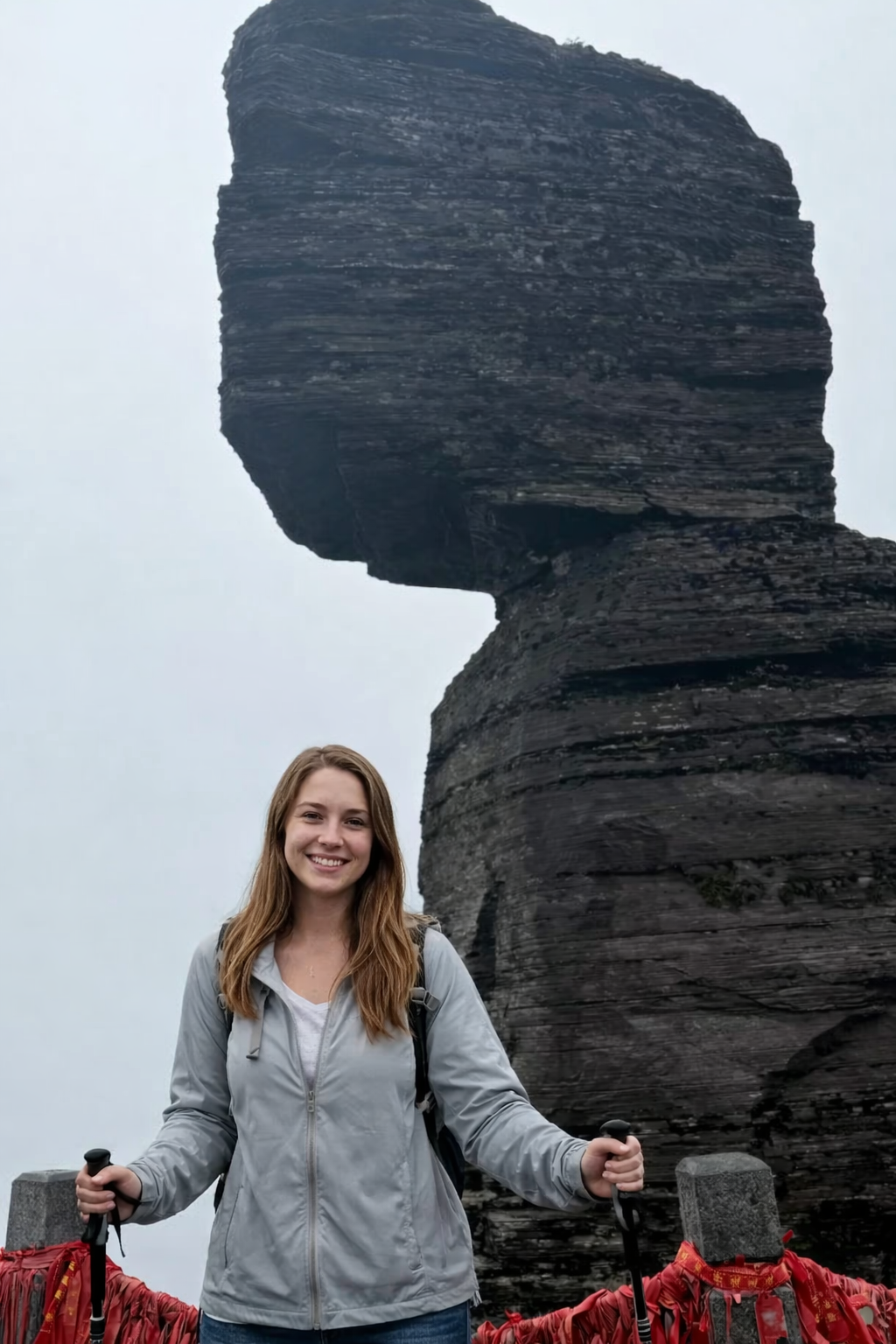
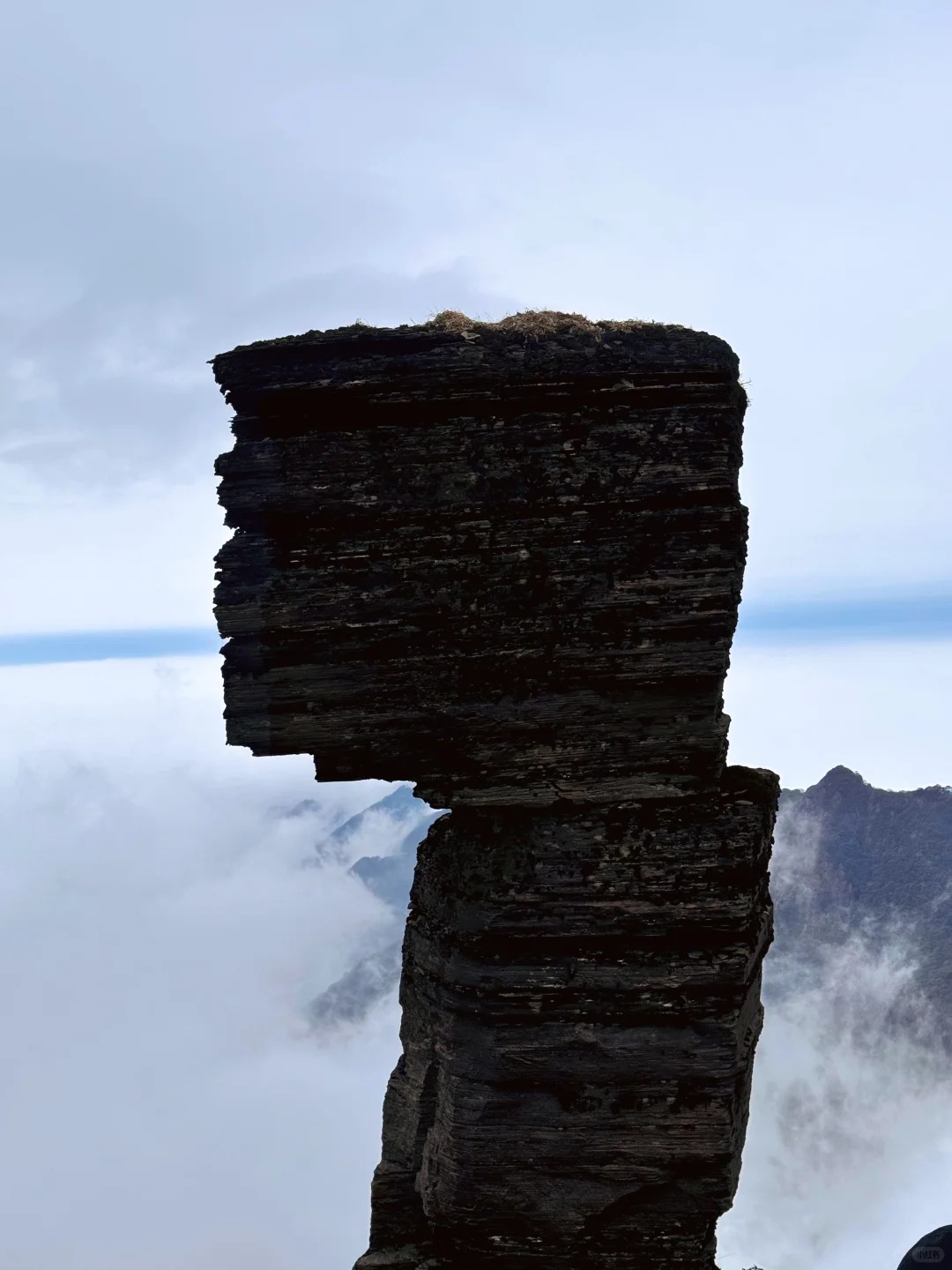
And there it was. The Mushroom Stone.
It’s an apt name. The rock formation towers ten meters high, a heavy, bulbous top balancing precariously on a thinner stem. It looks like it should topple over with a stiff breeze, yet it has stood there for a billion years, surviving erosion that wore down the rest of the mountain. Seeing it in person, you feel small. It’s not just the size; it’s the silence of the stone against the rushing wind. People were lining up to take photos, pretending to hold it up or push it over, but I just stood back and watched the mist swirl around its base. It felt ancient in a way that makes human history seem like a blink of an eye.
But the real prize was still ahead: the Red Cloud Golden Summit (Hongyun Jinding).
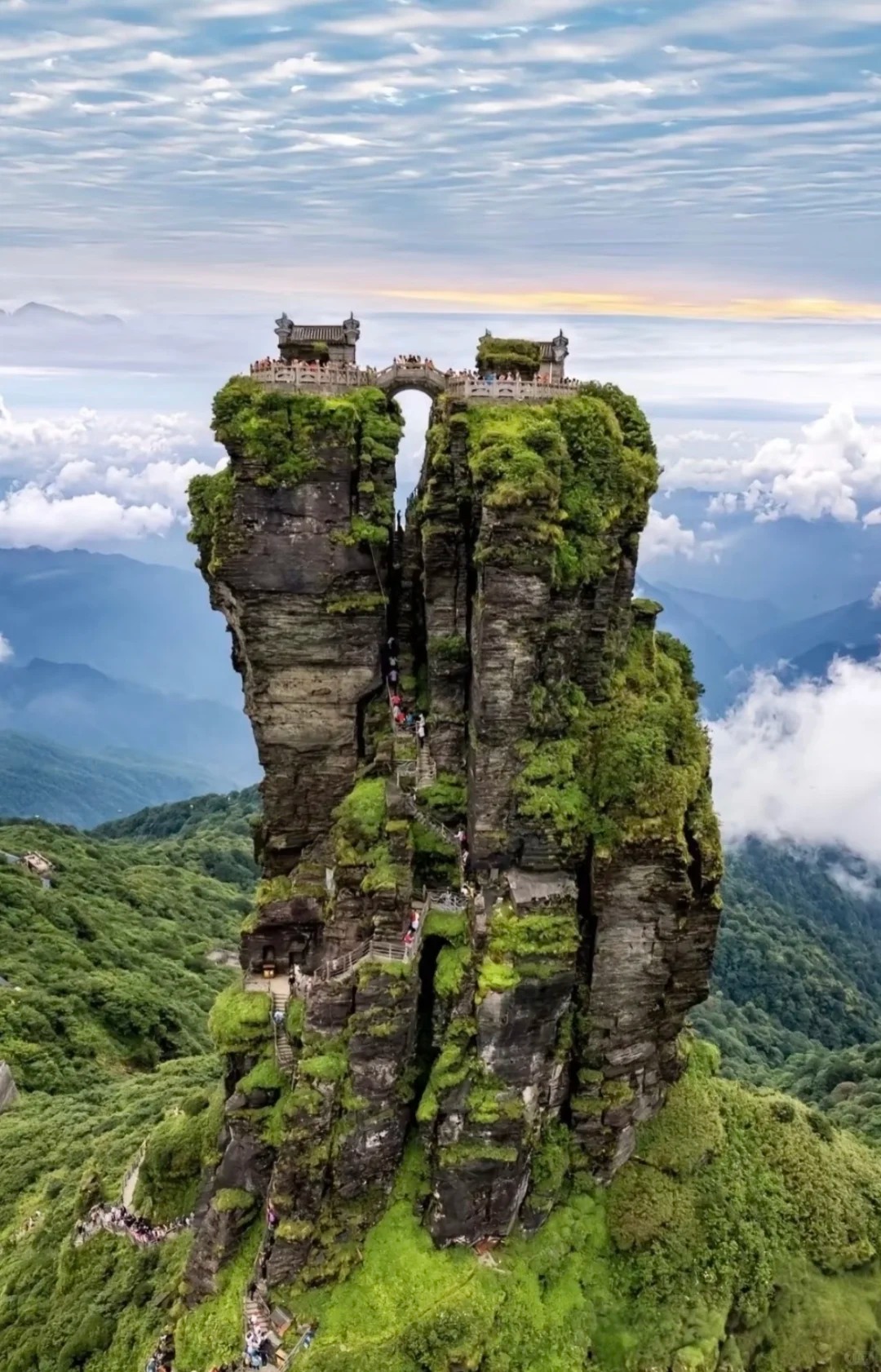
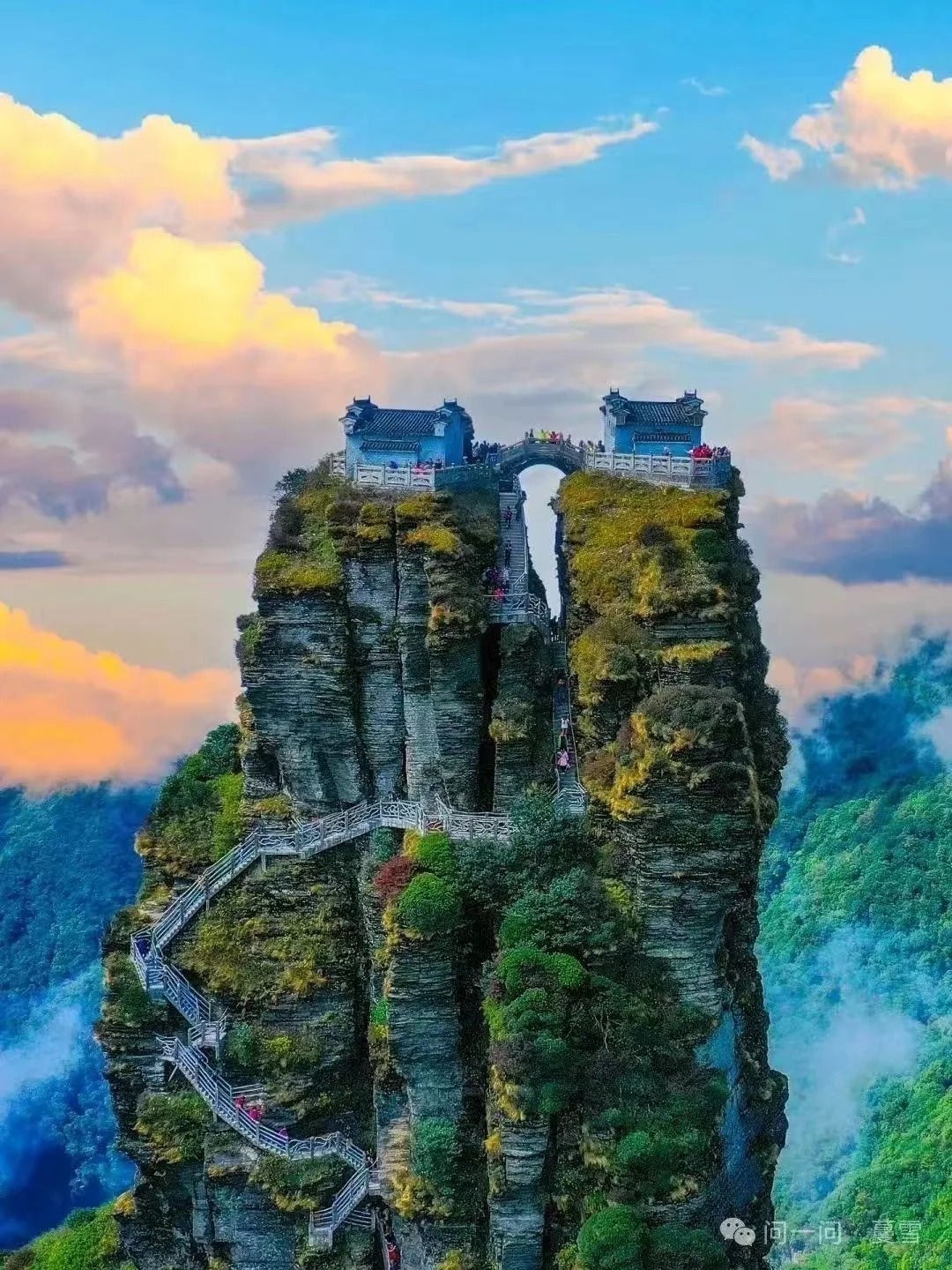
This is the iconic spire. It rises vertically from the ridge, a thumb of rock that looks unclimbable. Yet, there is a path.
I joined the queue of people making the final ascent. The path here is not for the faint of heart. It is narrow, steep, and in some places, you are essentially pulling yourself up near-vertical stone faces using iron chains, with a sheer drop into the white void just inches away.
Don't look down, just look at your feet!" a father shouted to his terrified young daughter ahead of me. I followed his advice. My hands were cold from the iron chains, my legs trembling slightly—partly from the thousands of steps I’d already climbed, partly from the adrenaline.
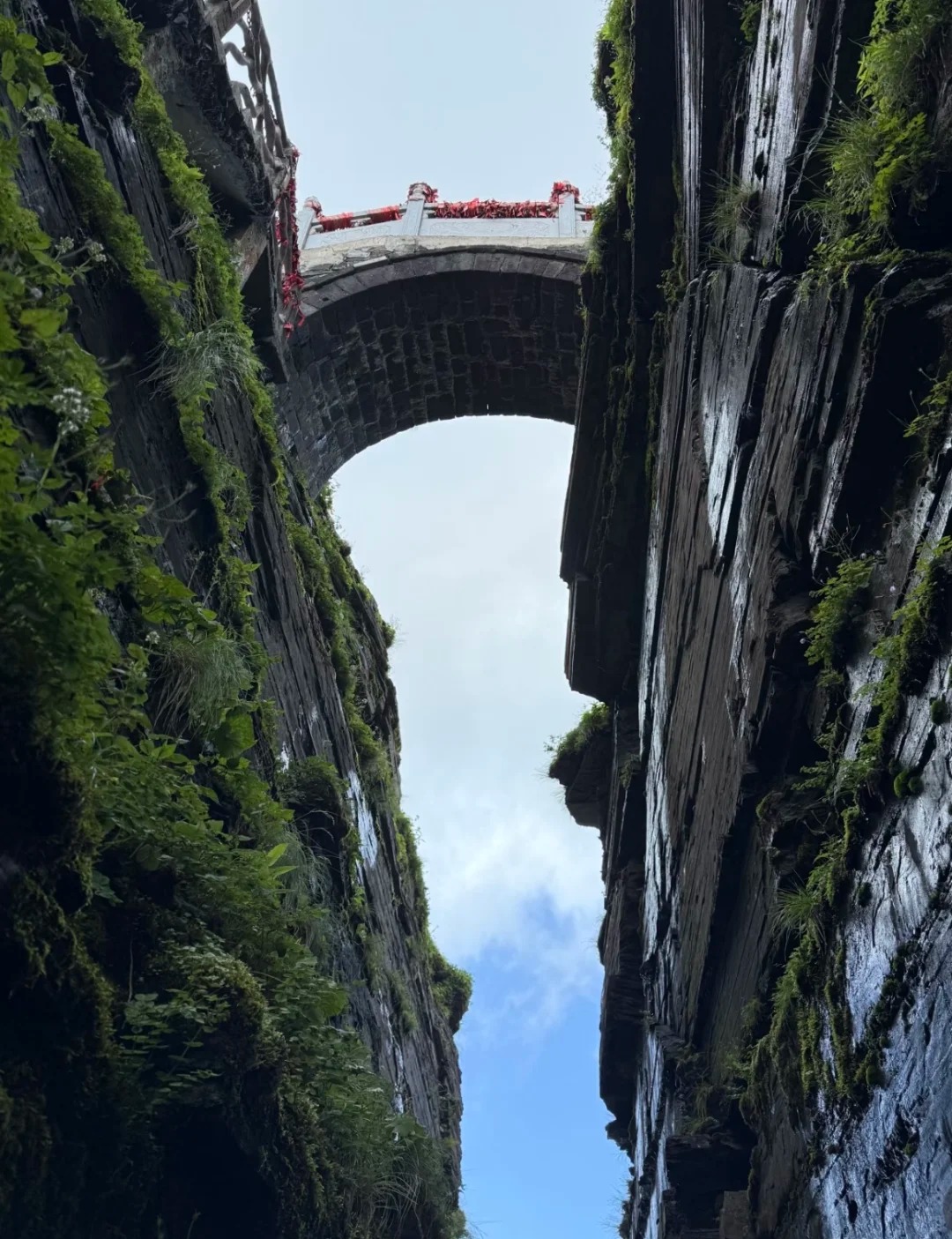
The summit of the spire is split into two peaks, representing the present and the future Buddha. connecting them is a small stone bridge, the Fairy Bridge. Crossing that bridge is a surreal experience. You are suspended in the sky, nearly 2,400 meters above sea level. On one side is the Temple of the Buddha, on the other the Temple of Maitreya. The smell of incense was strong here, mixing with the crisp mountain air.
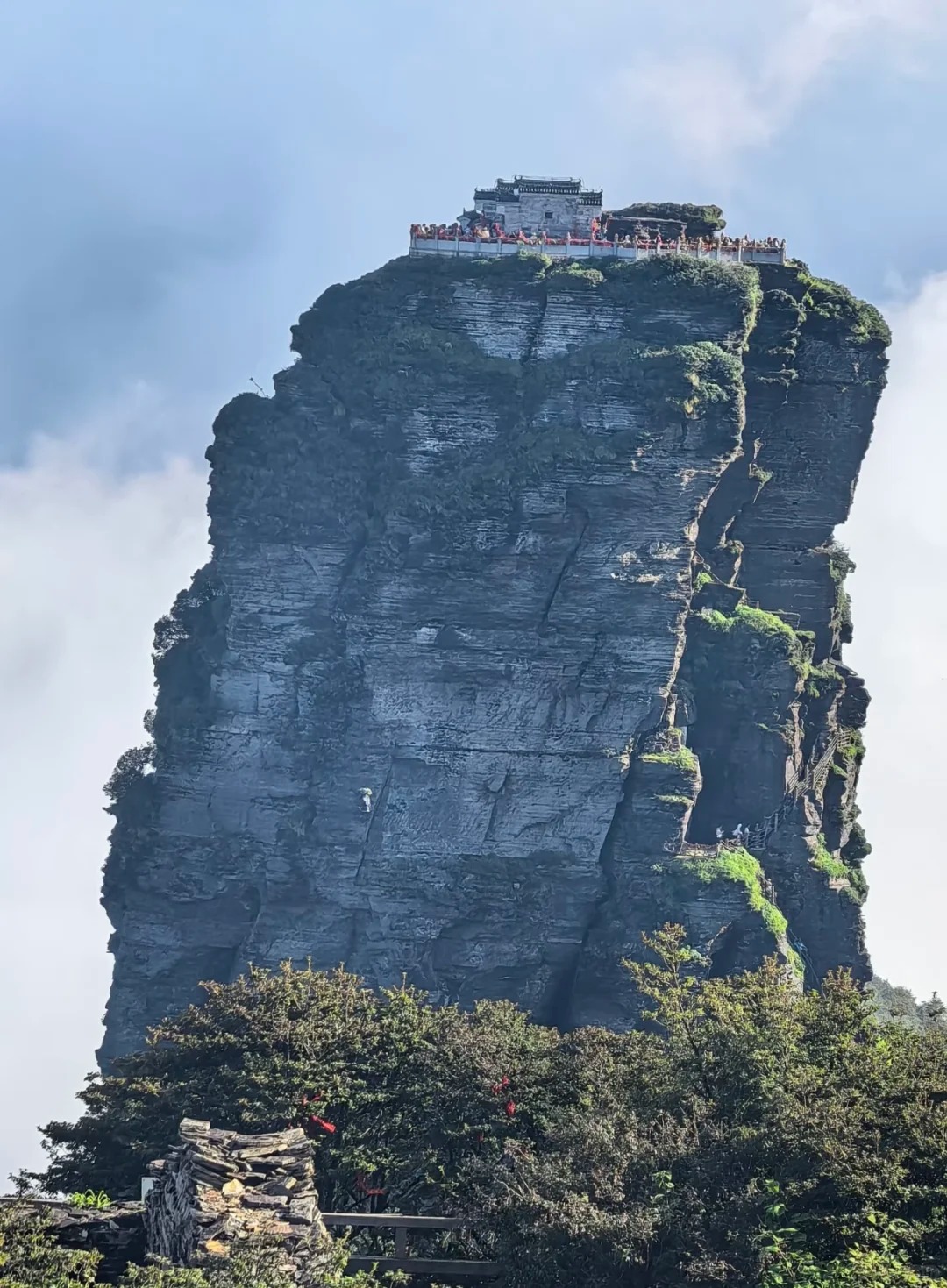
I squeezed into the small courtyard of the Maitreya temple. The wind was ferocious up here. It whipped the prayer ribbons into a frenzy, a cacophony of flapping red against the grey stone. I leaned against the temple wall, catching my breath. Just then, the clouds below us broke again.
The crowd gasped in unison. Below us wasn't land, but a white ocean. The "Cloud Sea" (Yunhai). Peaks of lower mountains poked through like islands. And for a brief, magical moment, the sun broke through above, casting a circular rainbow halo against the mist—the "Buddha's Light." It’s an optical phenomenon, I know, but standing on top of a sacred spire, exhausted and high on endorphins, it felt like a benediction.
The descent was brutal, just as the hostel owner had warned. My knees screamed with every step. I took the cable car down, watching the canopy rush by, feeling the pressure change in my ears.
Back in the town of Jiangkou that evening, I sat at a plastic table on the sidewalk, ordering a bowl of Guizhou’s sour fish soup and a bottle of local beer. My legs felt like jelly, my clothes were damp with sweat and mist, and I was utterly exhausted. But every time I closed my eyes, I saw that stone bridge suspended in the sky, the red ribbons dancing in the wind, and the silent, ancient watch of the Mushroom Stone.
Fanjingshan isn't just a scenic spot you check off a list.
It’s a physical encounter with the earth. It demands effort, it humbles you with its scale, and if you are lucky, it rewards you with a glimpse of the sublime. If you go, bring a raincoat, bring good shoes, but most importantly, bring patience. The mountain reveals itself only when it wants to.