There are places you travel to for relaxation, and then there are places you travel to for transformation. To visit Tibet is to choose the latter. It is known as the "Roof of the World," and physically, yes, you are closer to the stratosphere. But emotionally, spiritually, you are closer to something else entirely—perhaps the rawest version of yourself.
My journey to Tibet was not merely a sightseeing trip; it was a pilgrimage of the senses and the soul.
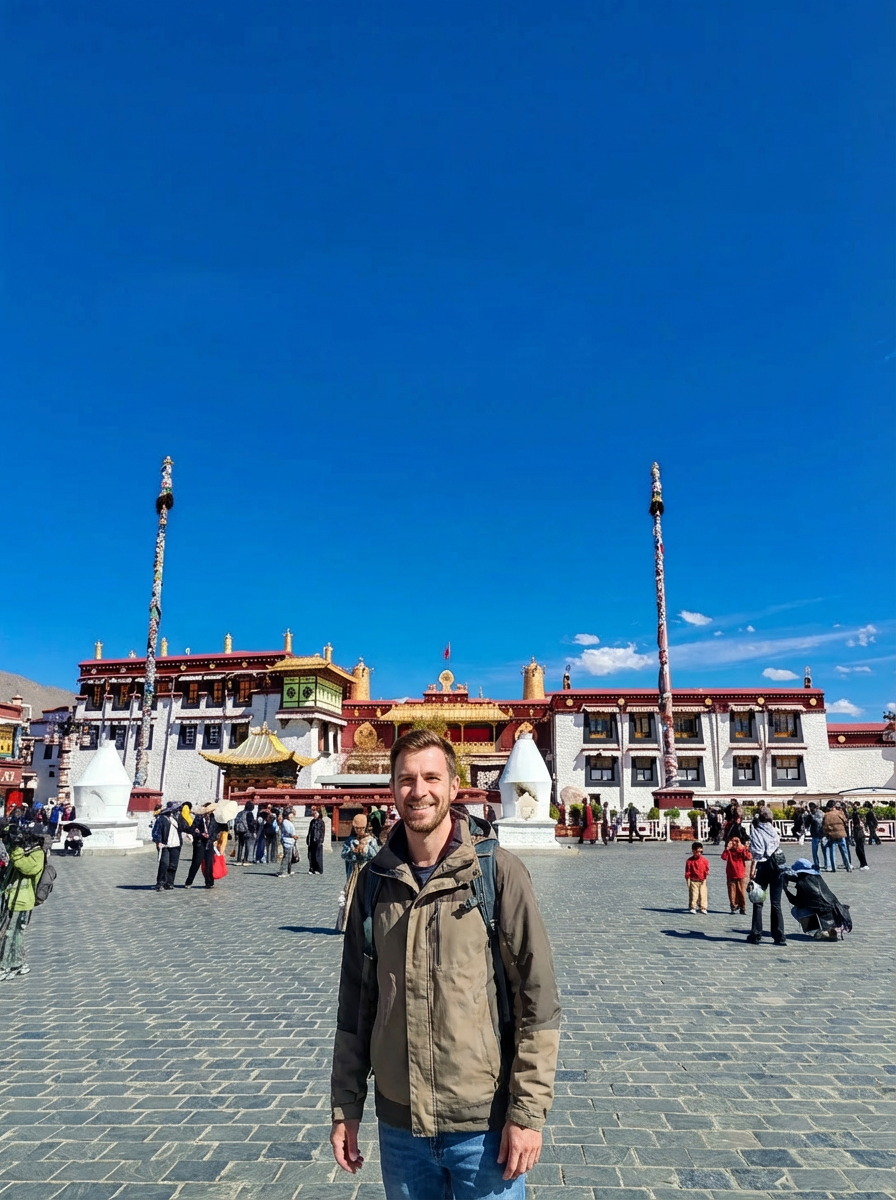
The Train to the Clouds
I chose to enter Tibet not by plane, but by the Qinghai-Tibet Railway. It is an engineering marvel, the highest railway in the world. I boarded the green train in Xining. For 22 hours, I was glued to the window.
As we climbed the Kunlun Mountains, the world outside changed. Trees disappeared. The ground turned into a tapestry of permafrost and alpine meadows. I saw herds of Tibetan antelopes racing alongside the train, their beige coats blending with the dry earth. I saw the massive Tanggula Pass, sitting at over 5,000 meters above sea level. Inside the cabin, oxygen was pumped in to help us adjust, but my heart raced—partly from the altitude, partly from the anticipation.
The train ride is essential. It allows your body to acclimate to the height, but more importantly, it allows your mind to slow down. By the time I stepped onto the platform in Lhasa, I felt I had left the modern world far behind.
Lhasa: The Place of the Gods
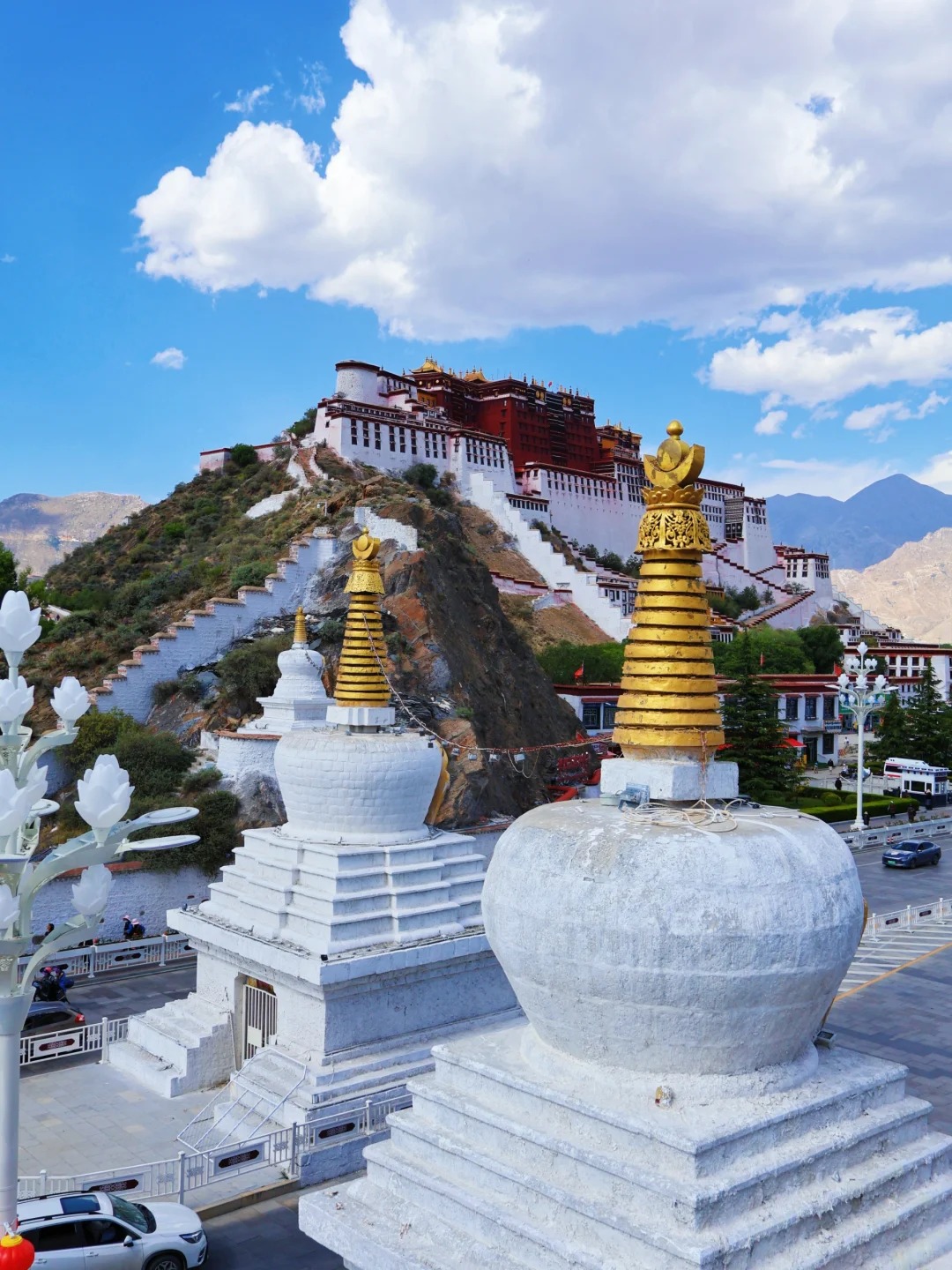
Lhasa hit me with its sunlight. It is intense, piercing, and pure. And then, I saw it. The Potala Palace.
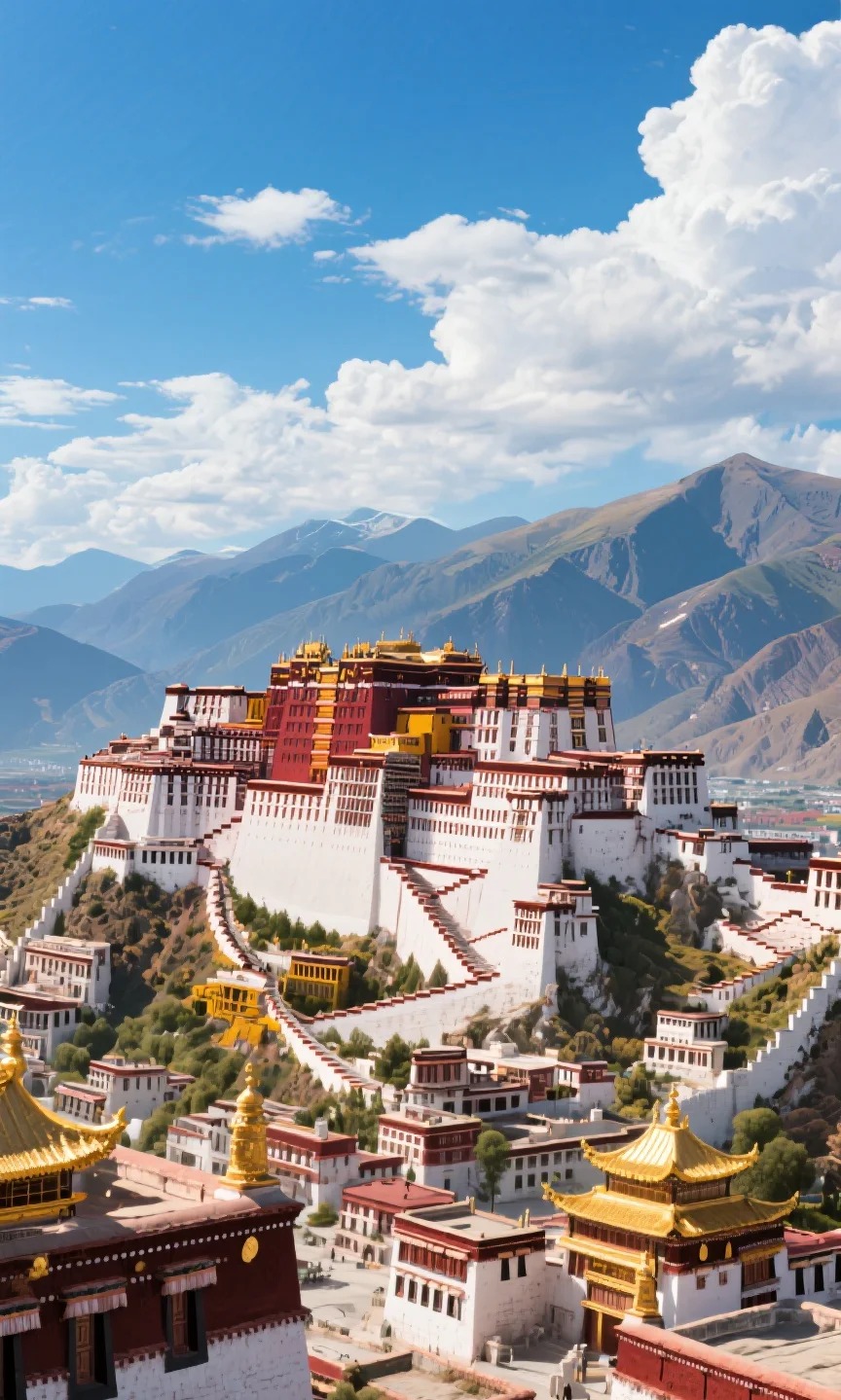
No matter how many photos you have seen, nothing prepares you for the reality of the Potala. It rises from the Red Hill like a fortress of red and white, imposing and magnificent. I climbed the zig-zagging steps, gasping for breath in the thin air. Inside, it is a labyrinth of chapels, stupas, and living quarters. The smell is distinct—a mix of centuries-old incense and yak butter lamps. It smells like devotion.
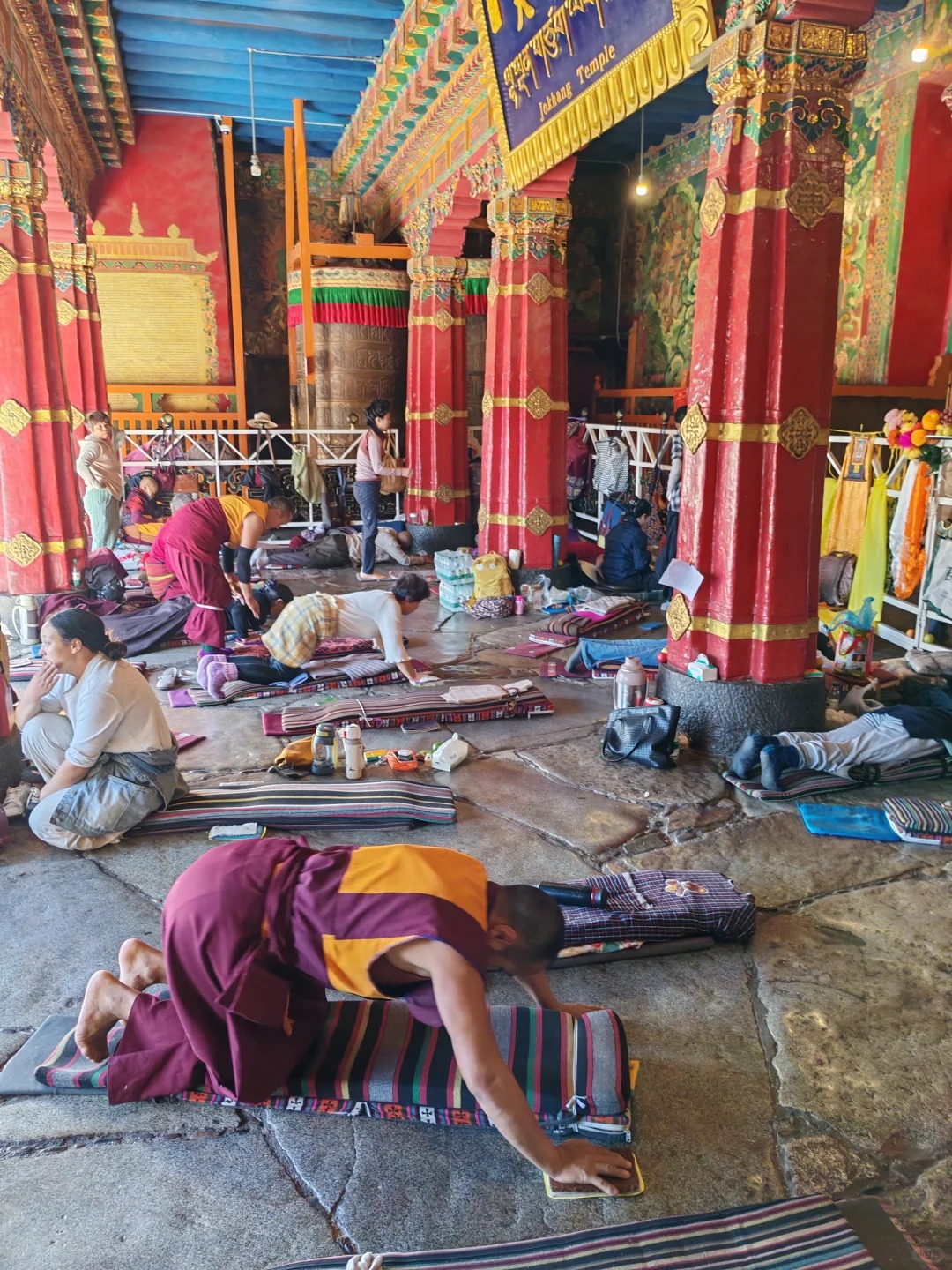
But the beating heart of Lhasa is not the Potala; it is the Jokhang Temple.
I went there at dawn. The square in front of the temple was filled with pilgrims. Some had walked for months, prostrating themselves every few steps—body flat on the ground, arms stretched out, marking the earth with their forehead. The sound of their wooden hand-guards sliding on the stone pavement—shhh-clack, shhh-clack—is a sound I will never forget.
I joined the Kora (circumambulation) around the temple on Barkhor Street. I walked clockwise with the crowd: elderly women spinning prayer wheels, young monks in crimson robes, nomads with turquoise woven into their braided hair. I wasn't just watching; I was part of a flowing river of faith.
A Cup of Sweet Tea and the Taste of Barley
You cannot visit Tibet without tasting its unique flavors. I found a bustling teahouse near the Barkhor. It was loud, chaotic, and smoky. I squeezed onto a wooden bench next to a local family.
I ordered Sweet Tea (Qamqoo). Unlike the salty yak butter tea which can be an acquired taste for foreigners, sweet tea is milky, sugary, and incredibly comforting. It tasted like a hug in a cup. I spent hours there, sipping tea and watching the sunlight filter through the dusty windows, listening to the cadence of the Tibetan language.
I also tried Tsampa, the staple food of the region. It is roasted barley flour mixed with yak butter tea. A local showed me how to knead it in my bowl with my fingers until it formed a dough. It has a nutty, earthy flavor that sustains you in the cold. And of course, Yak Meat Momos (dumplings). The wrapper was thick and chewy, trapping the hot, savory juices of the meat inside. Dipped in a spicy chili sauce, it was the perfect remedy for the high-altitude chill.
Namtso: The Heavenly Lake
A few days later, I drove north to Namtso Lake. It is one of the three holy lakes of Tibet. The drive took us through the damxung grasslands, where yaks grazed like black dots on a green canvas.
When we arrived at the Laagen La pass (5190m), the wind was ferocious. But the view... The lake lay below, a sheet of impossible turquoise, mirroring the snow-capped Nyainqentanglha mountain range.
I walked down to the water’s edge. The water was crystal clear. Prayer flags—blue, white, red, green, yellow—fluttered violently in the wind, sending mantras to the heavens. I sat on a white yak (dressed up for tourists, yes, but majestic nonetheless) and just stared. The colors in Tibet are saturated. The sky is too blue, the clouds too white, the water too teal. It feels like you are wearing polarized sunglasses, but it’s just the reality of the high plateau.
The Debate of the Monks
Back in Lhasa, I visited the Sera Monastery to watch the famous monks’ debate. Every afternoon, in a gravel courtyard shaded by trees, hundreds of monks gather. They pair off—one sitting, one standing. The standing monk shouts a question, clapping his hands loudly and stomping his foot to emphasize the point.
It looks like an argument, almost aggressive, but it is a rigorous logical exercise practiced for centuries to sharpen their understanding of Buddhist philosophy. The energy was electric. Even without understanding the language, I could feel the intensity of their intellect and their passion for their studies.
Why Tibet Matters
To visit Tibet is to be humbled. You are humbled by the mountains, which make human cities look like toys. You are humbled by the people, whose resilience and devotion shine brighter than the gold on their temple roofs.
As I sat in the airport waiting to leave, looking at the prayer beads I had bought as a souvenir, I realized something. I came looking for a destination, but I found a perspective. Tibet teaches you that life can be simple, that faith can be powerful, and that happiness does not come from what you have, but from how you see the world.
If you are ready to have your eyes opened and your heart touched, come to Tibet. The mountains are calling.