Among the Floating Peaks: My Journey Through China's Zhangjiajie National Forest Park
I arrived in Zhangjiajie at 6 a.m. after a overnight train from Changsha, my eyes heavy with sleep but my backpack stuffed with snacks and a camera I’d charged twice. The taxi driver dropped me off at the main entrance of the national forest park, and as I stepped out into the cool morning air, I smelled something I’d never smelled before—fresh pine mixed with damp stone, a hint of wild flowers, and the faint earthy scent of mist. The sky was still a pale blue, streaked with pink from the rising sun, and in the distance, I could see them: the sandstone pillars, rising straight up from the ground like giant stone fingers pointing at the sky. I’d seen photos a hundred times—on postcards, in movies, on social media—but nothing prepared me for the real thing. They were bigger, stranger, more magical than I’d ever imagined.
The park was quiet this early, just a few other travelers and a group of local guides chatting near the ticket office. I bought my ticket and grabbed a map, but the guide next to me—an older man with a weathered face and a hat covered in pins—shook his head. “Maps are good,” he said in slow English, “but you need to walk slow. Look up, not down. The mountains tell stories if you listen.” I smiled and thanked him, tucking the map into my pocket. His words stuck with me as I walked through the entrance gate and into the forest. Within minutes, the noise of the parking lot faded, replaced by the sound of birds chirping and a small stream gurgling over stones. This was it—I was in Zhangjiajie, the place that had inspired the floating mountains in Avatar, and I felt like I’d stepped into a fairy tale.

The Avatar Mountains at Dawn – First Glimpse of Magic
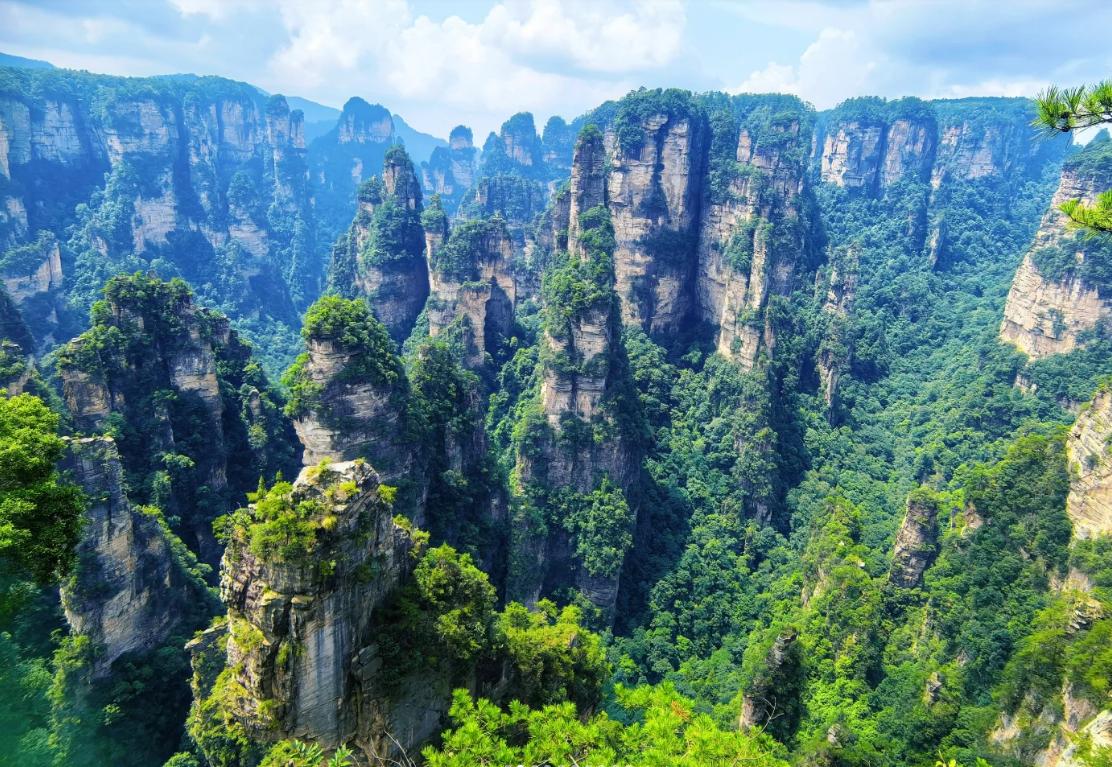
My first stop was the Yuanjiajie Scenic Area, home to the famous “Hallelujah Mountains”—the ones that looked like they were floating in the air. To get there, I took a cable car, and as it lifted off the ground, my stomach did a little flip. But the fear vanished as soon as I looked down. The forest spread out below me like a green ocean, and the sandstone pillars rose from it like islands, their tops covered in mist. The cable car creaked gently as it moved forward, and I held my camera out the window, snapping photos like a madman. A couple from Germany sat next to me, and we laughed together as we both tried to capture the perfect shot. “It’s like another planet,” the woman said, and I nodded. She was right—there was something otherworldly about seeing those pillars rise from the mist, no visible roots, just stone and greenery suspended in the air.
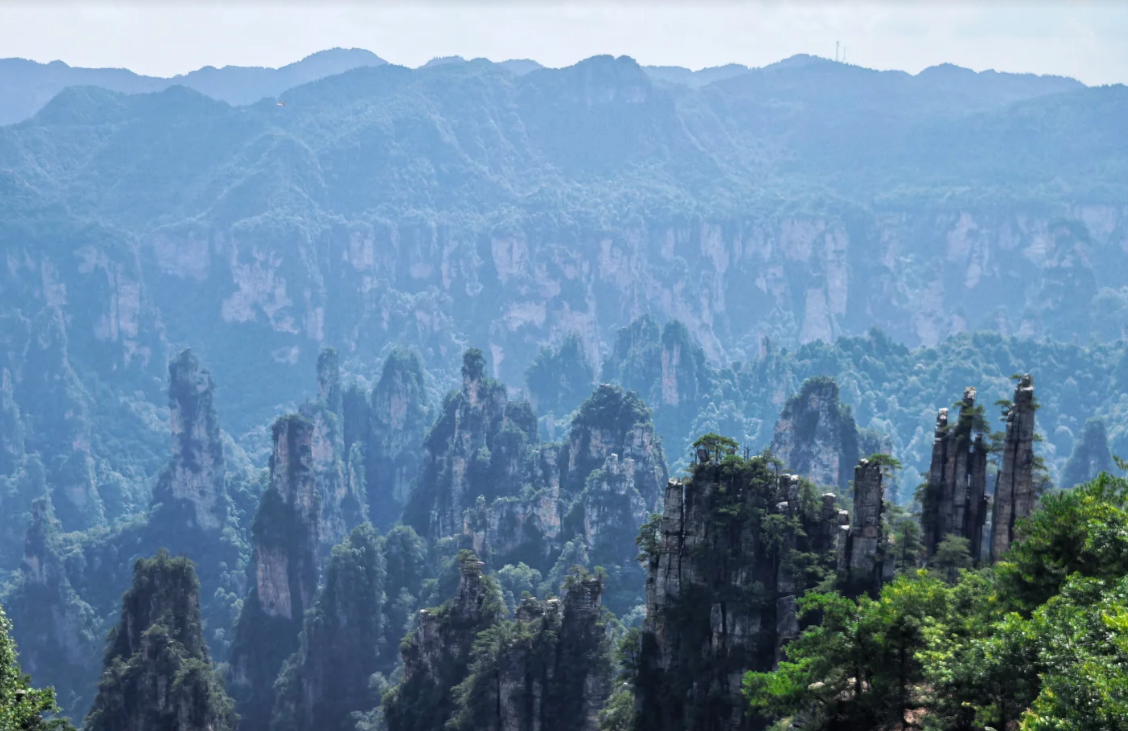
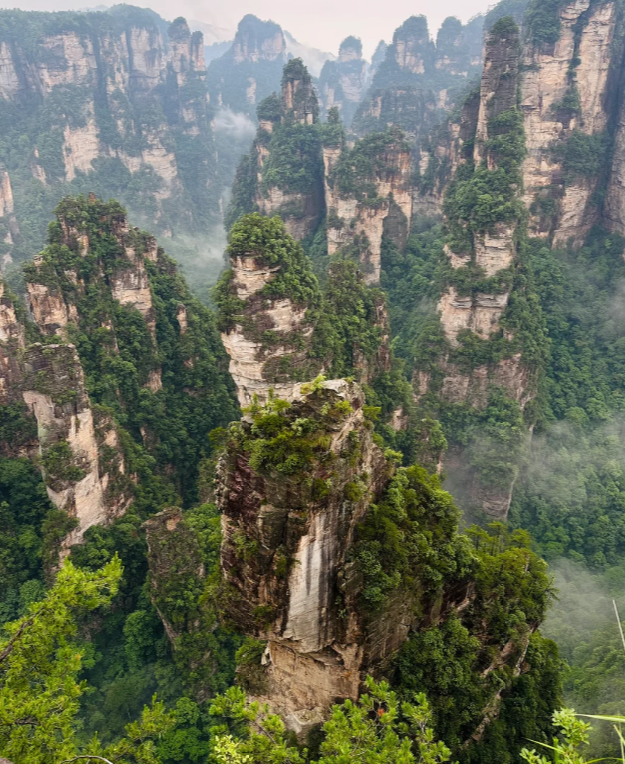
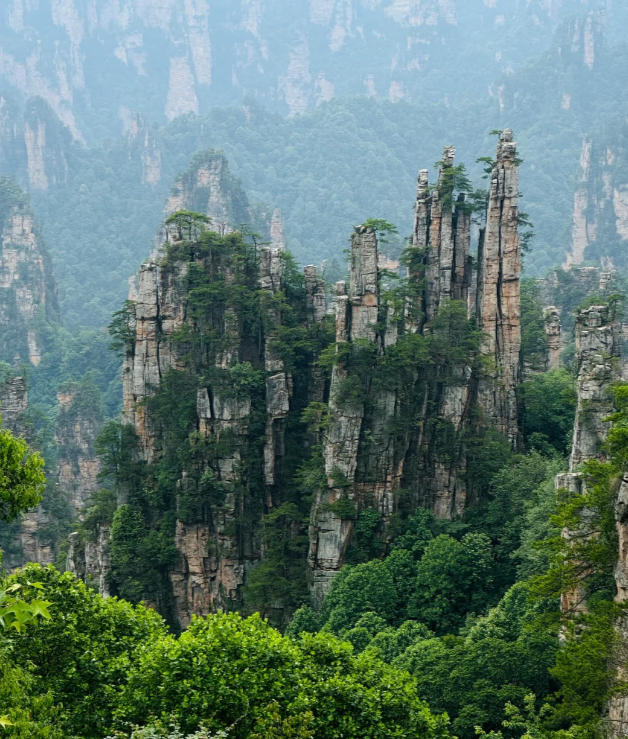
When the cable car reached the top, I stepped onto a wooden platform and gasped. The view was even better than from the cable car. The main pillar—called the “Southern Sky Column” but renamed “Avatar Hallelujah Mountain” after the movie—stood front and center, its sides covered in green moss and small trees, a wisp of mist curling around its top. I walked along the glass skywalk that clung to the side of a nearby cliff, my legs shaking a little as I looked down at the forest 300 meters below. But I didn’t care about the height—I was too busy staring at the mountains. They came in all shapes and sizes: some were thin and tall, like needles; others were wide and flat-topped, like tables; some were grouped together, like a family huddling close. Each one had a name, I later learned—“Old Man Carrying a Basket,” “Goddess Peak,” “Fairy Dancing”—and as I looked at them, I could see why. The “Goddess Peak” really did look like a woman standing tall, her hair flowing in the wind.
I sat down on a stone bench to catch my breath, and an old local man sat next to me, smoking a pipe. He didn’t speak English, but he pointed at the mountains and made a gesture like he was painting. I nodded, and he smiled, tapping his chest. “My home,” he said. He pulled out a small photo from his pocket—it was a black-and-white picture of the same mountains, but with fewer trees, and a small village at the base. “1970,” he said, holding up seven fingers. I realized he’d lived here his whole life, watching the mountains change as the park became famous. He’d seen it go from a quiet forest where only locals hunted and gathered to a place where tourists from all over the world came to stare at the stones. But when he looked at the mountains, his eyes were soft, like he was looking at an old friend.
By 9 a.m., the mist had lifted, and the sun was shining bright, turning the stones a warm orange color. The park was starting to fill up with tourists—groups with flags, photographers with tripods, families with kids running around—but I didn’t mind. There was something nice about sharing this moment with so many people, all of us staring at the mountains with the same look of wonder. I walked along the trail, stopping every few steps to take photos or just stand and stare. At one point, I heard a group of children laughing, and I turned to see them pointing at a monkey sitting on a tree branch, eating a banana. The monkey looked down at us, as if judging our cameras, then jumped to another branch and disappeared into the forest. It was a small moment, but it made the mountains feel alive—not just rocks and trees, but a home for all kinds of creatures.
Tianmen Mountain – The Gate to Heaven and Its Stories
After lunch at a small restaurant near the cable car station—where I ate spicy tofu and fried rice with local mushrooms—I headed to Tianmen Mountain, another part of the national forest park famous for its “Heaven’s Gate,” a natural archway in the side of a mountain. To get to the top, I took the world’s longest cable car ride—7.5 kilometers long—and it took 28 minutes. At first, the ride was smooth, but when we reached the middle, the wind picked up, and the cable car swayed back and forth. I gripped the armrest, my heart racing, but then I looked out the window and forgot to be scared. We were flying over a sea of clouds, with the mountain peaks poking through like islands. It felt like I was flying, like I could reach out and touch the sky.
When we reached the top, I walked along the Tianmen Mountain Trail, which winds around the side of the mountain. The trail is narrow in places, with a metal railing on one side and a steep drop on the other, but the views are worth it. I passed a group of monks walking slowly, their robes flowing in the wind, and they nodded at me as we passed. Later, I learned that Tianmen Mountain is a sacred place for Taoists, and there’s a temple at the top that’s been there for over 1,000 years. I walked to the temple, a small wooden building with red pillars and a roof covered in green tiles, and sat down in the courtyard. A monk was playing a flute, the music soft and haunting, and I closed my eyes, letting the sound mix with the wind in the trees. For a moment, I forgot about the tourists, about the cable car, about everything except the music and the mountains. It was pure peace.
The main attraction, of course, is the Heaven’s Gate—a 131.5-meter-high archway that looks like a door cut into the mountain. To get there, you have to climb 999 steps, a number that’s considered lucky in Chinese culture. I started climbing, my legs already sore from the morning’s walking, but I took it slow. Each step brought me closer to the archway, and as I climbed, I noticed the details in the stone steps—some were worn smooth from millions of feet, others had small carvings of animals. Halfway up, I stopped to catch my breath and looked down. The forest spread out below me, and the cable cars looked like tiny toys moving slowly through the air. A young woman from Japan climbed up next to me, and we climbed the rest of the way together, encouraging each other. “Almost there,” she said, pointing at the archway. When we reached the top, we high-fived, both of us breathless but grinning.
Standing under the Heaven’s Gate was surreal. The archway is so big that you can see the sky through it, and the sun shone through, casting a golden light on the stones. A group of tourists were taking photos, but I walked to the edge and looked out. Below me, the mountains stretched as far as the eye could see, and the clouds were drifting through the valley like rivers of white. I thought about the Taoist monks who had walked these steps centuries ago, about the locals who had told stories about the gate leading to heaven, about all the people who had stood where I was standing, feeling the same sense of awe. The gate wasn’t just a rock formation—it was a symbol, a reminder that there are things in this world that are bigger than us, older than us, more beautiful than we can imagine.
On my way down, I stopped at a small souvenir shop run by a local woman named Li. She sold hand-carved wooden statues of the mountains and paintings done by local artists. I bought a small painting of the Heaven’s Gate, and she told me a story about her grandfather, who had been a guide in the park before it was a tourist attraction. “He used to take hunters up the mountain,” she said. “He knew every path, every tree, every animal. He told me that the mountains are alive—that they breathe, that they talk. When the wind blows through the trees, that’s the mountains whispering.” I thanked her for the story and the painting, and as I walked away, I listened to the wind in the trees. Sure enough, it sounded like a whisper.
Golden Whip Stream – A Walk Through the Valley
By the afternoon, the sun was starting to dip lower in the sky, and I decided to take a break from climbing mountains and walk along the Golden Whip Stream. The stream is named after the Golden Whip Rock, a tall, thin pillar that looks like a whip, and the trail follows the stream for 7.5 kilometers through the valley. It’s a flat trail, much easier than the mountain paths, and it’s surrounded by trees and flowers. I started walking, my shoes crunching on the gravel path, and within minutes, I felt relaxed. The sound of the stream was constant—gurgling over stones, splashing into small pools—and the trees provided shade from the sun.
I walked slowly, stopping often to look at the stream. The water was crystal clear, and I could see small fish swimming around the stones. Every now and then, I’d see a crayfish scuttling across the bottom, or a frog jumping into the water with a splash. I sat down on a smooth stone by the stream and took off my shoes, dipping my feet into the water. It was cold, but refreshing, and I wiggled my toes as the water flowed over them. A family of ducks swam by, the mother leading the way, her ducklings following closely behind. They didn’t seem to mind me sitting there—they just kept swimming, quacking softly.
As I walked further along the trail, I passed a group of local women washing clothes in the stream. They were laughing and talking, and when they saw me, they waved. I waved back, and one of them held up a piece of cloth, showing me how she was beating it against a stone to clean it. It was a simple, ancient practice, and it made me realize that even though the park is full of tourists, life here still goes on as it has for centuries. The stream isn’t just a tourist attraction—it’s a part of the locals’ daily lives, a source of water, of food, of joy.
About halfway along the trail, I reached the Golden Whip Rock. It’s even more impressive up close—tall and straight, with a golden hue from the sun, and it stands right next to the stream. There’s a legend that the rock is a magic whip that a god used to fight monsters, and that the stream is the blood of the monsters he defeated. I stood there looking at it, and I could see why people would make up such a story. The rock is so unusual, so out of place, that it feels like it must have magical origins. A guide was telling the story to a group of tourists, and I listened, smiling. Myths and legends are what make places like Zhangjiajie special—they turn rocks into magic, streams into stories.
As I continued walking, the trail started to get busier with people heading back to the entrance. I passed a group of hikers carrying large backpacks, probably camping in the park, and a couple holding hands, walking slowly and talking quietly. I even passed a man playing a guitar, sitting on a rock by the stream, singing a song in Chinese. The music mixed with the sound of the stream, and it was the most beautiful thing I’d heard all day. I dropped a few yuan in his guitar case, and he smiled and nodded, playing a little louder.
Sunset Over the Peaks – Goodbye to Zhangjiajie
I knew I had to see the sunset over the mountains, so I hurried back to the Yuanjiajie Scenic Area, taking the cable car up just in time. The sun was low in the sky, casting a warm red glow over the sandstone pillars. The mist had started to roll back in, wrapping around the tops of the mountains like a blanket. I walked to the observation deck, where a small crowd had gathered, and found a spot at the edge. We all stood quietly, watching as the sun dipped lower and lower, turning the sky from pink to orange to purple.
The mountains looked different at sunset—softer, more romantic. The shadows were longer, and the golden light made the stones look like they were on fire. I saw a couple take out a camera and take a photo together, their faces lit up by the sunset. A father lifted his young daughter onto his shoulders so she could see better, and she laughed as she pointed at the mountains. I took a photo too, but I knew it would never do justice to the real thing. Some moments are just too big, too beautiful, to be captured in a picture.
As the sun disappeared behind the mountains, the crowd started to leave, but I stayed. I sat down on the observation deck, watching as the sky turned dark and the first stars started to come out. The mountains were now silhouettes against the night sky, and the forest below was quiet, except for the occasional hoot of an owl. I thought about the day—about the cable car rides, the stone steps, the stream, the monks, the local people I’d met. I thought about the old guide who’d told me to walk slow, to listen to the mountains. He was right. The mountains had told me stories—stories of gods and monsters, of monks and hunters, of locals and tourists, all connected by this beautiful place.
A park ranger walked by and told me it was time to leave—they were closing the cable cars soon. I stood up, my legs sore but my heart full, and walked back to the cable car station. On the ride down, I looked up at the mountains one last time. They were dark now, but I could still see their shapes, still feel their magic. I knew I’d never forget this day. Zhangjiajie isn’t just a park—it’s a feeling, a memory, a reminder of how beautiful the world can be.
That night, I ate dinner at a small restaurant in the town near the park, where I had hot pot with local vegetables and meat. The restaurant was full of tourists, all talking about their day in the park. I sat next to a couple from Canada, and we talked about our favorite parts—the cable car ride, the Heaven’s Gate, the sunset. “It’s like nothing I’ve ever seen,” the man said, and I nodded. We were all strangers, from different parts of the world, but we’d all shared something special that day—something that would stay with us forever.
As I walked back to my hotel, I looked up at the sky. The stars were bright, and in the distance, I could see the silhouette of the mountains. I thought about the old local man with the black-and-white photo, about his home, about how the mountains had been there long before him and would be there long after me. They were a constant, a reminder that there are things in this world that don’t change, that endure. And as I fell asleep that night, I could still hear the wind in the trees, the mountains whispering their stories, and I smiled.
People say that travel changes you, and I never really believed it until I went to Zhangjiajie. It didn’t change who I was, but it opened my eyes. It made me appreciate the beauty of nature, the power of stories, the connection between people from different cultures. It made me want to walk slower, to listen more, to notice the magic in the world around me. And every time I look at the small painting of the Heaven’s Gate on my wall, I’ll remember that day in Zhangjiajie, among the floating peaks, and I’ll hear the mountains whispering again.