I. Dawn on the Bund: Where Stone Meets Sky
I arrived in Shanghai just before sunrise, jet-lagged but wired with anticipation. The city had always loomed in my imagination as this impossible fusion—part Art Deco relic, part sci-fi metropolis. But nothing prepared me for that first morning walk along the Huangpu River.
The air was cool and damp, carrying the faint metallic tang of river water mixed with something indefinably urban—like wet concrete and distant fried dough. I’d read about the Bund, of course. Everyone does. But standing there at 6:15 a.m., with only a few elderly locals practicing tai chi near Chen Yi Square and a lone street sweeper pushing his cart with rhythmic clinks, I felt like I’d slipped behind the curtain of a grand stage before the audience arrived.

To my left, the colonial-era buildings rose like stoic guardians—twenty-some structures built between the 1880s and 1930s, each one a monument to foreign banks, trading houses, and consulates from Britain, France, Japan, even Russia. The Customs House clock tower chimed softly, its bronze bells echoing over the water like a ghost clearing its throat. I ran my fingers along the rough granite balustrade, imagining the silk-clad merchants and fur-coated diplomats who once strolled here, arguing over tea prices or opium routes. History here doesn’t whisper—it hums beneath your feet.
And then I turned.
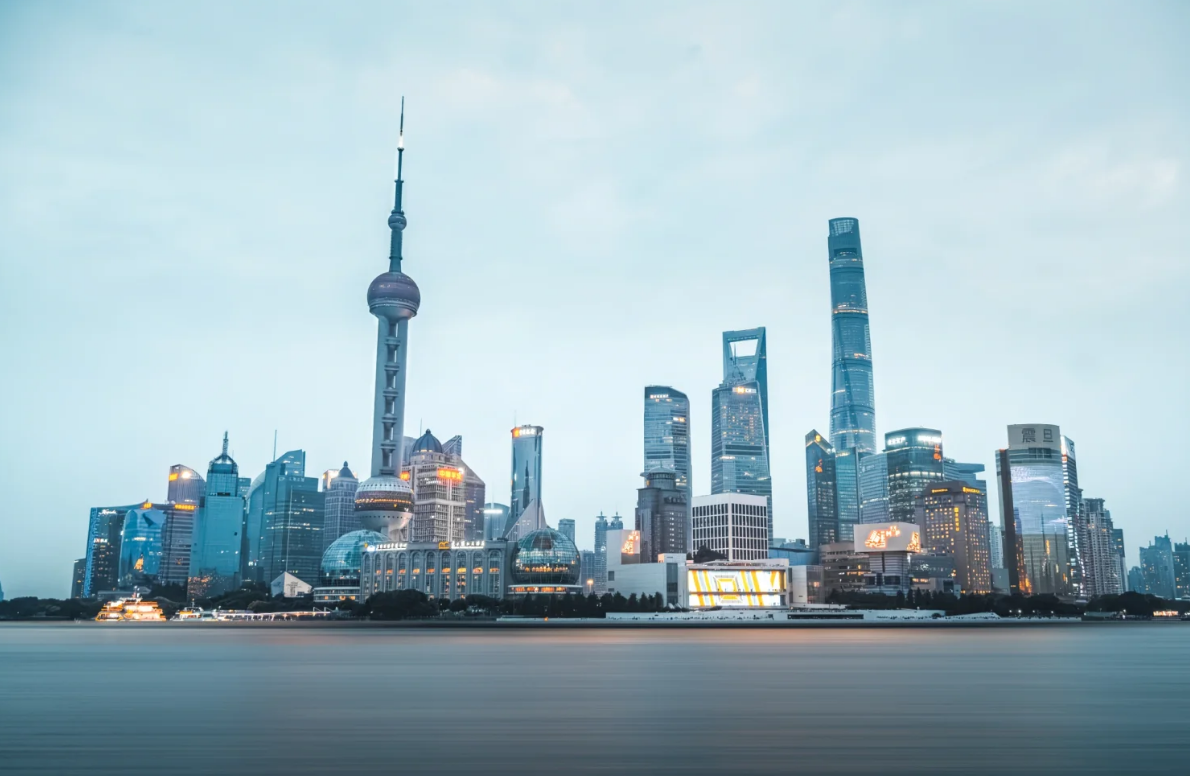
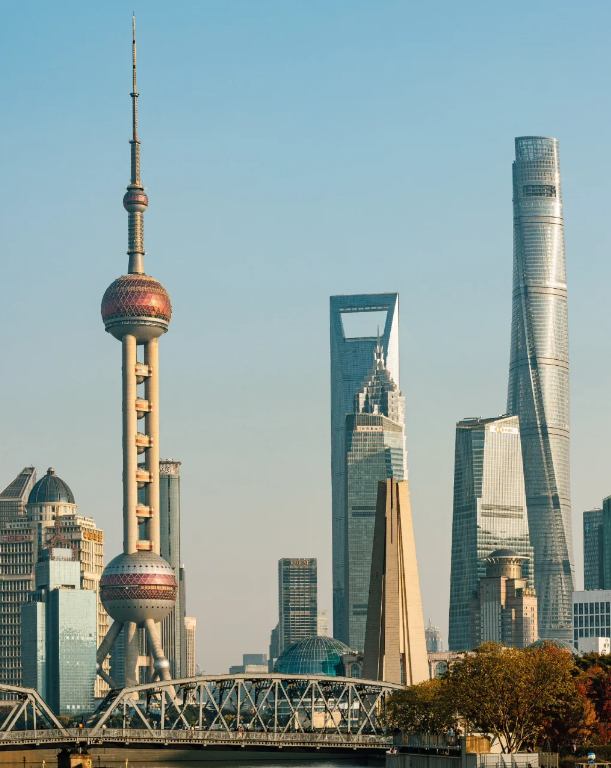
Across the river, Pudong exploded into view. The Oriental Pearl Tower, that surreal lattice of spheres, glowed faintly pink in the dawn light. Behind it, the Shanghai Tower—a spiraling glass tornado—caught the first golden rays and threw them back like a mirror aimed at heaven. The juxtaposition was staggering: on one bank, the weight of empire; on the other, the audacity of tomorrow. I stood there, coffee cooling in my hand, feeling utterly small yet strangely connected—as if I were standing exactly where time folded in on itself.
A fisherman in a faded blue jacket cast his line off the stone embankment, completely unfazed by the skyline. “Good luck,” I said in clumsy Mandarin. He grinned, missing a tooth, and replied, “Patience.” That word stuck with me all day.
II. Lost (and Found) in the Lanes of Jing’an
Later that afternoon, I deliberately got lost.
After the grandeur of the Bund, I craved intimacy—the kind only narrow alleys can offer. So I wandered west into Jing’an, away from the neon glare, into the labyrinth of longtang—Shanghai’s historic lane houses. These weren’t tourist alleys polished for Instagram; these were living arteries, pulsing with laundry lines, potted chrysanthemums, and the clatter of mahjong tiles from open windows.
I passed a tiny shop where an old woman sat folding shengjian mantou—pan-fried pork buns—her hands moving with the certainty of decades. The scent hit me like a warm hug: caramelized bottoms, yeasty dough, and that unmistakable umami steam rising from the bamboo baskets. I bought three without thinking. The first bite scalded my tongue, but I didn’t care. Crispy base, fluffy top, broth bursting inside—it was comfort made edible. She watched me eat, amused, then handed me a paper cup of warm soy milk. “For balance,” she said in Shanghainese-accented Mandarin. I never learned her name, but I’ll remember her kindness every time I smell sesame oil.
Deeper in, I stumbled upon a hidden courtyard tucked behind a rusted gate. Inside, a single magnolia tree bloomed improbably in December (or so I thought—later I learned Shanghai’s winters are mild enough for winter-blooming varieties). Beneath it sat a man painting calligraphy on rice paper, his brushstrokes slow and deliberate. He didn’t look up as I approached, but when I lingered, he finally spoke: “You’re not from here.”

“No,” I admitted. “But I feel like I’ve dreamed this place.”
He smiled faintly. “Many have. This neighborhood survived wars, revolutions, redevelopment. We rebuild, but we keep the bones.” He gestured to the brick walls around us, patched with newer mortar but still bearing the original moldings. “Shanghai forgets nothing. It just layers new stories over old ones.”
I sat with him for nearly an hour, watching him write poems I couldn’t read but whose rhythm I could feel. When I left, he pressed a small scroll into my hand—two characters: jiān chí (perseverance). I keep it pinned above my desk now.
III. The Soul in the Steam: A Breakfast Pilgrimage
No visit to Shanghai is complete without surrendering to its breakfast culture. And so, on my second morning, I skipped the hotel buffet entirely and followed my nose to a nondescript stall near Yunnan Road.
Here’s what I learned: in Shanghai, breakfast isn’t a meal—it’s a ritual. By 7 a.m., the queue already snaked around the block. Office workers in crisp shirts, students with backpacks, retirees with thermoses—they all waited patiently for their turn at the counter where two women moved like synchronized dancers: one flipping congyoubing (scallion pancakes) on a blackened griddle, the other ladling out xian doujiang (savory soy milk) thick with pickled vegetables, dried shrimp, and crispy youtiao (fried dough sticks).
I ordered everything.
The scallion pancake arrived blistered and golden, shattering at the touch, releasing waves of sesame oil and garlic. I tore off a piece and dipped it into the soy milk—hot, briny, almost soup-like—and the contrast was electric. The youtiao, dunked until soft, became a savory sponge. Around me, people ate standing up, leaning against bicycles, chatting in rapid Shanghainese that sounded like birdsong mixed with gossip.
An elderly man noticed my enthusiasm and chuckled. “First time?”
“Is it that obvious?” I asked, wiping oil from my chin.
“You eat like you’re afraid it’ll disappear,” he said. “Relax. It’s been here for fifty years. It’ll be here tomorrow.”
But I knew better. Cities change. Stalls vanish overnight to make way for metro lines or luxury condos. So I savored every bite like it might be my last—a lesson Shanghai teaches quickly: enjoy the moment, because the next version of the city is already being poured in concrete.
IV. Yu Garden: Poetry Carved in Rock and Water
In the heart of the Old City, surrounded by shopping malls selling fake Rolexes and bubble tea chains, lies Yu Garden—a 400-year-old classical Chinese garden that feels like stepping into a Ming dynasty ink painting.
I entered through the Dragon Wall, a vibrant ceramic mural depicting coiling serpents amidst clouds, and immediately the noise of the city softened. Here, every element is intentional: zigzag bridges to confuse evil spirits, moon gates framing perfect vignettes, scholar’s rocks arranged to mimic mountain ranges. Water flows gently through lotus ponds, koi gliding like living jewels beneath arched bridges.
I found a quiet bench beneath a gnarled pine and watched sunlight filter through carved latticework onto mossy stones. A group of schoolchildren in matching uniforms tiptoed past, their teacher whispering about harmony between man and nature. I thought about how Western gardens often seek to dominate nature—manicured lawns, straight paths—while Chinese gardens invite you to wander, to discover, to lose yourself in miniature landscapes that represent vast philosophies.
Later, I climbed the Exquisite Jade Rock pavilion, named after a porous limestone formation said to resemble jade when wet. From the top, I could see the entire garden unfold below—a mosaic of courtyards, corridors, and carefully placed voids. It struck me then: Shanghai itself is like this garden. Amidst the chaos of skyscrapers and subways, there are pockets of stillness, of intention, of beauty preserved not in spite of progress, but alongside it.
As I left, I stopped at the Huxinting Teahouse, the oldest in Shanghai, built on stilts over a pond. I ordered Longjing green tea and a plate of xiaolongbao. The dumplings arrived in a bamboo steamer, their skins translucent, trembling with broth. I bit carefully, sipped tea, and watched the ripples spread across the water. For a moment, I wasn’t a tourist. I was just a person, present, grateful.
V. Nightfall in Xintiandi: Where Past Parties with Present
My final evening in Shanghai took me to Xintiandi—a district that could only exist here. Once a cluster of run-down shikumen (stone-gate) houses from the 1920s, it’s now a stylish enclave of boutiques, jazz bars, and fusion restaurants—but crucially, the architecture remains intact. Red brick walls, black lacquered doors, tiled roofs… they’ve been restored, not replaced.
I walked down Taicang Road as dusk settled, lanterns flickering to life. Couples laughed over cocktails in courtyards strung with fairy lights. A saxophonist played Coltrane under a ginkgo tree. Yet just beyond the wine bar, an old man sat on a stool outside his doorway, smoking a cigarette and reading a newspaper—same as he probably did thirty years ago.
I ducked into a tiny Sichuan-Shanghainese fusion spot recommended by a local food blogger I’d messaged days earlier. The chef, a woman in her forties with sharp eyes and flour-dusted sleeves, served me hongshao rou (braised pork belly) with a twist: instead of the usual rock sugar sweetness, she’d added a hint of Sichuan peppercorn, creating a numbing depth that danced on the tongue. “Shanghai used to be closed,” she told me as she refilled my jasmine tea. “Now we borrow flavors, ideas, people. That’s how we grow.”
After dinner, I wandered toward the French Concession, where plane trees arch over boulevards like cathedral ceilings. I passed art galleries, vintage stores, and hidden speakeasies behind unmarked doors. There’s a romance here that feels European, yet undeniably Chinese—a hybrid identity that refuses to be pinned down.
I ended the night on a rooftop bar in Pudong, looking back across the river at the Bund, now glittering like a string of pearls. The same skyline I’d seen at dawn, but transformed by light, by time, by my own shifting perspective. I thought about the fisherman’s word: patience. Shanghai rewards those who linger, who look beyond the postcard views, who taste the soy milk and listen to the old poets.
This city doesn’t give itself away easily. It reveals itself in layers—in the crackle of a pancake, the curve of a bridge, the silence between subway announcements. You have to lean in. You have to stay awhile.
And when you do, Shanghai doesn’t just show you its attractions. It lets you belong, however briefly, to its rhythm.
I left Shanghai three days later, but it hasn’t left me. Sometimes, in the middle of a rainy afternoon in my own city, I catch a whiff of sesame oil or hear the distant chime of a clock tower, and I’m back on that riverbank at dawn—standing between yesterday and tomorrow, perfectly, wonderfully in between.
If you ever go, don’t just see Shanghai. Taste it. Get lost in it. Let it layer itself onto your soul.
Because once it does, you’ll carry a piece of it forever—steaming, shimmering, alive.