There are moments in travel when you have to recalibrate your sense of scale. For me, one of those moments occurred in Leshan, a city about two hours south of Chengdu. I had read the statistics: 71 meters tall. 71 meters wide. 1,200 years old. Numbers, however, are easy to read but hard to feel. It wasn’t until I boarded a small wooden boat and chugged out onto the muddy waters of the Dadu River that the reality of the Leshan Giant Buddha truly hit me.
I decided to start my visit with the river cruise. It was a humid afternoon, typical of Sichuan. The sky was a hazy white, reflecting in the turbulent waters where the Dadu, Min, and Qingyi rivers meet. The locals call this the “Mouth of the Min.” The currents here are notoriously dangerous, swirling and colliding with a ferocity that has claimed many boats over the centuries. As our boat turned the bend, the captain pointed a calloused finger toward the cliff. “There he is,” he said.
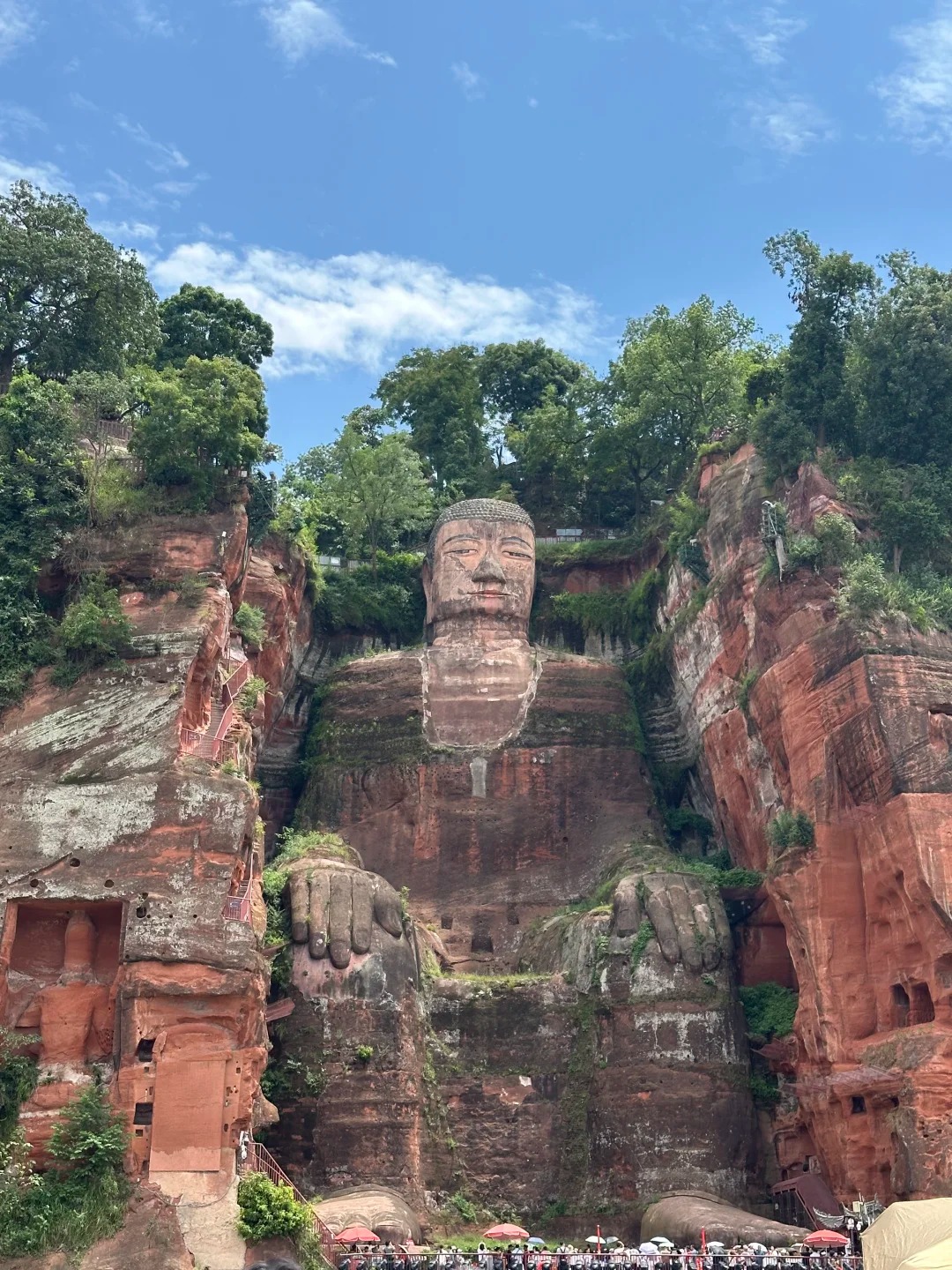
I looked up, and my neck strained. Emerging from the red sandstone of Mount Lingyun was the head of the Buddha. Even from the water, several hundred meters away, the size was staggering. The head itself is 14.7 meters high. That’s as tall as a four-story building. I could see the 1,021 buns of hair coiled on his head, each one perfectly sculpted. His face was serene, his eyes half-closed in meditation, and his lips wore the faintest hint of a smile. He looked like a giant guardian watching over the chaotic waters. Seeing him from the boat, framed by the green of the mountain and the brown of the river, gave me a sense of the full composition. It was a perfect harmony of nature and human ambition.
But I wanted more than a distant view. I wanted to get close. I wanted to touch the rock. So, I disembarked and made my way into the Lingyun Temple complex. The atmosphere shifted immediately from the bustle of the river to the hushed reverence of the temple grounds. Incense smoke curled into the air, mixed with the chanting of monks in orange robes. The path leads you to the top of the cliff, right beside the Buddha’s head.
Standing next to his ear, which is seven meters long, was surreal. I looked at the stone. It’s not polished marble; it’s rough, textured red sandstone. You can see the layers of sediment that have settled over millions of years. I ran my hand along the railing (trying not to think about the sheer drop) and tried to imagine the workers over 1,200 years ago, hanging from ropes by the cliff face, chiseling away rock by rock. It is a feat of engineering that defies logic.
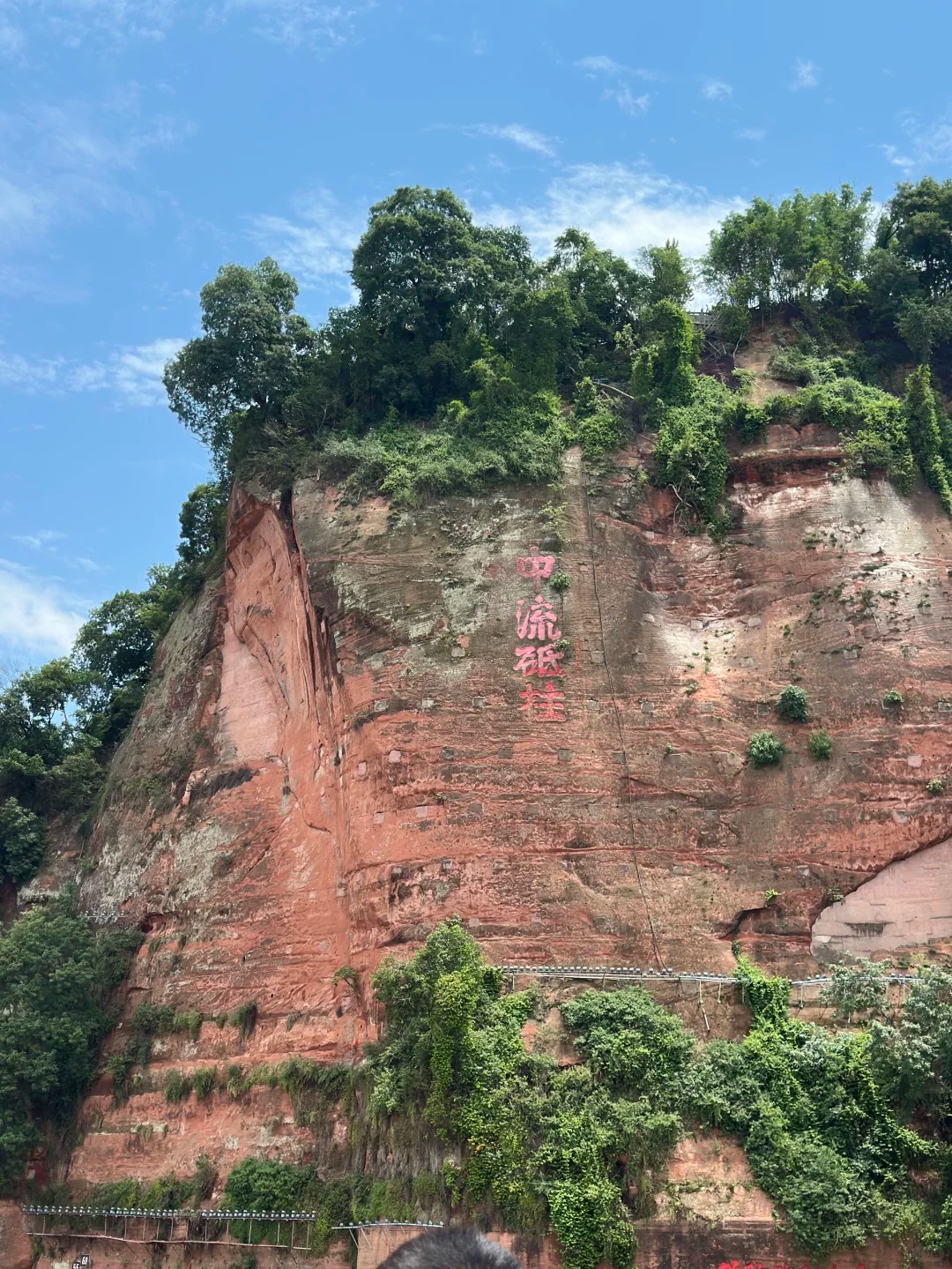
The real adventure began when I started the descent down the “Nine Bends” stairs. These are narrow, steep stone staircases carved into the rock face, zigzagging down from the Buddha’s head to his feet. As I descended, the roar of the river below grew louder. The stairs are uneven, worn smooth by millions of footsteps over the centuries. I had to pause often, partly because of the steep incline and partly because I kept getting distracted by the details I was seeing. From this angle, I could see the intricate folds of the Buddha’s robes. The stone has been carved to look like heavy drapery, rippling in the wind. The precision is mind-blowing.
When I finally reached the bottom, I stepped onto the platform at the Buddha’s feet. This is where you truly understand the word “Giant.” I stood next to his big toe. It is 8.5 meters long. You could fit a dinner party for ten on his toenail. Standing there, looking up at the knees towering above me, then the torso, then the head, I felt like an ant. It was a humbling experience. I felt a strange sense of safety standing there. The Buddha’s hands rest on his knees, palms down, in a gesture of grounding. Watching the violent surge of the river right in front of him, and then looking at the calm, unmoving stone of the Buddha, I understood the purpose of this statue.
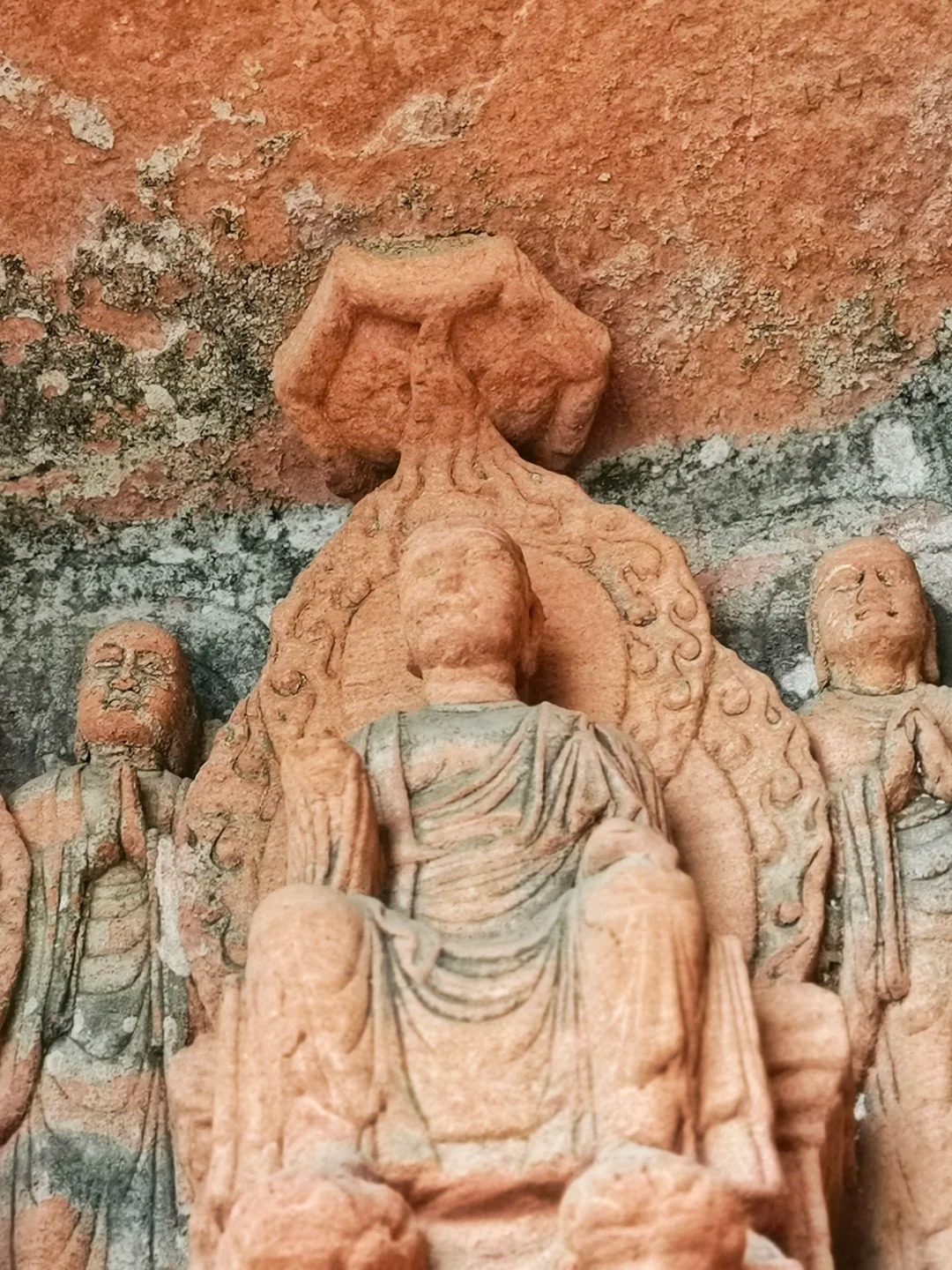
I learned about Haitong, the monk who initiated the project in 713 AD. The river was treacherous, capsizing boats and drowning people. Haitong believed that carving a Maitreya Buddha—the future Buddha—would calm the waters. He spent 20 years raising funds and carving. When the local government officials tried to take his money, he famously gouged out his own eye to show his devotion and refusal to give up. He didn’t live to see the completion, but his disciples finished it 90 years later. Standing at the feet of this colossus, I felt a deep respect for Haitong’s stubborn faith. Whether the Buddha actually calmed the river is a question for hydrologists, but he certainly calmed the hearts of the people who sail on it.
Climbing back up the other side of the stairs was a workout. My legs were burning by the time I reached the top again. I stopped at a small teahouse perched on the cliff edge. I ordered a cup of jasmine tea and sat on a bamboo chair, looking out over the river. The sun was beginning to set, casting a golden light on the water.
I watched a group of pilgrims walking past the Buddha’s head, carrying prayer beads and murmuring prayers. I watched a young couple taking selfies, laughing against the backdrop of ancient stone. And I watched the river flowing endlessly, indifferent to the stone giant watching over it.
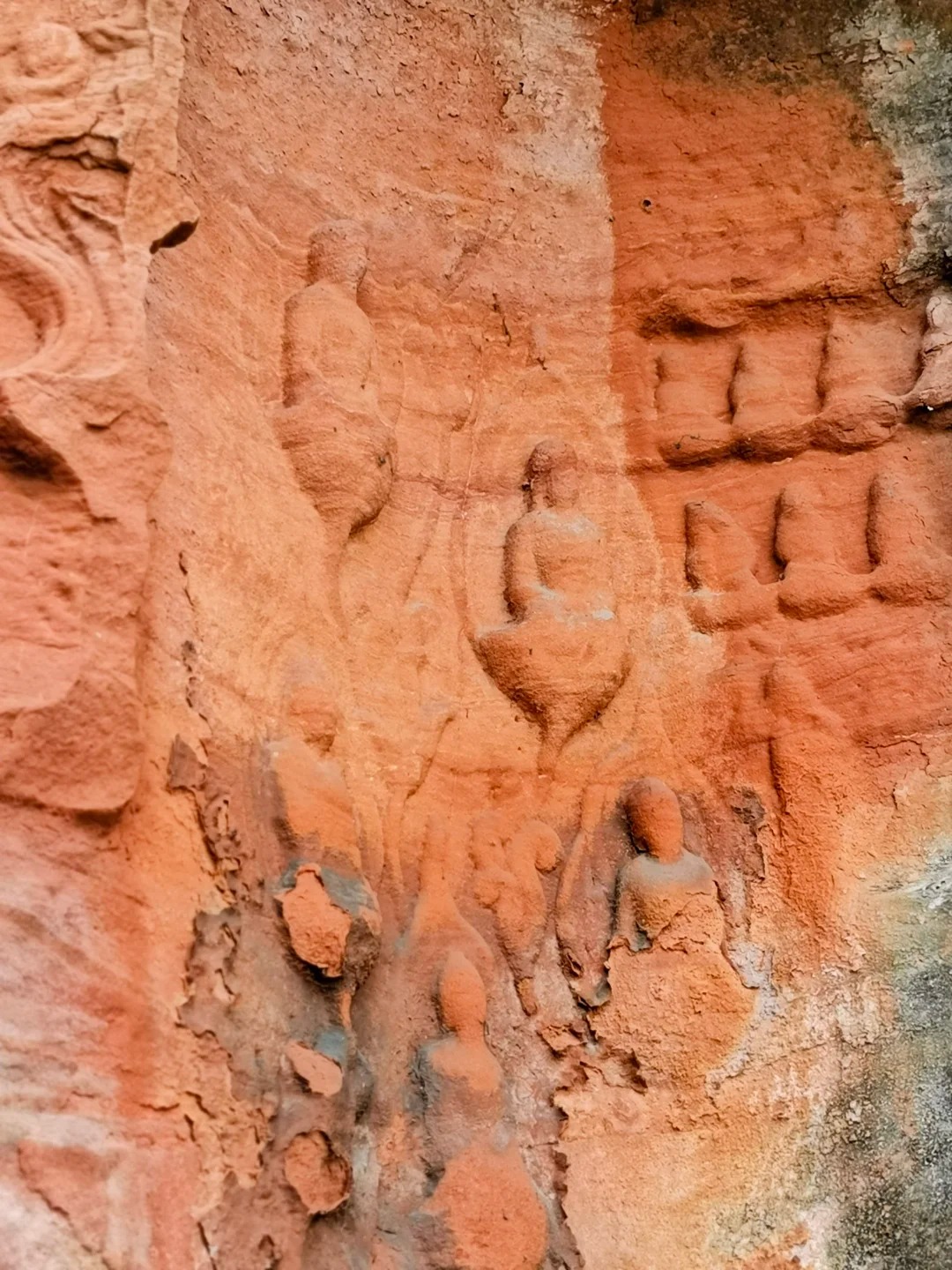
Visiting the Leshan Giant Buddha is not just about checking off a UNESCO World Heritage site. It is about connecting with a time when faith could move mountains—literally. It is about seeing the intersection of spirituality and practicality (the stone debris from the carving was actually pushed into the river, redirecting the currents and calming the waters, proving Haitong was a bit of a hydraulic engineer himself).
If you come to Leshan, do not just take the photo and leave. Take the boat. Then, take the stairs. Feel the stone. Listen to the river. Look up at the serene face and realize that he has been watching that same river for 1,200 years, seeing empires rise and fall, wars come and go, and the water keep flowing. In a world that changes so fast, there is something profoundly comforting about that kind of permanence. The Leshan Giant Buddha is a reminder that patience, determination, and compassion can create things that outlast us all.