By Yuki, a Japanese photographer specializing in architectural and landscape photography
As someone obsessed with capturing the harmony between man and nature, Hongcun has lingered in my mind since I first saw a print of its Moon Marsh at a photography exhibition in Tokyo. This ancient village in Anhui Province, with its white walls, black tiles, and reflection in calm waters, is often called “a village in a painting”—and I’d come to test if reality could live up to the hype. My journey began with a 3-hour high-speed train from Chengdu to Hefei, followed by a 2-hour bus ride to Hongcun. As the bus wound through green hills dotted with rapeseed flowers (it was early April, the perfect season), I pressed my face to the window, already framing shots in my mind. By 3 PM, I stepped into the village, and the first thing I noticed was the silence—broken only by the rustle of bamboo leaves and the gurgle of streams that wind through every alley.
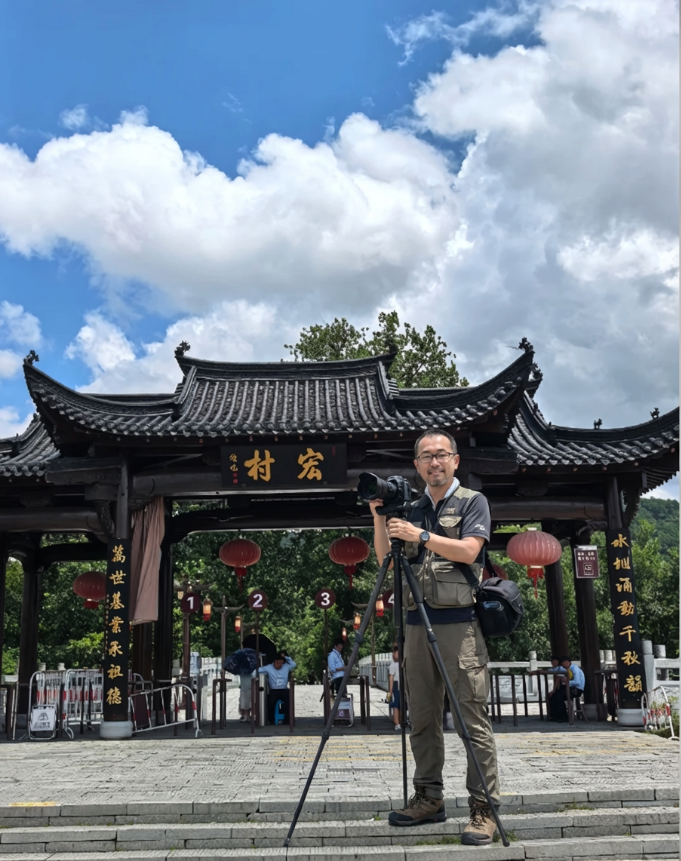
My guesthouse, “Lotus Court Inn,” was a restored Huizhou-style courtyard house at the edge of the village. The owner, Mr. Cheng, a retired architect who specialized in Huizhou architecture, greeted me with a cup ofHuangshan Maofeng tea. “You’re here for photography, I see,” he said, nodding at my camera bag. “The best light is at dawn by the Moon Marsh—no tourists, just the village waking up.” The guesthouse’s courtyard was a mini masterpiece: a small fish pond with lotus flowers, surrounded by corridors with wooden railings carved with lotus patterns. My room overlooked the pond, and through the paper window, I could see a row of black-tiled roofs stretching toward the hills. I dumped my luggage, grabbed my camera, and hurried out—there was still an hour of golden light left.
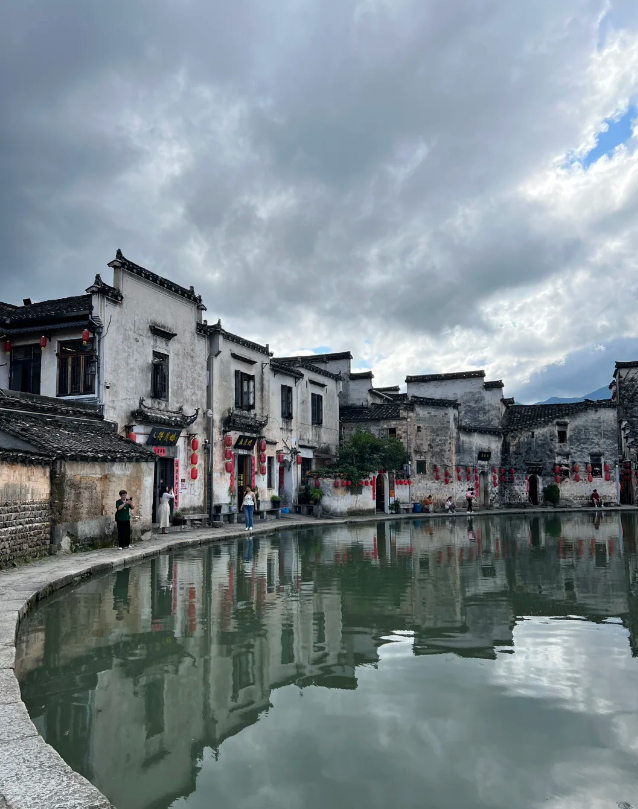
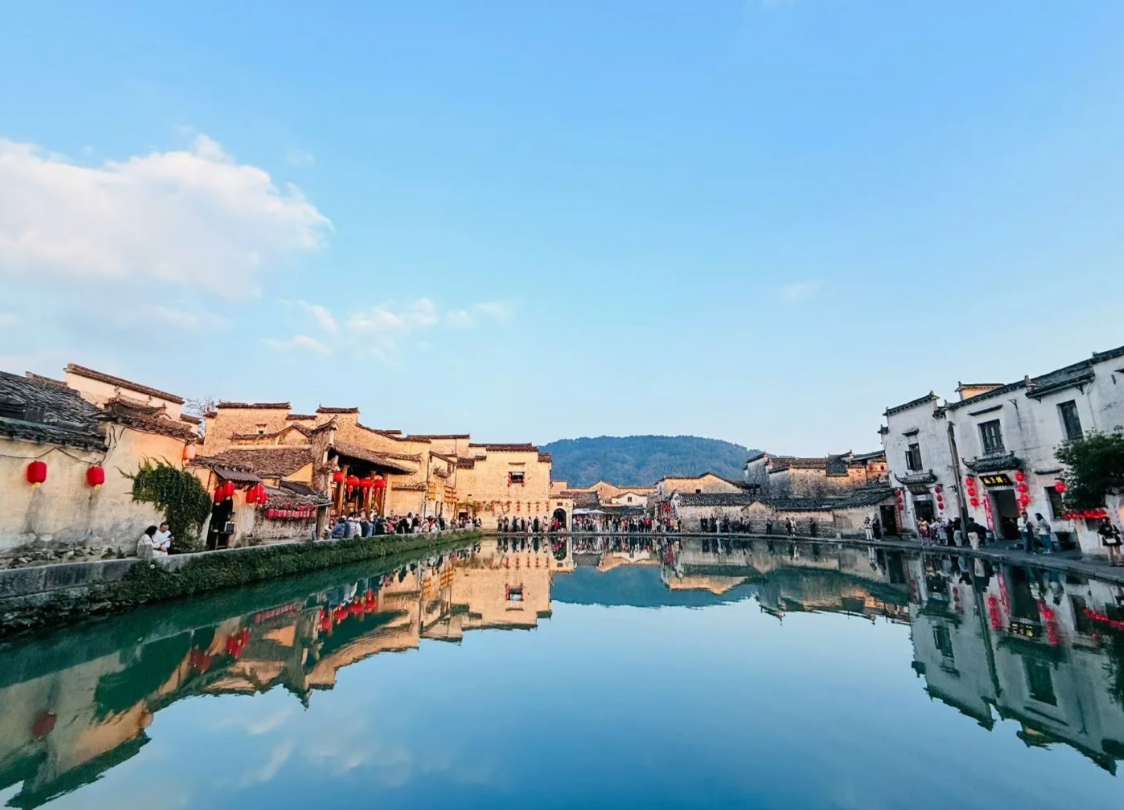
My first stop was the Moon Marsh (Yuezhao), the heart of Hongcun. Shaped like a half-moon, the marsh is surrounded by Huizhou-style houses, their white walls and black “horse-head” gables (a signature of Huizhou architecture, designed to prevent fires) reflected perfectly in the still water. A group of elderly women was washing clothes by the marsh, their wooden mallets tapping against stone slabs in a rhythmic beat. I knelt by the bank, adjusting my aperture to capture the reflection—too much light would wash out the details of the roof carvings, too little would lose the softness of the water. Just as I pressed the shutter, a child chased a duck across the stone bridge, and the ripples distorted the reflection for a split second. I groaned, but Mr. Cheng, who’d followed me out, laughed. “That’s the beauty of Hongcun—you can’t plan the perfect shot. You have to wait for it.” We sat on a stone bench and watched as the sun dipped below the hills, turning the walls pink and the water silver. A painter from Shanghai set up his easel nearby, and we chatted—he’d come to Hongcun every spring for 10 years. “It’s never the same,” he said. “The light, the flowers, the people—every time is a new painting.”
Dinner at the guesthouse was a feast of Anhui cuisine: braised bamboo shoots with soy sauce, stewed chicken with stone fungus (a specialty from Huangshan), and “stinky mandarin fish” (a famous Anhui dish where the fish is fermented to give it a unique umami flavor). Mr. Cheng explained that Huizhou cuisine is simple but flavorful, using local ingredients like bamboo, fungus, and freshwater fish. “In the old days, Hongcun was a wealthy village of merchants,” he said. “They brought back spices from their travels, but they always kept the dishes rooted in local flavors.” After dinner, he took me to the village square, where a group of locals was performing “Huizhou opera” under a stone archway. The performers wore bright costumes, and their singing was high-pitched and melodic, accompanied by drums and erhu. I took photos of their painted faces and elaborate headpieces, and an old performer handed me a mask—carved from bamboo, with red and gold patterns. “For your collection,” he said through Mr. Cheng’s translation. “May it bring you good shots.”
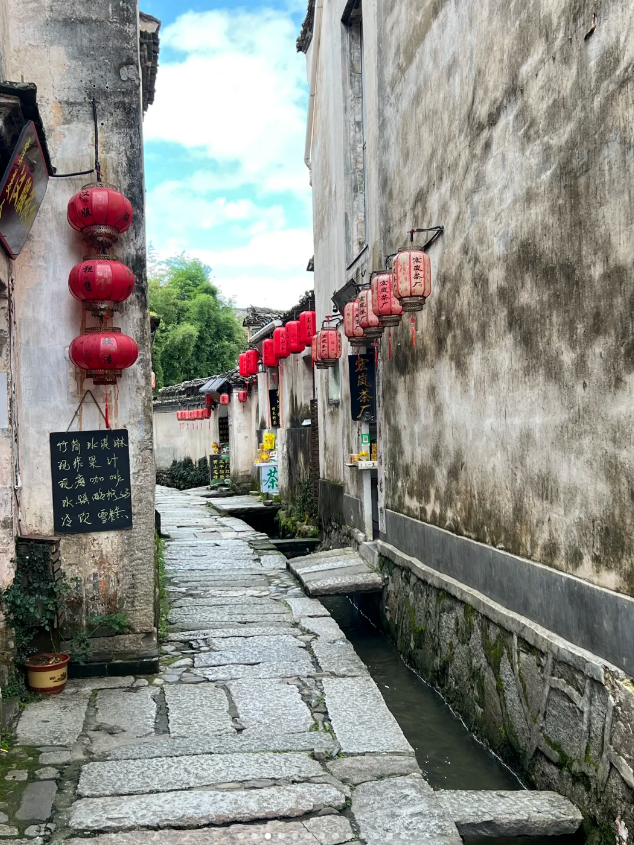
I woke up at 5 AM the next day, as Mr. Cheng had suggested. The village was still dark, with only a few lanterns glowing in the windows. I walked to the Moon Marsh with my tripod, and for 20 minutes, I was alone—just the sound of birds and the distant crow of a rooster. As the sky turned pale blue, the village began to wake: a woman lit a fire in her kitchen, and smoke curled from the black tiles; a farmer led a cow down the alley, its hooves clattering on the stone road; a child carried a bowl of rice porridge to her grandmother. I took shot after shot, changing lenses to capture both the wide view of the marsh and the details of a cat stretching on a windowsill. When the first tourists arrived at 7 AM, I packed up, satisfied—I’d gotten my perfect shots.
After breakfast, Mr. Cheng took me on a tour of the village’s historic houses. The most famous was the Chengzhi Hall (承志堂), built in 1855 by a wealthy Huizhou merchant. The hall is a labyrinth of courtyards, halls, and bedrooms, with every beam, rafter, and window carved with intricate patterns: dragons, phoenixes, lotus flowers, and scenes from Chinese operas. “Look at this,” Mr. Cheng said, pointing to a wooden beam in the main hall. Carved into it was a entire scene of a market, with dozens of tiny figures—merchants, children, beggars—each with distinct faces. “It took 20 craftsmen 3 years to carve this hall,” he said. “Every detail has a meaning: the dragons symbolize power, the lotus symbolizes purity, the fish symbolize prosperity.” In one of the side courtyards, there was a well with a stone cover carved with a lotus. “The well was for the women of the house,” Mr. Cheng explained. “The lotus cover kept the water clean, and it also symbolized that women should be as pure as lotus flowers.”
After visiting Chengzhi Hall, I walked to the South Lake (Nanhu), a long, narrow lake at the entrance of the village. A stone bridge crosses the lake, and willow trees line the banks. I rented a bamboo raft from an old man named Grandpa Wang, who’d been rowing rafts on the lake for 40 years. “Sit still, and I’ll take you to the best spot,” he said. He rowed slowly, using a bamboo pole to push against the lake bed, and the raft glided past lotus leaves (still small, in early April) and water birds. We stopped at a small island in the middle of the lake, and Grandpa Wang pointed to a house on the shore. “That’s where the movie Crouching Tiger, Hidden Dragon was filmed,” he said. I remembered the scene—Zhang Ziyi’s character practicing martial arts on a bamboo roof. I took photos of the house, its reflection in the lake, and Grandpa Wang rowing past with a straw hat on his head. “You’re the first Japanese photographer who’s asked to take my photo,” he said, grinning. “Most tourists just take photos of the lake.”
For lunch, I ate at a small restaurant by the South Lake, run by a couple named Li. They served “bamboo shoot noodles”—fresh noodles with stir-fried bamboo shoots and minced pork—and “lotus root cakes,” sweet and crispy. Mrs. Li told me she’d learned to cook from her mother-in-law, who’d run the restaurant for 30 years. “Tourists love our food, but we never change the recipe,” she said. “We use bamboo from the hills behind the village, picked that morning.” After lunch, I visited a “Huizhou ink-making workshop” on the edge of the village. The master, Mr. Fang, showed me how to make traditional Chinese ink from pine soot, animal glue, and spices. “Huizhou ink is famous all over China,” he said, grinding the ink stick on a stone slab. “It’s black and shiny, and it doesn’t fade for hundreds of years.” I tried grinding the ink myself—it was harder than it looked, requiring a steady hand and even pressure. Mr. Fang wrote a Chinese character for “light” on a piece of rice paper with the ink I’d made, and gave it to me. “For your photography,” he said. “Light and ink are the same—they capture beauty.”
In the afternoon, I walked up the hill behind the village to get a panoramic view. The hill was covered in bamboo forests, and the path was lined with wildflowers. At the top, there was a small pavilion, and from there, I could see the entire village: the Moon Marsh like a silver half-moon in the center, the South Lake like a green ribbon at the entrance, and the white houses and black tiles spreading out like a chessboard. A group of art students from Beijing was sketching, and I sat next to a girl named Xiao Ting. She showed me her sketchbook, filled with drawings of Hongcun’s courtyards and bridges. “I come here every year to sketch,” she said. “Hongcun teaches you to see beauty in simplicity—the curve of a roof, the reflection of a wall in water, the way light falls on a stone.” We talked about photography and painting, and she told me about a hidden spot by the village’s east gate: a small stream with stone steps, where locals washed vegetables. I thanked her and hurried down the hill. The spot was even more beautiful than she’d described—sunlight filtered through the bamboo trees, casting dappled shadows on the stream, and a woman was washing celery, her hands moving gently in the water. I took what would become my favorite photo of the trip: the woman’s hands, the green celery, the stone steps, and the reflection of the bamboo in the water.
That night, I sat in the guesthouse’s courtyard, drinking Huangshan Maofeng tea and sorting through my photos. Mr. Cheng joined me, and we talked about Huizhou culture. “Hongcun has been here for over 900 years,” he said. “It’s survived wars, floods, and time. The reason it’s still beautiful is because we respect nature—we built the village around the marsh and the lake, not the other way around. We use local materials—stone, wood, bamboo. We live in harmony with the land.” As I looked at my photos—the Moon Marsh at dawn, the carved beams of Chengzhi Hall, the woman washing celery by the stream—I realized he was right. Hongcun wasn’t just a “village in a painting”; it was a living example of how humans can create beauty without destroying nature. I fell asleep to the sound of the stream outside my window, already planning my next trip—this time, to capture Hongcun in autumn, when the leaves turn red and the village is wrapped in mist.
Travel Guide: Capturing Hongcun’s Beauty Like a Local
1. Transportation: Getting to & Around Hongcun
- Getting to Hongcun: By High-Speed Train: The nearest high-speed train station is Huangshan North Station (about 30 kilometers from Hongcun). Take a high-speed train to Huangshan North from major cities: Shanghai (2.5 hours), Hefei (1.5 hours), Nanjing (2 hours). From Huangshan North Station, take a direct bus to Hongcun (30 yuan, 1 hour) — buses leave every 30 minutes from 7 AM to 6 PM.
- By Plane: The nearest airport is Huangshan Tunxi International Airport (TXN), about 60 kilometers from Hongcun. There are direct flights from Beijing (2 hours), Shanghai (1.5 hours), and Guangzhou (2.5 hours). From the airport, take a bus to Huangshan North Station (20 yuan, 40 minutes), then transfer to the Hongcun bus.
Getting Around Hongcun: On Foot: Hongcun is small—you can walk to all major attractions in 15-20 minutes. The village’s stone paths are easy to navigate, and there are signs in both Chinese and English.
Bamboo Raft: Rent a bamboo raft on the South Lake for 80 yuan per person (1 hour). Grandpa Wang’s raft is highly recommended—he knows all the best photo spots.
Taxi: Taxis are available outside the village entrance. A ride to Huangshan Scenic Area (about 20 kilometers) costs 50-60 yuan. Taxis can’t enter the village, so they’ll drop you at the entrance.
2. Top Attractions: What to See & Experience
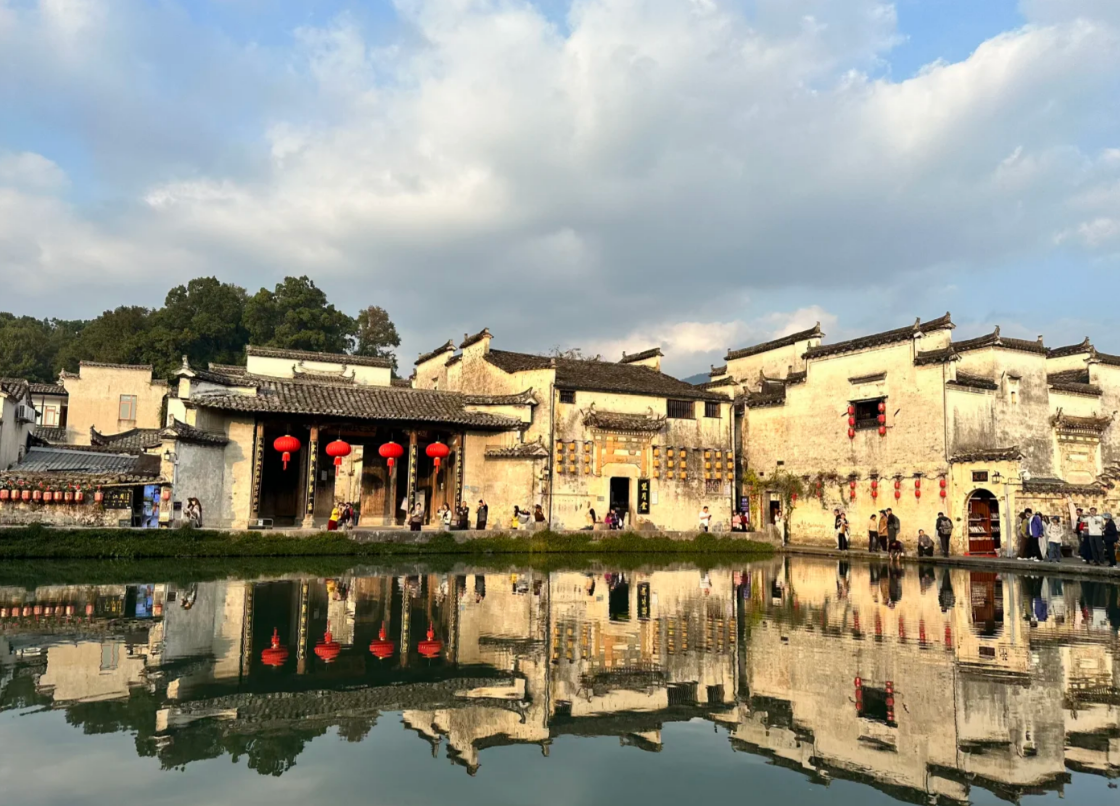
- Moon Marsh (Yuezhao)Highlights: The iconic half-moon marsh surrounded by Huizhou-style houses. The best time to visit is dawn (5:30-7 AM) for calm water and golden light, or dusk (5-6:30 PM) for pink skies and reflections.
- Tips: Bring a wide-angle lens for panoramic shots, and a macro lens for details like the carvings on the surrounding houses. Avoid midday—strong sunlight creates harsh shadows.
Chengzhi Hall (承志堂)Highlights: A grand Huizhou merchant’s house with intricate wood carvings, stone courtyards, and hidden rooms. Don’t miss the “100-Lion Beam” (a beam carved with 100 lions, each in a different pose) and the lotus well.
Tickets: Included in the village entrance ticket (104 yuan per person).
Hours: 7:30 AM-5:30 PM (summer), 8 AM-5 PM (winter).
Tips: Hire a local guide (50 yuan per group) to learn about the history of the carvings—many have hidden meanings.
South Lake (Nanhu)Highlights: A long lake with a stone bridge and willow trees. Rent a bamboo raft to explore the lake, or walk along the bank to take photos of the Crouching Tiger, Hidden Dragon filming location.
Tips: The best time to take photos of the stone bridge is mid-morning, when the sun is low and casts long shadows.
Huizhou Ink-Making WorkshopHighlights: Learn to make traditional Huizhou ink from master craftsmen. You can grind your own ink and get a calligraphy work as a souvenir.
Price: 120 yuan per person (includes ink-making experience and souvenir).
Hours: 9 AM-5 PM.
Tips: Book in advance through your guesthouse—workshops are small (max 5 people per session).
Hill Behind the VillageHighlights: A small hill with bamboo forests and a pavilion at the top. The perfect spot for panoramic photos of Hongcun.
Tips: Wear comfortable shoes— the path is steep in some parts. Bring insect repellent in summer. The best time to visit is late afternoon for sunset views.
3. Photography Guide: Capture Hongcun’s Magic
Hongcun is a photographer’s dream, but knowing when and where to shoot will make your photos stand out. Here’s a detailed guide:
- Best Time to Visit for Photography: Spring (March-April): Rapeseed flowers bloom around the village, adding bright yellow to your shots. The weather is mild, and there’s less rain.
- Autumn (October-November): Leaves turn red and gold, and the village is often wrapped in mist in the morning. Perfect for moody, atmospheric shots.
- Avoid Summer (July-August): Hot and rainy, with frequent thunderstorms. Humidity can damage camera equipment.
Best Shooting Times of Day: Dawn (5:30-7 AM): Calm water at Moon Marsh, golden light, few tourists. Ideal for reflection shots.
Late Afternoon (4-6 PM): Soft, warm light. Perfect for shooting the South Lake and the hilltop panoramic view.
Night (7-8 PM): Lanterns glow in the windows, and the village is quiet. Use a tripod for long-exposure shots of the Moon Marsh at night.
Must-Have Camera Gear: Wide-Angle Lens (16-35mm): For panoramic shots of the village and reflections in the marsh.
Macro Lens (100mm): For details like wood carvings, ink grinding, and wildflowers.
Tripod: Essential for dawn, dusk, and night shots—prevents blurriness in low light.
Polarizing Filter: Reduces glare on water and makes colors more vibrant (especially useful for reflection shots).
Rain Cover: In case of sudden rain (common in spring and autumn).
Hidden Photo Spots: East Gate Stream: A small stream with stone steps where locals wash vegetables. Ask for directions at your guesthouse—it’s not marked on maps.
Chengzhi Hall Courtyards: The side courtyards have beautiful light in the morning—shoot the lotus well and carved railings.
Bamboo Forest Path: The path to the hill behind the village is lined with bamboo—shoot from low angles to capture the height of the bamboo.
4. Accommodation: Stay in a Huizhou Courtyard
The best way to experience Hongcun is to stay in a traditional Huizhou courtyard guesthouse. Here are top recommendations:
- Lotus Court Inn: The guesthouse featured in the diary. Run by Mr. Cheng, a retired Huizhou architecture expert. It has a beautiful lotus courtyard and rooms with pond views. Prices: 600-800 yuan per night (includes breakfast and tea). Mr. Cheng can arrange guided tours and photography tips.
- Hongcun Ancient Courtyard Hotel: A restored 200-year-old merchant’s house. The rooms are decorated with traditional Huizhou furniture, and the courtyard has a small stage where local opera is performed on weekends. Prices: 800-1,000 yuan per night. They offer ink-making and calligraphy classes.
- Yuezhao Hostel: A budget-friendly option near the Moon Marsh. The rooms are simple but clean, and the rooftop terrace has great views of the marsh. Prices: 200-300 yuan per night. Popular with backpackers and art students.
- Huangshan Hongcun Villa: A luxury resort on the edge of the village. It has a swimming pool, spa, and restaurant serving high-end Anhui cuisine. Rooms have balconies with mountain views. Prices: 1,500+ yuan per night. Perfect for travelers seeking comfort.
5. Food: Authentic Anhui Cuisine
Anhui cuisine (Hui cai) is one of China’s eight major cuisines, known for its use of local ingredients and simple cooking methods. Here are must-try dishes and where to eat:
- Stinky Mandarin Fish (Chou Gui Yu): A signature dish—fish fermented for 3-5 days to develop a unique umami flavor. Served braised with bamboo shoots. Try it at Old Huizhou Restaurant (near the South Lake, 80-100 yuan per fish).
- Braised Bamboo Shoots (Hong Shao Sun): Fresh bamboo shoots braised with soy sauce and sugar. Crisp and flavorful. Available at most local restaurants—try Li’s Noodle Shop (by the South Lake, 25 yuan per plate).
- Stone Fungus Chicken Stew (Shi Er Dun Ji): Chicken stewed with stone fungus (a rare fungus from Huangshan) and goji berries. Nutritious and flavorful. Try it at Lotus Court Inn (Mr. Cheng’s wife makes the best version, 120 yuan per pot).
- Lotus Root Cakes (Ou Gen Gao): Sweet cakes made with lotus root, glutinous rice, and brown sugar. Crispy on the outside, soft on the inside. Available at street stalls near the Moon Marsh (5 yuan per cake).
- Huangshan Maofeng Tea: Not a dish, but a must-try. A green tea with a fresh, floral flavor. Buy it at Mr. Fang’s Ink Workshop—he sells high-quality tea picked from his own garden (200 yuan per 500g).
6. Cultural Etiquette & Practical Tips
- Respecting Locals: Hongcun is a living village, not just a tourist attraction. Ask permission before taking photos of locals (especially elderly people and children). Don’t walk through private courtyards unless you’re a guest.
- Preserving the Village: Don’t litter—there are trash cans near all major attractions. Don’t touch the wood carvings in Chengzhi Hall—oil from hands can damage them. Don’t wash clothes or dishes in the Moon Marsh or South Lake.
- Ticket Information: The village entrance ticket is 104 yuan per person, valid for 3 days. You’ll need to show your ID or passport when buying tickets. Keep the ticket—you’ll need it to enter attractions like Chengzhi Hall.
- Weather & Clothing: Spring (March-April): Mild (10-20°C), but rainy. Bring a light jacket and umbrella.
- Autumn (October-November): Cool (8-18°C), with misty mornings. Bring a warm sweater and waterproof shoes.
- Winter (December-February): Cold (0-8°C), sometimes snowy. Pack a down jacket and gloves.
Shopping: Buy handcrafted souvenirs like Huizhou ink, bamboo carvings, and lotus root cakes. Avoid mass-produced souvenirs—look for small shops run by locals. Mr. Fang’s Ink Workshop and Grandpa Wang’s Bamboo Shop (near the South Lake) are great options.
Language: Most guesthouse owners and tourist staff speak basic English. Learn a few Chinese phrases: “Xie xie” (thank you), “Duo shao qian?” (how much?), “Ke yi pai zhao ma?” (can I take a photo?).
7. Two-Day Itinerary for Hongcun
Day 1: Village Highlights & Culture
- 1. 7:30 AM: Arrive at Hongcun, check into a courtyard guesthouse.
- 2. 8:30 AM: Breakfast at the guesthouse (soy milk, steamed buns, local pickles).
- 3. 9:30 AM: Visit Moon Marsh—take morning reflection shots.
- 4. 11:00 AM: Tour Chengzhi Hall with a local guide—admire the wood carvings.
- 5. 12:30 PM: Lunch at Old Huizhou Restaurant (stinky mandarin fish, braised bamboo shoots).
- 6. 2:00 PM: Huizhou ink-making workshop—grind your own ink and get a calligraphy souvenir.
- 7. 4:00 PM: Rent a bamboo raft on South Lake—visit the Crouching Tiger, Hidden Dragon filming location.
- 8. 6:00 PM: Dinner at Li’s Noodle Shop (bamboo shoot noodles, lotus root cakes).
- 9. 7:30 PM: Watch Huizhou opera in the village square—take photos of the performers.
Day 2: Photography & Nature
- 10. 5:30 AM: Wake up, go to Moon Marsh for dawn reflection shots (bring tripod).
- 11. 7:30 AM: Breakfast at the guesthouse—try Huangshan Maofeng tea.
- 12. 9:00 AM: Walk to East Gate Stream—shoot locals washing vegetables.
- 13. 11:00 AM: Visit the bamboo forest path and hill behind the village—take panoramic shots.
- 14. 12:30 PM: Lunch at the guesthouse (stone fungus chicken stew).
- 15. 2:00 PM: Explore the village’s back alleys—shoot hidden courtyards and stone paths.
- 16. 4:00 PM: Return to the hilltop pavilion for sunset shots of the village.
- 17. 6:30 PM: Farewell dinner at the guesthouse—try all local specialties.
- 18. 8:00 PM: Buy souvenirs (Huizhou ink, bamboo carvings) before leaving.