The road to Qinghai is a road through history. One of the most poignant stops along this ancient trade route is Riyue Mountain, or the Sun and Moon Mountain. Standing at this pass is like standing at a crossroads of cultures. It marks the boundary between the agricultural lands of the east and the pastoral grasslands of the west. It was here, according to legend, that a Tang Dynasty princess said a tearful goodbye to her homeland.
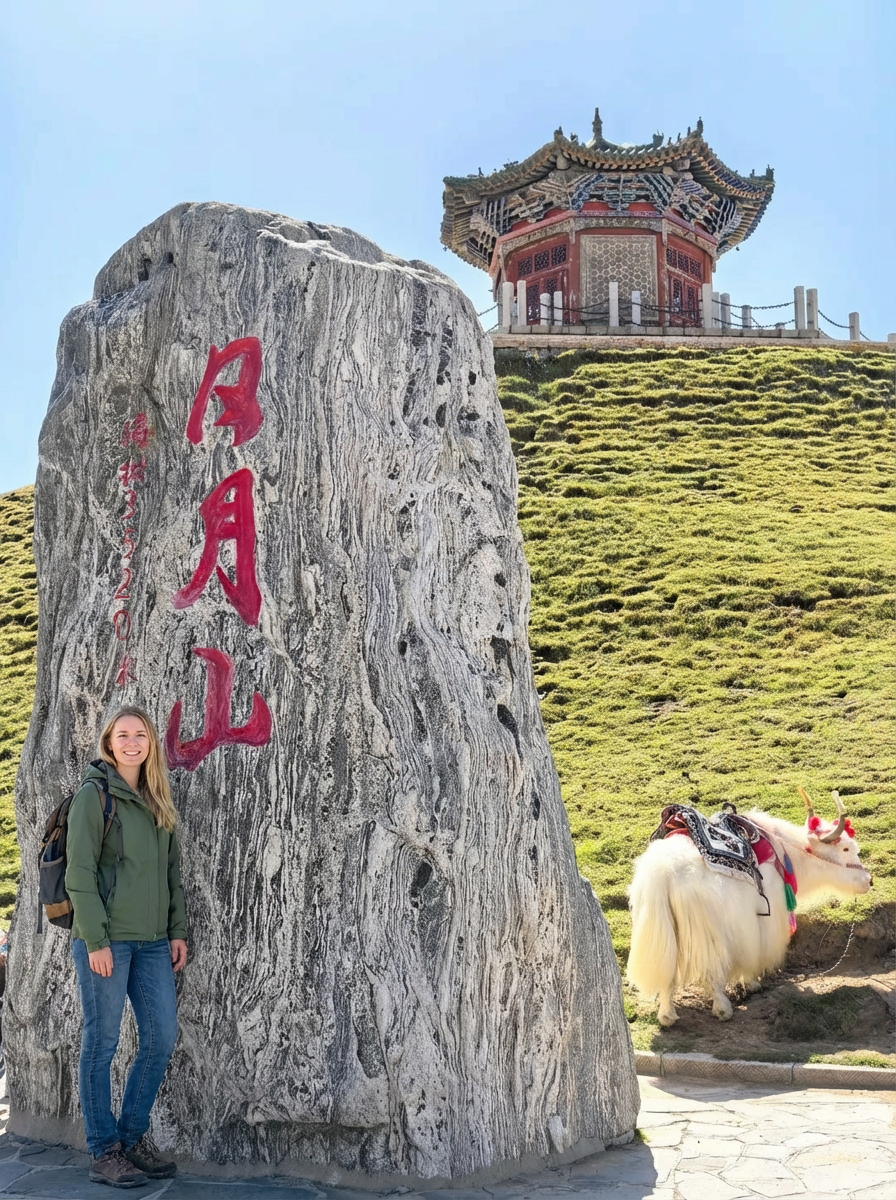
I drove up the winding road to the pass, which sits at an altitude of 3,520 meters. The air grew cooler and thinner with every meter we climbed. The view from the top is panoramic. To the east, the terraced fields of yellow rape flowers and green wheat create a patchwork quilt of civilization. To the west, the vast, undulating grasslands stretch out toward the horizon, inhabited by nomadic tribes. It is a visual representation of two different worlds colliding and merging.
There are two pavilions at the summit: the Sun Pavilion and the Moon Pavilion. They are traditional Chinese structures, painted red and gold, looking somewhat out of place against the rugged terrain, yet majestic in their own right. I climbed the stairs to the Sun Pavilion. The wind was howling, fierce and relentless. It grabbed at my clothes and nearly took my breath away. I held onto the railing and looked out.
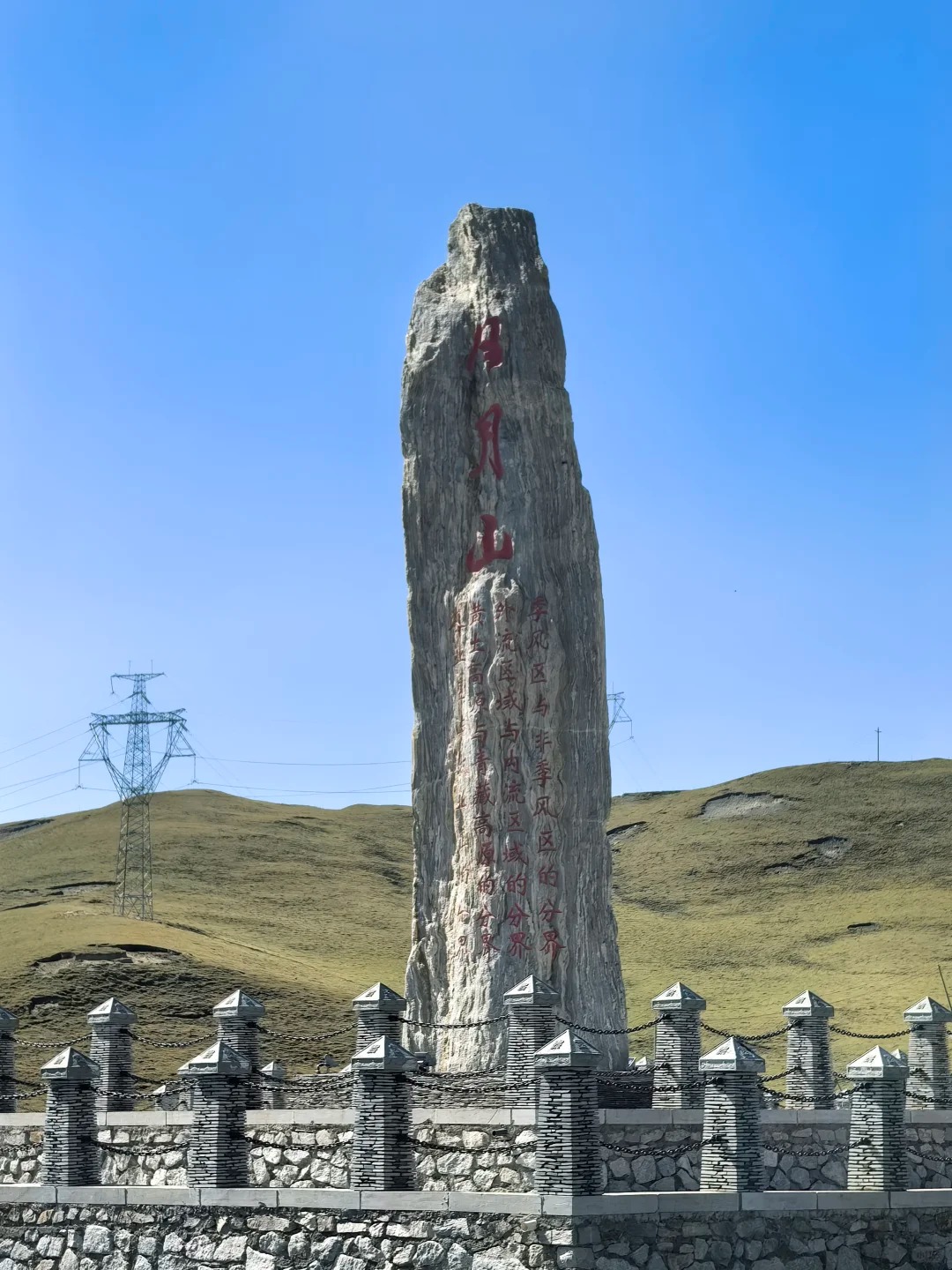
This was the legendary point where Princess Wencheng turned back for one last look at her home in Chang’an (modern-day Xi’an) before continuing her journey to marry the King of Tibet in the 7th century. The story goes that she dropped a mirror here—the Sun and Moon Mirror—which was supposed to show her the scenery of her hometown. In her grief, she shattered it to break her ties to the past and embrace her future duty.
Standing there, with the wind whipping my hair, the story felt real. I could imagine the loneliness and the weight of responsibility that young woman must have felt. It gave the landscape a melancholic beauty. It wasn’t just a mountain pass anymore; it was a monument to sacrifice and political alliance.
I walked over to the ridge that separates the two watersheds. On one side, the rivers flow east to nourish the farms; on the other, they flow west into the great inland lakes. It is the hydrological divide of China. I picked up a piece of stone from the ground. It was cold and hard. I wondered how many travelers, merchants, and soldiers had stood on this exact spot over the centuries, feeling the same wind, looking at the same view.
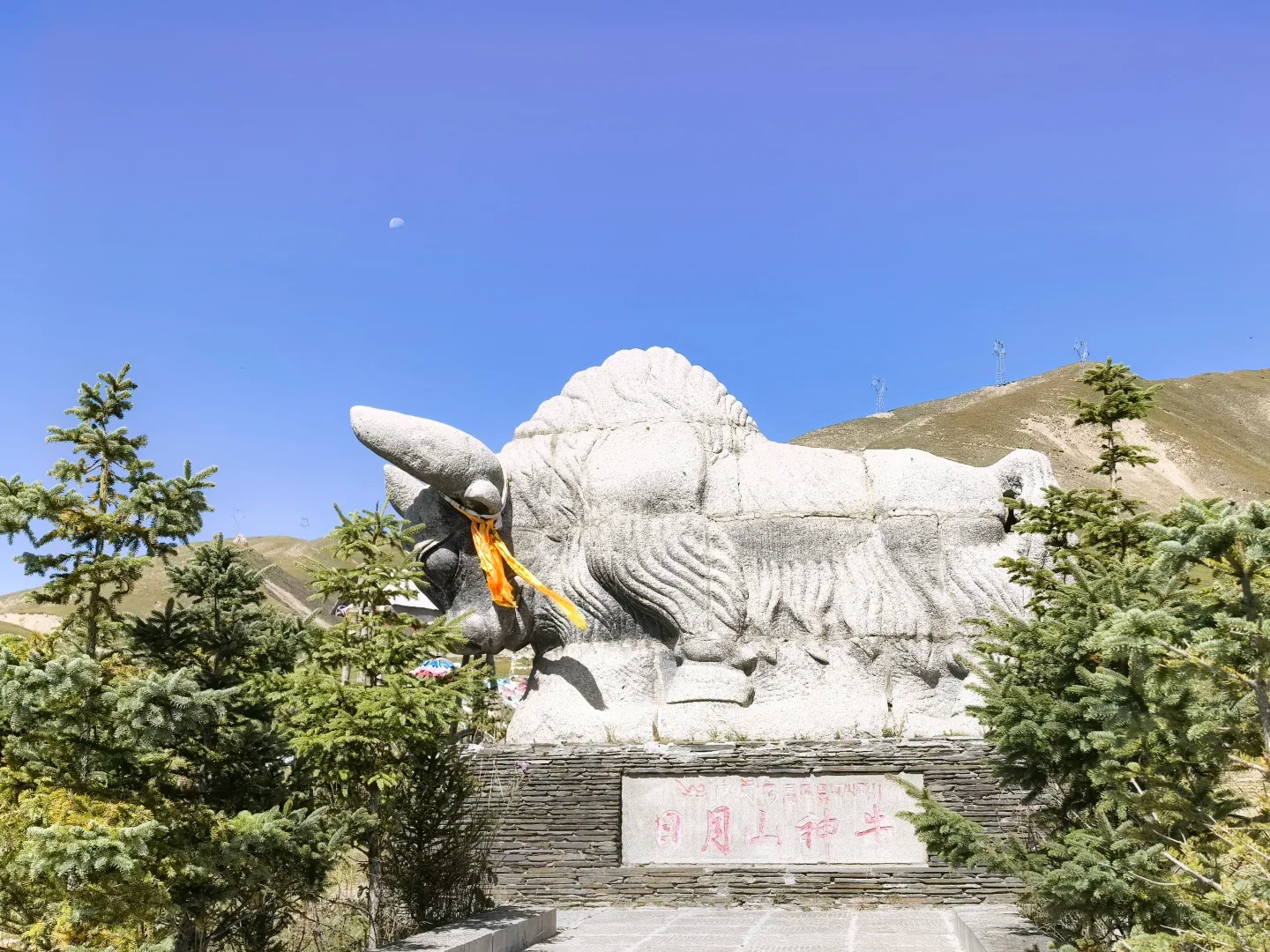
Descending the western side of the mountain, the landscape changed instantly. The paved roads gave way to dirt tracks leading to yurts. I saw herders on motorcycles alongside men on horseback. It’s a blend of the ancient and the modern. I stopped at a small roadside stall selling yak jerky and roasted potatoes. The vendor, a woman with wind-burned cheeks, handed me a potato. It was hot, charred on the outside, and fluffy on the inside. I sat on a plastic stool, eating the potato and watching the eagles glide over the grassland. It was a moment of simple, unadulterated happiness.
The Riyue Mountain area is also significant for the Daotang River, known as the “River that flows backwards.” Most rivers flow away from the mountains, but due to the unique topography here, a section of this river flows in the opposite direction. Seeing it was a reminder that nature often ignores our expectations.
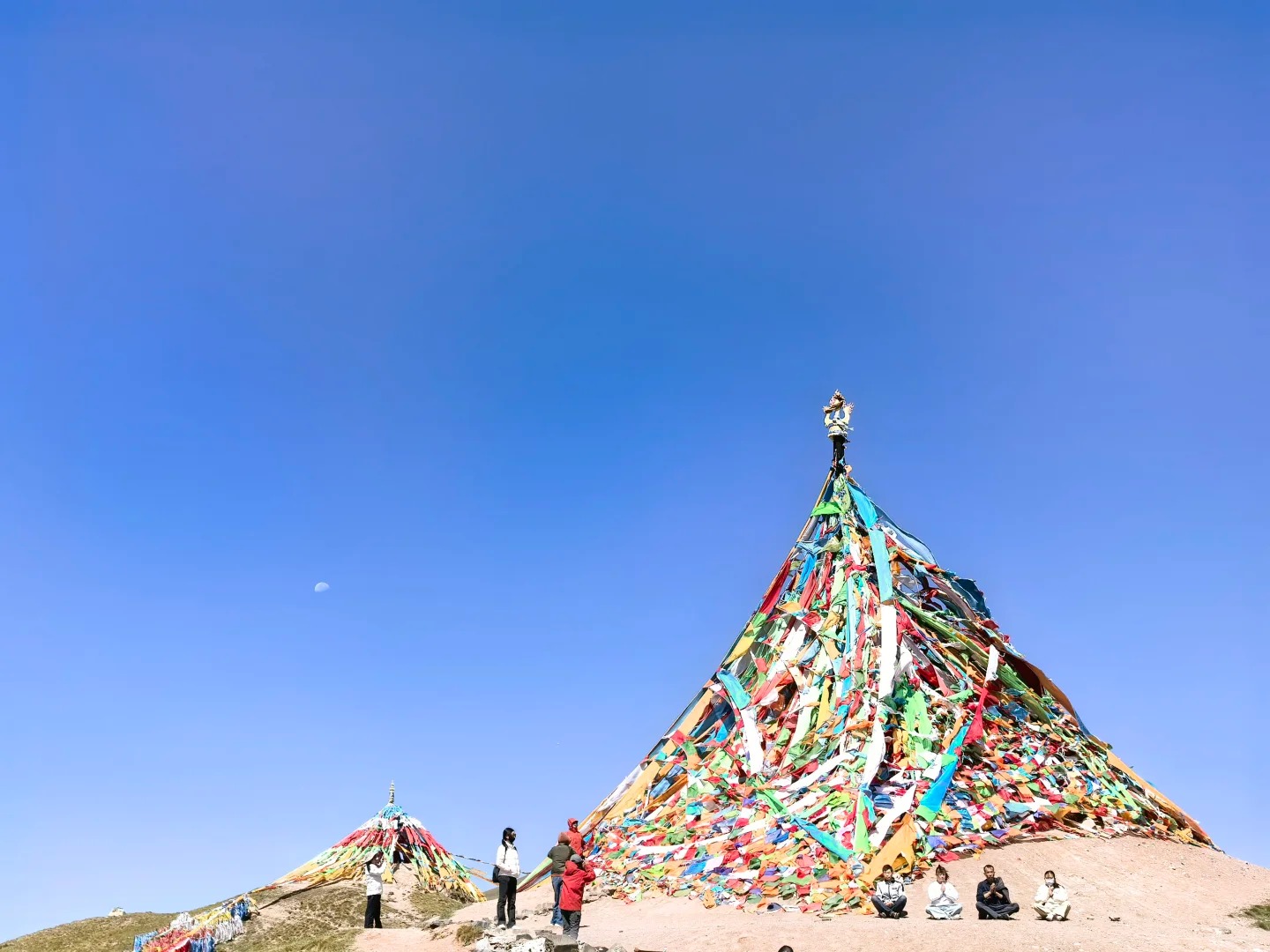
As the sun began to set, the sky turned a bruised purple and orange. The grasslands glowed with an eerie light. I headed back towards the pass to take one last look at the pavilions silhouetted against the darkening sky. They looked like sentinels guarding the past.
Driving away, I thought about Princess Wencheng. She crossed these mountains with a retinue of servants, carrying silk, grain, and books, bringing civilization to the high plateau. Today, we cross it in SUVs with GPS. But the mountain remains the same. The wind still blows. The divide between east and west still exists.
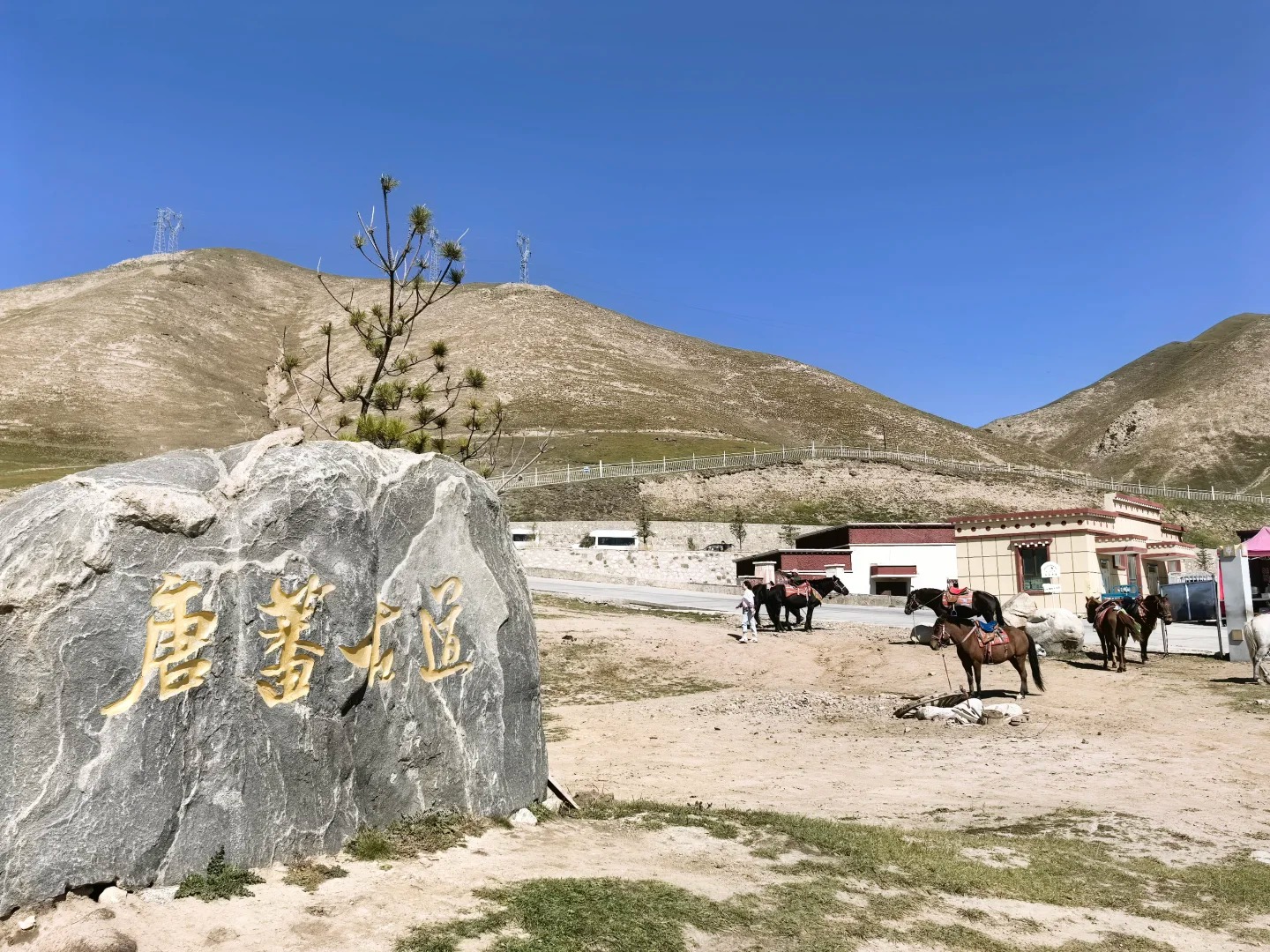
Riyue Mountain is more than just a photo op. It is a place where you can feel the pulse of history. It is a reminder of how geography shapes destiny. For the traveler, it is a threshold. You leave the comfort of the known east and step into the wild, untamed west. It is a transition that is as emotional as it is physical. If you travel this road, take a moment. Stand between the Sun and Moon pavilions. Feel the wind. Remember the princess. And appreciate the journey you are on.