There is a legend in Xinjiang that Sayram Lake is the last tear of the Atlantic Ocean. As the warm currents of the Atlantic travel eastward, they bring moisture and life across Europe and Central Asia, but by the time they reach the Tianshan Mountains, they are blocked by the towering peaks. Unable to go further, they weep, and that tear becomes this lake. Having stood on its shores, breathing in the crisp, thin air, I can tell you that the legend feels true. There is a melancholic beauty here, a sense of a journey ended, a final resting place for the clouds.
My trip to Sayram Lake was a transition from the arid heat of the deserts to the cool, lush embrace of the alpine. As the car climbed the pass, the landscape shifted dramatically. The grey, rocky slopes gave way to vibrant green meadows dotted with sheep, and suddenly, there it was—a blue so intense it seemed unnatural.

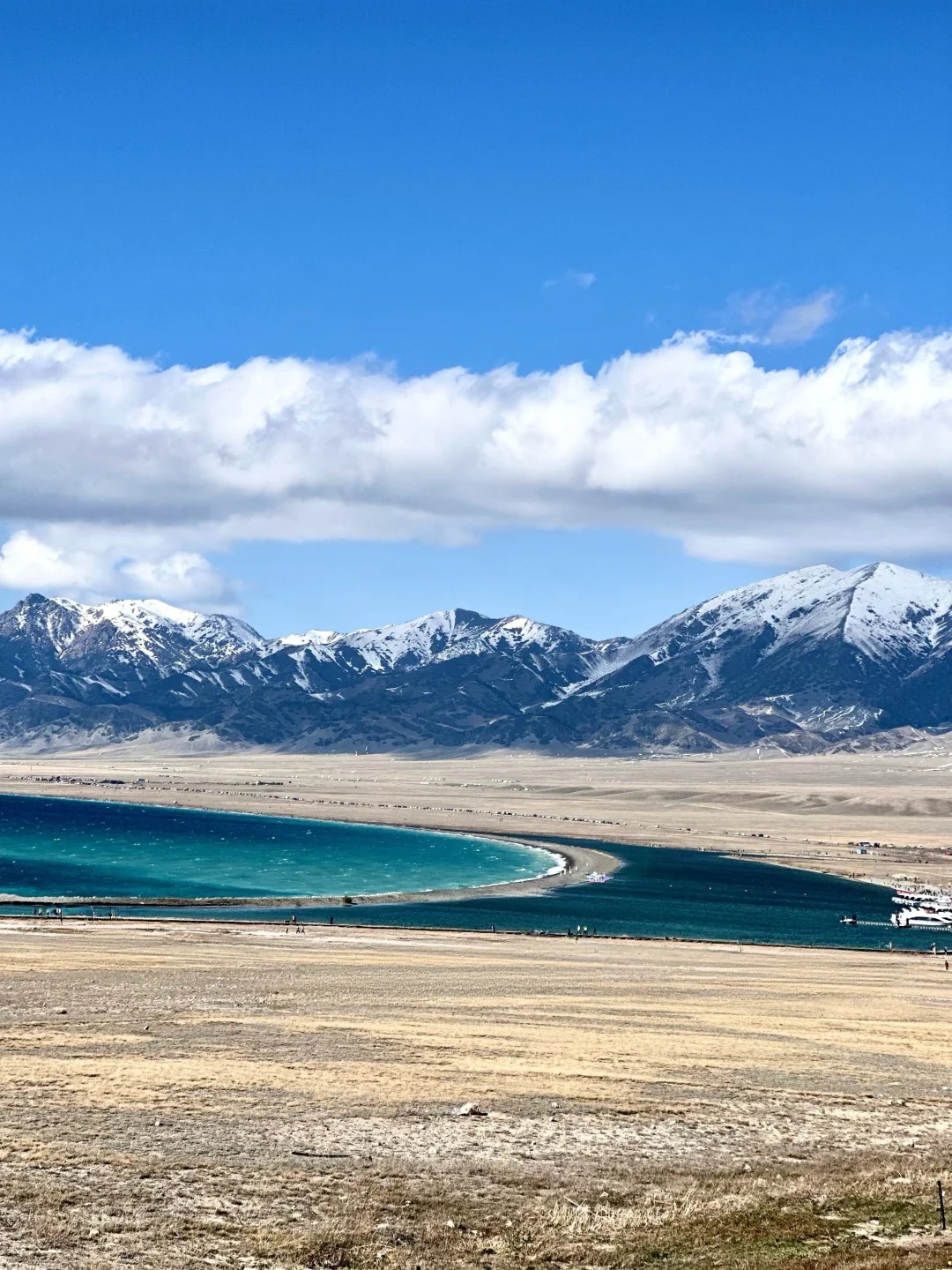
Sayram Lake is the largest alpine lake in China, sitting at an altitude of over 2,000 meters. But “large” is a word that fails to capture it. It is vast. It is an inland sea, a sheet of sapphire glass surrounded by snow-capped peaks and rolling grasslands. I had seen pictures of the lake, of course, but pixels on a screen cannot convey the way the light dances on the water, or the way the blue changes from turquoise near the shore to a deep, majestic indigo in the center.
I decided to drive around the lake. The scenic loop road is about 90 kilometers, and it is a journey that takes you through a dozen different worlds. The road is a marvel of engineering itself, winding precariously close to the water’s edge at times and climbing high up the cliffs at others. I stopped at a viewing point early in the morning. The lake was calm, reflecting the surrounding mountains with such clarity that it was hard to tell where the sky ended and the water began. It was a perfect mirror, disturbed only by the occasional ripple caused by a diving bird.
One of the most striking features of Sayram is the juxtaposition of elements. In the background, you have the majestic, snowy peaks of the Tianshan, looking cold and forbidding. In the foreground, the meadows are exploding with wildflowers—purple, yellow, white—creating a soft, colorful carpet. And bridging the two is the intense, electric blue of the water. It is a photographer’s paradise, but more importantly, it is a place of healing.
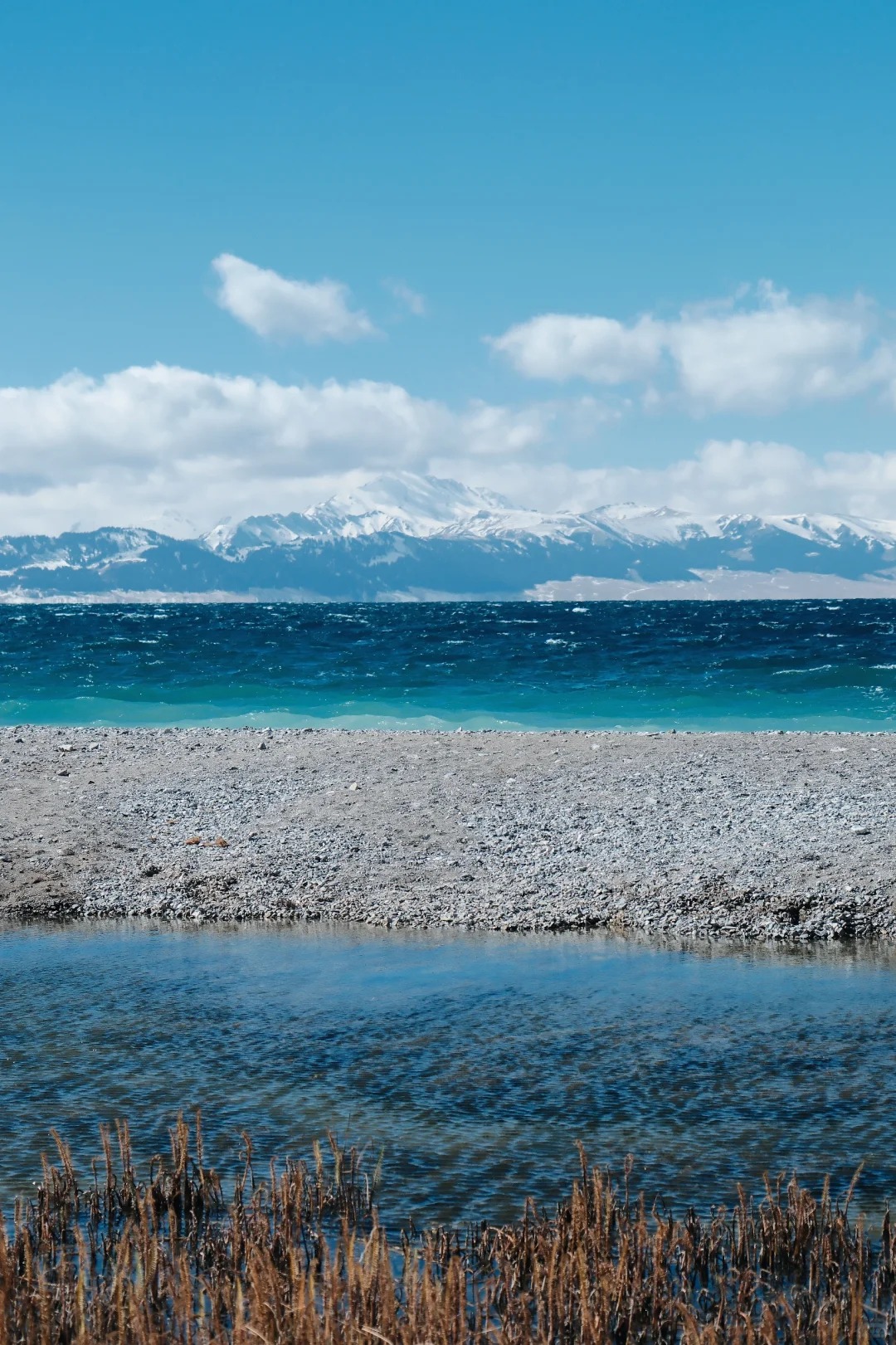
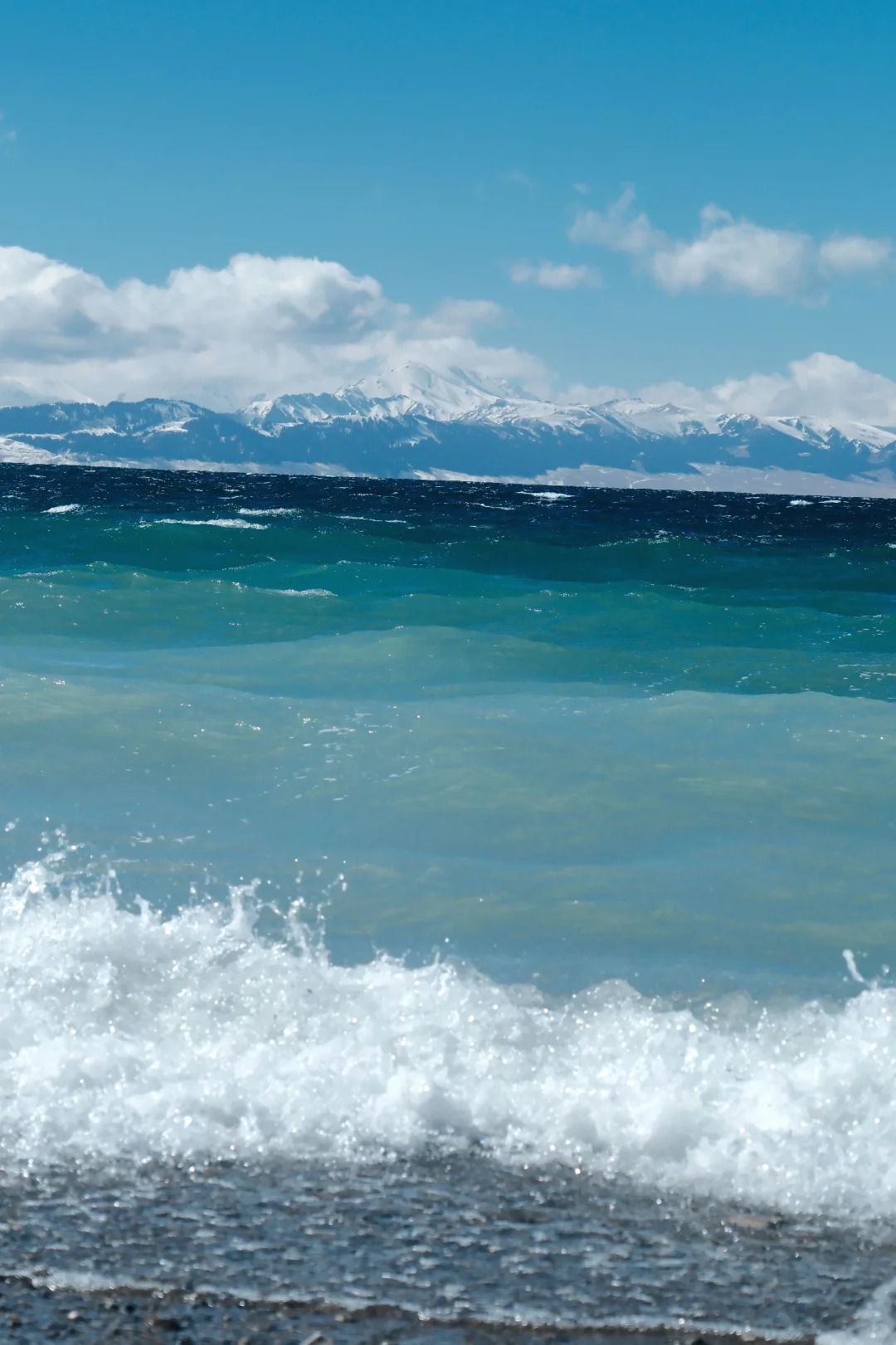
I parked the car and walked down to the shore. The water is crystal clear. I could see the pebbles at the bottom, meters below the surface. It is also freezing cold, fed by melting glaciers. I dipped my hand in, and the cold bit instantly, shocking me awake. It is pure, untouched water, free from the pollution that plagues so many of the world’s water bodies.
As I continued around the loop, I encountered the nomadic herders who bring their livestock to the lush pastures here for the summer. The sight of white yurts and traditional Kazakh tents scattered across the green slopes is iconic. I was invited into a yurt by an elderly Kazakh grandmother. Inside, the aroma of milk tea and freshly baked buns was intoxicating. She offered me a bowl of *kumis* (fermented mare’s milk), a traditional drink that is an acquired taste but warms the belly against the mountain chill.
Through a translator app, she told me that she has been coming to this valley every summer for fifty years. She pointed to the mountains and spoke about how the glaciers have retreated, how the weather has changed. It was a poignant reminder that this pristine paradise is fragile. We often think of nature as eternal, but standing by the last tear of the Atlantic, I realized how much we stand to lose.
The highlight of the trip was the swans. Sayram Lake is known as the “Swan Lake” of the west. In the wetlands near the outlet of the lake, I saw elegant white swans gliding through the water, their necks curved in graceful arches. They seem unbothered by the tourists snapping photos, floating with a regal indifference. Seeing these symbols of love and fidelity in such a harsh, high-altitude environment was moving. They migrate here, just like the clouds, finding a sanctuary in the cold.
I reached the most famous spot of the lake—the “Drifting Point.” This is where the road is built right next to the water, creating the illusion that you are driving on the lake itself. It is spectacular, but I found myself more drawn to the quiet, unnamed corners. I found a secluded beach covered in smooth, multi-colored stones. I sat there for an hour, just throwing stones into the water and listening to the sound they made—*plink, plink, plink*—echoing in the vast silence.

As the afternoon sun began to lower, the lake transformed again. This is when the “Blue Tear” really comes alive. The water seems to glow from within, emitting a light that defies physics. The shadows of the clouds racing across the surface of the lake created a moving mosaic of dark and light. It was hypnotic. I felt my mind clearing, the stress of daily life evaporating with the moisture.
Driving away from Sayram Lake was hard. I left a piece of my heart there, on that pebbled beach, staring at the blue water. It is not just a lake; it is a sanctuary. It is a place where the earth touches the sky, and the Atlantic comes to die. If you travel to Xinjiang, do not rush this place. Spend a day, spend a night. Wake up to the sound of the wind and the sight of the swans. Let the blue of Sayram seep into your soul. It is an experience that will stay with you, a vivid, technicolor memory in a world that is increasingly grey.