In the Ordos region of Inner Mongolia, there is a sacred compound that confounds Western expectations. The Mausoleum of Genghis Khan is not a tomb in the conventional sense. His actual burial site, somewhere in the vastness of Mongolia, remains one of history's great secrets, deliberately lost to protect it from desecration. This place, known in Mongolian as Chinggis Khaanii Onchon, is a naiman chagan ger—eight white yurts—dedicated to guarding his spirit, his artifacts, and the eternal flame of his legacy. Visiting is less an archaeological trip and more a cultural and spiritual pilgrimage.

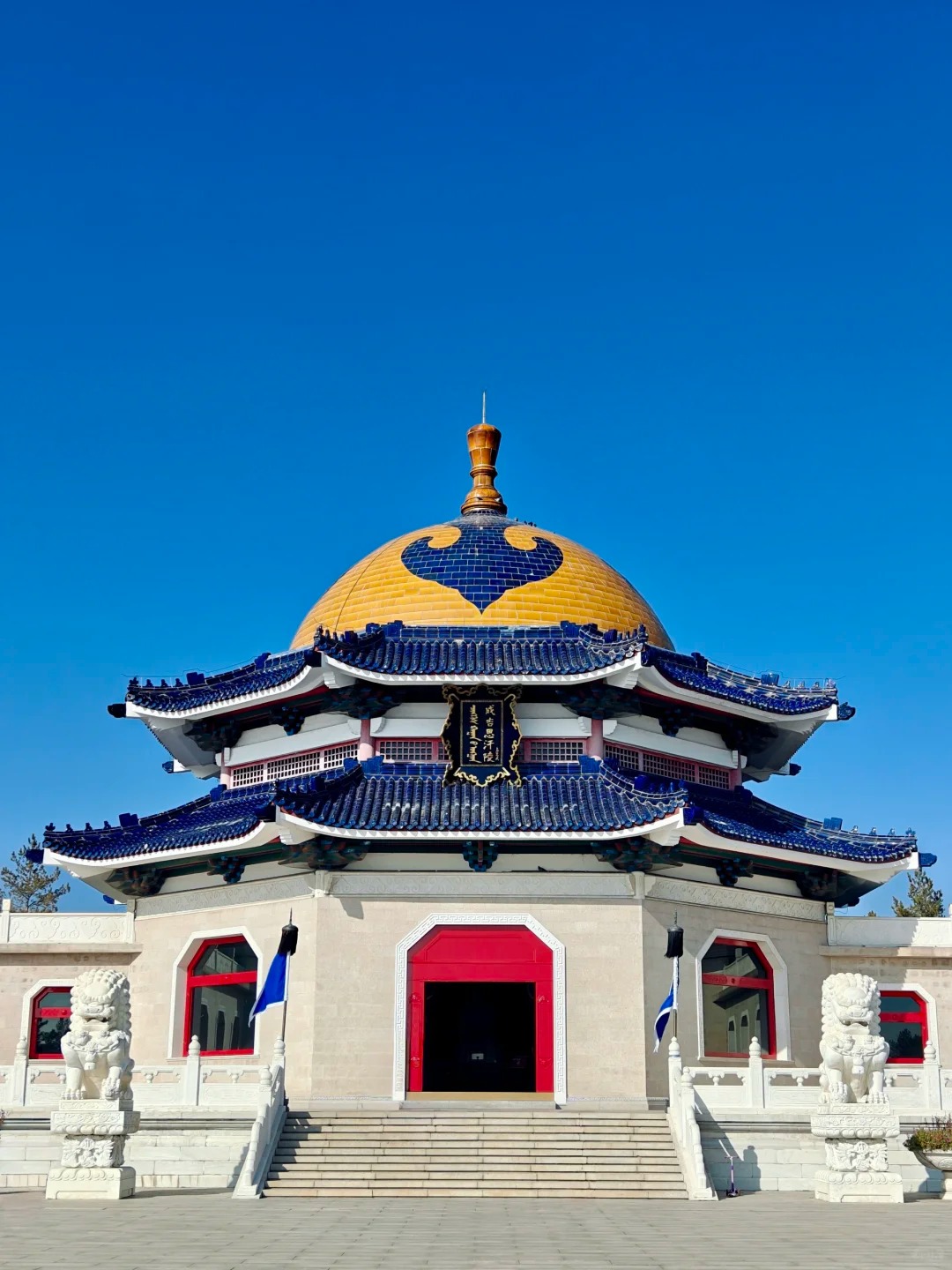
The approach is imposing. Three grand, Mongolian-style pavilions with blue-tiled roofs and white walls rise from the flat grassland. The air feels different—charged with reverence. Before entering, I was instructed on etiquette: no loud noises, no pointing, walk clockwise. The main hall is cool and dim, dominated by a massive white marble statue of the Great Khan seated in majesty. The atmosphere is thick with the smell of melted butter from lamps and the subtle fragrance of sandalwood incense. But the true focal point is in the rear chamber: the "Spirit Sanctuary." Here, within a silver shrine, rests a felt ger said to contain precious relics—saddles, bows, perhaps even a strand of hair. No one sees inside; it's the idea, the symbolic presence, that matters.
I was fortunate to witness part of a traditional sacrifice ceremony. A group of Mongolians from distant banners had come to pay respects. Dressed in their finest deels, they presented offerings of blue khadag (ceremonial scarves), milk wine, and whole roasted sheep. Chanting lamas recited scriptures, their deep, rhythmic voices filling the hall. The air grew hazy with incense. It wasn't a show; it was raw, heartfelt devotion, a direct line of reverence stretching back eight centuries. I stood silently at the back, an observer humbled by the living tradition.
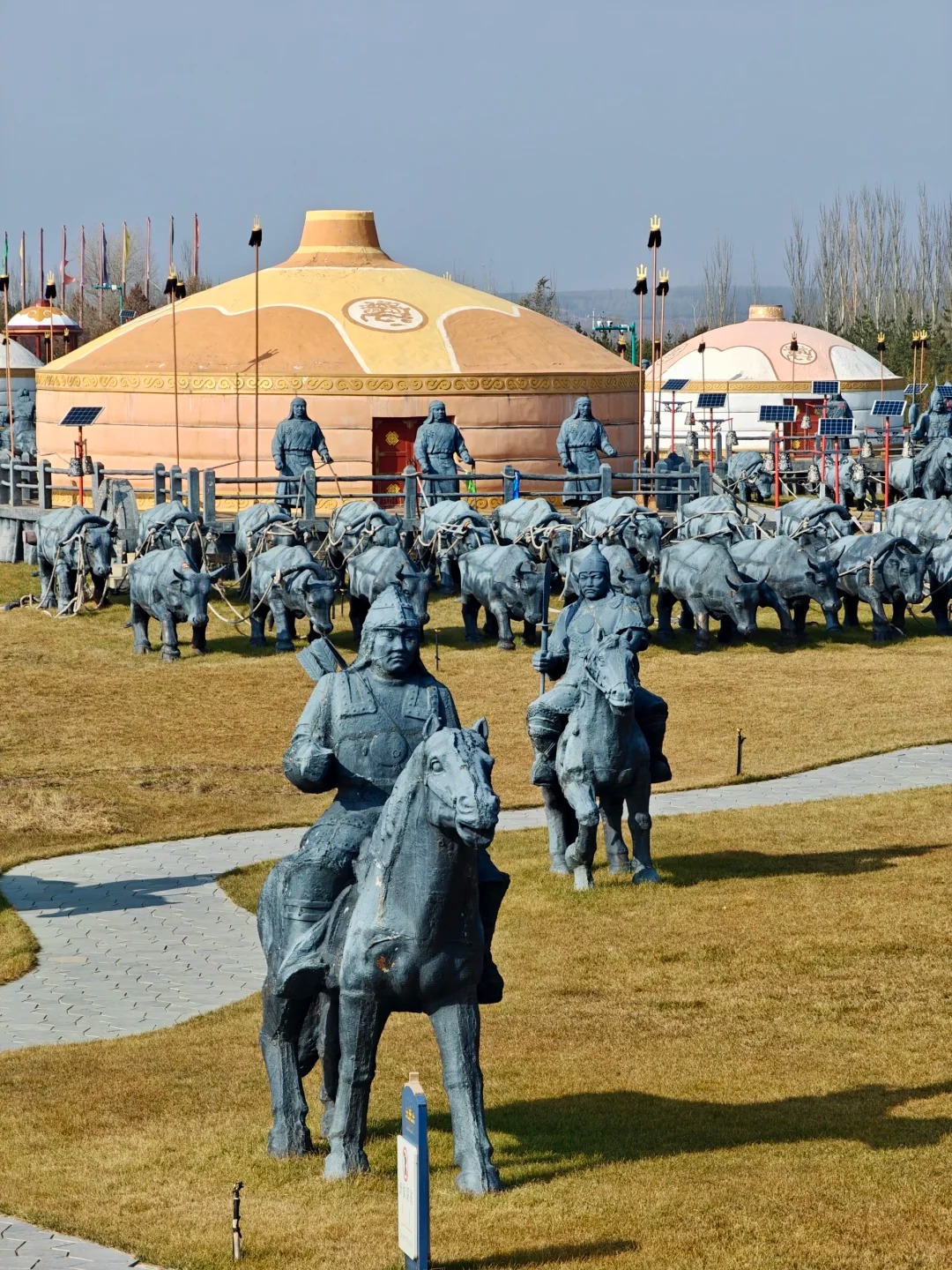
Afterwards, I wandered the surrounding grounds. In a quieter exhibition hall, I found artifacts that spoke more personally: a simple leather water flask, a rusted stirrup. These mundane objects, connected to the man rather than the myth, made him feel suddenly real. Outside, I met an elderly guard, a descendant of the Darkhad people, the traditional guardians of the mausoleum. Through a translator, he told me, "We do not guard bones. We guard his sulde (spirit banner), his will. As long as the flame burns and the rituals

continue, his spirit guides the Mongol people." His words crystallized the experience. This mausoleum is not about death or a physical grave. It's about continuity, memory, and the unbroken spirit of a people embodied in their legendary leader. I left not having seen a tomb, but having felt the enduring pulse of a nomadic civilization's heart.