I have climbed many mountains in China—Yellow Mountain for its bizarre pines, Zhangjiajie for its sandstone pillars. But Mount Wutai was different. It wasn’t the scenery that drew me here, though it is undeniably beautiful; it was the energy. As one of the Four Sacred Mountains of Buddhism in China, Mount Wutai (Wutaishan) is the abode of Manjusri, the Bodhisattva of Wisdom. I came here not just to hike, but to clear my head.
The journey started in Taihuai Town, the bustling hub at the foot of the mountains. It was a chaotic mix of pilgrims, monks in saffron robes, and tourists carrying selfie sticks. I felt a bit overwhelmed initially, wondering where the “spiritual” side was hiding. I bought a ticket and hopped onto the green sightseeing bus that winds its way up the narrow, treacherous roads.

My first stop was the Pusading Temple, located on the highest peak of Lion Head Hill. The air grew thin and crisp as we ascended. Stepping off the bus, the temperature had dropped significantly. The temple, painted in imperial yellow—a rarity signifying imperial patronage—glowed against the deep blue sky. I walked past the incense burners, where thick smoke curled into the air, and found myself in front of the main hall. The golden statue of Manjusri sat atop a lion, holding a sword that cuts through ignorance. I sat on a stone step for a while, just breathing. The view from the top was breathtaking, a sea of green valleys and distant peaks rolling into the mist. It felt like the top of the world.
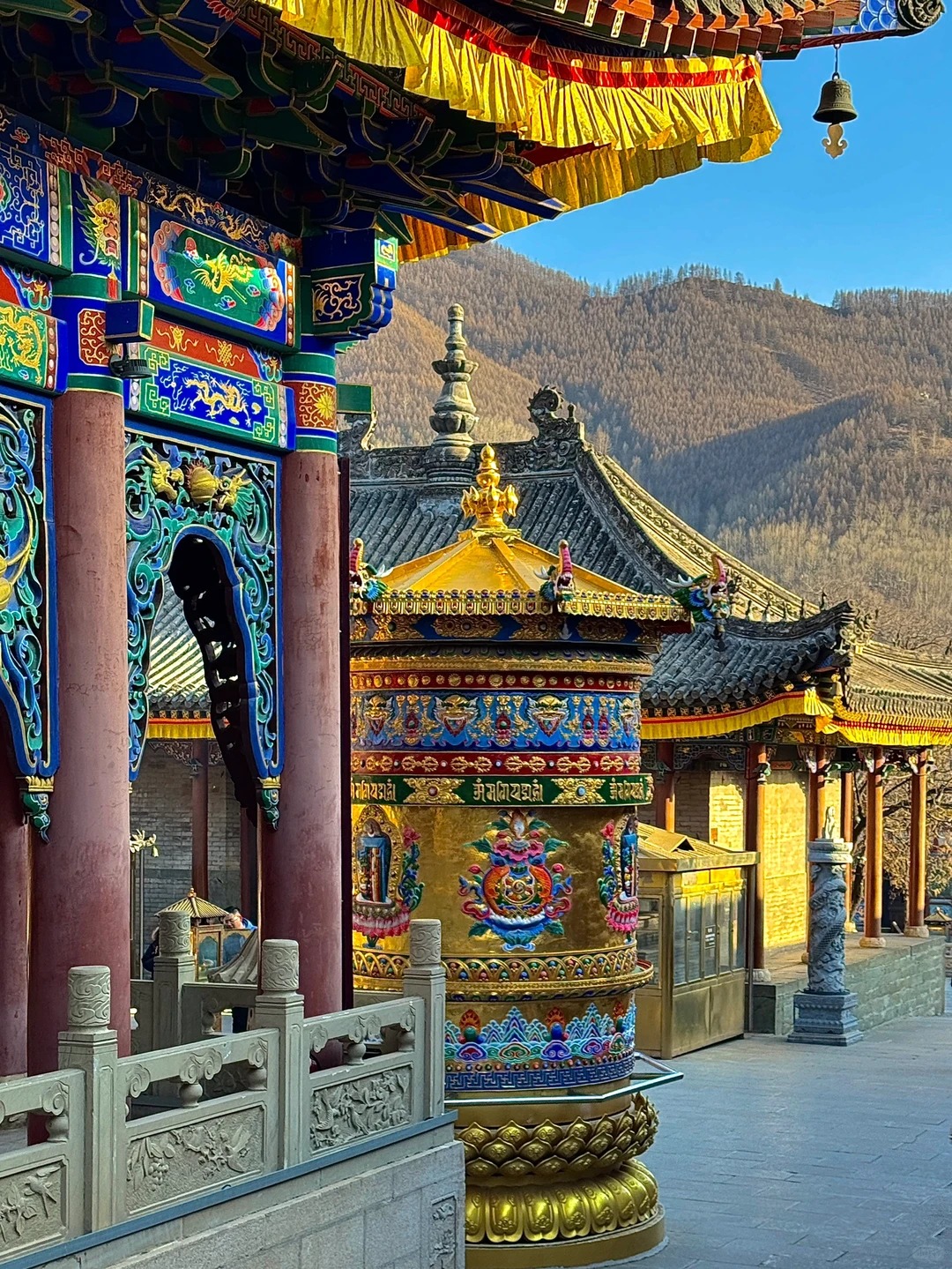
But the real magic of Mount Wutai, I found, wasn’t in the famous temples, but in the remote valleys. I decided to hike to the Dailuo Ding (Bell Tower Peak). It was a grueling climb of over 1,000 steps, known as the “Stairway to Heaven.” Halfway up, my legs were burning, and my lungs were gasping for air in the thin atmosphere. I stopped to rest at a small tea shack run by a local woman. She didn’t speak much, but she handed me a cup of hot butter tea. It was salty and rich, unlike anything I drink back home. “Drink,” she gestured, “for strength.” The hot liquid warmed my insides, and with renewed energy, I reached the summit.
The Dailuo Ding is unique. It features five pagodas, each representing one of the five peaks of Mount Wutai. It was here that I had my most profound experience. Clouds rolled in, enveloping us in thick white mist. The sound of chanting monks drifted from the main hall, blending with the tinkling of wind chimes. I couldn’t see the scenery anymore; I could only see a few feet in front of me. And in that blindness, I felt a strange sense of peace. It didn’t matter where I was going; I was just there, present in the moment.

Descending, I took a different path towards the Nanshan Temple. This is a place of architectural wonder. The layout is complex, a maze of terraces and stairs. What fascinated me here were the statues—not just of Buddhas, but of ordinary people, scholars, and even jesters, carved with incredible humor and life. It reminded me that Buddhism here isn’t just about the otherworldly; it’s deeply rooted in the human experience.
I spent the night in a simple monastery guesthouse in Taihuai Town. The rules were strict: lights out at 9 PM, vegetarian meals only. Dinner was simple tofu and greens, but it tasted better than any banquet I’ve had. That night, I fell asleep to the distant sound of a wooden bell beaten by the monks for the evening prayer. It was a deep, resonant sound that seemed to vibrate through the floorboards.
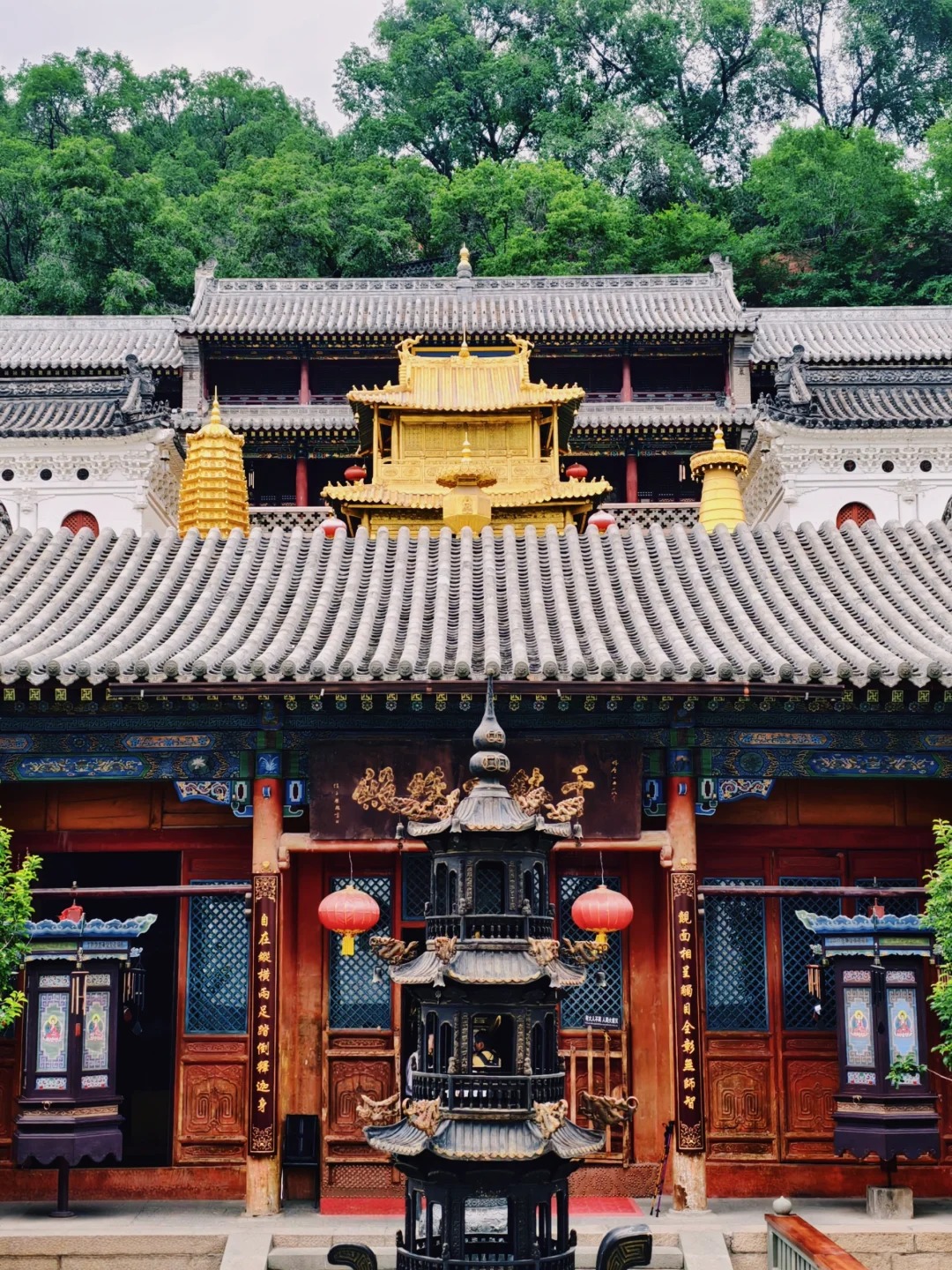
The next morning, I woke up before dawn to watch the sunrise from the East Peak. It was freezing cold. The grass was covered in frost. But as the sun broke over the horizon, painting the sky in hues of purple and gold, I saw why people have revered this mountain for thousands of years. The light hit the golden roofs of the distant temples, and for a split second, the whole mountain seemed to ignite.
Mount Wutai is not just a place for the religious. It is a place for anyone seeking perspective. Standing on those peaks, looking at the vastness of nature, the petty worries of daily life seem to dissolve. I came down from the mountain feeling lighter, as if I had left a heavy baggage behind.
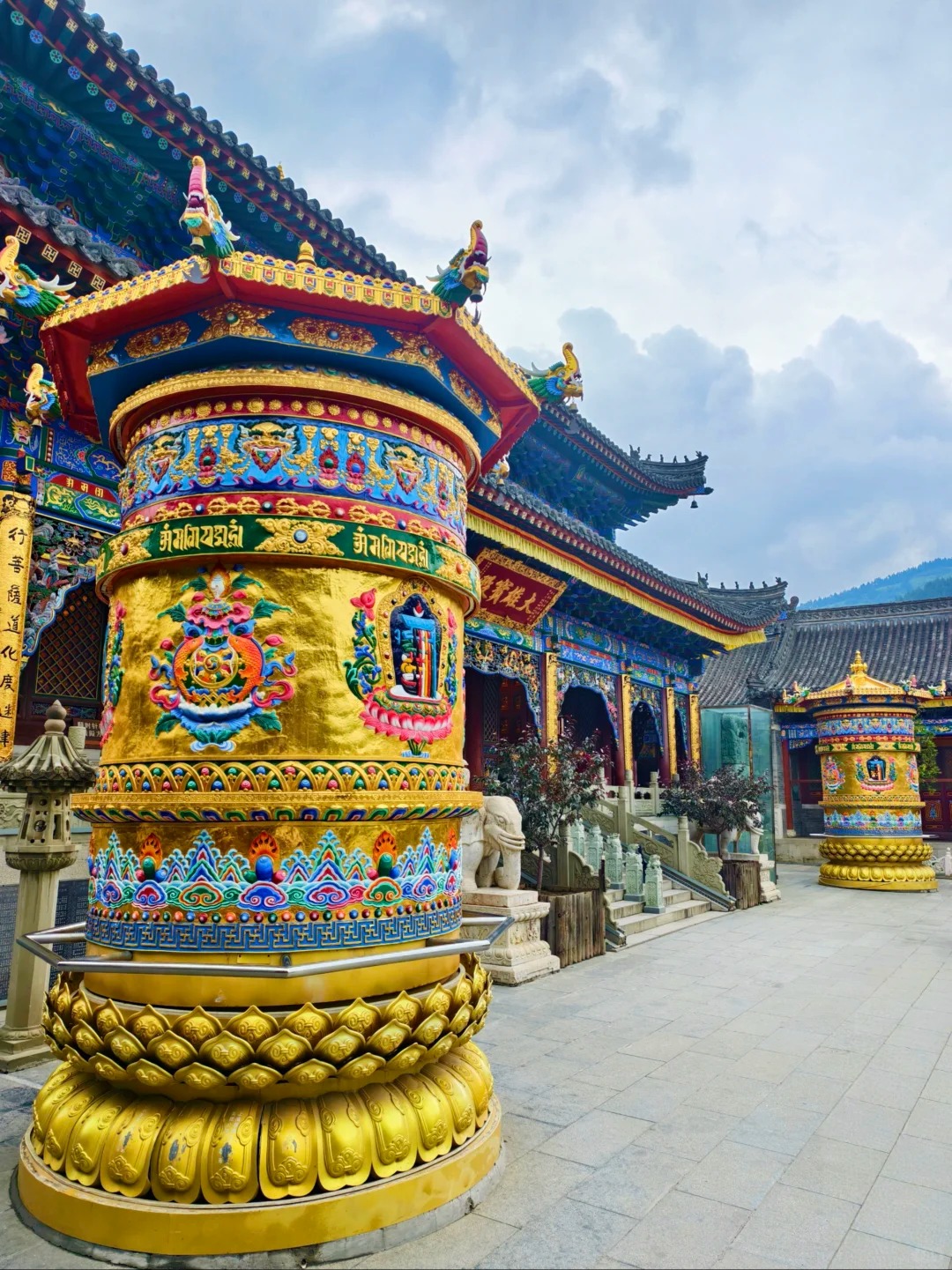
If you visit, do not rush. Skip a few temples if you have to, but find a quiet spot to sit and listen. Listen to the wind, the chanting, the silence. That is the true voice of Mount Wutai.