They say that Hailuogou is a place where fire meets ice. It sounded like a cliché until I stood shivering in a swimming trunks, neck-deep in steaming water, looking up at a massive wall of blue ice. Hailuogou Glacier Park is one of those places that defies logic. Located on the eastern slope of Gongga Mountain, the “King of Sichuan Mountains,” it is home to a glacier that descends all the way down to the forest zone. It is a clash of worlds: tropical humidity meets polar freeze.
My journey began in the town of Moxi, a quaint settlement with wooden buildings and cobblestone streets. From there, I boarded a bus that would take me up to the park entrance. As we climbed, the landscape changed rapidly. We started in a dense forest of tall trees, ferns, and hanging moss. It felt like a scene from *Jurassic Park*. The air was thick and wet. But as the bus wound its way up the switchbacks, the trees became shorter, the air thinner, and the temperature dropped. By the time we reached Camp No. 3 and transferred to the cable car, we were effectively in the clouds.
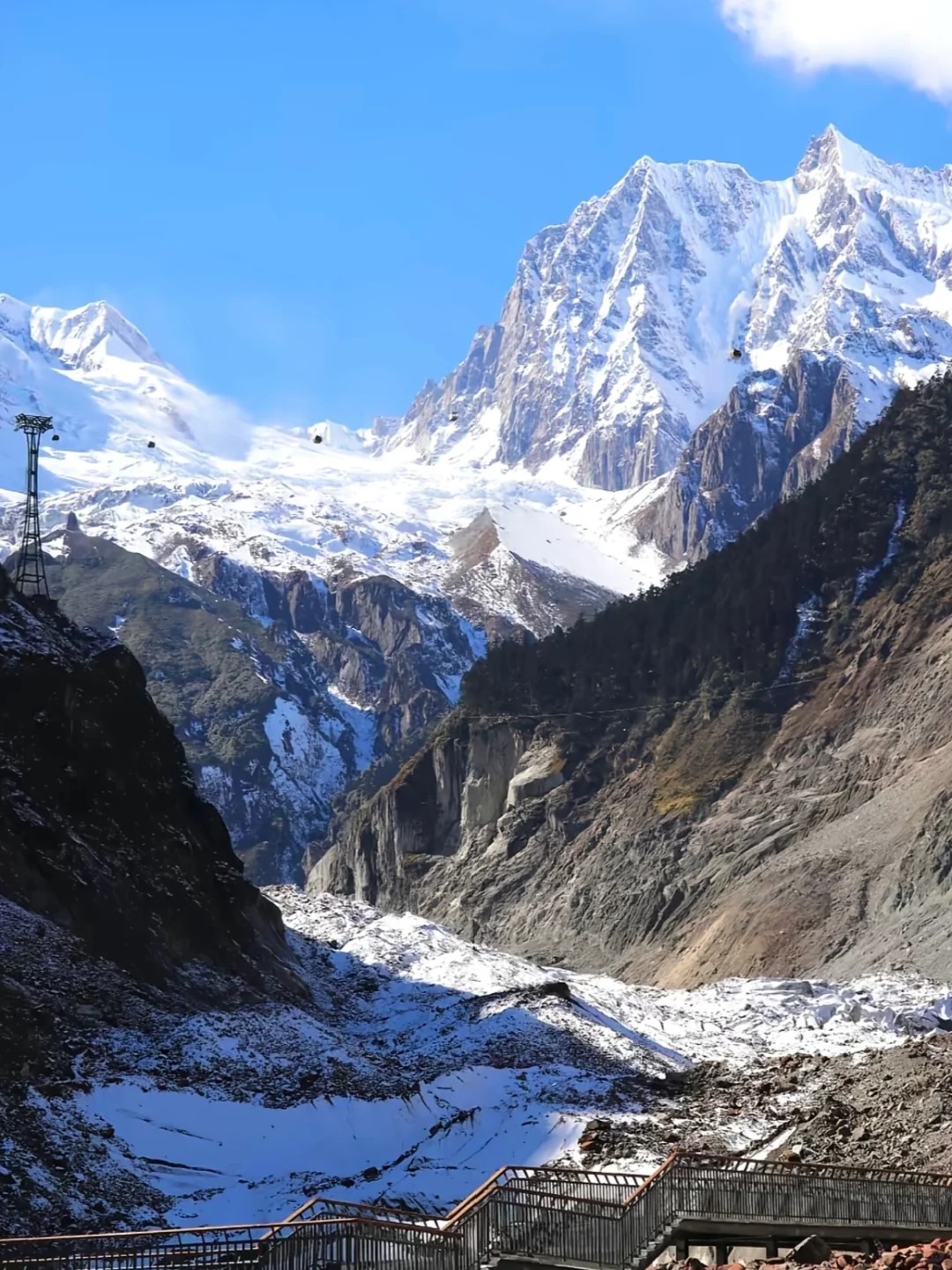
The cable car ride is an experience in itself. It doesn’t just go up; it traverses the landscape, giving you a bird’s-eye view of the ancient forest below. Through the mist, I saw the trees transition from broadleaf to fir, and finally to gnarled, windswept pines clinging to the rocks. The cable car disappeared into a thick white fog, and for a few minutes, we were suspended in a void of white. Then, suddenly, we broke through.
The view that greeted me was terrifying and magnificent. There, sprawling out before me, was the glacier. It wasn’t just a block of ice; it was a living, moving river of frozen water. The sun was hitting it, turning the surface into a blinding expanse of white and deep turquoise blue. I got off at the viewing platform, and the cold hit me instantly. It was a sharp, biting wind that cuts right through your clothing. But I couldn’t look away.
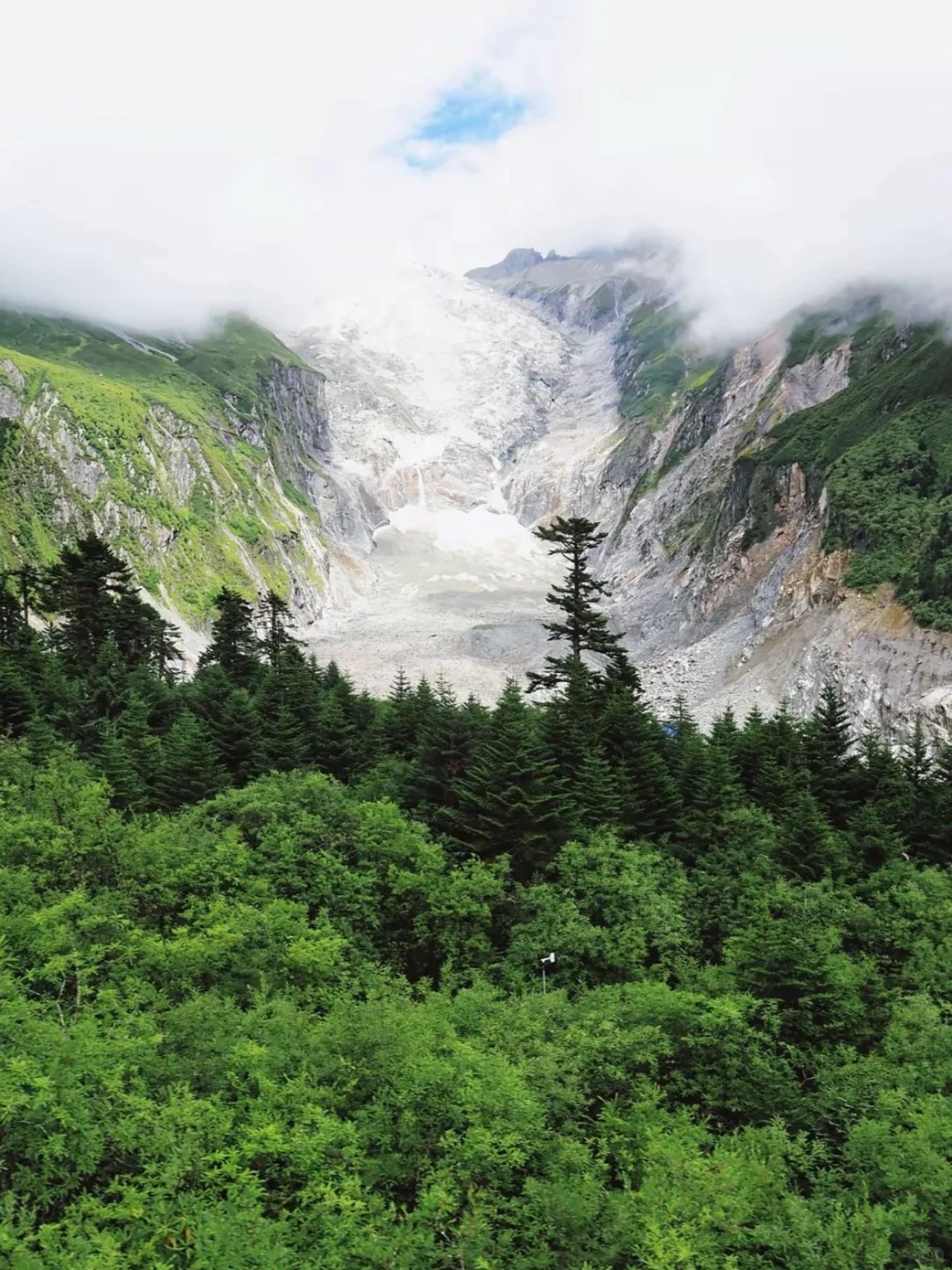
I walked toward the edge of the observation deck to see the Great Ice Fall. This is the heart of Hailuogou. The glacier drops over 1,000 meters in a vertical sweep, looking like a frozen waterfall caught in time. The surface is not smooth; it is a chaotic mess of seracs—towering blocks of ice that lean against each other like drunken giants. I stood there for a long time, just listening. Glaciers make noise. They groan, crack, and shift. I heard a deep *thud* echoing from the ice fall, followed by the sound of ice crashing down. It was a reminder that despite looking solid, this mountain is moving. It is alive.
The contrast is what makes Hailuogou so special. Usually, to see a glacier, you have to trek through barren tundra. Here, the glacier crashes right into a green forest. I saw mossy rocks and wildflowers growing just meters away from the edge of the ice. It’s a photographer’s dream—a frame of deep green pine needles and bright yellow lichens in the foreground, set against a backdrop of alien blue ice.
Later that afternoon, I descended to Camp No. 2 to visit the Hot Springs. After hours of shivering in the cold wind, this was pure bliss. The hot springs are situated in a forest, surrounded by snow-covered rocks. It was snowing lightly, big fluffy flakes drifting down. I stepped into the pool, and the heat was intense—40 degrees Celsius or more. The water was rich in minerals, smelling slightly of sulfur. I leaned my head back against the stone edge of the pool, steam rising all around me, and watched the snow land on the wooden railing. It melted instantly. The sensation of freezing air on my face and near-boiling water on my body was invigorating. It felt like I was purifying my soul.
I also took the time to explore the Coniferous Forest near the base. This part of the park is often overlooked by tourists rushing to the glacier, but it is magical. It is an old-growth forest with trees that are hundreds of years old. The silence here is profound. The light filters through the canopy in beams, illuminating the moss. I kept my eyes peeled for the famous Red Pandas that live here, though, unfortunately, I didn’t spot one. I did, however, see some spectacular pheasants and a variety of birds whose songs echoed through the woods.

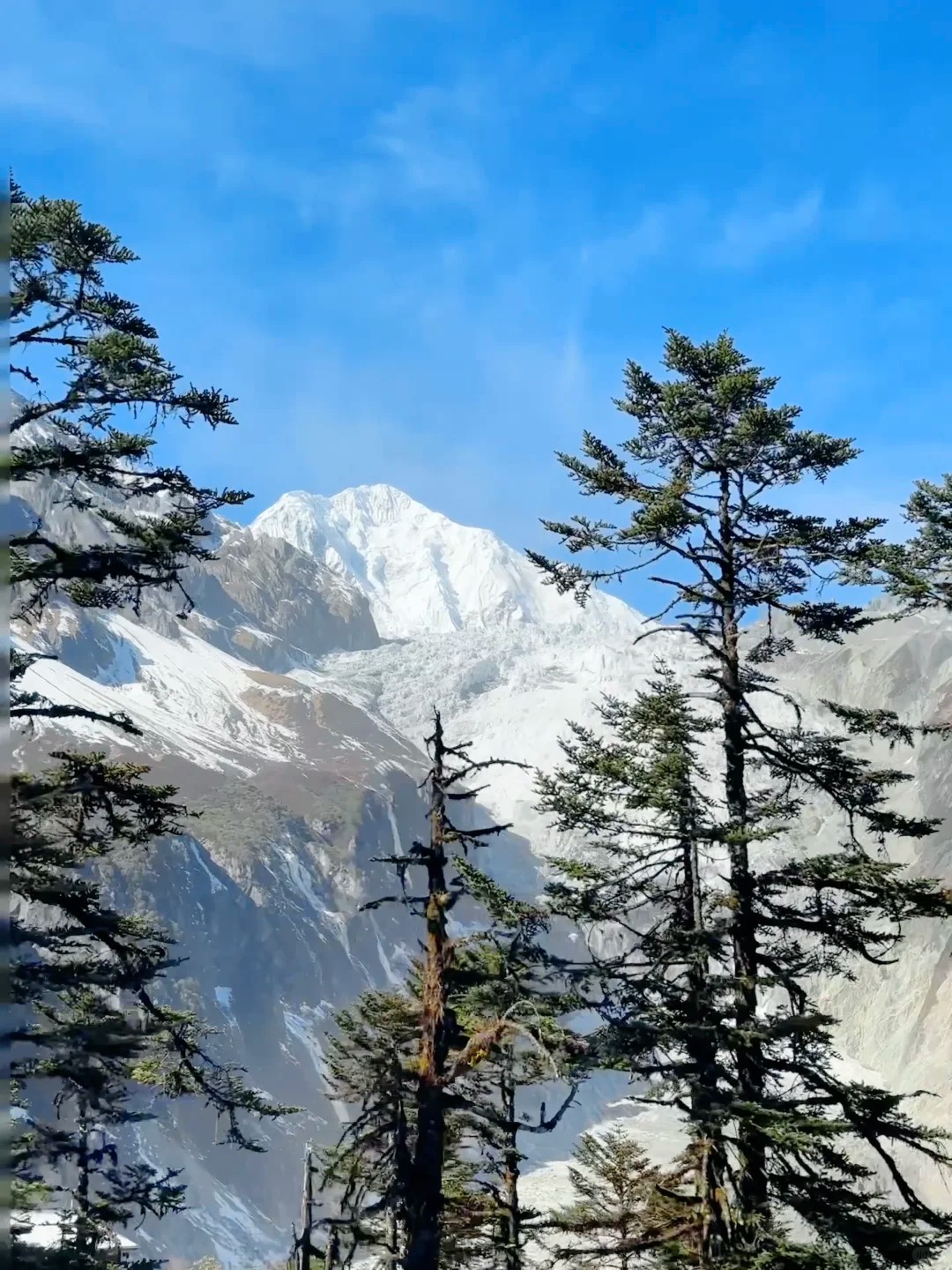
Standing at the foot of the glacier, looking up at the immense white wall, I felt a profound respect for the power of nature. The Gongga Mountain is a sacred mountain to the Tibetans. They call it “Minya Konka.” Looking at the jagged peaks piercing the sky, I understood why. It is too big, too powerful to be tamed. The glacier is just its white tongue, tasting the valley below.
Visiting Hailuogou is a journey of extremes. You sweat in the hot springs, you freeze on the observation deck, you marvel at the ice, and you breathe in the oxygen-rich air of the forest. It is a place where the elements fight each other, creating a landscape that is dramatic, dangerous, and devastatingly beautiful. If you come here, dress in layers. Bring a warm hat. And make sure you save the hot springs for last—nothing beats sitting in a steaming pool with a snow-capped peak staring down at you