By Sophie, a French wine connoisseur and cultural heritage enthusiast
As someone who spends her days analyzing the terroir of Bordeaux and Burgundy, I’ve always been fascinated by civilizations that turn “earth” into legacy—whether in a bottle of wine or a field of clay soldiers. Xian, once the capital of 13 Chinese dynasties and the eastern starting point of the Silk Road, had lingered on my bucket list for years. When I stepped off the high-speed train from Beijing (a smooth 4-hour ride), the first thing that hit me was the smell: a mix of spiced lamb, roasted chestnuts, and the faint earthiness of ancient walls. My guide, Liu Wei, met me at the station with a small clay figurine—a mini replica of a terracotta warrior. “Welcome to Chang’an,” he said, using the city’s ancient name. “Today, we’ll drink from the cup of history.”
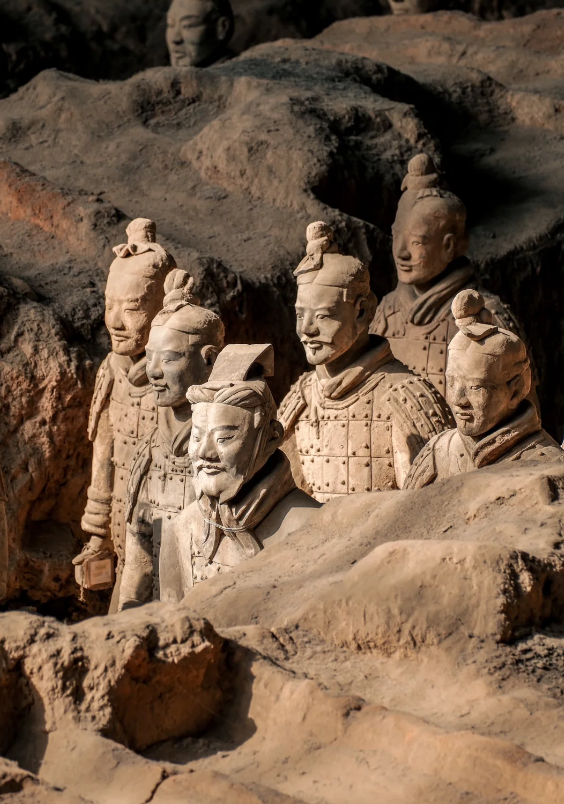
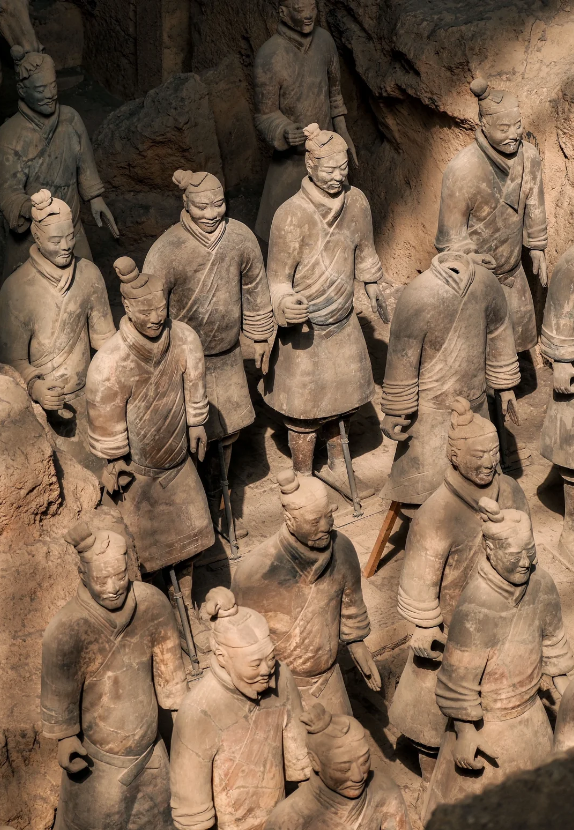
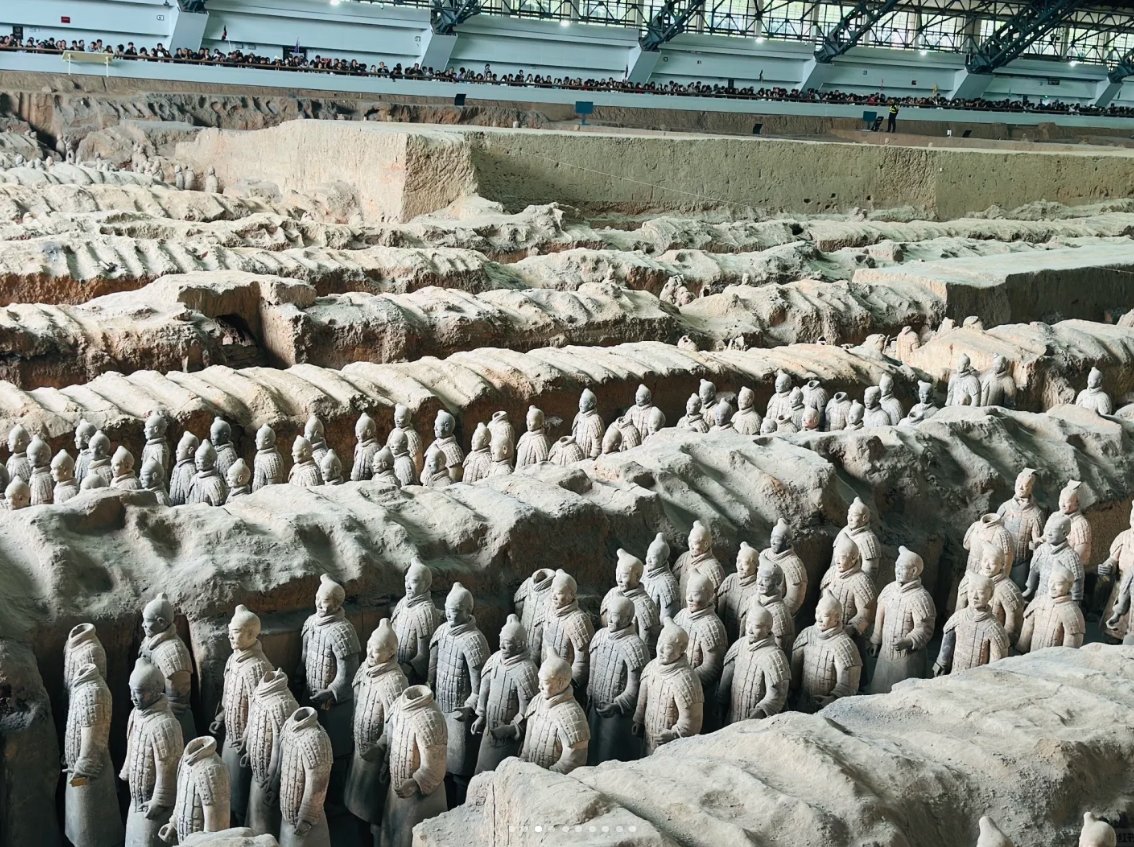
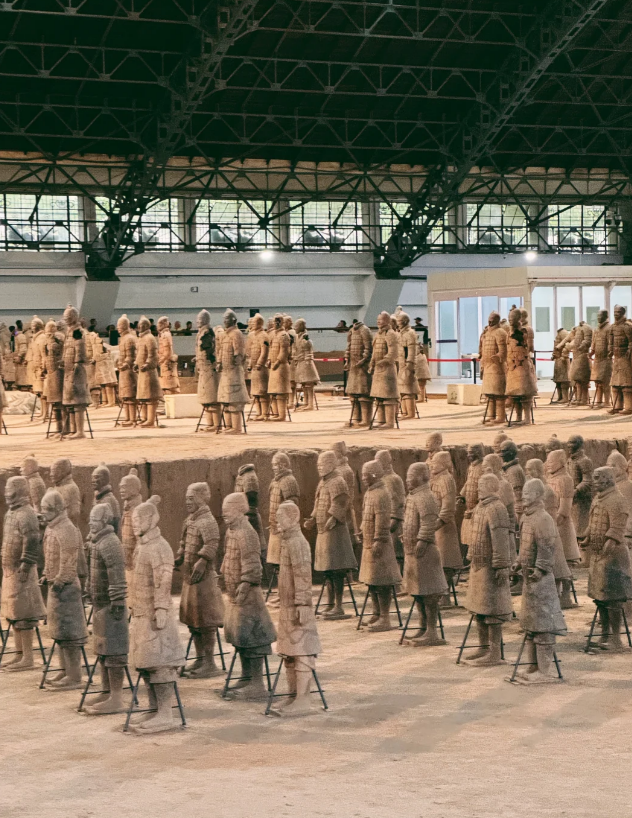
My first stop was the Terracotta Army Museum in Lintong District, 40 kilometers east of downtown Xian. As we walked toward Pit 1—the largest excavation site—I felt a flutter of anticipation, like waiting for a rare vintage to be uncorked. Then I saw them: thousands of life-sized clay soldiers, arranged in battle formation, their faces unique, their armor detailed, frozen in time for over 2,200 years. “This is the army of Qin Shi Huang, the first emperor to unify China,” Liu Wei explained, pointing to a soldier with a square jaw and furrowed brow. “Each face was modeled after a real soldier in his army—no two are the same.” I leaned in to study the details: the ridges on the soldiers’ helmets, the folds in their tunics, the calluses on their clay hands. A archaeologist was carefully brushing dust off a newly uncovered horse figurine, and I watched, transfixed, as the creature’s muscular legs emerged from the soil. “It’s like uncovering a buried civilization,” I whispered. Liu Wei nodded. “Qin Shi Huang believed these soldiers would protect him in the afterlife. He built a mausoleum here that’s larger than the Forbidden City—we haven’t even excavated half of it.”
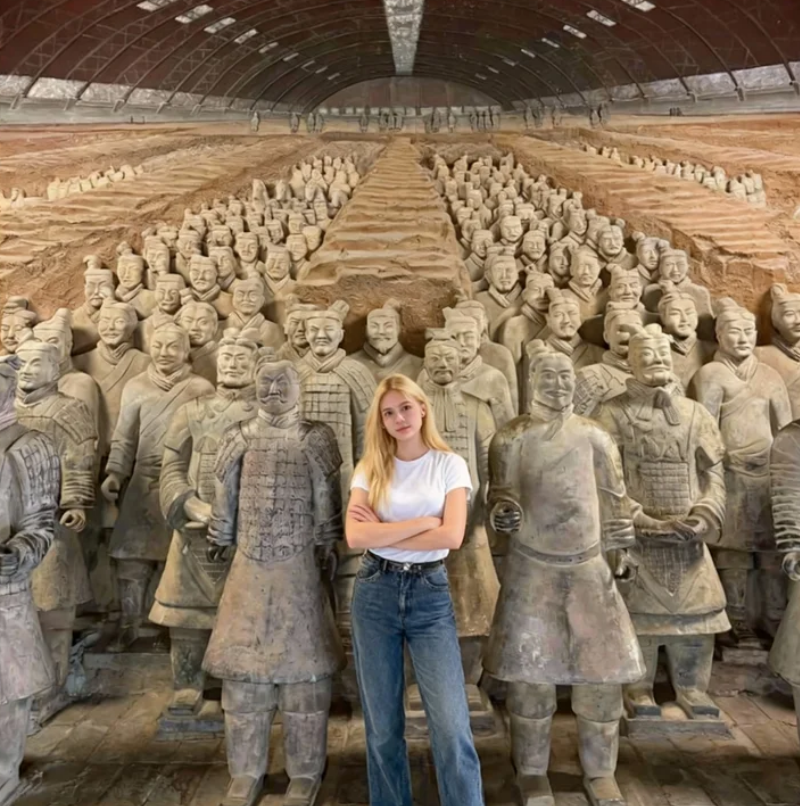
In Pit 3, the command center of the army, we saw smaller groups of officers and generals, their uniforms more elaborate than the foot soldiers. A glass case held a bronze chariot, its wheels still intact, its surface etched with intricate patterns of dragons and clouds. “This chariot was buried with the emperor to carry him in the afterlife,” Liu Wei said. “The bronze is so well-preserved, you could still see the gold plating on the handles.” As a wine connoisseur, I’m trained to notice small details—the way a wine’s aroma changes with air, the texture of tannins on the tongue—and here, those skills kicked in. I noticed how the soldiers’ stances varied (some ready to march, some holding bows), how their hairstyles indicated rank, how the clay’s color shifted from deep brown to pale gray depending on the soil it was buried in. “These soldiers are like a vintage wine,” I told Liu Wei. “Every detail tells a story about the time they were made.” He laughed. “Wait until you try the local wine—Xian has been making wine since the Han Dynasty, thanks to the Silk Road.”
By noon, the museum was crowded, so we headed to a nearby restaurant for lunch. Liu Wei ordered “yangrou paomo”—a classic Xian dish of lamb soup with crumbled flatbread. “You have to break the bread yourself,” he said, handing me a hard flatbread and a bowl. “The more you crumble it, the more flavor it absorbs.” I spent 10 minutes breaking the bread into tiny pieces, my hands getting dusty, while Liu Wei watched amusedly. When I handed the bowl back, the chef added lamb broth, shredded lamb, vermicelli, and a sprinkle of cilantro and chili oil. The first sip was a revelation: rich, savory, with a hint of spice that warmed my chest. “This dish has been around since the Tang Dynasty,” Liu Wei said. “Travelers on the Silk Road would eat it to keep warm during long journeys.” We also tried “liangpi”—cold noodles with sesame sauce and vinegar—and “roujiamo”—a meat sandwich often called “Chinese hamburger,” with tender braised pork inside a crispy bun. Every bite was a mix of flavors, like a well-balanced wine—complex, layered, and deeply satisfying.
After lunch, we visited the Qin Shi Huang Mausoleum, the emperor’s actual tomb, located a kilometer from the terracotta pits. The tomb itself hasn’t been excavated—archaeologists are waiting for technology to advance so they can preserve the artifacts inside—but the surrounding burial pits are fascinating. We saw pits filled with clay acrobats, musicians, and even horses and chariots. A sign explained that the mausoleum is surrounded by a moat of mercury, which ancient records say represents the rivers and seas. “Qin Shi Huang was obsessed with immortality,” Liu Wei said. “He sent envoys to find the elixir of life and built this mausoleum to ensure his legacy would live forever.” As we walked through the quiet gardens surrounding the tomb, I thought about how wine and tombs are both about legacy—winemakers leave their mark in bottles that age for decades, emperors in tombs that last for millennia. It was a strange connection, but it made Xian feel more intimate, more human.
That evening, we returned to downtown Xian to walk the Ancient City Wall—the best-preserved city wall in China, built during the Ming Dynasty. Stretching 13.7 kilometers, the wall is 12 meters high and 15 meters wide, wide enough for eight horses to gallop side by side. Liu Wei rented us two bicycles, and we cycled along the top of the wall as the sun set. Below us, the city came alive: locals flew kites in the square, street vendors lit up their stalls, and the towers along the wall were strung with red lanterns. We stopped at the South Gate, the most elaborate of the wall’s four gates, and watched a traditional drum performance. Drummers in Tang Dynasty costumes beat large drums in sync, their movements powerful and rhythmic, while a narrator told the story of Xian’s role as a Silk Road hub. “This gate used to be the entrance for emperors,” Liu Wei said. “Merchants from Persia, India, and Rome would pass through here, bringing silk, spices, and wine.” I closed my eyes and imagined the scene: camels loaded with goods, traders haggling in different languages, the smell of foreign spices mixing with local lamb. For a moment, time blurred—the drumbeats felt like they could have been echoing through the gate 1,000 years ago.
After cycling the wall, we went to Muslim Quarter (Huimin Street), a bustling area filled with food stalls, mosques, and souvenir shops. The quarter has been home to Xian’s Muslim community for over 1,300 years, since the Tang Dynasty, when Arab and Persian merchants settled here. We wandered through the narrow alleys, trying snacks like “sanzi” (twisted fried dough), “dates wrapped in glutinous rice,” and “spiced beef jerky.” Liu Wei took me to a small family-run restaurant for dinner, where we ate “chuanr” (grilled skewers)—lamb, chicken, and vegetables marinated in cumin and chili—and “fried rice with yangrou.” The owner, a middle-aged woman named Aisha, told me her family had run the restaurant for five generations. “My great-great-grandfather came here from Persia on the Silk Road,” she said, through Liu Wei’s translation. “He brought his recipes for grilled meat, and we’ve been adapting them to local tastes ever since.” As we ate, a group of musicians played traditional Uyghur music on the street outside, their instruments mixing with the sounds of laughter and sizzling skewers. It was chaotic, noisy, and utterly magical—exactly what I’d imagined the Silk Road would be like.
The next morning, we visited the Giant Wild Goose Pagoda, a 64.5-meter-tall Buddhist pagoda built in the Tang Dynasty to house sutras and relics brought back from India by the monk Xuanzang. The pagoda’s seven stories are made of brick, with a simple, elegant design that contrasts with the ornate temples I’d seen in Beijing. We climbed the narrow stone stairs to the top, where we had a panoramic view of Xian—ancient walls to the north, modern skyscrapers to the south, and the pagoda’s surrounding gardens below. “Xuanzang walked 10,000 kilometers to India to get these sutras,” Liu Wei said. “It took him 17 years to go and come back. The emperor built this pagoda to honor his journey.” In the garden, we watched a group of elderly locals practicing tai chi, their movements slow and graceful against the backdrop of the pagoda. A woman noticed my camera and waved, inviting me to join them. I tried to copy their gestures, clumsy at first, but soon found a rhythm. “Tai chi is like wine,” she said, through Liu Wei. “It gets better with time, and it connects you to your body and the world around you.”
After the pagoda, we visited the Shaanxi History Museum, which houses over 370,000 artifacts from Xian’s 3,000-year history. My favorite exhibit was the Tang Dynasty pottery figurines—colorful statues of court ladies, scholars, and musicians, their faces expressive and detailed. One figurine of a court lady holding a fan had intricate makeup painted on her face: red cheeks, black eyeliner, and a small red dot on her forehead, a Tang Dynasty fashion trend. “These figurines were buried with nobles to serve them in the afterlife,” Liu Wei explained. “They’re like a snapshot of Tang Dynasty life—what people wore, how they acted, what they valued.” We also saw bronze artifacts from the Shang Dynasty (over 3,000 years old), gold and silver jewelry from the Han Dynasty, and silk fabrics from the Tang Dynasty that still retained their bright colors. As I looked at a Han Dynasty wine vessel—shaped like a bird, with a narrow spout for pouring—I thought about how wine had been a part of Chinese culture for as long as these artifacts. “Did they make wine like we do in France?” I asked. Liu Wei smiled and took me to a small wine shop near the museum.
The shop, “Silk Road Wine House,” was run by an elderly man named Mr. Zhang, who specialized in traditional Chinese rice wine and grape wine made with local grapes. He poured me a glass of “huangjiu” (rice wine), a clear, amber-colored wine with a sweet, floral aroma. “This wine has been made in Xian since the Han Dynasty,” he said. “We use local rice and spring water, and ferment it in clay jars for three years.” I took a sip—it was smoother than I expected, with notes of honey and pear, and a slight sweetness that lingered on my tongue. Then he poured me a glass of grape wine made from “cabernet gernischt,” a grape variety brought to China by European missionaries in the 19th century. “Xian’s climate is perfect for grapes—hot summers, cool winters, lots of sunlight,” he said. “We’ve been making grape wine here for over 100 years, but the tradition of winemaking goes back to the Silk Road, when Persians brought grapevines here.” The wine was bold, with blackcurrant and cedar notes, similar to a Bordeaux but with a unique earthiness that I recognized from the terracotta soldiers’ clay. “This is Xian in a glass,” Mr. Zhang said. “History, soil, and tradition.”
That evening, Liu Wei took me to a Tang Dynasty-style restaurant for a farewell dinner. The restaurant was decorated with silk tapestries, Tang Dynasty paintings, and musicians playing traditional instruments. We ate “Tang Dynasty feast”—a multi-course meal that included “lotus root stuffed with glutinous rice,” “braised pork with osmanthus,” and “peach-shaped pastries” for dessert. Between courses, dancers in Tang Dynasty costumes performed a “feather dance,” their movements light and ethereal, like birds in flight. “The Tang Dynasty was Xian’s golden age,” Liu Wei said, raising his glass of huangjiu. “It was the most prosperous city in the world, a meeting point of cultures. That spirit is still here—you can taste it in the food, drink it in the wine, feel it in the walls.” As I raised my glass, I thought about my journey: the terracotta soldiers standing guard, the lamb paomo warming my soul, the tai chi movements connecting me to the present, the wine linking me to the Silk Road traders of old. Xian wasn’t just a city of history—it was a city where history breathed, where the past and present danced together like the Tang Dynasty dancers. I took a sip of huangjiu, savoring its sweetness, and knew I’d be back. After all, a civilization this rich—like a great wine—deserves to be revisited.
Travel Guide: Uncover Xian’s Ancient Secrets & Modern Charms
1. Transportation: Getting to & Around Xian
- Getting to Xian: By High-Speed Train: The most convenient way from major Chinese cities. From Beijing (4 hours, 510 yuan for second class), Shanghai (6.5 hours, 650 yuan for second class), Chengdu (3 hours, 260 yuan for second class). Xian has two main stations: Xian North Railway Station (high-speed trains) and Xian Railway Station (ordinary trains).
- By Plane: Xian Xianyang International Airport (XIY) is 25 kilometers northwest of downtown. Direct flights to major cities worldwide: Paris (12 hours), London (11 hours), Tokyo (4 hours), Bangkok (3 hours). From the airport, take the Airport Express Line to downtown (40 minutes, 16 yuan) or a taxi (80-100 yuan, 30 minutes).
Getting Around Xian: Subway: 4 lines cover most tourist attractions (Terracotta Army, Ancient City Wall, Muslim Quarter). Download the “Xian Metro” app or use Alipay/WeChat Pay for QR codes. Single rides cost 2-6 yuan. Operating hours: 6 AM-11 PM.
Taxi: Green taxis (downtown) and blue taxis (suburbs) with meters. Starting fare: 8 yuan for first 3 kilometers, 2 yuan per additional kilometer. Drivers speak limited English—have destinations written in Chinese.
Bicycle: Shared bikes (Mobike, Hellobike) are perfect for exploring the Ancient City Wall (rent on top of the wall for 45 yuan/100 minutes) or Muslim Quarter. 2 yuan per 30 minutes.
Tour Bus: Tourist Bus Line 3 goes directly to Terracotta Army from downtown (10 yuan, 1 hour). Buses leave every 30 minutes from 7 AM to 5 PM.
2. Top Attractions: Ancient Wonders & Cultural Gems
- Terracotta Army Museum (Qin Shi Huang Mausoleum Museum)Highlights: Pit 1 (main army formation), Pit 3 (command center), Bronze Chariot Exhibition. Don’t miss the 360-degree movie “The Emperor’s Dream” (10 yuan) for context.
- Tickets: 120 yuan (peak season, March-November), 100 yuan (off-season, December-February). Includes access to Terracotta Pits and Qin Shi Huang Mausoleum. Book online via “Qin Shi Huang Mausoleum Museum” official website (English available).
- Hours: 8:30 AM-6 PM (peak season, last entry 5 PM), 8:30 AM-5:30 PM (off-season, last entry 4:30 PM). Closed on Mondays (except public holidays).
- Pro Tip: Arrive at 8:30 AM to avoid crowds. Hire a professional guide (100 yuan for 2 hours) to learn the stories behind the soldiers—self-guided tours miss key details. Wear comfortable shoes—lots of walking!
Xian Ancient City WallHighlights: South Gate (most scenic, with drum performances), East Gate (least crowded), cycling along the wall. Sunset is the best time—golden light on the walls and red lanterns lit up.
Tickets: 54 yuan (adult), 27 yuan (student). Bicycle rental: 45 yuan/100 minutes (single bike), 90 yuan/100 minutes (tandem bike).
Hours: 8 AM-10 PM (South Gate), 8 AM-8 PM (other gates).
Pro Tip: Cycle from South Gate to East Gate (3 kilometers, 40 minutes)—the most scenic stretch. Avoid cycling the full 13.7 kilometers unless you’re fit! Catch the 7 PM drum performance at South Gate.
Muslim Quarter (Huimin Street)Highlights: Food stalls (yangrou paomo, liangpi, roujiamo), Great Mosque (built in Tang Dynasty, unique Chinese-Islamic architecture), traditional handicraft shops.
Tickets: Free (Muslim Quarter), 25 yuan (Great Mosque).
Hours: Food stalls 8 AM-midnight, Great Mosque 8 AM-6 PM.
Pro Tip: Avoid the main Huimin Street (tourist traps) and explore the side alleys like Xiyangshi Street for authentic food. Try Aisha’s Chuanr Stall for grilled lamb skewers—she’s been there for 20 years.
Giant Wild Goose PagodaHighlights: Pagoda itself (climb to top for views), Big Wild Goose Pagoda North Square Music Fountain (largest in Asia, 12:00 PM, 2:00 PM, 4:00 PM, 6:00 PM, 8:00 PM), Tang Dynasty Art Garden.
Tickets: 30 yuan (pagoda park), 15 yuan (climb pagoda).
Hours: 8 AM-9 PM (peak season), 8 AM-8 PM (off-season).
Pro Tip: Watch the fountain show at 8 PM (summer) for lights and music. Visit the pagoda in the morning to avoid crowds.
Shaanxi History MuseumHighlights: Tang Dynasty pottery figurines, Han Dynasty gold jewelry, Qin Dynasty bronze artifacts. The “Hall of Precious Relics” is a must-see.
Tickets: Free (adult), but must book online 3 days in advance via “Shaanxi History Museum” official website (English available). 300 free tickets per day (morning 150, afternoon 150).
Hours: 9 AM-5:30 PM (Tuesday-Sunday, last entry 4:30 PM). Closed on Mondays.
Pro Tip: Book tickets as soon as they’re released (8 AM daily)—they sell out fast. Hire a guide (80 yuan for 1.5 hours) to understand the artifacts’ history.
3. Food: Must-Try Xian Dishes & Where to Eat
Xian’s cuisine (Qin cuisine) is a mix of imperial flavors and Silk Road influences—spicy, savory, and hearty. Here are the essentials:
| Dish Name (Pinyin) | Description | Where to Eat | Price (Yuan) |
| Yangrou Paomo (Lamb Soup with Flatbread) | Crumble flatbread into lamb broth, add vermicelli, lamb, and spices | Laocheng Xiangzi Paomo (118 Beiyuanmen, Muslim Quarter—authentic since 1920) | 35-45 per bowl |
| Roujiamo (Chinese Hamburger) | Crispy bun filled with braised pork, lamb, or beef | Lao Sun Jia Roujiamo (multiple locations—try the pork version) | 8-12 per sandwich |
| Liangpi (Cold Noodles) | Wide wheat noodles with sesame sauce, vinegar, garlic, and chili oil | Wang Hai Liangpi (Xiyangshi Street, Muslim Quarter—local favorite) | 10-15 per bowl |
| Chuanr (Grilled Skewers) | Lamb, chicken, or vegetables marinated in cumin and chili | Aisha’s Chuanr Stall (Xiyangshi Street, Muslim Quarter) | 2-5 per skewer |
| Huangjiu (Rice Wine) | Sweet, amber-colored wine fermented from rice | Silk Road Wine House (near Shaanxi History Museum) | 50-100 per bottle |
4. Accommodation: Where to Stay
- Muslim Quarter Area: Perfect for food and culture. Try “Xian Traditional Courtyard Hotel” (mid-range, 500-700 yuan/night)—a restored Ming Dynasty courtyard with wooden furniture and a rooftop terrace. For budget: “Muslim Quarter Hostel” (200-300 yuan/night), clean dorms with shared kitchens.
- Ancient City Wall Area: Convenient for sightseeing. “The Ritz-Carlton Xian” (luxury, 1,800+ yuan/night)—overlooks the South Gate, with a spa and Michelin-starred restaurant. “Home Inn (South Gate Branch)” (budget, 300-400 yuan/night)—steps from the wall, free breakfast.
- Xiaozhai Area: Modern and lively, near Giant Wild Goose Pagoda. “Grand Hyatt Xian” (luxury, 1,500+ yuan/night)—close to shopping malls and metro. “7 Days Inn (Xiaozhai Branch)” (budget, 250-350 yuan/night)—affordable and clean.
5. Cultural Etiquette & Practical Tips
- Museum & Temple Etiquette: No loud talking or running in museums. Don’t touch artifacts or take photos with flash. At the Great Mosque, dress modestly (cover shoulders and knees) and remove shoes before entering prayer halls.
- Muslim Quarter Etiquette: Respect local customs—don’t eat pork in Muslim-owned restaurants. Ask permission before taking photos of locals, especially women. Don’t litter—use the trash cans provided.
- Ancient City Wall Etiquette: Keep to the right while cycling. Don’t lean on the wall edges or climb over railings. Be careful on rainy days—the stones get slippery.
- Payment: Most shops and restaurants accept Alipay/WeChat Pay. Carry 200-300 yuan in cash for small food stalls. ATMs are widely available (Visa/Mastercard accepted).
- Weather & Clothing: Spring (March-May): Mild (8-20°C), windy and dusty. Bring a mask, light jacket, and scarf.
- Summer (June-August): Hot and dry (30-38°C), occasional rain. Bring sunscreen, hat, and water bottle.
- Autumn (September-November): Cool and sunny (10-25°C)—best time to visit. Bring a sweater and jacket.
- Winter (December-February): Cold and dry (-2-10°C), rare snow. Pack a down jacket, gloves, and hat.
Language: Tourist areas have English signs. Hotel staff and young people speak basic English. Download “Google Translate” with offline Chinese pack—useful for ordering food or asking directions.
Safety: Xian is a safe city, but watch for pickpockets in crowded areas (Muslim Quarter, Terracotta Army Museum). Keep your valuables in a crossbody bag.
6. Three-Day Itinerary for Xian
Day 1: Qin Dynasty Wonders
- 1. 8:00 AM: Take Tourist Bus Line 3 to Terracotta Army Museum.
- 2. 9:00 AM: Tour Terracotta Pits and Bronze Chariot Exhibition (hire a guide).
- 3. 12:30 PM: Lunch at museum restaurant (try yangrou paomo).
- 4. 2:00 PM: Visit Qin Shi Huang Mausoleum (walk or take shuttle bus from Terracotta Pits).
- 5. 4:30 PM: Return to downtown via Tourist Bus Line 3.
- 6. 6:30 PM: Dinner at Laocheng Xiangzi Paomo (Muslim Quarter).
- 7. 8:00 PM: Wander Muslim Quarter for snacks (try liangpi and sanzi).
Day 2: Ancient City & Tang Dynasty Charms
- 8. 8:30 AM: Breakfast at Lao Sun Jia Roujiamo (try pork roujiamo).
- 9. 9:30 AM: Cycle along Xian Ancient City Wall (start at South Gate).
- 10. 11:30 AM: Visit Great Mosque (Muslim Quarter).
- 11. 1:00 PM: Lunch at Aisha’s Chuanr Stall (grilled skewers).
- 12. 2:30 PM: Visit Giant Wild Goose Pagoda (climb to top for views).
- 13. 4:30 PM: Watch music fountain show at North Square.
- 14. 6:30 PM: Farewell dinner at Tang Dynasty-style restaurant (try Tang Dynasty feast).
Day 3: History & Local Life
- 15. 9:00 AM: Visit Shaanxi History Museum (book tickets in advance).
- 16. 11:30 AM: Lunch at Wang Hai Liangpi (Muslim Quarter).
- 17. 1:30 PM: Explore Xiaozhai Shopping Mall (modern Xian, buy souvenirs).
- 18. 3:30 PM: Visit Silk Road Wine House (taste huangjiu and local grape wine).
- 19. 5:30 PM: Buy local snacks (dates, spiced beef jerky) as souvenirs.
- 20. 7:00 PM: Dinner at local restaurant (try fried rice with yangrou) before departure.