I’ve seen many beautiful beaches in my travels—white sand beaches in the South China Sea, black sand beaches in Iceland, and golden sand beaches in Australia—but none have left me as awe-struck as Panjin Red Beach in Liaoning Province. This isn’t your typical beach; instead of sand, the shore is covered with a vibrant red plant called suaeda salsa, which turns the entire coastline into a sea of red every autumn. When I arrived in Panjin in late September, the red beach was at its peak, and as I stood on the viewing platform, I felt like I was looking at a huge red carpet spread out across the land, stretching as far as the eye could see. It was a sight I would never forget.
Panjin Red Beach is located in the Liaohe Delta, where the Liaohe River flows into the Bohai Sea. The area is a wetland, and the suaeda salsa thrives in the saline-alkali soil here. The plant starts as a small green seedling in the spring, turns pink in the summer, and finally matures into a deep, vibrant red in the autumn. The red color comes from a pigment in the plant that helps it survive in the harsh saline environment. It’s a remarkable example of nature’s adaptability, and the result is one of the most beautiful natural landscapes in China.
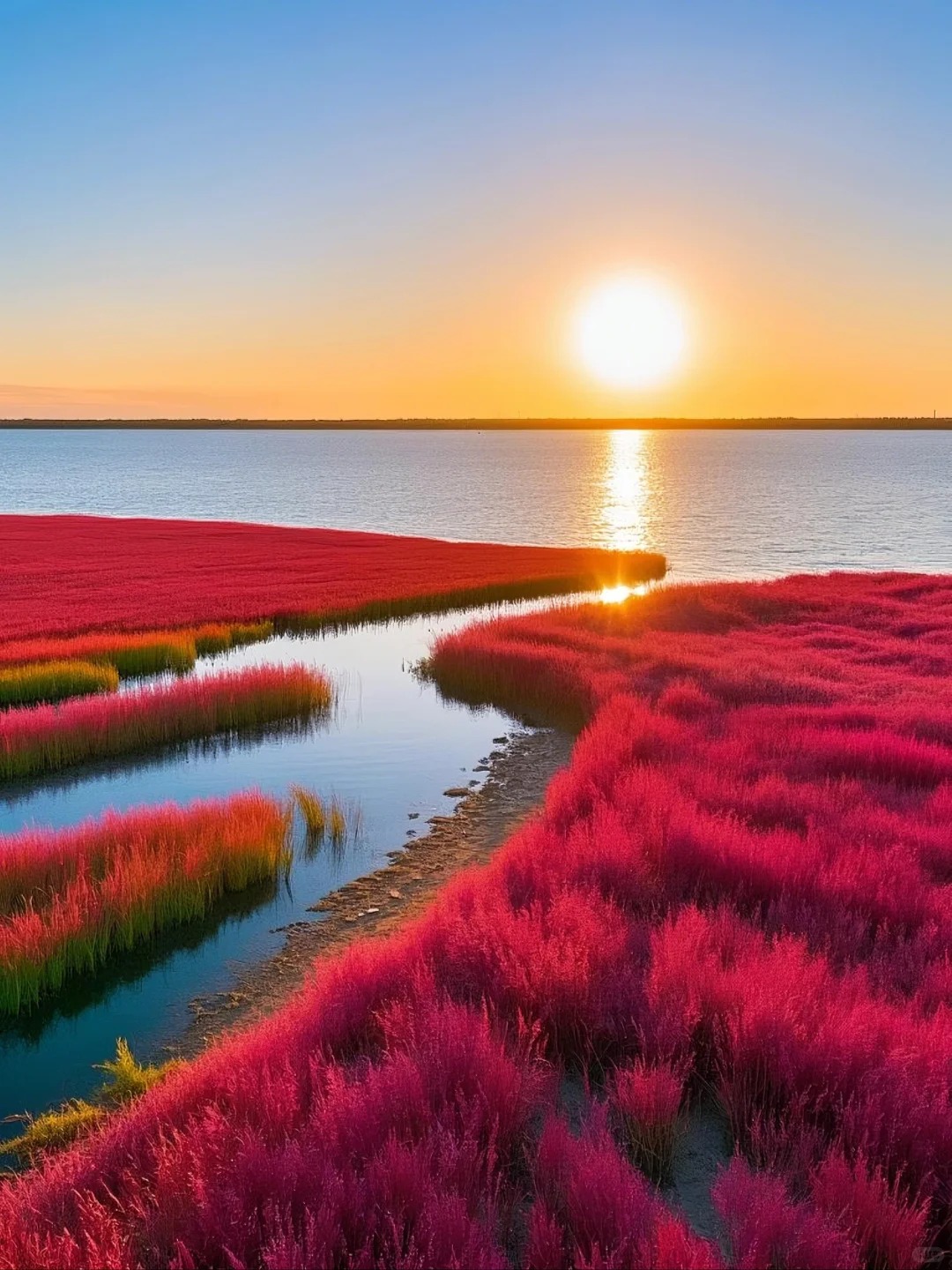
The best way to experience Panjin Red Beach is by walking along the wooden plank roads that wind through the wetland. The plank roads are elevated, so you can walk above the red plants without damaging them, and they offer stunning views of the beach and the surrounding landscape. As I walked along the plank road, the wind blew gently, carrying the salty smell of the sea and the earthy scent of the suaeda salsa. The sound of birds chirping filled the air—Panjin Red Beach is a important stopover for migratory birds, and during the autumn, you can see thousands of birds, including red-crowned cranes, geese, and ducks, flying over the wetland.
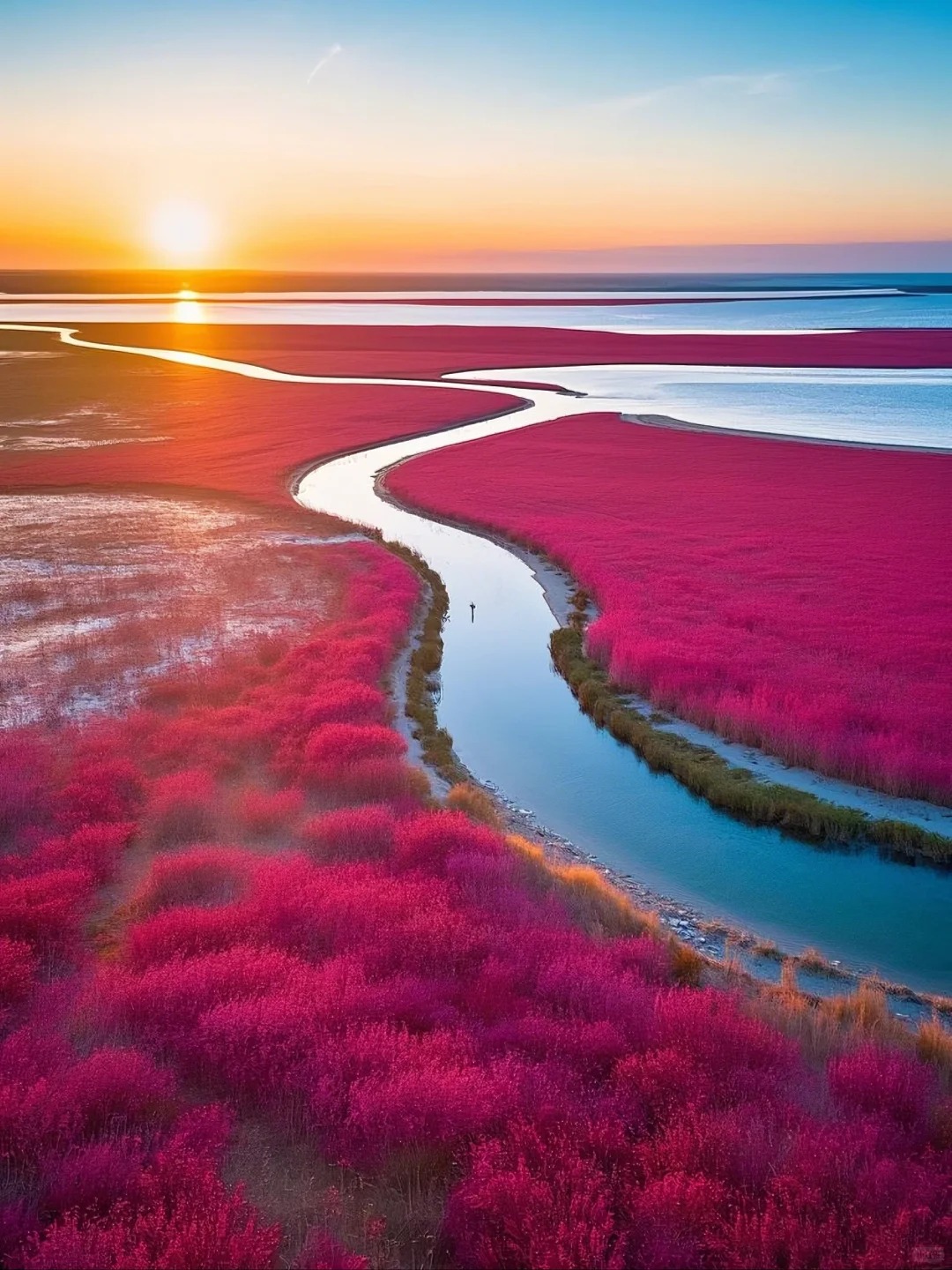
One of the most spectacular views was from the “Red Beach Scenic Area Observation Tower,” the highest point in the scenic area. From the top of the tower, I could see the entire red beach stretching out to the horizon, with the blue Bohai Sea in the distance. The contrast between the red beach, the blue sea, and the green reeds that grow along the edges of the wetland was breathtaking. I also noticed small streams winding through the red plants, their clear water reflecting the red color of the suaeda salsa, creating a beautiful mosaic of colors.
As I walked further along the plank road, I came to a section where the suaeda salsa was so dense that it looked like a red velvet carpet. I knelt down to take a closer look at the plants—they were small, with succulent leaves that were bright red. The guide told me that the suaeda salsa is not only beautiful but also edible; it’s a popular local vegetable that can be stir-fried or made into soup. I made a mental note to try it later at a local restaurant.
Another highlight of Panjin Red Beach is the “Bird Watching Pavilion,” where you can observe the migratory birds up close. I brought a pair of binoculars, and I was able to see red-crowned cranes flying gracefully in the sky, their white feathers and red crowns standing out against the blue background. There were also flocks of geese swimming in the wetlands, their honking echoing across the water. It was a beautiful sight to see these birds in their natural habitat, and it made me appreciate the importance of wetlands as a sanctuary for wildlife.
As I continued my walk, I noticed that the red beach was not just a single color—there were shades of pink, orange, and purple mixed in with the deep red, creating a gradient of colors that changed as the sun moved across the sky. In the morning, the red beach was bathed in golden light, making the colors even more vibrant. In the afternoon, as the sun began to set, the beach turned a deep, rich red, almost purple, and the sky turned pink and orange. It was like watching a painting come to life.
One of the most memorable moments of my visit was meeting a local photographer who had been coming to Panjin Red Beach for over 10 years. He told me that the best time to take photos is at sunrise or sunset, when the light is soft and the colors are most intense. He showed me some of his photos, and they were absolutely stunning—close-up shots of the suaeda salsa, photos of red-crowned cranes in flight, and panoramic views of the red beach at sunset. He also gave me some tips on where to find the best views, and I followed his advice to a small cove where the red beach curved around the water, creating a perfect frame for the sunset.
After spending the day exploring the red beach, I went to a local restaurant near the scenic area to try the suaeda salsa. The restaurant served it stir-fried with garlic, and it was delicious—crisp, slightly salty, and with a unique flavor. I also tried another local specialty, “Panjin rice crabs,” which are small crabs that grow in the rice fields around Panjin. They’re steamed and served with a soy sauce dip, and they’re sweet and tender. The meal was a perfect end to a perfect day, and it allowed me to taste the flavors of Panjin.
As I left Panjin Red Beach that evening, I felt a sense of peace and wonder. This beautiful natural landscape is a testament to the power and beauty of nature, and it’s a reminder of the importance of protecting our environment. Panjin Red Beach is not just a tourist attraction; it’s a national nature reserve that is home to a diverse range of wildlife and plants. It’s a place where you can connect with nature, relax, and be inspired by the beauty of the world around you.
If you’re planning a trip to China in the autumn, I highly recommend visiting Panjin Red Beach. It’s a unique and breathtaking landscape that you won’t find anywhere else in the world. Whether you’re a nature lover, a photographer, or just someone looking for a beautiful place to relax, Panjin Red Beach has something for everyone. And when you leave, you’ll carry with you memories of a sea of red that will stay with you forever.