They told me Shanghai was a city of the future, a fever dream of chrome and neon reaching for the heavens. They showed me pictures of skyscrapers piercing the clouds. And so, I arrived expecting only velocity, a city in fast-forward. What I found instead was a place in profound conversation with itself, a dance of yesterday and tomorrow, with the Huangpu River as its silent, flowing moderator. This is my record of a city that isn’t just seen, but felt in the pulsing gap between its two hearts.
The Waterfront Dialogues – A Promenade of Stone and Glass
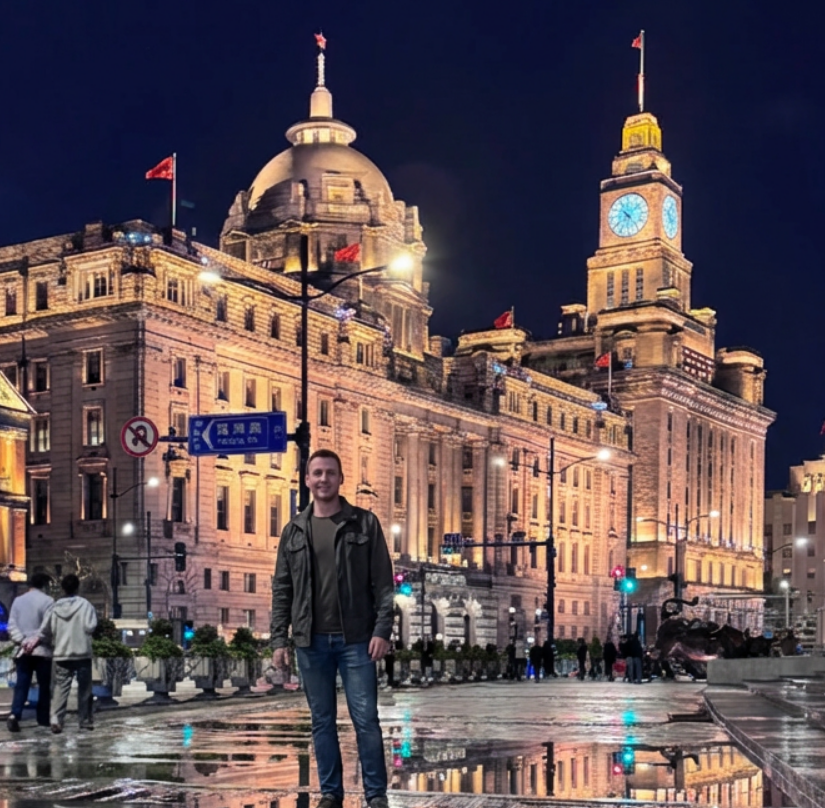
My journey began at dawn on the Bund. The famous riverfront was almost empty, the air carrying the damp, mineral scent of the water and the faint, clean smell of polished granite. To my left stood the grand, silent procession of colonial-era buildings—banks, trading houses, hotels. Their stone facades, a mix of Gothic, Baroque, and Art Deco, were softened by the morning light, looking less like monuments to foreign power and more like elegant, sleeping elders. I ran my hand over the cool, intricately carved surface of a balustrade; it felt solid, heavy with a century of weather and history.
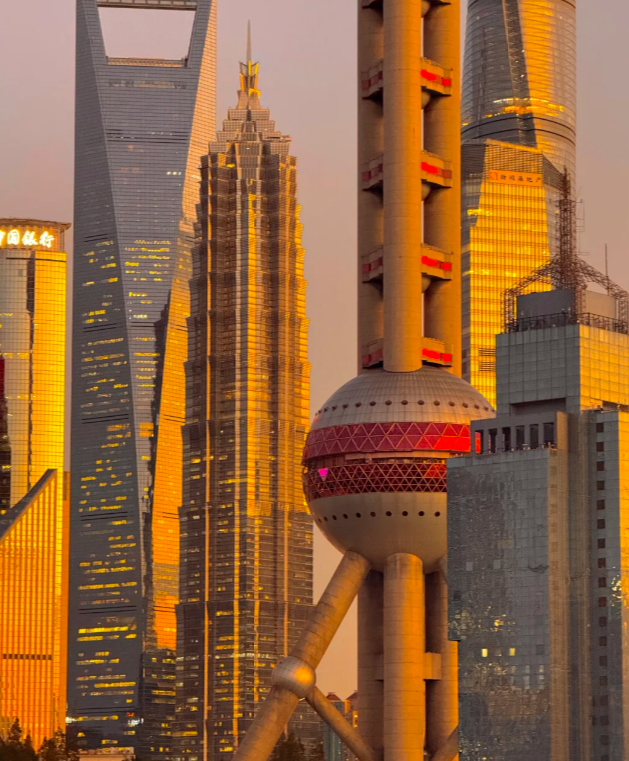
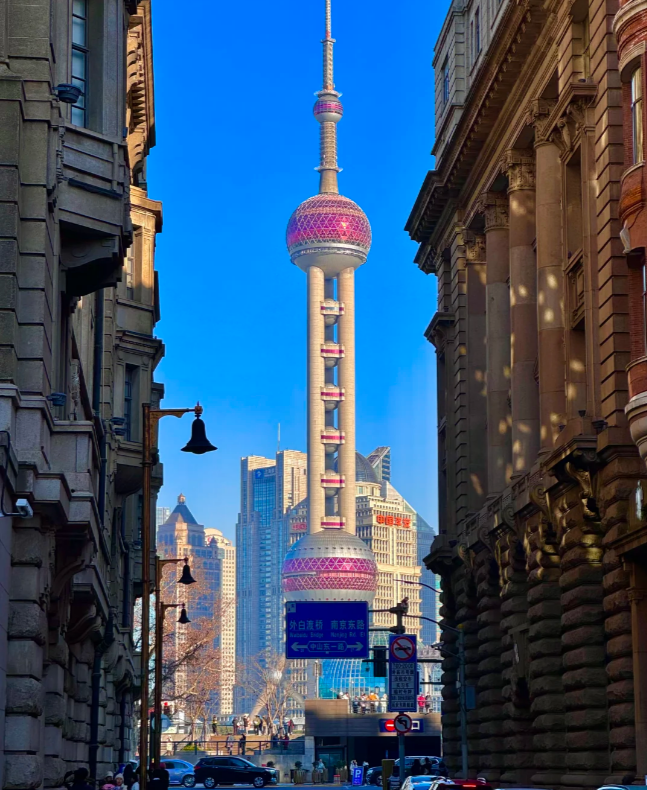
Across the river, Pudong’s skyline was a sheer cliff of modernity. The Oriental Pearl Tower, the Jin Mao Tower, the Shanghai Tower—they were silhouettes against the brightening sky, not yet glittering, but imposing in their geometric confidence. The first commuter ferries began to chug across the water, their low horns echoing between the stone canyon behind me and the glass one ahead. In that quiet hour, the Bund wasn’t a postcard. It was a stage set before the actors arrived, and the dialogue was purely architectural: the weighty, grounded declarations of the past facing the audacious, vertical questions of the future. I felt like a punctuation mark between two immense, competing sentences. I bought a steaming jianbing from a sleepy vendor, the savory egg and crispy cracker a perfect, simple counterpoint to the grand spectacle, rooting me in the practical, everyday life that flows around these icons.
Threads of Memory in the Old Town's Maze
Seeking the city’s older heartbeat, I dove into the labyrinth south of the Bund, the network of lanes they call the Old Town. The sensory shift was immediate and total. The wide, orderly riverfront gave way to narrow, winding alleyways barely wide enough for two people to pass. The air grew thick and lived-in: the smell of frying dough and star anise, the pungent tang of preserved vegetables, the faint, sweet odor of ripe fruit from overflowing baskets.
I found myself at the Yu Garden, a 16th-century jewel box hidden behind a chaotic marketplace. Stepping through its moon gate was like being swallowed by peace. Suddenly, the city’s roar became a distant murmur. Here, time moved as slowly as the golden carp gliding beneath the zigzag bridge. I sat in a pavilion, watching sunlight filter through ancient ginkgo leaves onto the dragon-ornamented walls. This was a landscape built for contemplation, for poetry and escape—a private, inward-looking world in stark contrast to the outward-facing ambition of the Bund. It spoke of a different China, one of scholars, merchants, and intricate philosophies. The sensation was one of profound intimacy, of being allowed into a carefully kept secret. Later, wandering the packed lanes of the bazaar outside, surrounded by the chatter of hagglers and the clatter of mahjong tiles from open windows, I understood this wasn’t a museum. It was a living, breathing organism, where history wasn’t preserved behind glass but was woven into the very fabric of drying laundry, shared meals, and shouted greetings from balcony to balcony. The past here was not a monument, but a neighbor.
Under the Canopy – Whispers of a Leafy Republic
Yearning for a different rhythm, I spent a day getting lost in the former French Concession. Here, the city’s texture changed again. The frantic energy softened into a leafy, sun-dappled repose. The streets were lined with platanus trees, their mottled bark and broad leaves creating a cathedral ceiling overhead. The architecture was a charming, faded symphony of Art Deco apartment blocks, Spanish-style villas with red-tiled roofs, and shikumen stone-gate houses.
I walked down quiet, residential lanes where bicycles leaned against garden walls draped in blooming wisteria. The air smelled of damp earth and coffee from hidden cafés tucked into renovated garage spaces. I visited a small, independent bookstore in a converted lane house, its shelves a mix of political treatises, translated poetry, and graphic novels. In a quiet square, I watched elderly men practice slow-motion tai chi beside young professionals chatting over laptops in a trendy juice bar. This district felt like Shanghai’s living room—a space of assimilation and quiet reinvention. It held the ghosts of revolutionaries, writers, and refugees who once walked these same lanes, but their whispers were now blended with the gentle tapping of keyboards and the frothing of cappuccino machines. It was history repurposed with a bohemian, cosmopolitan grace. Sitting on a park bench, I felt a sense of spaciousness, not of sky, but of possibility. This was a Shanghai that curated its own pace, proving the city’s soul wasn’t monolithic but wonderfully, complexly layered.
The Vertical Frontier – A View from the Clouds
To keep my promise to the future, I ventured into Pudong. Crossing the river on the sleek, transparent观光隧道 (sightseeing tunnel) felt like being shot into a sci-fi film. Emerging in Lujiazui was like stepping onto a different planet. The scale was inhuman, glorious, and slightly terrifying. The wind whipped between the towers, creating a low, constant hum. People moved with purpose, their faces lit by the glow of smartphone screens.
I ascended the Shanghai Tower, the world’s second-tallest building. The elevator pressed on my eardrums as we soared upward at heart-stopping speed. The observation deck offered a view that defied belief. The city sprawled in every direction, a geometric circuit board of gray, green, and glittering blue. The Huangpu was a silent, brown ribbon, the Bund a delicate, miniature model. The vastness was disorienting. The noisy, smelly, tactile city I had been exploring for days was now utterly silent, clean, and abstract—a map of itself. It was breathtaking, but it also created a strange loneliness. The human stories, the sizzle of street food, the touch of old stone—all were reduced to pattern and light. Up here, Shanghai was pure idea, pure ambition. It was a necessary perspective, a reminder of the sheer audacity of the project this city represents. But as I looked down, my eyes instinctively sought the green pockets of the French Concession and the dense, gray knot of the Old Town, finding comfort in the human-scale mysteries they still held.
The Night River – Where All the Conversations Merge
My pilgrimage ended where it began, back on the Bund, but this time at night. The transformation was absolute. The historical buildings were now bathed in a golden, theatrical light, each architectural detail exalted. They looked proud, even haughty, asserting their enduring beauty. But across the river, Pudong had unleashed its full arsenal of luminescence. Towers pulsed with animated LED displays, glowed in neon blues and cool whites, and speared the darkness with beams of light. The river itself became a black mirror, doubling the spectacle, making the city seem infinite.
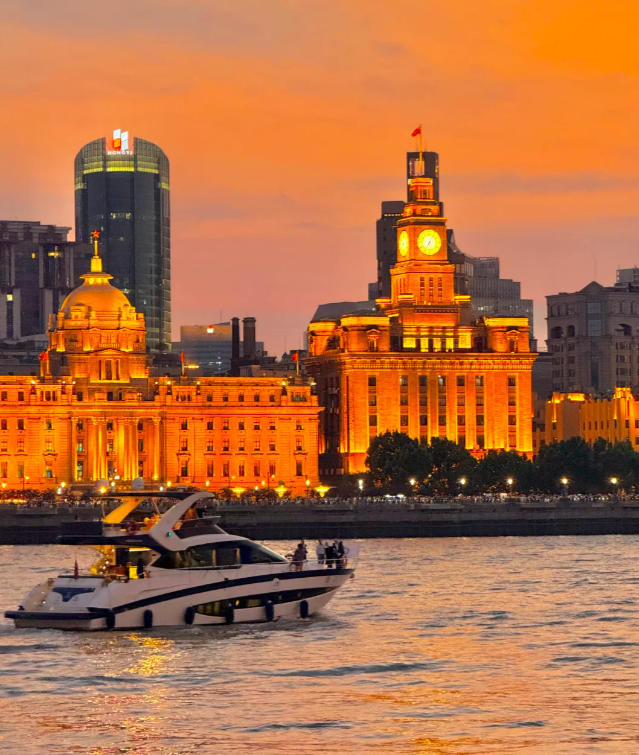
The crowds were thick now, a river of humanity flowing alongside the water. Languages from every continent swirled in the air, mixed with the click of cameras and the exclamations of awe. I found a spot by the railing and simply watched. The day’s experiences—the weight of history, the labyrinth of daily life, the leafy repose, the dizzying verticality—all coalesced here. The two skylines weren’t arguing anymore; they were performing a magnificent, coordinated duet for the night. One played the sonata of solid, earned grandeur; the other, the symphony of electric, unbounded dream.
And I, in the middle, finally understood. Shanghai is not a city choosing between its past and its future. It is a city powered by the tension between them. The Huangpu isn’t just a river; it’s the current that carries this vital, endless conversation. The past gives the future its depth and gravity; the future gives the past a reason to shine anew. You don’t come to Shanghai to see the old or the new. You come to stand on the knife-edge of *now*, in the thrilling, noisy, beautiful space where both are constantly, brilliantly, being remade. I left not with a collection of sights, but with a sensation—the hum of a metropolis forever in the act of becoming, a river of time made stone and light.