By Tom, a Canadian cultural scholar specializing in East Asian ethnic minorities
As someone who’s spent years studying China’s ethnic minority cultures, Lijiang has long been at the top of my travel list. This mountainous city in Yunnan Province is home to the Naxi people, whose unique language, architecture, and traditions have survived for centuries—even as tourism has grown. My journey began with a two-hour flight from Shanghai to Lijiang Sanyi Airport, and from the moment I stepped off the plane, I felt the difference: the air was crisp with the scent of pine, and the distant Jade Dragon Snow Mountain glistened under the blue sky. A driver from my pre-booked Naxi homestay picked me up, and as we wound through the countryside, he pointed out terraced fields and Naxi villages with white walls and black-tiled roofs, their eaves curved like the wings of birds.

My homestay, “Jade Water Inn,” was tucked in the heart of Lijiang Ancient Town, away from the busiest tourist streets. The owner, A-ma, a 60-year-old Naxi woman with silver earrings and a traditional “seven-star” jacket, greeted me at the door with a bowl of suyou tea—a bitter-sweet herbal tea that Naxi people serve to welcome guests. “Drink this,” she said, her eyes crinkling with a smile. “It will help you adjust to the altitude.” The inn was a traditional courtyard house with a central fountain where goldfish swam, surrounded by rooms with wooden floors and paper windows. My room had a view of the ancient town’s rooftops, and at night, I could hear the sound of a nearby stream flowing over stones.
A-ma insisted I start my day with a Naxi breakfast: zongzi (glutinous rice wrapped in bamboo leaves, filled with sweet red bean paste), youtiao (fried dough sticks), and a plate of pickled vegetables. As I ate, her grandson, Xiao-he, who spoke fluent English, explained the significance of the food. “Zongzi is for good luck,” he said. “Our Naxi ancestors ate it before going on long journeys along the Tea Horse Road.” After breakfast, Xiao-he offered to be my guide for the morning, and we set off to explore the ancient town’s labyrinthine alleys. Unlike the crowded main streets lined with souvenir shops, the back alleys were quiet, with locals hanging laundry from their windows and old men playing a traditional board game called “elephant chess” outside their doors.
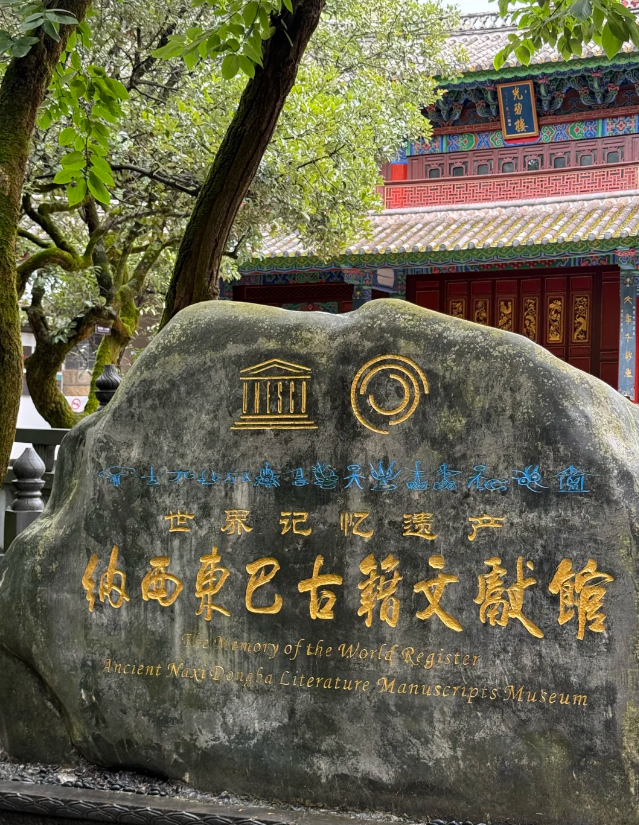
Our first stop was the Mufu Palace, the former residence of the Naxi chieftain during the Ming and Qing dynasties. The palace is a masterpiece of Naxi architecture, with carved wooden beams depicting scenes from Naxi mythology and courtyards filled with peonies. A Naxi guide led us through the palace, explaining how the layout reflected Naxi social structure—men’s quarters on the east side (symbolizing the sun) and women’s quarters on the west side (symbolizing the moon). I was particularly fascinated by the palace’s library, which houses ancient Naxi manuscripts written in the Dongba script—the only living hieroglyphic language in the world. The guide showed us a manuscript about the Naxi creation myth, and I spent 20 minutes tracing the characters with my finger, marveling at how a language could survive for so long.
By mid-morning, we made our way to the Black Dragon Pool Park, a scenic spot at the foot of Elephant Hill. The park’s main attraction is the Black Dragon Pool, whose clear waters reflect the Jade Dragon Snow Mountain on sunny days. Xiao-he told me that the Naxi people consider the pool sacred, and in the past, they would hold ceremonies here to pray for rain. We sat on a stone bench by the pool and watched a group of Naxi women singing traditional songs in their native language. Their voices were high and clear, and even though I couldn’t understand the words, I felt the emotion in their melody. One of the women noticed me listening and waved me over, offering me a piece of sugarcane. “This is from our village,” she said through Xiao-he’s translation. “We grow it ourselves.”
For lunch, A-ma had prepared a traditional Naxi feast at the inn: braised pork with wild mushrooms, stir-fried bamboo shoots, and a dish called “eight-treasure soup” made with local herbs and dried fruits. The highlight was the “Naxi bacon,” which had been cured for six months and sliced thin. It was salty and smoky, with a hint of pine from the wood used to cure it. As we ate, A-ma told me stories about her childhood in the ancient town. “When I was a girl, there were no cars here,” she said. “We walked everywhere, and the streams were so clear we could catch fish with our hands.” She lamented the growth of tourism but said she was glad that young Naxi people like Xiao-he were learning to preserve their culture while sharing it with visitors.
In the afternoon, I had booked an East Ba paper-making workshop at the Naxi Culture Center—a 20-minute walk from the ancient town. The workshop was run by Master Li, a 70-year-old Naxi man who had been making Dongba paper for 50 years. He showed me the traditional process, which involves soaking mulberry bark in water for three months, beating it into pulp with a wooden hammer, and spreading the pulp on a bamboo screen to dry. “Dongba paper is strong and durable,” Master Li said, handing me a piece of paper that was over 100 years old. “It’s why our ancient manuscripts have survived.” I spent an hour making my own piece of Dongba paper, pressing it with a stone and hanging it to dry. Master Li wrote a Naxi character meaning “peace” on it with ink, and I decided to frame it as a souvenir.
After the workshop, Xiao-he took me to the Tea Horse Road Museum on the outskirts of the ancient town. The museum tells the story of the Tea Horse Road, a network of trade routes that connected Yunnan Province with Tibet and South Asia for over 1,000 years. Naxi merchants would lead caravans of horses loaded with tea leaves to Tibet, exchanging them for salt and wool. The museum has exhibits of ancient tea chests, horse saddles, and maps of the routes. A short film about the Tea Horse Road brought the history to life—showing merchants braving snow-capped mountains and dangerous rivers. “My great-grandfather was a tea merchant,” Xiao-he said. “He spent six months a year on the road. It was hard work, but it’s how our family made a living.”

As the sun began to set, we walked back to the ancient town and climbed to the top of Lion Hill, a small hill with a panoramic view of the town. The rooftops were bathed in golden light, and the sound of temple bells echoed through the valleys. Xiao-he pointed out the ancient town’s layout, which was designed to resemble a big inkstone—with the streams as ink and the alleys as brush strokes. “Our ancestors were very clever,” he said. “They built the town to work with nature, not against it.” We stayed until dark, watching as the ancient town’s lanterns lit up one by one, turning the alleys into rivers of light.
That night, A-ma invited her neighbors over for a traditional Naxi dinner. We sat around the courtyard fountain, eating and drinking rice wine. The neighbors sang Naxi folk songs and played traditional instruments—the erhu (a two-stringed fiddle) and the pipa (a four-stringed lute). One of the neighbors, an old man who had been a horse caravan leader in his youth, told stories of his journeys on the Tea Horse Road. He talked about sleeping under the stars, fighting off bandits, and sharing tea with Tibetan monks. I listened, transfixed, as his stories brought the ancient trade route to life.
Before I went to bed, A-ma gave me a small bag of herbs. “Put this under your pillow,” she said. “It will help you sleep well. Tomorrow, we can go to the countryside to pick tea.” As I lay in bed, listening to the stream outside and the distant sound of a Naxi song, I thought about how different Lijiang was from the other cities I’d visited in China. Beijing had its imperial history, Shanghai its modern charm, but Lijiang had something else— a living, breathing culture that had been passed down from generation to generation. It wasn’t just a tourist destination; it was a home.
Travel Guide: Exploring Lijiang Like a Local
1. Transportation: Getting to & Around Lijiang
- Getting to Lijiang: The most convenient way is by plane—Lijiang Sanyi Airport (LJG) has direct flights from major cities like Beijing, Shanghai, and Guangzhou. A one-way flight from Shanghai takes about 2 hours, and from Beijing about 3 hours. You can also take a high-speed train from Kunming (the capital of Yunnan Province) to Lijiang— the 3.5-hour ride offers scenic views of Yunnan’s mountains and valleys.
- Getting Around Lijiang: Ancient Town: Motor vehicles are not allowed inside the ancient town, so you’ll have to walk or take a rickshaw. Rickshaws cost about 10-20 yuan for short trips within the town.
- Between Attractions: Taxis are available outside the ancient town. A ride from the ancient town to the Tea Horse Road Museum costs about 30 yuan. You can also rent a bicycle (20-30 yuan per day) to explore the surrounding countryside.
- To Jade Dragon Snow Mountain: The snow mountain is about 25 kilometers from the ancient town. You can take a public bus (15 yuan one-way) from Lijiang Bus Station, or book a day tour with a local agency (about 300 yuan per person, including tickets and transportation).
2. Top Attractions: What to See & Experience
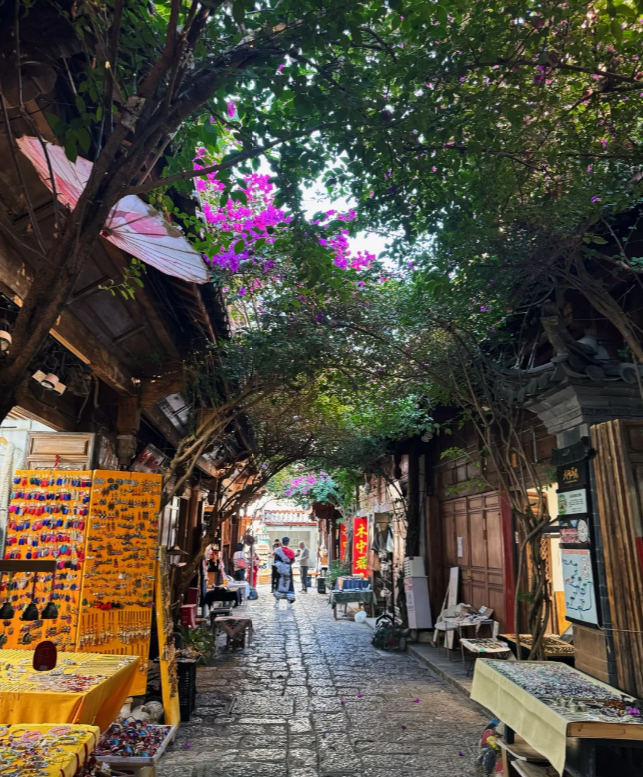
- Lijiang Ancient Town (Dayan Ancient Town)Highlights: The main attractions include the Mufu Palace, Sifang Street (the town’s central square), and the Black Dragon Pool Park. Don’t miss the back alleys—they’re the best place to experience local life.
- Tickets: The ancient town itself is free, but some attractions (like Mufu Palace) require tickets. Mufu Palace: 60 yuan per person.
- Best Time to Visit: Early morning (7-9 AM) to avoid crowds, or evening (7-9 PM) when the lanterns are lit.
Tea Horse Road MuseumHighlights: Exhibits on the history of the Tea Horse Road, including ancient trade goods, tools, and maps. The short film (available in English) is a must-watch.
Tickets: 60 yuan per person.
Hours: 9 AM-5 PM (closed on Mondays).
Dongba Paper-Making WorkshopHighlights: Learn how to make traditional Dongba paper from local masters. You’ll get to take home the paper you make, and some workshops offer calligraphy lessons.
Price: 100-150 yuan per person (varies by workshop).
Pro Tip: Book in advance through your homestay—they can recommend reputable workshops. The Naxi Culture Center is a good choice for English-speaking visitors.
Jade Dragon Snow MountainHighlights: One of Yunnan’s most famous natural attractions, with snow-capped peaks year-round. You can take a cable car to the viewing platform (4,680 meters above sea level) for stunning views.
Tickets: 130 yuan per person (entrance fee) + 200 yuan (cable car fee).
Pro Tip: The altitude can cause altitude sickness—bring a bottle of oxygen (available at the mountain entrance for 30 yuan) and avoid running or jumping.
3. Accommodation: Stay Like a Naxi Local
The best way to experience Naxi culture is to stay in a traditional Naxi homestay. Here are some top recommendations:
- Jade Water Inn: The homestay featured in the diary. It’s located in the quiet part of the ancient town, with a beautiful courtyard and friendly hosts. Rooms cost 400-600 yuan per night, including breakfast. A-ma and Xiao-he can arrange cultural experiences like tea picking and Dongba paper workshops.
- Naxi Family Inn: A family-run homestay near Sifang Street. The rooms are decorated with traditional Naxi textiles, and the hosts serve homemade Naxi meals. Prices start at 300 yuan per night. They offer free bike rentals.
- Lijiang Ancient Town Hotel: A mid-range hotel with modern amenities and traditional Naxi architecture. It’s located near the ancient town’s entrance, making it convenient for travelers with luggage. Rooms cost 600-800 yuan per night, and they have an on-site restaurant serving Naxi and Chinese cuisine.
- Banyan Tree Lijiang: A luxury resort on the outskirts of the ancient town. It features private villas with plunge pools and stunning views of the Jade Dragon Snow Mountain. Prices start at 2,000 yuan per night, and they offer exclusive experiences like private tea ceremonies and horseback riding on the Tea Horse Road.
4. Food: Naxi Cuisine You Must Try
Naxi cuisine is hearty and flavorful, with influences from Tibetan and Yunnanese cooking. Here are the must-try dishes and where to find them:
- Suyou Tea: A bitter-sweet herbal tea served to welcome guests. Try it at any Naxi homestay or at the Tea Horse Road Museum.
- Naxi Bacon: Cured pork with a smoky flavor. The best place to try it is at A-ma’s Jade Water Inn, or at “Old Naxi Restaurant” on Sifang Street.
- Braised Pork with Wild Mushrooms: Tender pork braised with local wild mushrooms. Available at most Naxi restaurants—try “Xiangyun Restaurant” near the Mufu Palace.
- Eight-Treasure Soup: A sweet soup made with local herbs, dried fruits, and glutinous rice. It’s a popular dessert—find it at “Naxi Dessert Shop” on the back alleys of the ancient town.
- Yak Meat Hot Pot: A hearty hot pot with tender yak meat and local vegetables. Perfect for cold nights—try it at “Tibetan Hot Pot Restaurant” near the ancient town’s north gate.
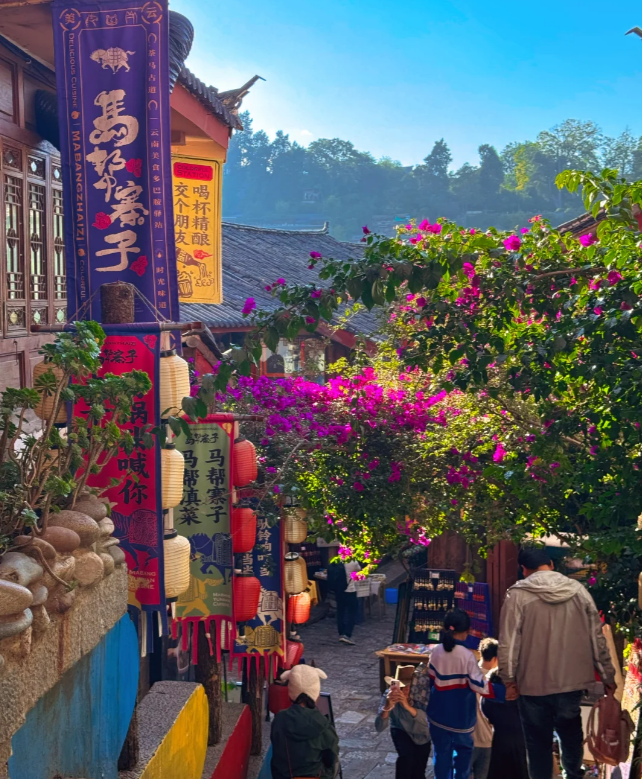
- Local Snacks: Don’t miss zongzi (sweet or savory), youtiao (fried dough sticks), and rice cakes. They’re available at street stalls on Sifang Street and in the back alleys.
5. Cultural Etiquette & Tips
- Respecting Naxi Culture: The Naxi people are proud of their culture, so be respectful when visiting their homes or participating in cultural activities. Remove your shoes when entering a Naxi homestay’s main courtyard, and ask permission before taking photos of locals.
- Dongba Religion: The Naxi people practice Dongba religion, which involves nature worship and ancestor worship. When visiting Dongba temples, do not touch the religious artifacts or interrupt ceremonies.
- Altitude Sickness: Lijiang is located at an altitude of 2,400 meters above sea level. To avoid altitude sickness, drink plenty of water, avoid drinking alcohol on your first day, and take it easy—don’t climb too many stairs or walk too fast.
- Weather: Lijiang has a mild climate, but the temperature can drop significantly at night. Even in summer (June-August), bring a light jacket. Winter (December-February) is cold, with occasional snow—pack warm clothes like down jackets and gloves.
- Shopping: Avoid buying mass-produced souvenirs on Sifang Street. Instead, look for handmade items like Dongba paper, Naxi textiles, and wooden carvings. The back alleys have small shops run by local artisans—try “Naxi Handicraft Shop” on Xuefeng Road.
- Language: Most young Naxi people speak basic English, especially those working in homestays and tourist attractions. Learning a few Naxi phrases will make locals happy: “Na ge” (hello), “Xie xie” (thank you), and “Zai jian” (goodbye).
6. Two-Day Itinerary for Lijiang
Day 1: Ancient Town & Cultural Experiences
- 1. 8:00 AM: Breakfast at your Naxi homestay (try zongzi and suyou tea).
- 2. 9:00 AM: Explore Mufu Palace and learn about Naxi chieftain history.
- 3. 11:00 AM: Visit Black Dragon Pool Park and watch Naxi women sing traditional songs.
- 4. 12:30 PM: Lunch at Old Naxi Restaurant (try Naxi bacon and braised pork with wild mushrooms).
- 5. 2:00 PM: Dongba paper-making workshop at the Naxi Culture Center.
- 6. 4:30 PM: Visit the Tea Horse Road Museum and watch the English-language film.
- 7. 6:30 PM: Climb Lion Hill for sunset views of the ancient town.
- 8. 8:00 PM: Dinner at your homestay with local neighbors (arrange in advance).
Day 2: Jade Dragon Snow Mountain & Countryside
- 9. 7:00 AM: Breakfast at the homestay, pack snacks and water for the mountain.
- 10. 8:00 AM: Take a bus or tour to Jade Dragon Snow Mountain.
- 11. 10:00 AM: Take the cable car to the viewing platform, enjoy the snow-capped peaks.
- 12. 12:30 PM: Lunch at the mountain’s restaurant (try yak meat noodles).
- 13. 2:00 PM: Visit Blue Moon Valley, a scenic valley with turquoise water.
- 14. 4:00 PM: Return to the ancient town, stop at a local village to pick tea (arrange through your homestay).
- 15. 6:30 PM: Dinner at Tibetan Hot Pot Restaurant (try yak meat hot pot).
- 16. 8:30 PM: Wander Sifang Street at night, listen to street musicians play Naxi songs.