If you have ever stood in a desert and felt the heat radiating from the ground, blurring the horizon into a shimmering mirage, you know the power of the sun. But until you have visited the Wensu Grand Canyon, you haven’t truly understood how the sun can sculpt the earth. Located in the Wensu County of Aksu Prefecture, this place is often overshadowed by its more famous cousin, the Kucha Grand Canyon. However, as a traveler who seeks the paths less trodden, I found Wensu to be a far more raw, expansive, and otherworldly experience. It is not just a canyon; it is a labyrinth of geological madness that feels like walking on the surface of Mars.
My journey to Wensu started early in the morning. The air was already thick with the smell of dry earth and dust. We drove south from the city, leaving the green poplar forests behind, and entered a zone of stark, arid beauty. The road was rough, cutting through a flat plain that stretched endlessly towards the horizon. But then, the earth began to rise. Not gradually, but in sudden, violent ruptures. The Wensu Grand Canyon, also known as the “Kuzigan Grand Canyon” by locals, is part of the Tianshan Mountain range’s southern edge. It is a place where the mountains meet the desert, and the clash is spectacular.
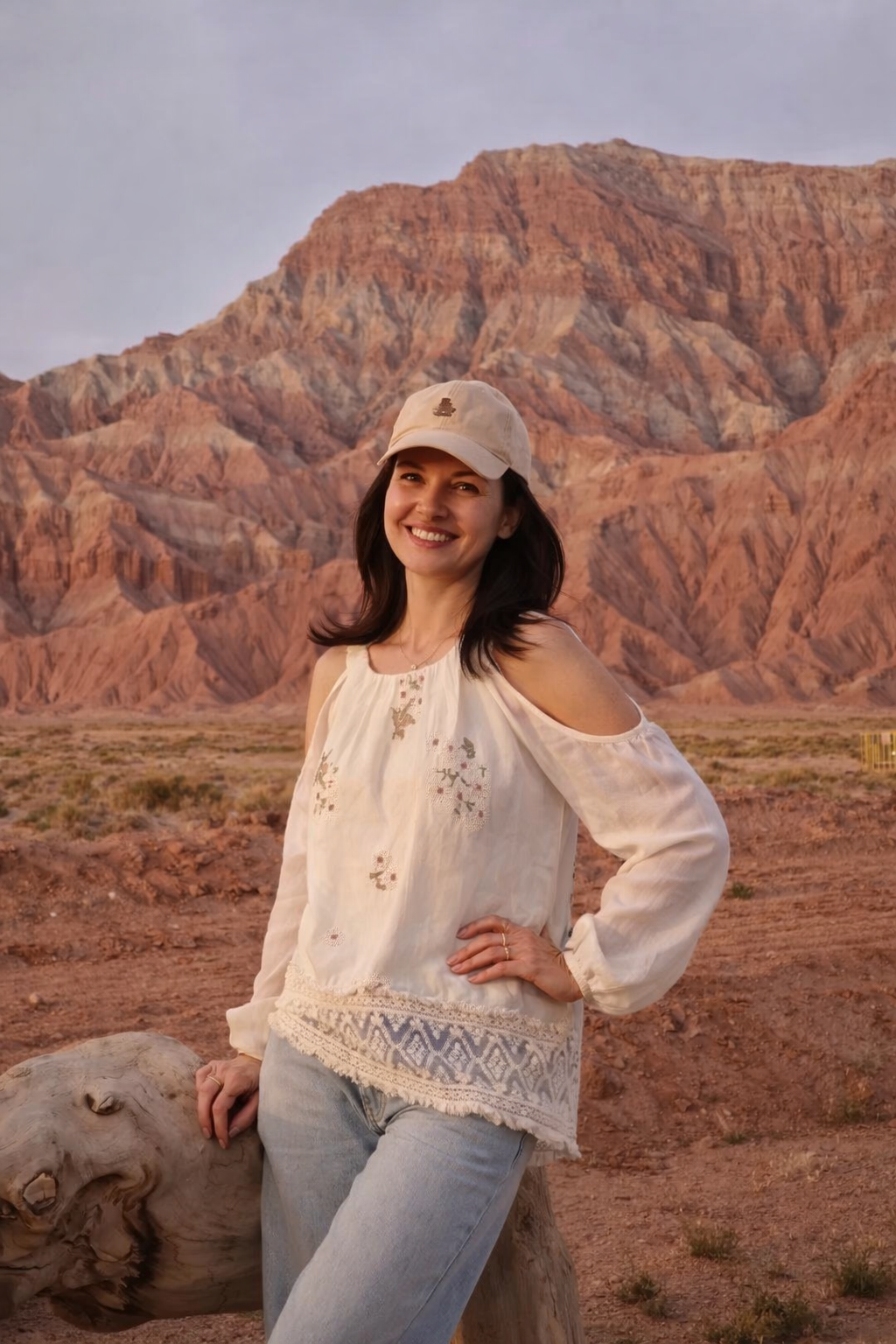
As I stepped out of the vehicle at the entrance, I was immediately struck by the scale. This isn’t a narrow slot canyon where you feel claustrophobic; this is a sprawling city of rock. The main canyon stretches for kilometers, branching off into countless tributaries like the veins of a leaf. The colors here are the first thing that assault your senses. They are impossible to describe accurately—a mixture of ochre, burnt orange, deep rust, and purple-grey. Under the midday sun, the rocks glow with an intensity that hurts your eyes. It is as if the earth itself has been set on fire and cooled down just enough for us to walk on it.
I started my hike into the heart of the canyon. The path is not paved; it is a dusty track winding through massive boulders and scree slopes. Silence here is heavy, but it is occasionally broken by the sound of stones tumbling down the cliffs, echoing like gunshots in the distance. It is a reminder that this landscape is unstable, constantly evolving.
One of the unique features of Wensu is the variety of geological formations compressed into one area. Geologists call it an open-air classroom. As I walked deeper, I saw stratifications that looked like giant waves frozen in time. The red sandstone layers, deposited millions of years ago when this area was a vast lake or ocean, are twisted and folded by tectonic movements. Standing in front of a wall of rock that looks like layered cake but is tilted at a 45-degree angle forces you to recalibrate your sense of time. We live our lives in seconds and hours; this place counts its life in eons.
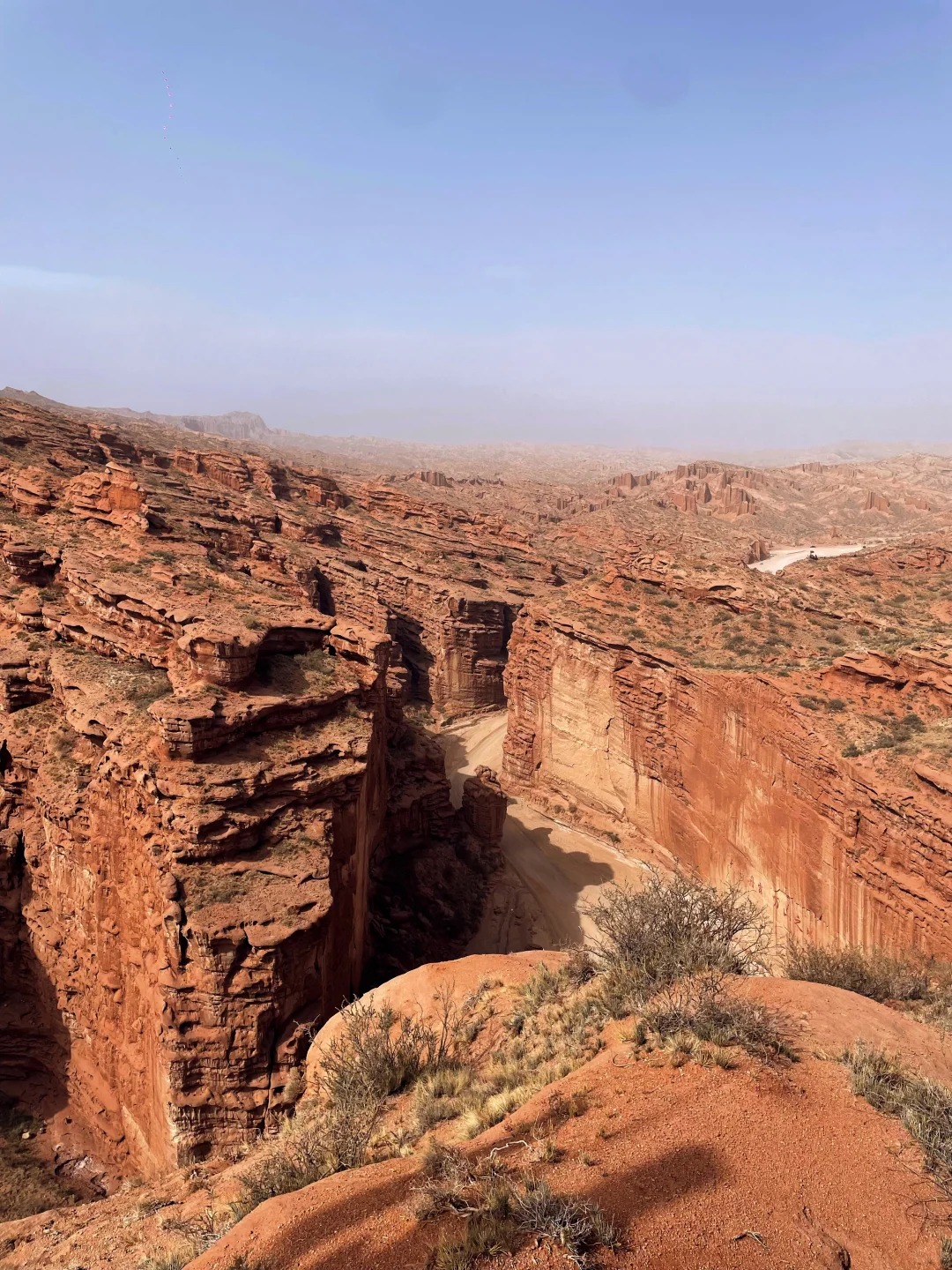
I wandered into a narrow side gorge, seeking shelter from the relentless sun. The temperature dropped instantly. The high walls blocked the light, creating a cool, shadowy corridor. Here, the wind has carved the rock into smooth, organic shapes. Some looked like mushrooms, others like ancient totems guarding the entrance to a secret world. I ran my hand over the surface of the rock. It was warm, grainy, and rough. It felt alive, holding the heat of the day and the memory of the wind.
In the main canyon, the scale is overwhelming. There are pillars of rock standing isolated, known as “earth forests” or “yardangs.” They stand like sentinels, watching over the empty valleys. I climbed a steep ridge to get a panoramic view. From up there, the canyon looked like a giant delta, a network of channels converging and diverging. The red dust coating my shoes and clothes made me feel like part of the landscape. I felt like an explorer discovering a lost world.
What struck me most profoundly about Wensu was the absence of life. In the grasslands, you hear the chirping of insects and the bleating of sheep. In the cities, the hum of traffic. Here, there is nothing but the wind and the occasional hawk circling high above, looking for prey that doesn’t exist. It is a desolate beauty, a minimalist landscape where color and texture are the only decoration. It strips away the distractions of modern life and forces you to focus on the sheer magnitude of nature.
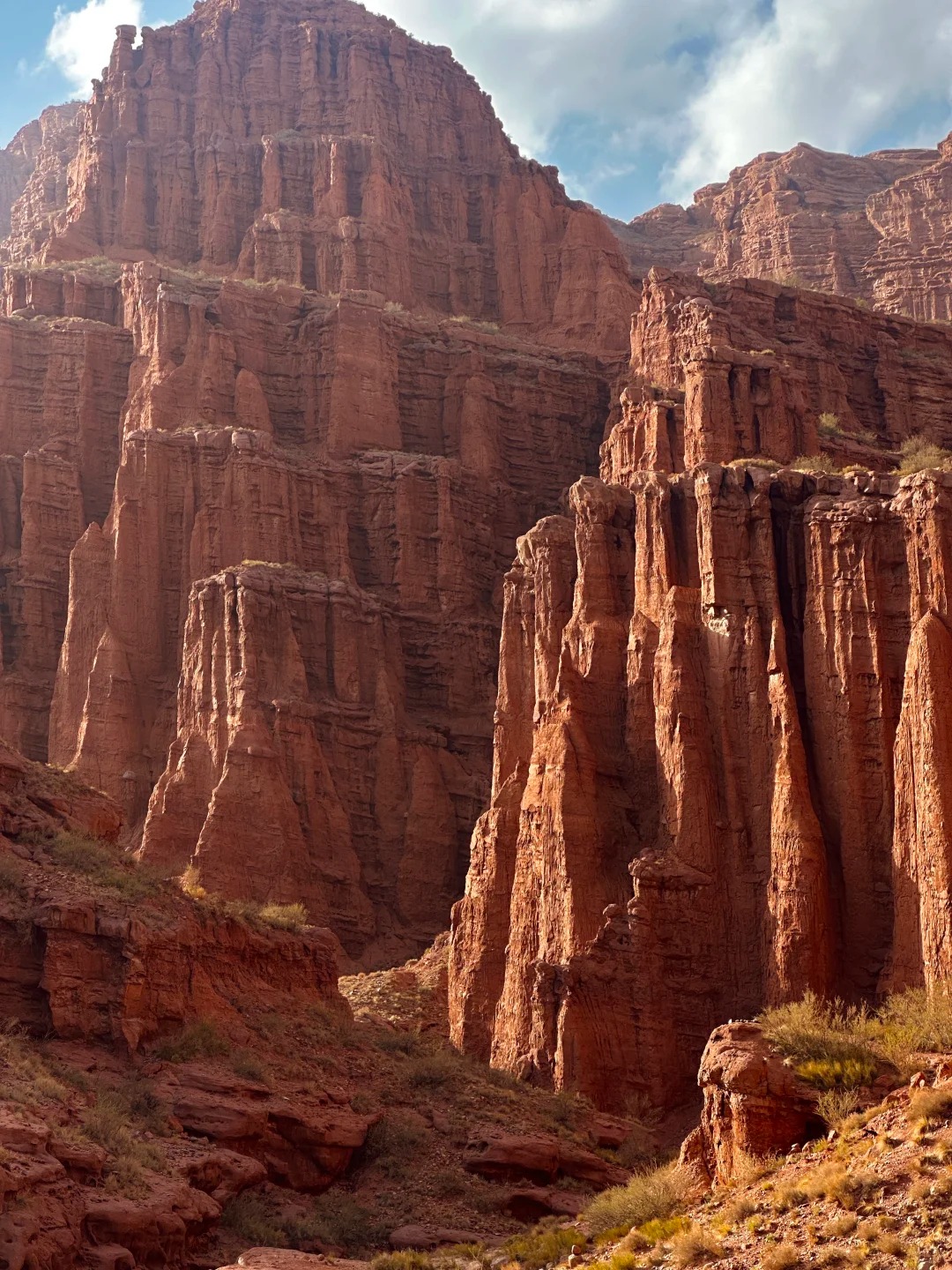
As the sun began to dip towards the west, the canyon underwent a magical transformation. The harsh, white light of the afternoon softened into a golden haze. The red rocks turned a deep, blood crimson, while the shadows lengthened into pools of violet. This is the “golden hour” that photographers chase, but witnessing it in person is a spiritual experience. I sat on a high cliff, watching the shadows creep across the valley floor, swallowing the red pillars one by one. The silence seemed to deepen, becoming a physical weight.
I met a group of geology students near the exit. They were chattering excitedly about salt anticlines and conglomerate rock. One of them showed me a piece of rock containing small fossils—shells from an ancient sea. Holding that rock in my hand, looking out at the arid, desert-like canyon, the irony was palpable. This dry, fiery place was once underwater. It is a testament to the chaotic, transformative power of our planet.
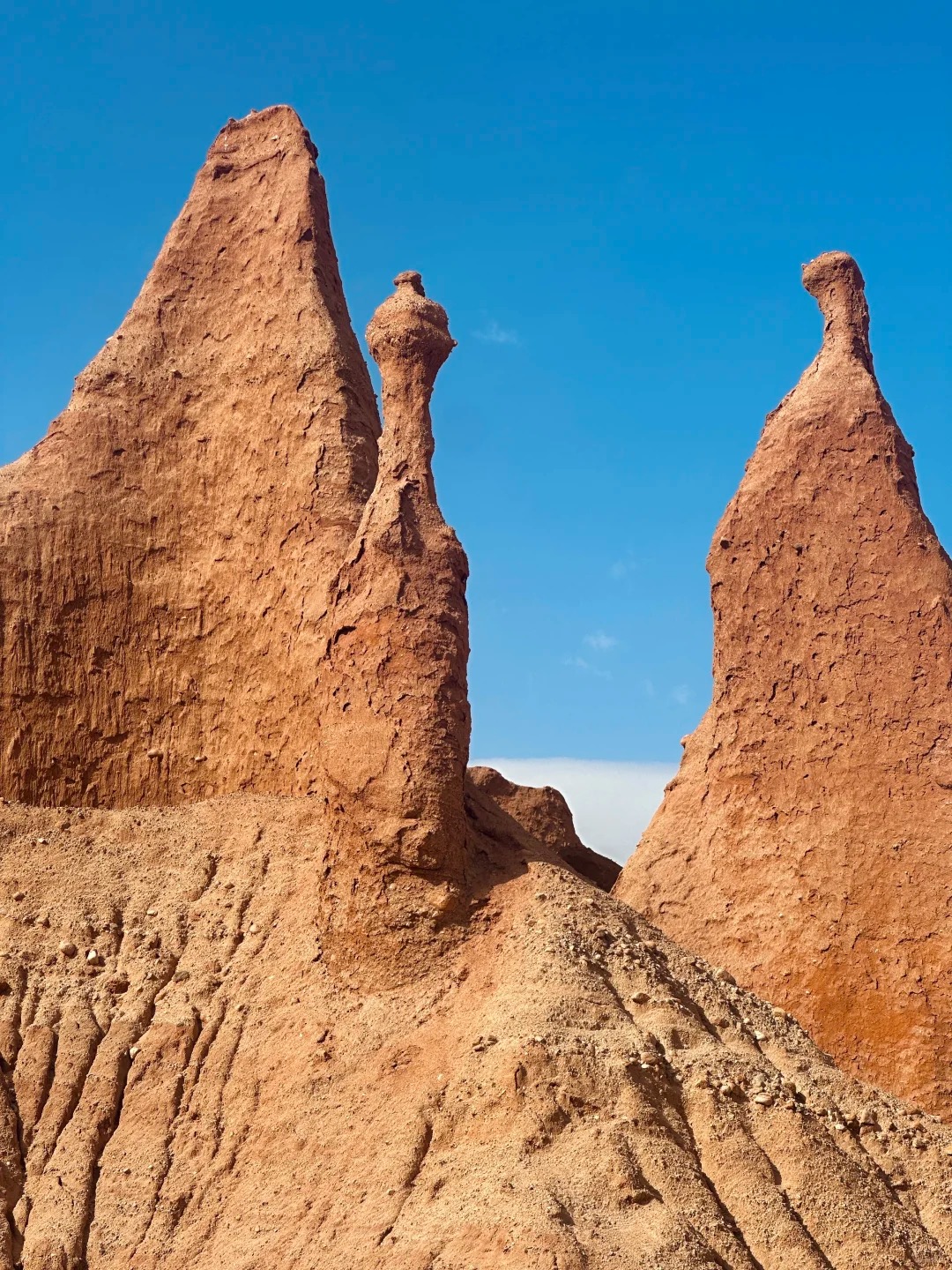
Driving back as the stars began to emerge, I felt a sense of peace that is hard to describe. Wensu Grand Canyon is not a place for a quick Instagram photo. It is a place that demands your time, your sweat, and your attention. It is a place that makes you feel small, insignificant, and strangely grateful. It reminds you that the world is vast, wild, and full of wonders that no screen can replicate.
If you find yourself in Xinjiang, do not just drive past the sign to Wensu. Take the detour. Bring plenty of water, a good pair of boots, and a sense of adventure. Let the red dust settle on your skin. Let the silence enter your soul. You will leave with a memory of a landscape so alien and beautiful that it will feel like a dream long after you have returned to the greener, flatter world below.