There is a specific kind of magic that happens when you step onto a island that has forgotten what century it is in. That was my feeling arriving at Tongli Ancient Town. Located about an hour’s drive from the bustle of Shanghai, Tongli is not a museum; it is a living, breathing time capsule. Unlike many tourist attractions that feel like movie sets with actors in costumes, Tongli is home to families who have lived here for generations, hanging their laundry to dry between Ming Dynasty windows.
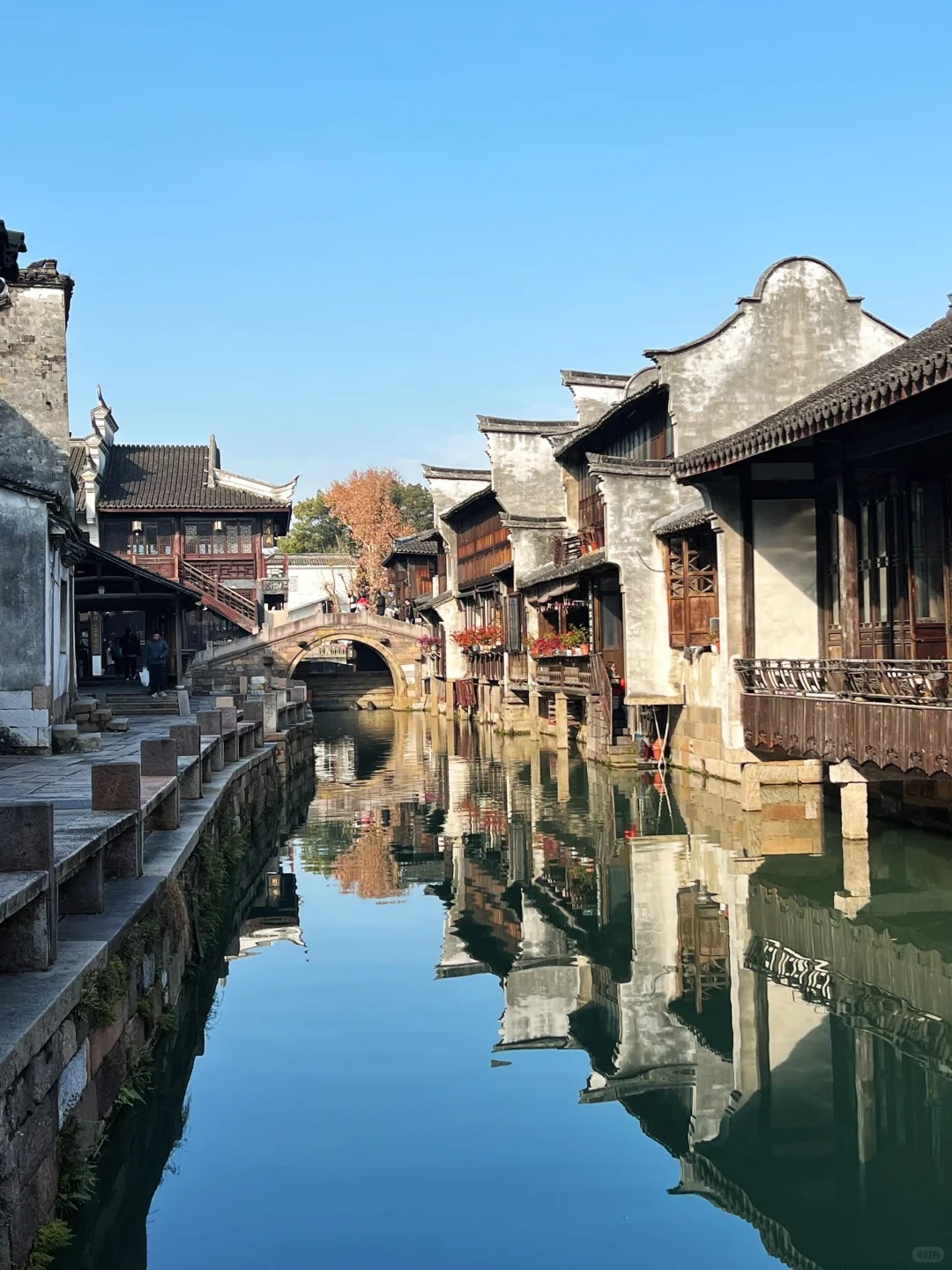
I first visited Tongli in the late autumn, when the air was crisp and the ginkgo trees were turning a brilliant, blinding yellow. The town is built on an island, crisscrossed by fifteen rivers that divide it into seven small islands. These islands are then stitched together by nearly fifty ancient stone bridges. I remember standing at the edge of the canal, watching an elderly woman sitting on her front porch, casually shucking peas while a tourist boat drifted past. She didn’t look up. For her, this breathtaking scenery was just the backdrop to her daily life. That authenticity is what makes Tongli so special.

I decided to hire a rowboat to see the town from the water level. This is the only way to truly understand Tongli. The canals are narrow, often barely wide enough for two boats to pass. As the boatman, a weathered man with a face like a walnut, pushed us along with his pole, we glided under “Three Bridges”—the Peace, Luck, and Longevity Bridges. He told me, in the local Wu dialect which I struggled to understand, that locals walk over these three bridges during birthdays and weddings to ensure a prosperous life. It’s a beautiful tradition. I reached out and touched the mossy stone of the bridges as we passed; they felt cold, slippery, and incredibly solid. Thousands of feet have worn them down, polishing them into a smooth sheen.
One of the highlights of my trip was visiting the Retreat and Reflection Garden (*Tuisi Yuan*). It is a UNESCO World Heritage site and, despite its small size, it is considered one of the finest gardens in the region. The gentleman who built it was an imperial official who retired early after a clash with the court. The name reflects his mindset: “Retreat” implies stepping back from politics, and “Reflection” implies looking inward at oneself. It resonated with me deeply. In our modern world, we are constantly “on,” constantly connected, constantly fighting for attention. Here, sitting by the small lotus pond in the garden, I felt a strong urge to disconnect. The architecture is designed to frame views of the surrounding landscape, making the small garden feel boundless.

I spent hours wandering the labyrinthine alleyways of Tongli. They are narrow, sometimes only allowing two people to walk shoulder-to-shoulder. The buildings are a mix of white-washed walls and dark gray tiles, the classic “water town” aesthetic. But it’s the details that capture you. A carved wooden transom above a door, depicting a scene from an opera; a stray cat napping on a stack of coal briquettes; the smell of steaming *shao mai* (sticky rice dumplings) drifting from a street food stall.
Speaking of food, Tongli is a place where you eat with your eyes first. I stopped at a small storefront to watch a vendor making “consomme” (freshly braised pork knuckles). The glistening skin looked impossibly tender. Later, sitting by the canal at dusk, I ate a bowl of “squirrel-shaped mandarin fish.” Don’t worry, no squirrels are harmed—it’s a local specialty where the fish is deboned and cross-cut in a way that makes it look like a squirrel’s tail when deep-fried, then covered in sweet and sour sauce. It was crispy, sweet, and utterly delicious, paired perfectly with a cup of local Longjing tea.
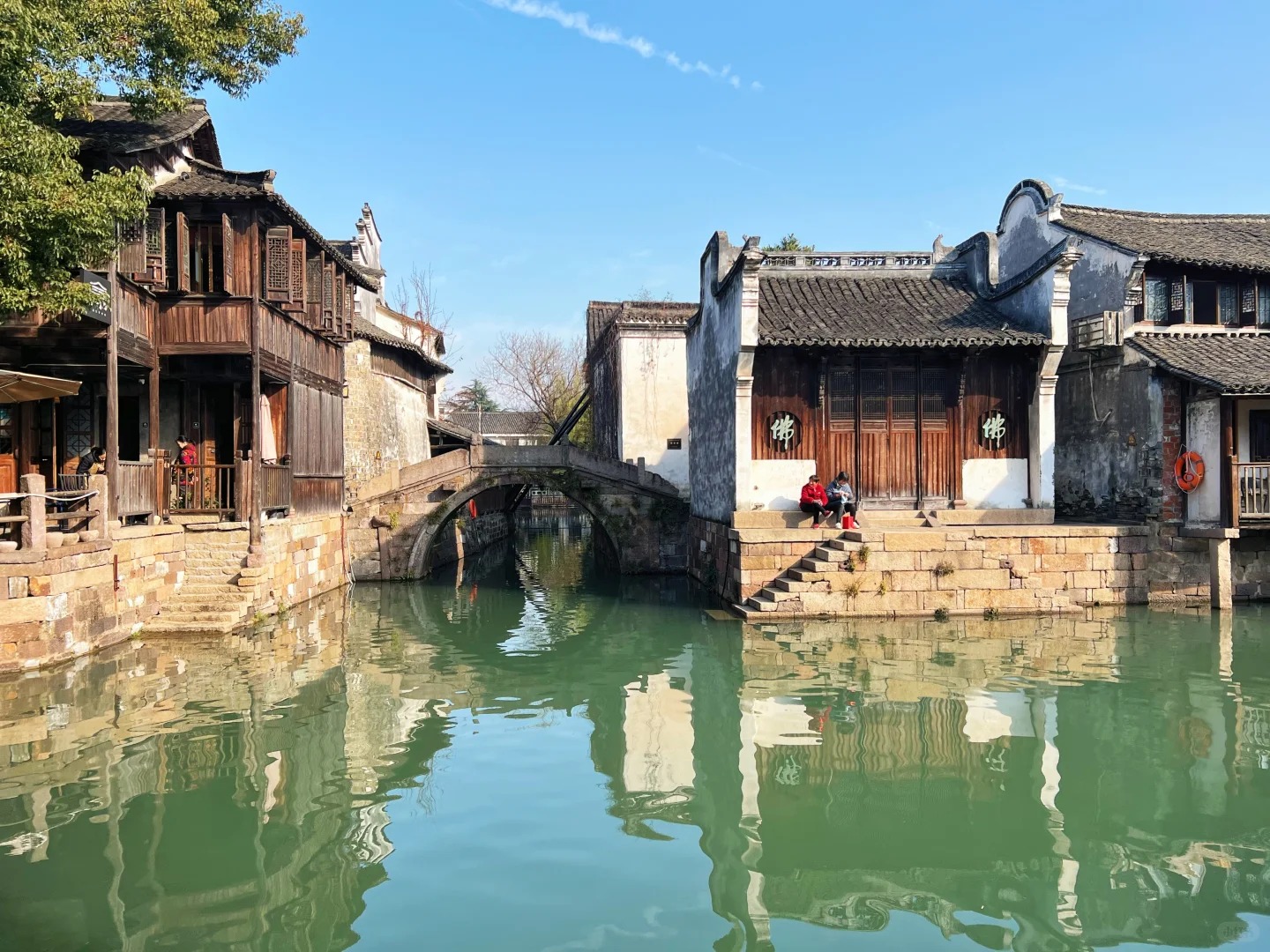
As night fell, Tongli transformed. The harsh fluorescent lights of the day dimmed, and the traditional red lanterns flickered to life along the water. The reflections in the canals turned into shimmering ribbons of red and gold. The tourist crowds thinned out, leaving the town to the locals and the occasional stray traveler. I sat on a stone step near the water, listening to the creaking of the boats and the distant sound of a pipa(a Chinese lute) being played somewhere nearby. It was a haunting, melancholic melody that fit the mood perfectly.
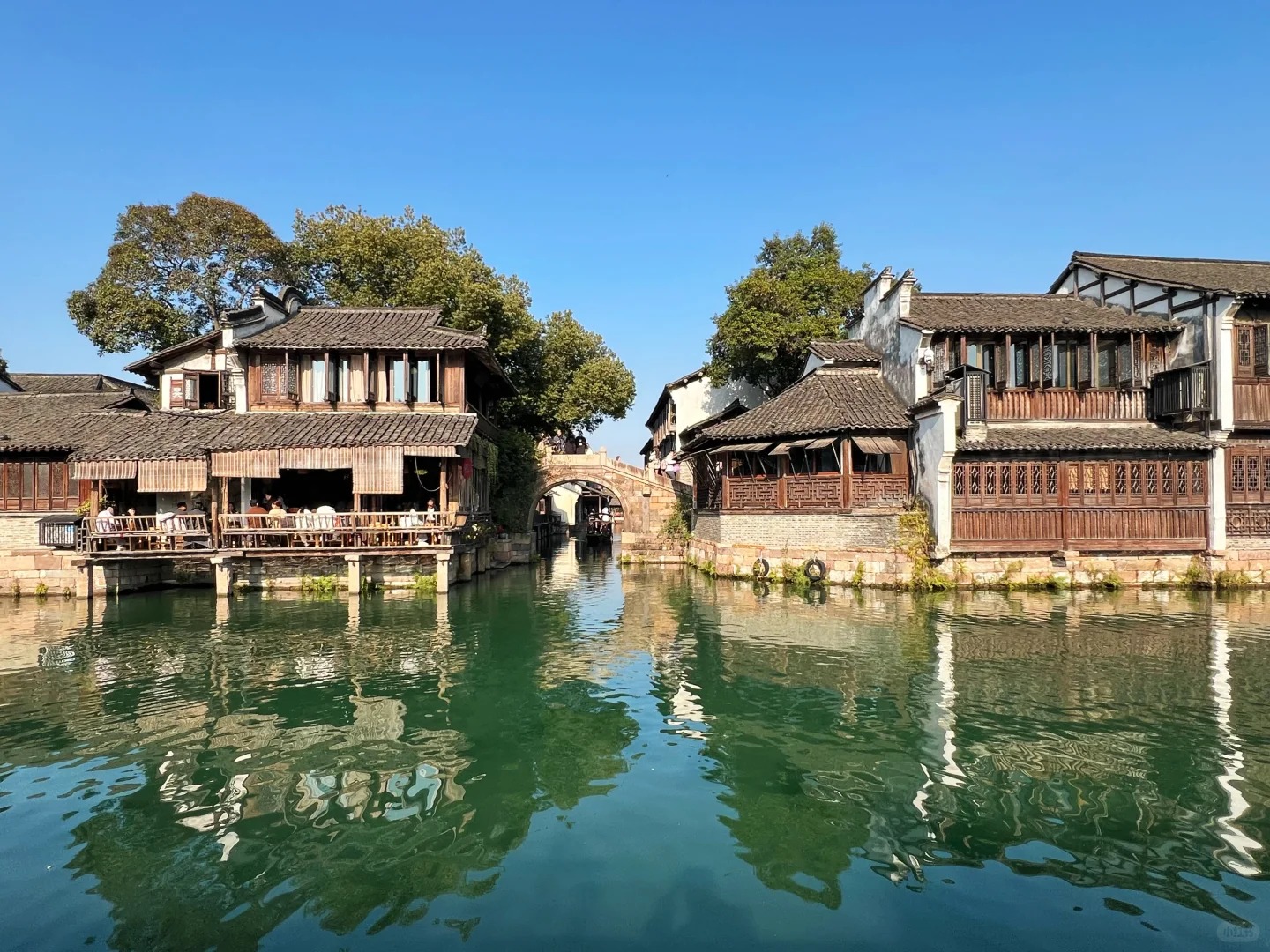
Tongli is not a place for adrenaline junkies. You won’t find bungee jumping or rollercoasters here. What you find is a rhythm of life that moves at the speed of the water—slow, steady, and persistent. It is a place to slow down, to breathe, and to realize that perhaps our ancestors understood a thing or two about living a balanced life. When I left the next morning, carrying a bag of locally made pastries, I felt lighter, as if the water of Tongli had washed away some of the accumulated stress of my modern life. It is a humble, beautiful reminder that sometimes, to move forward, you need to step back into the past.