There is a world beneath our feet, a silent, dark, and dripping underworld that exists in complete opposition to the sun-drenched world above. I discovered this underworld in Zhangjiajie, at a place called Huanglong Cave, or the Yellow Dragon Cave. I have been to caves before—usually damp, small hollows in the ground—but nothing could have prepared me for the scale of this place. It is not a cave; it is a subterranean kingdom.
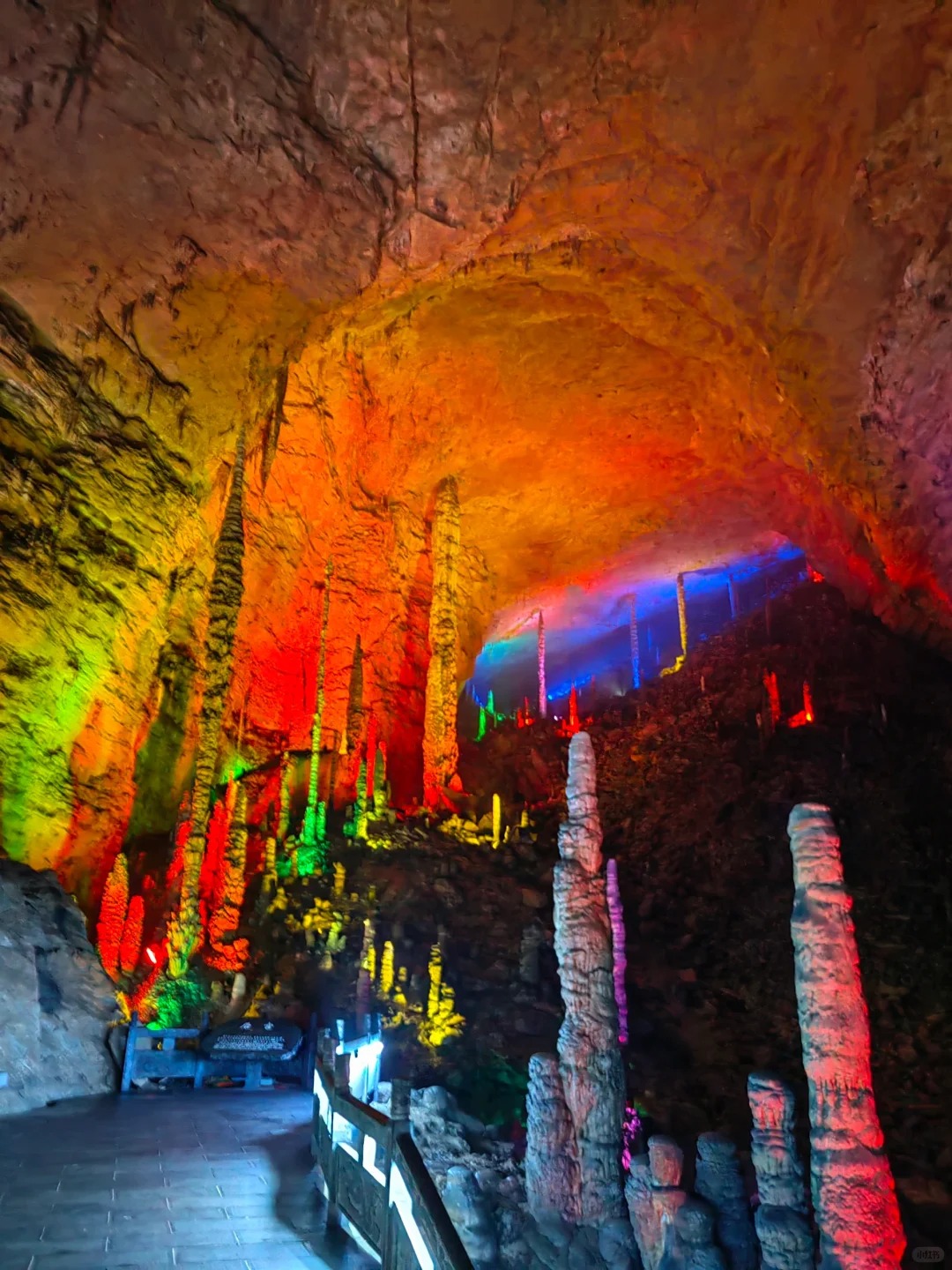
Entering Huanglong Cave feels like descending into the lungs of the earth. The entrance itself is huge, a gaping mouth in the cliffside. As I walked in, the temperature dropped instantly. The air was cool, humid, and smelled of wet limestone and ancient mud. The noise of the outside world faded away, replaced by the rhythmic sound of dripping water—*drip, drip, splash*—the heartbeat of the cave. The lighting was dim, strategically placed to illuminate the vast darkness without ruining the mystery.
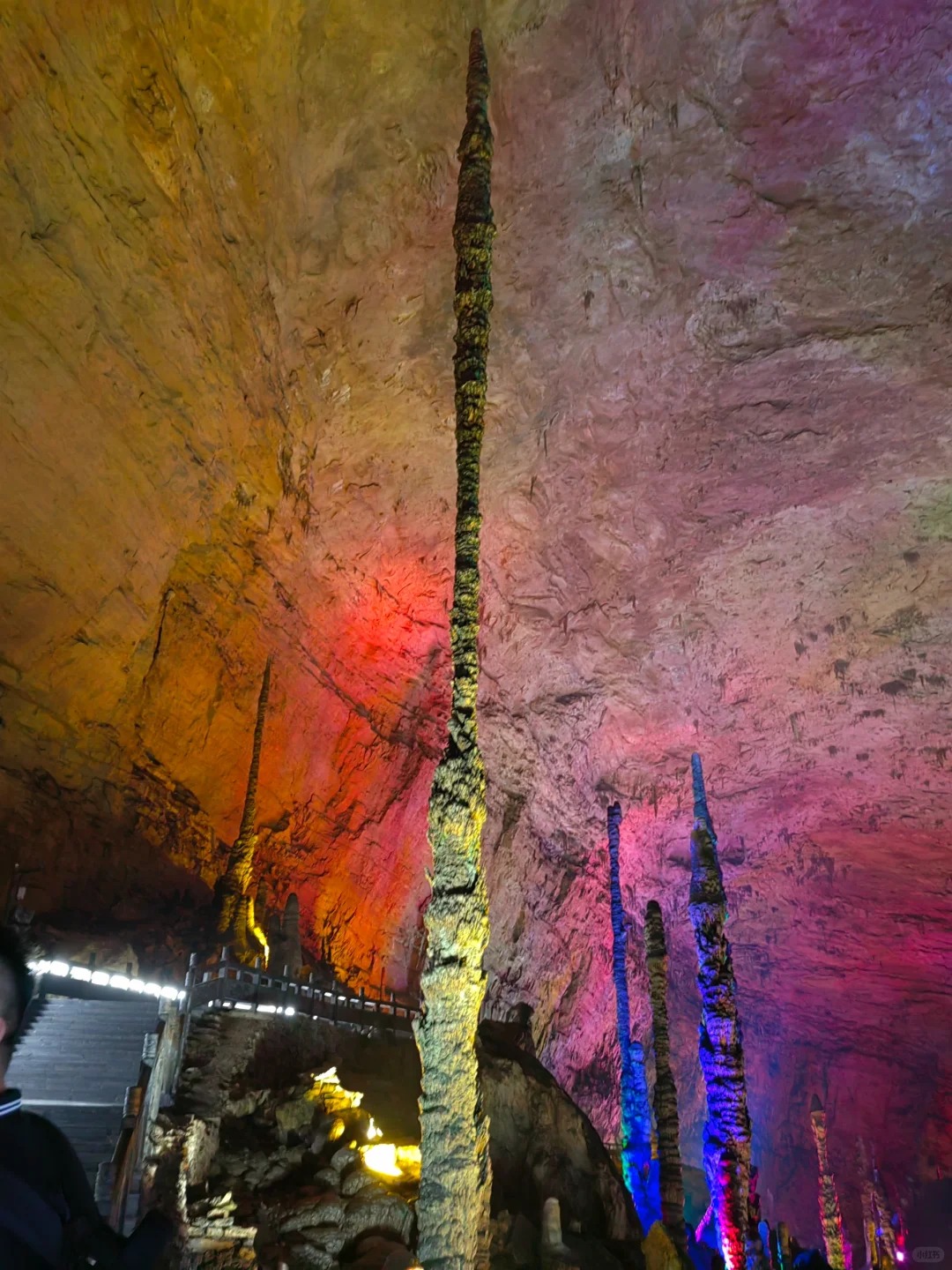
The sheer scale of the caverns is difficult to describe. The first hall, named the “Dragon Palace,” is so big that a 747 airplane could theoretically fit inside it. I felt like an ant wandering through a cathedral built by giants. The stalactites hung from the ceiling like jagged teeth, some of them thousands of years old. I stood at the railing of a metal walkway, looking down into the “Milk Way,” a massive underground river that flows through the cave. The water was black and silent, reflecting the artificial lights like liquid obsidian.
One of the most memorable moments of the visit was crossing the “Xianshi Bridge,” or Immortal Bridge. It is a natural stone bridge formed over millions of years by the deposit of calcite. Walking across it was nerve-wracking. Below, the darkness seemed infinite. The bridge is narrow and slippery, and as I小心翼翼地 made my way across, I couldn’t help but respect the immense power of water. Water, soft and yielding, had carved this hard rock over eons. It is a testament to persistence.
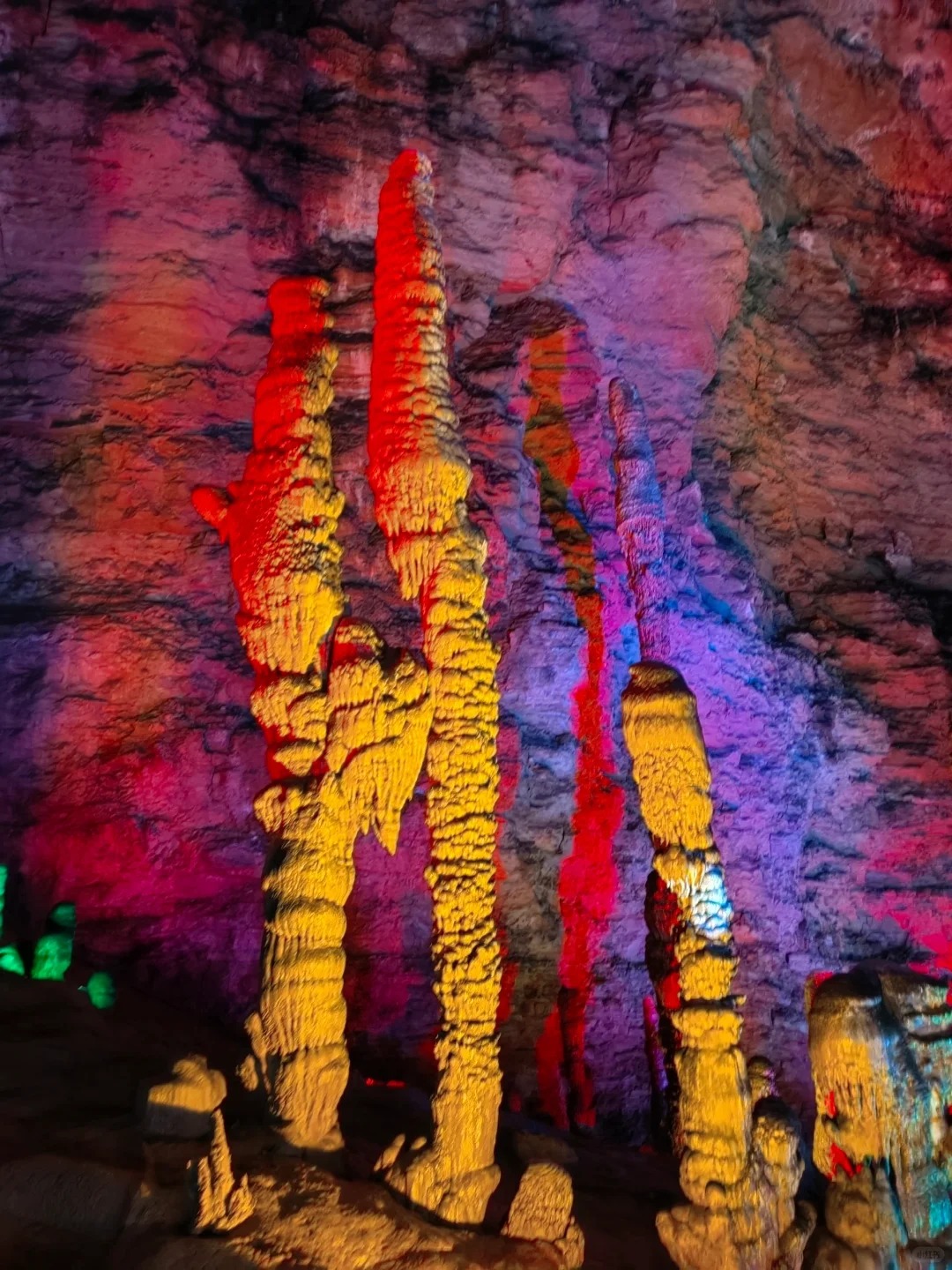
I remember seeing a formation called the “Naiguja Spring.” It is a stalagmite that is still growing, fed by the water dripping from above. Our guide told us that in the cave culture, it is considered lucky to touch the growing formations, so many people reached out to feel the cold, wet surface. I touched it too. It felt smooth and solid, yet slightly wet. It was a strange feeling, connecting with something that was growing so slowly, millimeter by millimeter, over centuries.
The “Yellow Dragon” name comes from a legend that a yellow dragon was trapped in the cave, and the winding, twisting passages are the dragon’s body. As we ventured deeper, the passages became tighter and more winding. The stalactites and stalagmites took on strange shapes—one looked like a monkey, another like a pagoda, and another like a towering fortress. The human mind seeks patterns in chaos, and in the dim light of the cave, the rocks seemed to come alive.
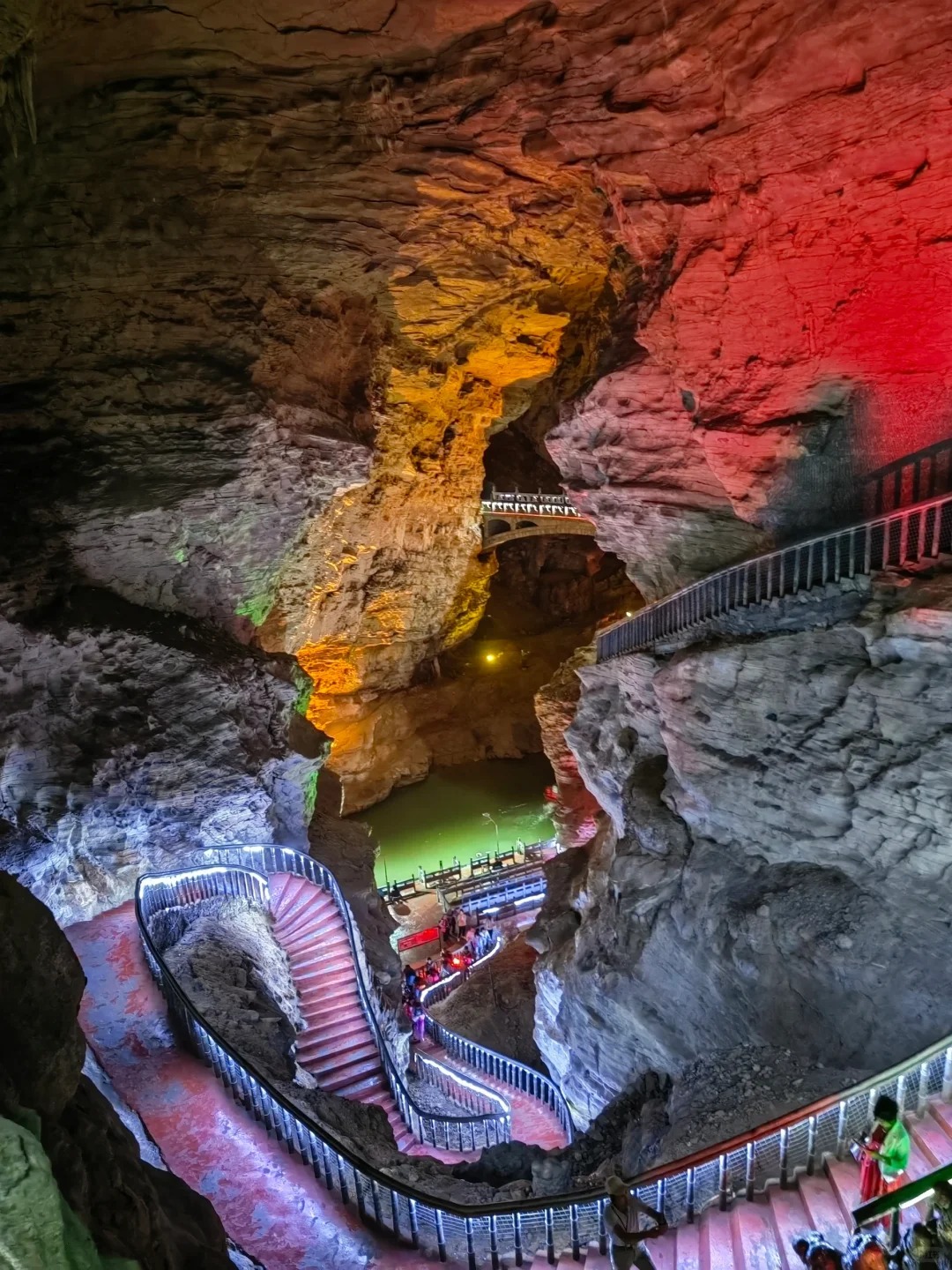
We eventually took a boat ride along the underground river. This was the highlight of the trip for me. The boat was small, electric, and silent. We drifted through narrow channels where the ceiling was so low I had to duck. The silence was profound. In a world filled with digital noise and constant chatter, this absolute silence was golden. The only sound was the gentle lapping of the water against the boat hull. We floated past the “Sea-Moon Field,” a pool so still that the stalactites above were perfectly reflected in the water, creating an infinite column of stone.
Emerging from the cave was a shock to the system. We stepped out of the cool darkness into the blinding sunlight and heat of the afternoon. My eyes struggled to adjust. I felt a strange sense of disorientation, as if I had returned from a journey to the center of the earth.
Huanglong Cave is not just a geological wonder; it is a spiritual experience. It strips away your ego with its vastness. You realize that human life is just a blink of an eye compared to the time it took to form those rocks. It makes you feel small, but not insignificant. It is a humbling reminder of the planet’s mysterious depths. If you visit Zhangjiajie and spend all your time looking up at the peaks, remember to look down. The Yellow Dragon is waiting below, ready to swallow you into its beautiful, dark heart.