I had read the descriptions: “The second largest waterfall in China.” “The only yellow waterfall in the world.” But numbers and adjectives failed to prepare me for Hukou. Standing on the edge of the Jin-Shaan Grand Canyon, watching the Yellow River—the Mother River of Chinese civilization—force its massive body into a narrow, rocky trough, was not just a visual experience. It was visceral. It was deafening. It felt like standing on the edge of the world.
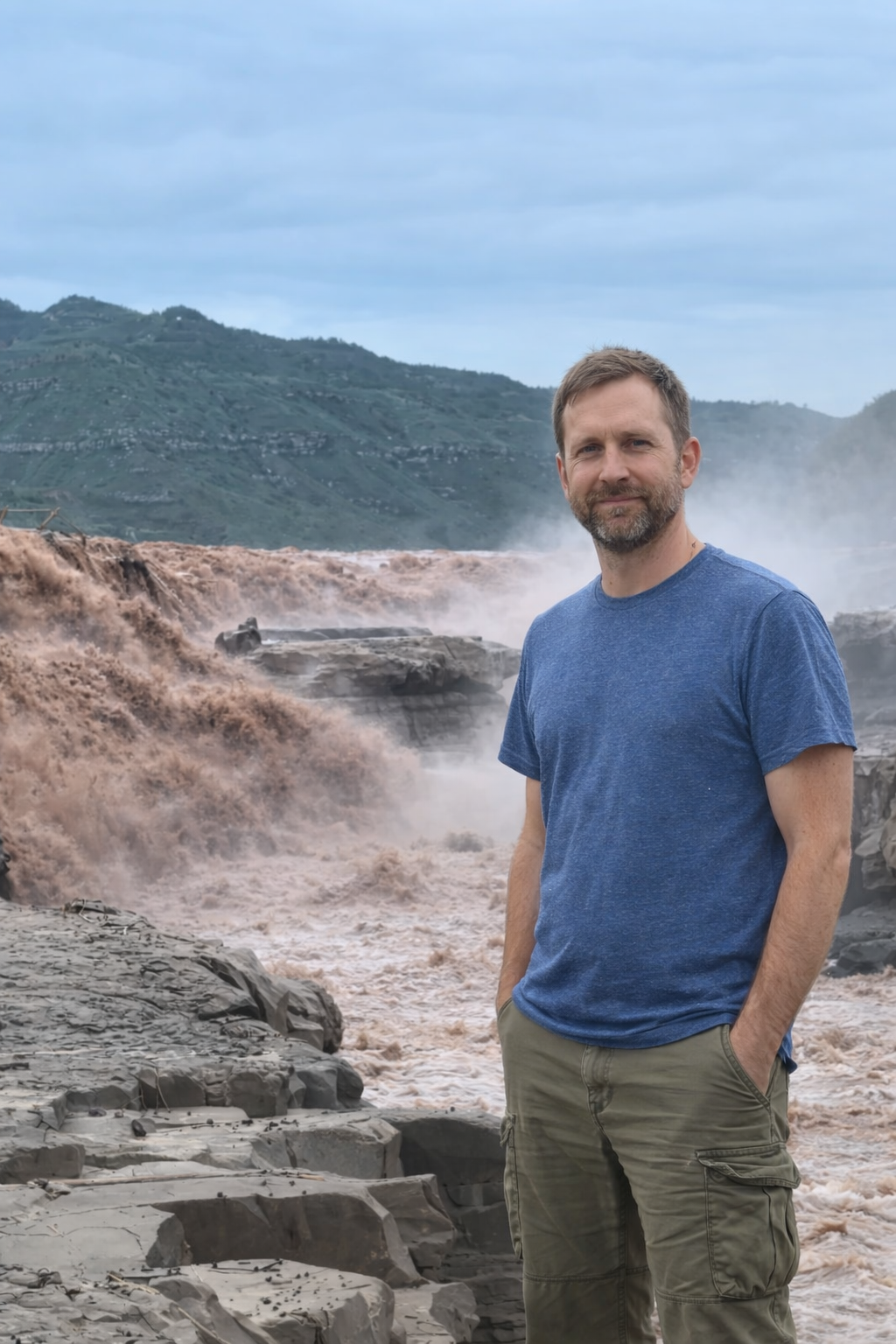
My journey to Hukou took me from the historic city of Xi’an towards the border of Shanxi and Shaanxi provinces. The landscape changed from the fertile loess plateau to a more dramatic, jagged terrain. I chose to view the waterfall from the Shanxi side, which is famous for its “Cave of the Dragon King,” offering a close-up view of the torrent.
As I approached the scenic area, I could hear it. It wasn’t a sound; it was a vibration in the air. It started as a low hum and grew into a continuous, thundering roar. By the time I walked through the gate and caught my first glimpse of the waterfall, my chest was rattling with the noise.
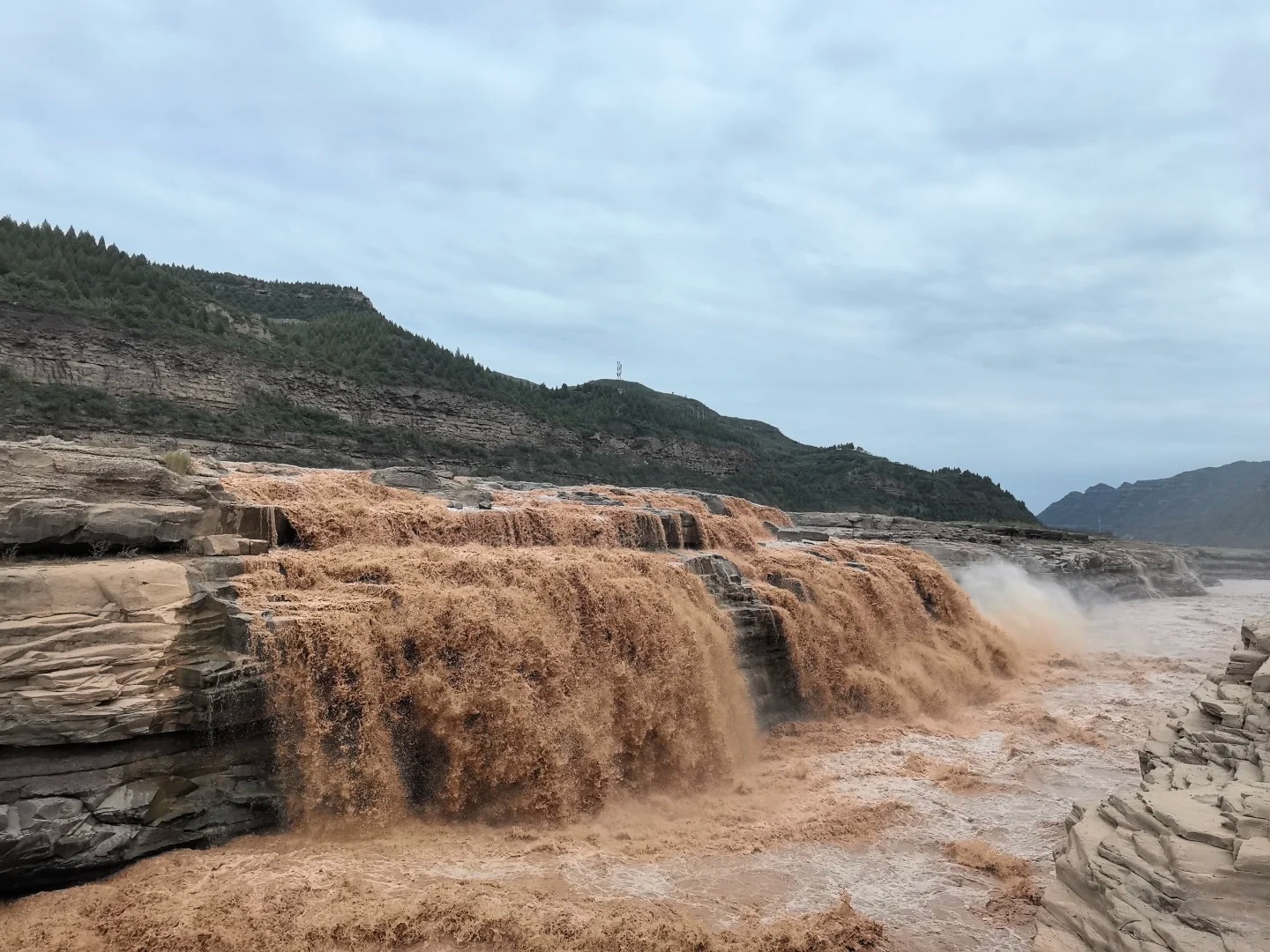
The color of the water is the first thing that shocks you. It is not blue, not green, not clear. It is a thick, opaque, violent ochre. This is the loess silt that gives the river its name and its character. Looking down from the viewing platform, the river looks like liquid gold being churned by an invisible giant hand.
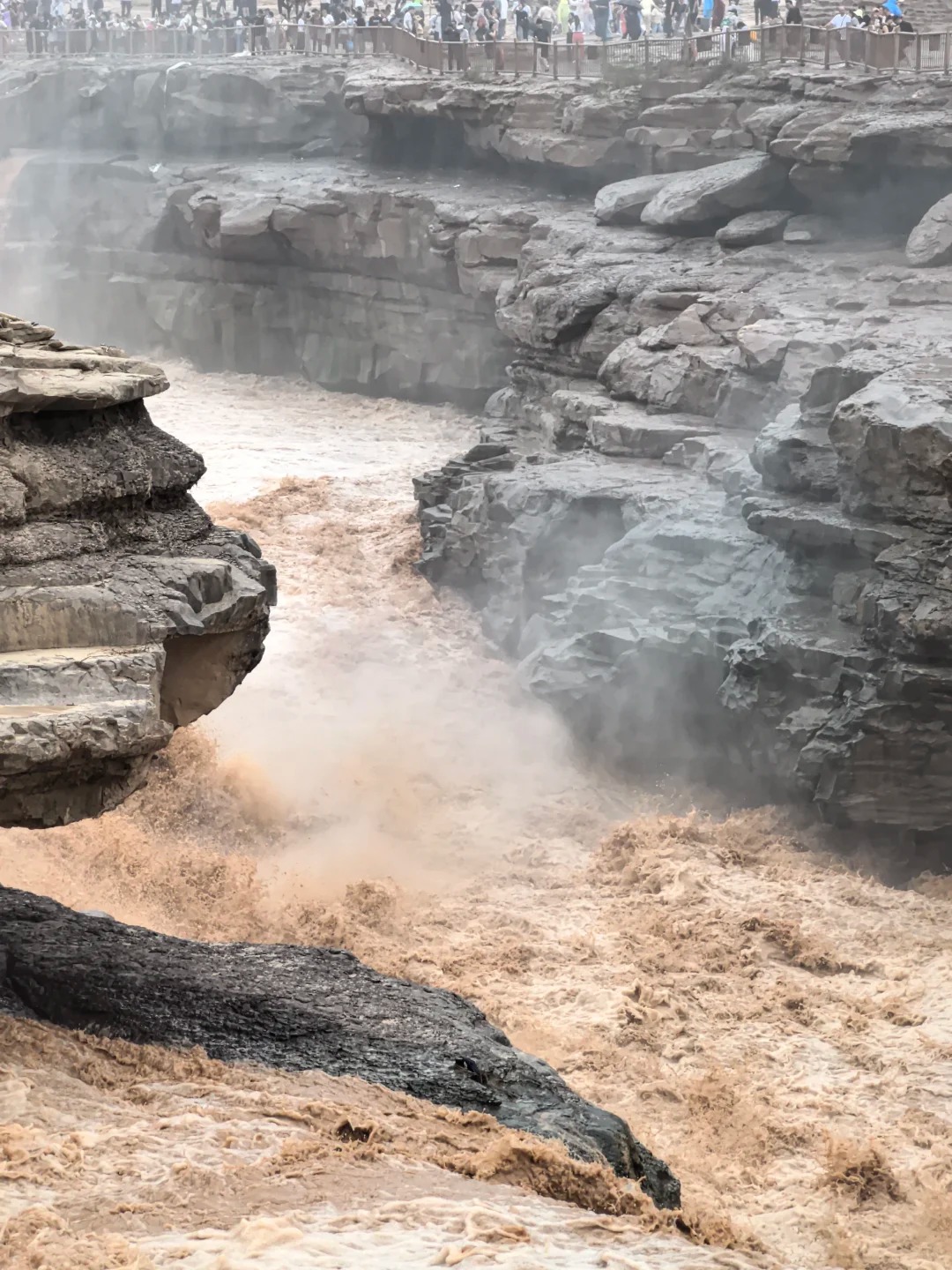
I walked down the stone steps that lead closer to the water’s edge. The mist here is incredible—it’s not a fine spray, but a heavy, damp fog that coats your hair and eyelashes instantly. I saw tourists wearing bright blue plastic rain ponchos, and I quickly realized why. I put on my jacket and pressed on.
The highlight of the visit was walking along the “Shili Longtan” (Ten-mile Dragon Pool) path. You can actually walk behind the curtain of the waterfall (depending on the water level, though when I was there, the flow was too strong for that). Instead, I stood on the rocks right next to the churning cauldron where the water crashes down. The power is terrifying. Seeing massive boulders tossed around like pebbles by the sheer force of the current gives you a humble understanding of nature’s dominance.
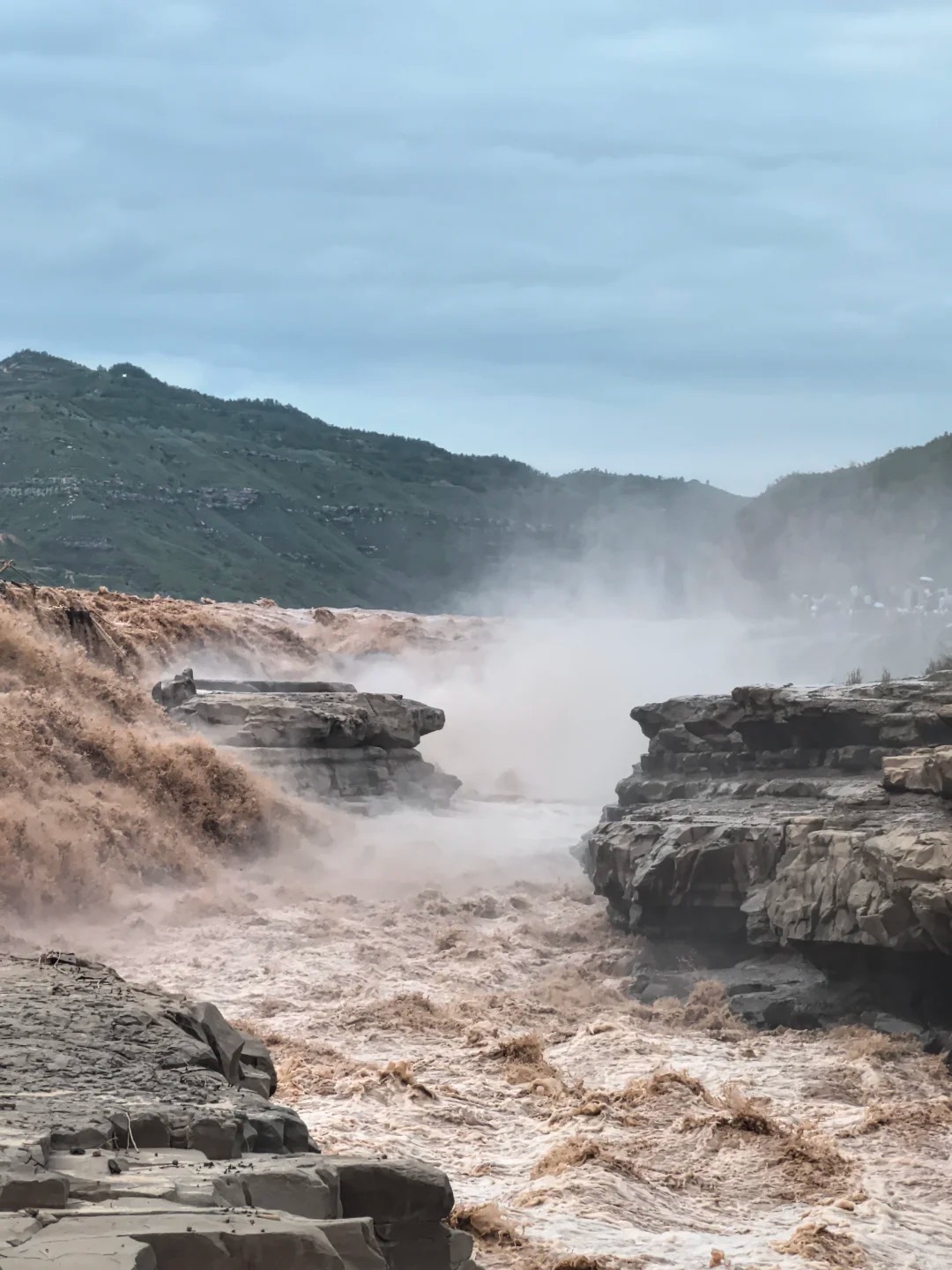
I stood there for a long time, mesmerized by the “smoke” rising from the river—an aerosol of water droplets and silt that creates rainbows in the sunlight. It is said that a dragon lives beneath this waterfall. Watching the water boil and surge, it’s easy to see how ancient people invented that myth. The energy is raw and primal.
After taking hundreds of photos that I knew wouldn’t do it justice, I decided to take a break. There is a tradition here of riding a donkey to get a closer look. I hesitated, thinking it might be too touristy, but I’m glad I did it. My donkey, led by an old local farmer in a white towel turban, carried me down a steep path right to the water’s edge. The farmer shouted over the roar of the falls, telling me stories about how the river used to flood, destroying villages, but also bringing life to the land. “This water,” he yelled, pointing at the yellow torrent, “is China’s blood!”
Leaving Hukou, I stopped to eat some local fried dough sticks and drank warm soy milk. The cold, damp air had settled into my bones, and the hot food was a lifesaver.
Hukou Waterfall is not a place for relaxation; it is a place for awe. It strips away your ego and reminds you of the forces that shaped this country. It is loud, muddy, and chaotic, yet incredibly beautiful. If you come to China, you must see the Yellow River here. You will understand why this river is worshipped. It is not just a body of water; it is the heartbeat of a nation.