You can’t escape the Big Wild Goose Pagoda (Dayanta) in Xi'an. It looms over the city like a wise old grandfather watching the kids play. But to truly see it, you have to look past the selfie sticks and the crowds. My experience with this 1,300-year-old giant wasn't just about staring at a tower; it was about finding stillness in the middle of chaos.
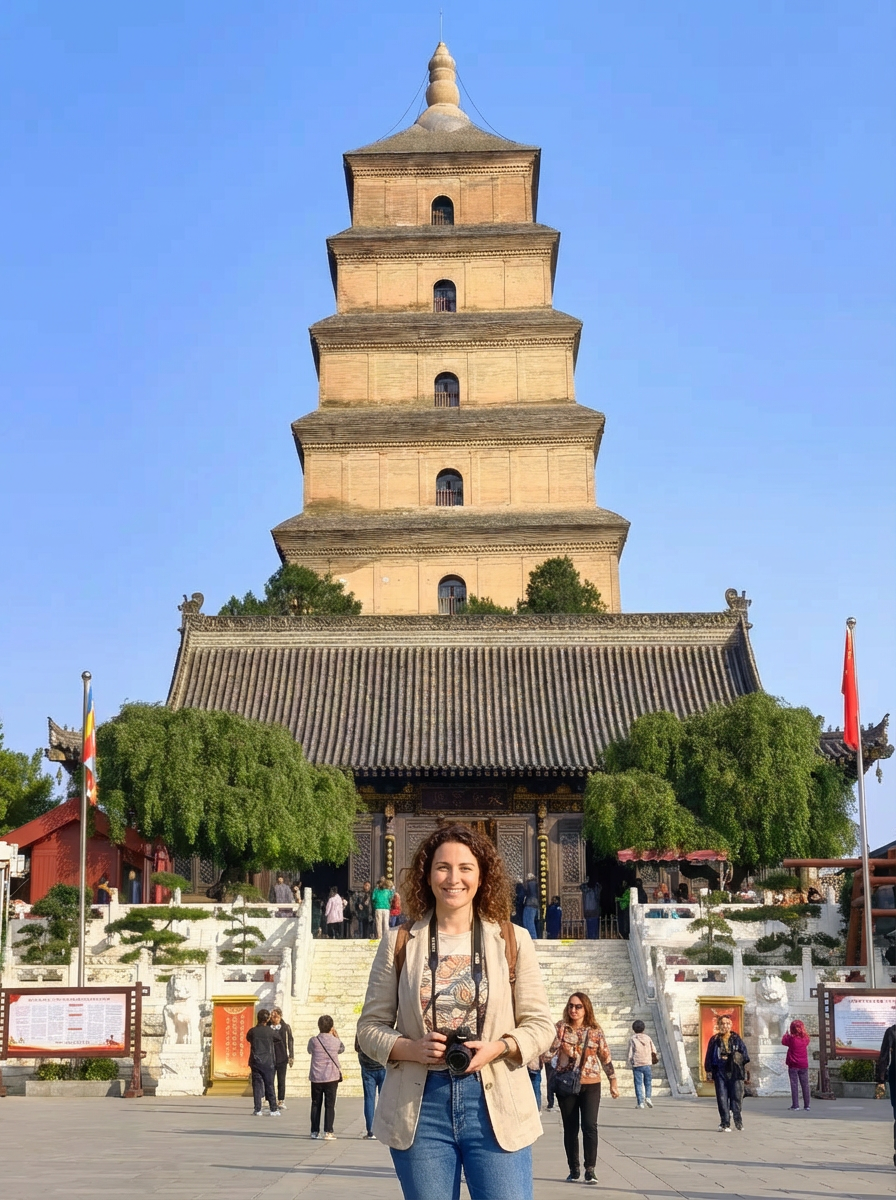
I arrived in the late afternoon. The plaza surrounding the pagoda is a frenzy of modern life—kids flying kites, street food vendors shouting, and the endless click of cameras. It felt a bit like a theme park. But once I bought my ticket and stepped through the gates of the Da Ci'en Temple complex, the volume of the world seemed to dial down. The smell of incense hit me—earthy, sweet, and ancient. It’s a scent that instantly tells your brain: slow down.
The Climb: A Stairway Through Time
"You have to climb it," a monk passing by told me, his saffron robes bright against the grey bricks. I’m not great with stairs, but you don't say no to a monk. The interior of the pagoda is surprisingly modest. It’s wooden, creaky, and steep. As I ascended the spiral staircase, my legs burned, but with every floor, the view transformed.
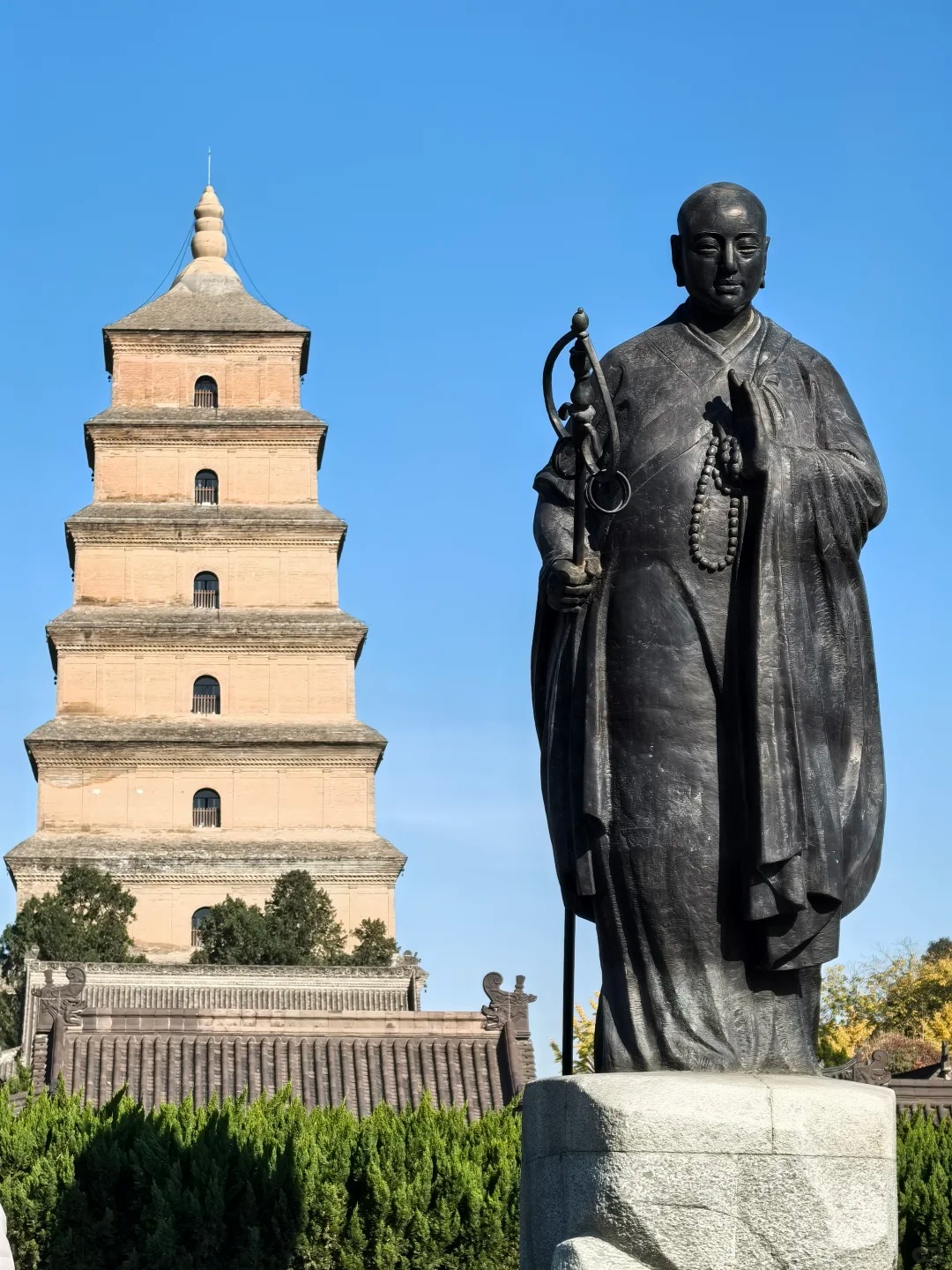
Reaching the top, I peered out of the arched window. The view was a shock. Straight ahead, the perfectly straight axis of modern Xi'an stretched out, lined with skyscrapers and neon lights. But looking down, directly below me, were the curved roofs of the temple, silent and geometric. It was a visual collision of the 7th century and the 21st. I imagined Xuanzang, the legendary monk who traveled to India and back, sitting right here (or in the original structure), translating sutras, looking out at a Chang'an that was the center of the world. Standing there, wiping sweat from my forehead, I felt a strange sense of continuity. Empires fall, skylines change, but this tower just keeps standing.
The Fountain Show: Kitsch or Magical?
I descended just as the sun began to set. People were gathering for the famous musical fountain show in the North Square. Honestly? I expected it to be cheesy. But as the music swelled—a mix of classical Chinese melodies and booming symphonies—and the jets of water shot up, illuminated by lasers, I found myself swept up in it.
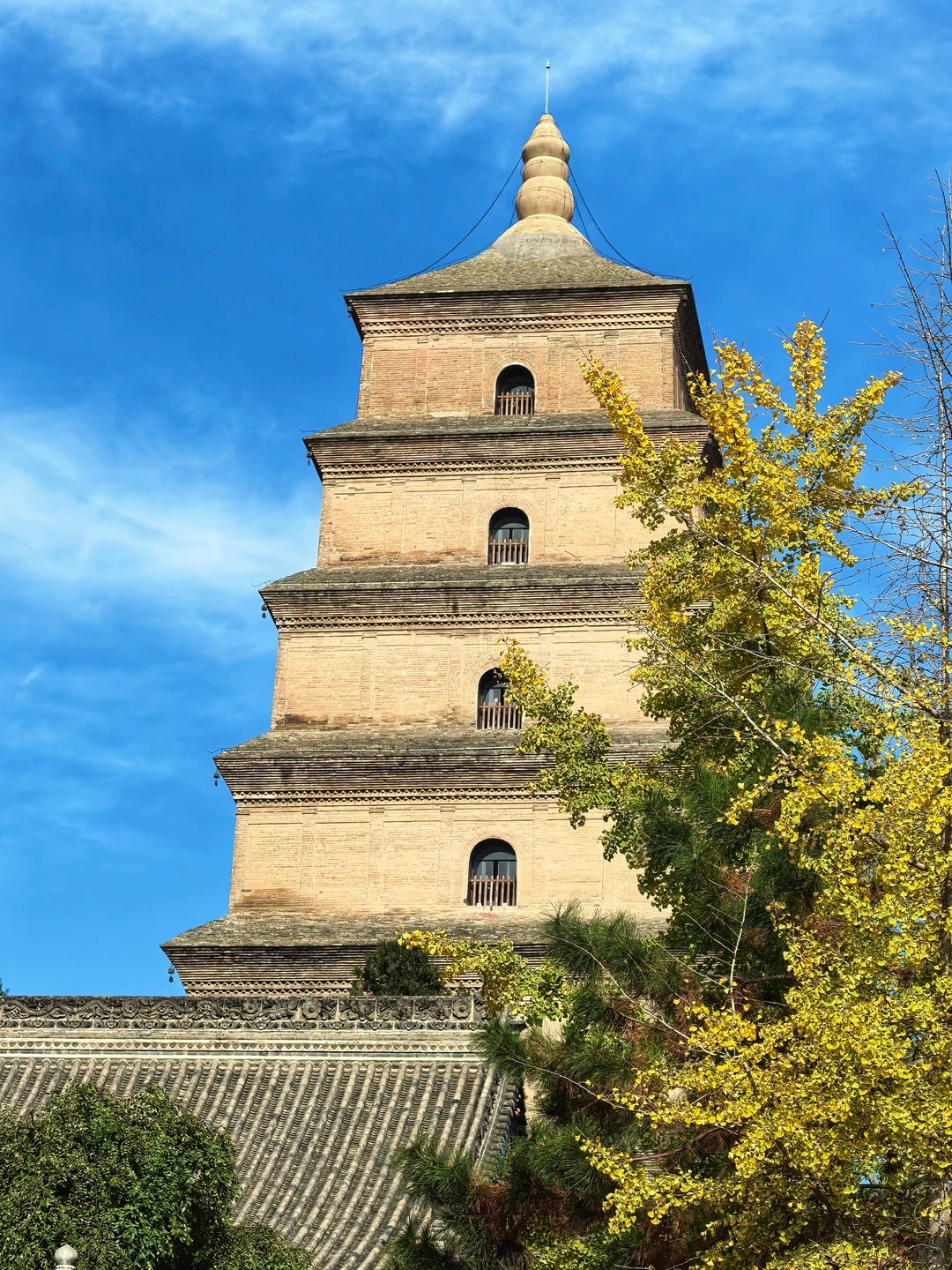
The crowd gasped in unison. I looked around. There were young couples holding hands, old men nodding to the beat, and tourists from every corner of the globe. The pagoda stood in the background, lit up in warm gold, a silent anchor to the spectacle. It wasn't just a light show; it was a celebration of the city's pride.
A Quiet Bowl of Noodles
After the show, I wandered into a small, nondescript noodle shop in a back alley nearby. I ordered a bowl of Biang Biang noodles. The chef slammed the dough against the counter—Biang! Biang!—a rhythmic percussion. Eating those thick, spicy, hand-pulled noodles, with the image of the golden pagoda still
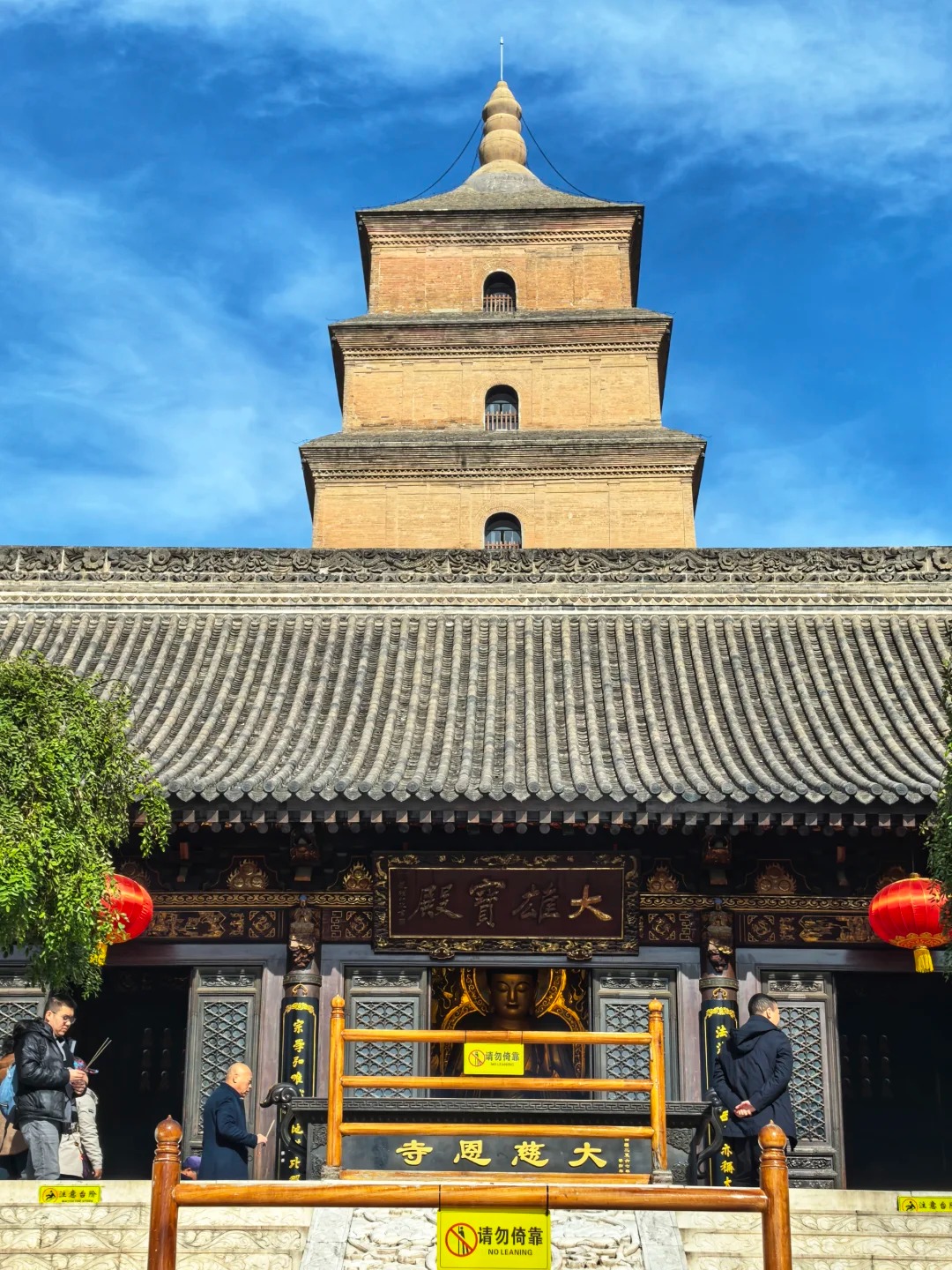
burned into my retinas, I realized that Xi'an’s heritage isn't just in the bricks. It’s in the food, the noise, the unpretentious vigor of the people. The Big Wild Goose Pagoda isn't a relic; it’s the heartbeat of a city that refuses to be just a museum.