History in China is usually measured in dynasties, but on the Silk Road, it is measured in footsteps.
My "China Silk Road tour" was an attempt to trace the ghost of the ancient trade route that linked the East and West. It is a route of poets, merchants, monks, and soldiers. From the imperial grandeur of Xi’an to the desolate beauty of the Dunhuang dunes, this journey felt less like a vacation and more like an archaeology of the soul.
Xi’an: The Starting Point
Every Silk Road journey begins in Xi’an (ancient Chang’an). Standing on top of the Ancient City Wall at sunset, I rented a bicycle. The wall is 14 kilometers long, a complete loop of grey brick that has guarded the city for over 600 years.
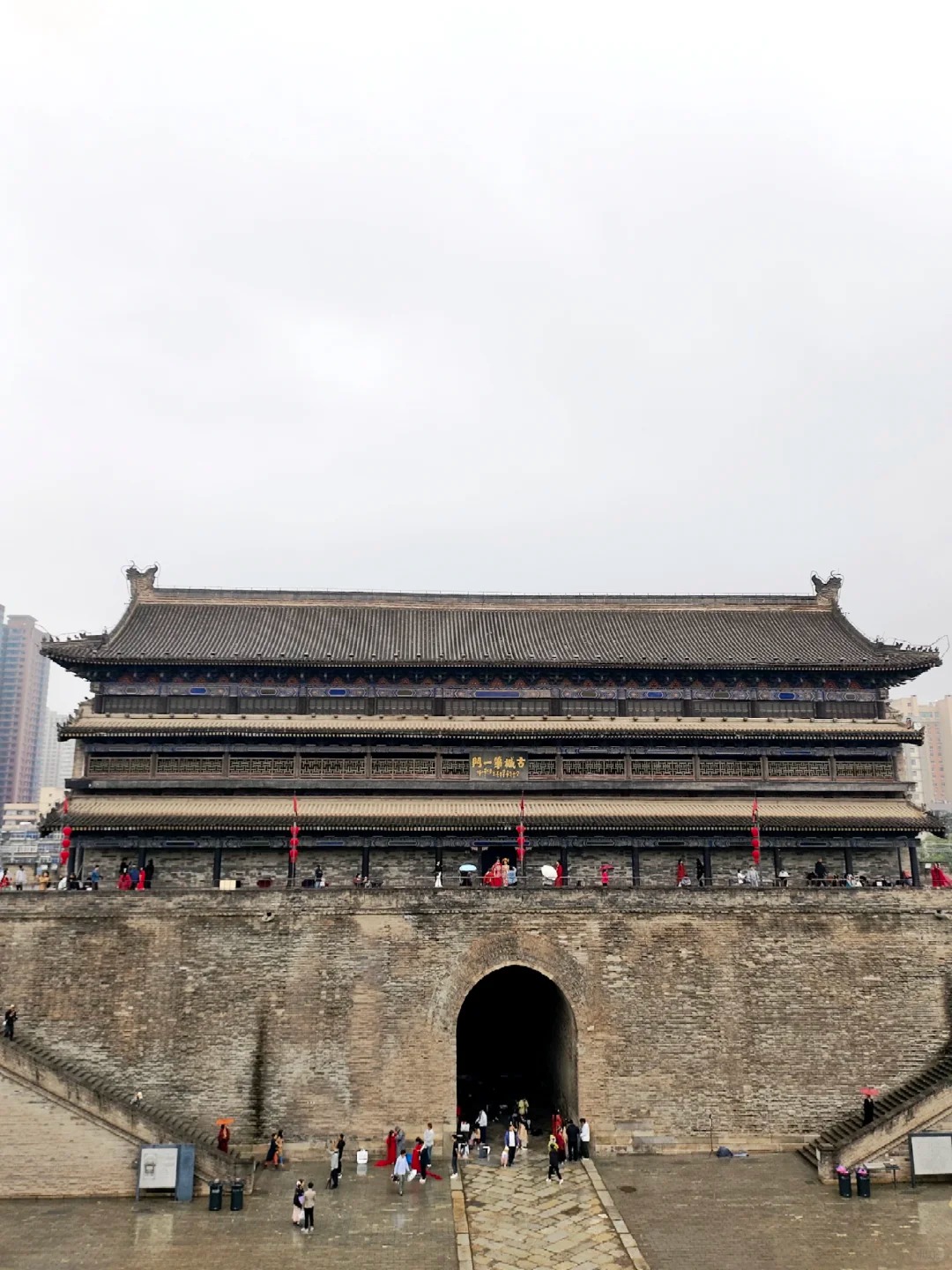
Cycling over the uneven bricks, I watched the city transform. To my left, the modern skyscrapers of the High-Tech Zone glittered with neon. To my right, the bell tower chimed, its sound deep and resonant.
But the real guardians of the Silk Road are underground. I visited the Terracotta Warriors early in the morning, before the crowds. Staring into the pit, I met the gaze of thousands of clay soldiers. Each face is unique—some stern, some weary, some young. They were built to protect an emperor in the afterlife, but they also stand as silent witnesses to the power that launched the first caravans westward.
For lunch, I dove into the Muslim Quarter. The air was thick with the smell of roasting mutton and sesame oil. I grabbed a Roujiamo (Chinese hamburger), the meat stewed for hours until it melted into the bread. It was the taste of the crossroads—wheat from the plains mixed with spices from the west.
The Hexi Corridor: The Throat of China
Taking the high-speed train west, we entered the Hexi Corridor, a narrow strip of oasis trapped between the Qilian Mountains and the Gobi Desert. This was the lifeline of the Silk Road.
I stopped in Jiayuguan, the western end of the Great Wall. Unlike the stone dragon of Beijing, this fort is made of rammed earth, standing stark and lonely against the desert backdrop. I stood on the ramparts looking out at the endless yellow sand. This was once the end of the known world. For exiled poets and banished officials, walking through the "Gate of Sighs" meant leaving civilization behind.
Dunhuang: The Library Cave
The jewel of my trip was Dunhuang. This oasis city feels like a miracle, a patch of green amidst a sea of sand.
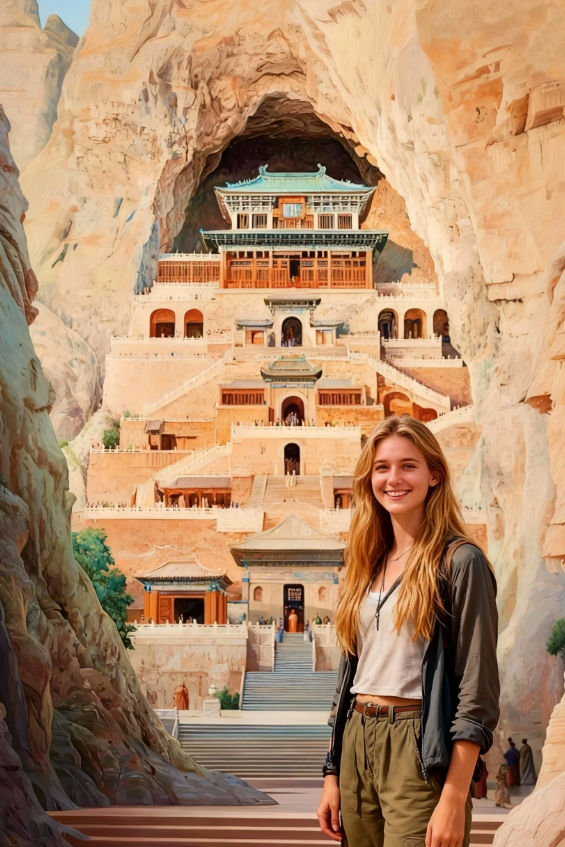
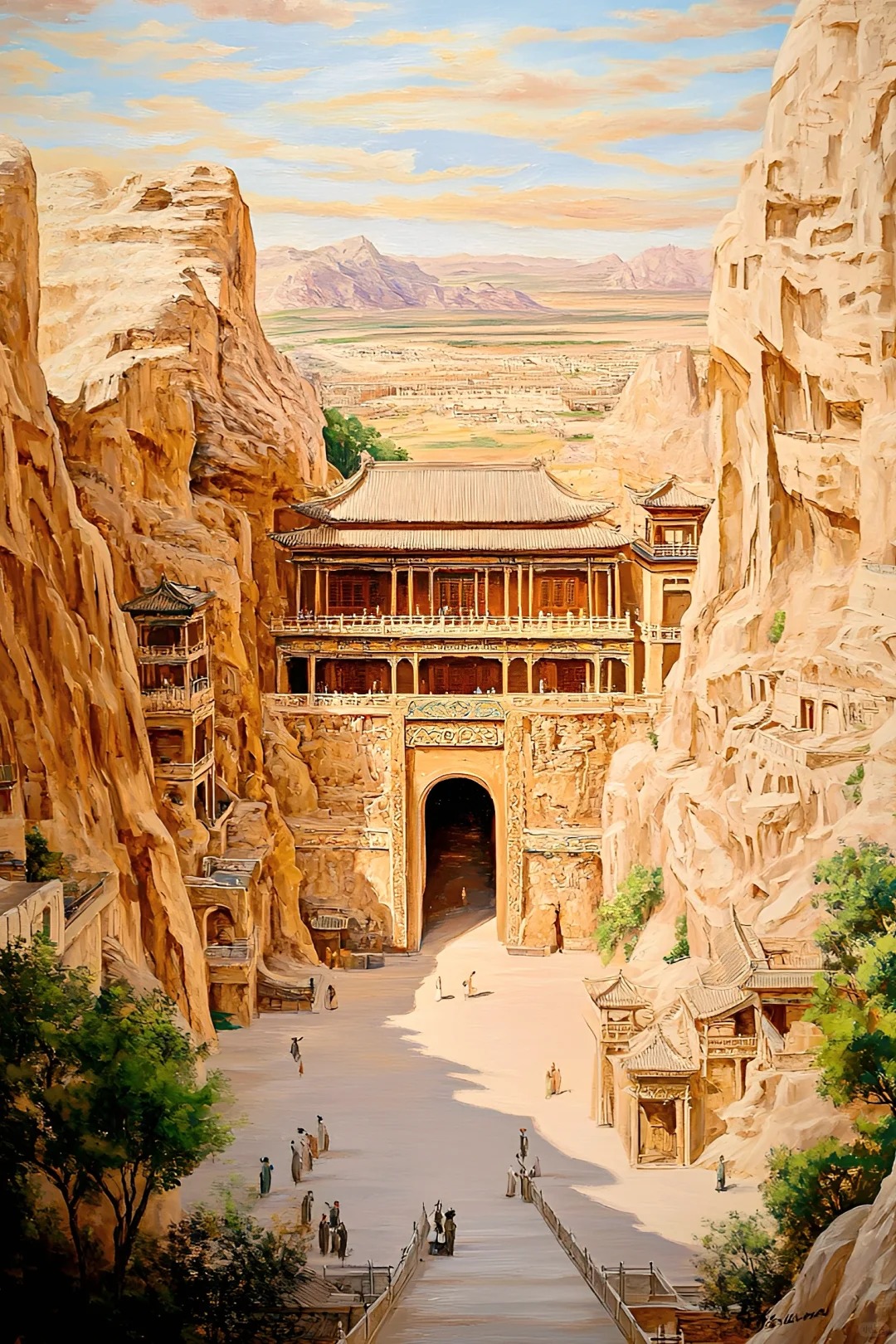
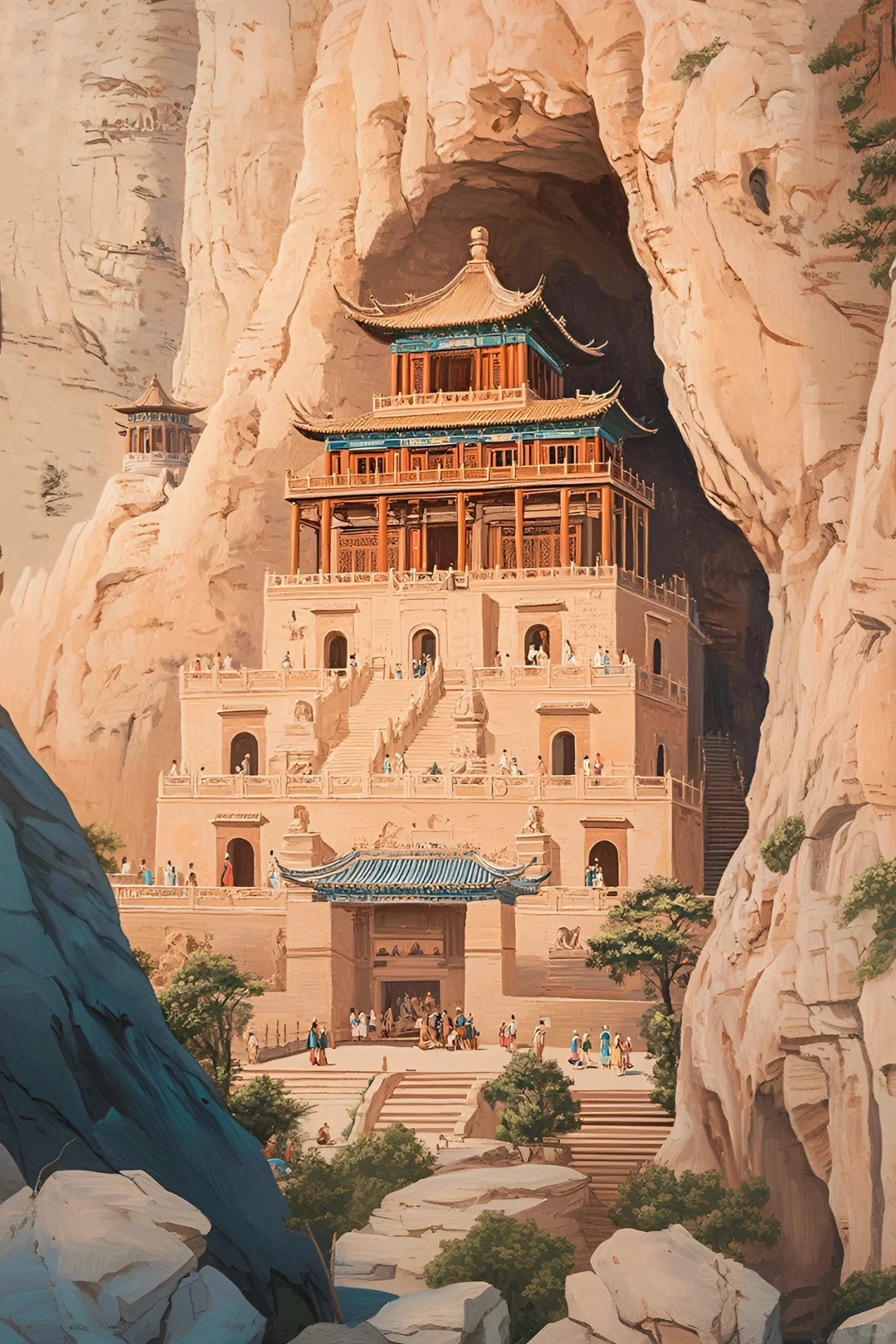
I went to the Mogao Caves, a honeycomb of temples carved into a cliff face. Inside, in the cool darkness, my flashlight beam danced over statues of Buddha and murals painted 1,000 years ago. The colors were still vibrant—lapis lazuli blue from Afghanistan, green from malachite.
The murals depicted not just gods, but life. I saw paintings of merchants leading camels, princes traveling, and musicians playing lutes. It was a graphic novel of the medieval world. The guide told me about the "Library Cave," where 50,000 manuscripts were found, preserving the knowledge of a millennium. It was humbling to stand in a place that had been a global center of learning when my own ancestors were still living in mud huts.
The Singing Sands and the Crescent Moon
That evening, I climbed the Mingsha Shan (Singing Sand Mountains). The dunes here are massive, rising hundreds of meters. Climbing sand is exhausting—two steps up, one step back.
But at the top, the reward was silence. I sat on the ridge and watched the sun set over the Crescent Moon Spring, a small, half-moon shaped lake that has existed among these shifting sands for 2,000 years without being buried.
As the wind picked up, the sand began to vibrate. It made a low, humming sound—the "singing" of the dunes. It sounded like a distant choir, or perhaps the phantom bells of the camel caravans that used to pass this way.
I closed my eyes and imagined them: the smell of spices, the sound of foreign tongues, the hope of fortune.
Why You Must Go
A "China Silk Road tour" is a lesson in connection. It reminds us that globalization isn't new; we have always been trading, traveling, and learning from each other. It is a journey of stark contrasts—between the crowded city and the empty desert, between the permanence of stone and the shifting of sand.