"Is this real?" That was my first thought as I stood in the parking lot, looking up.
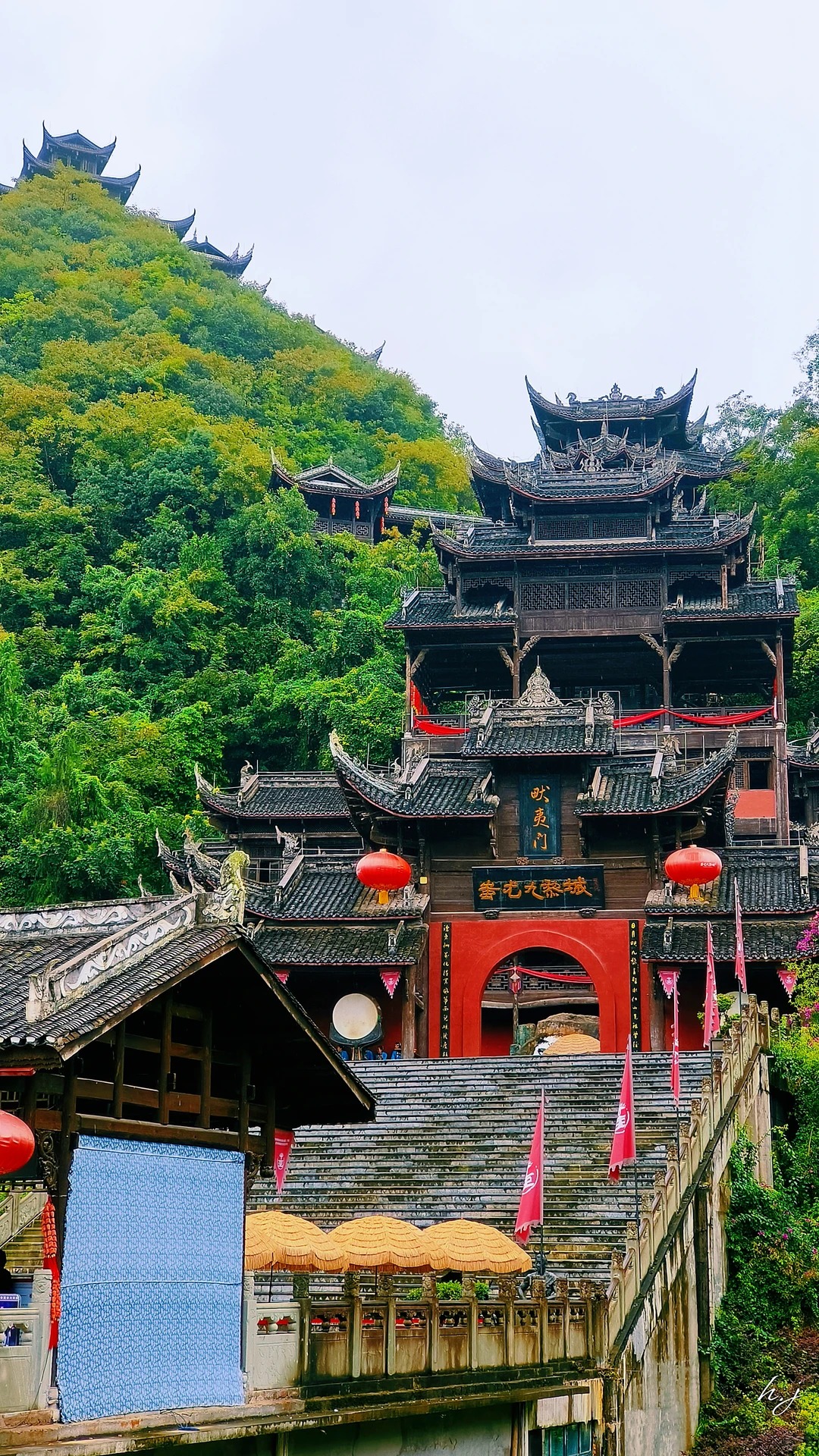
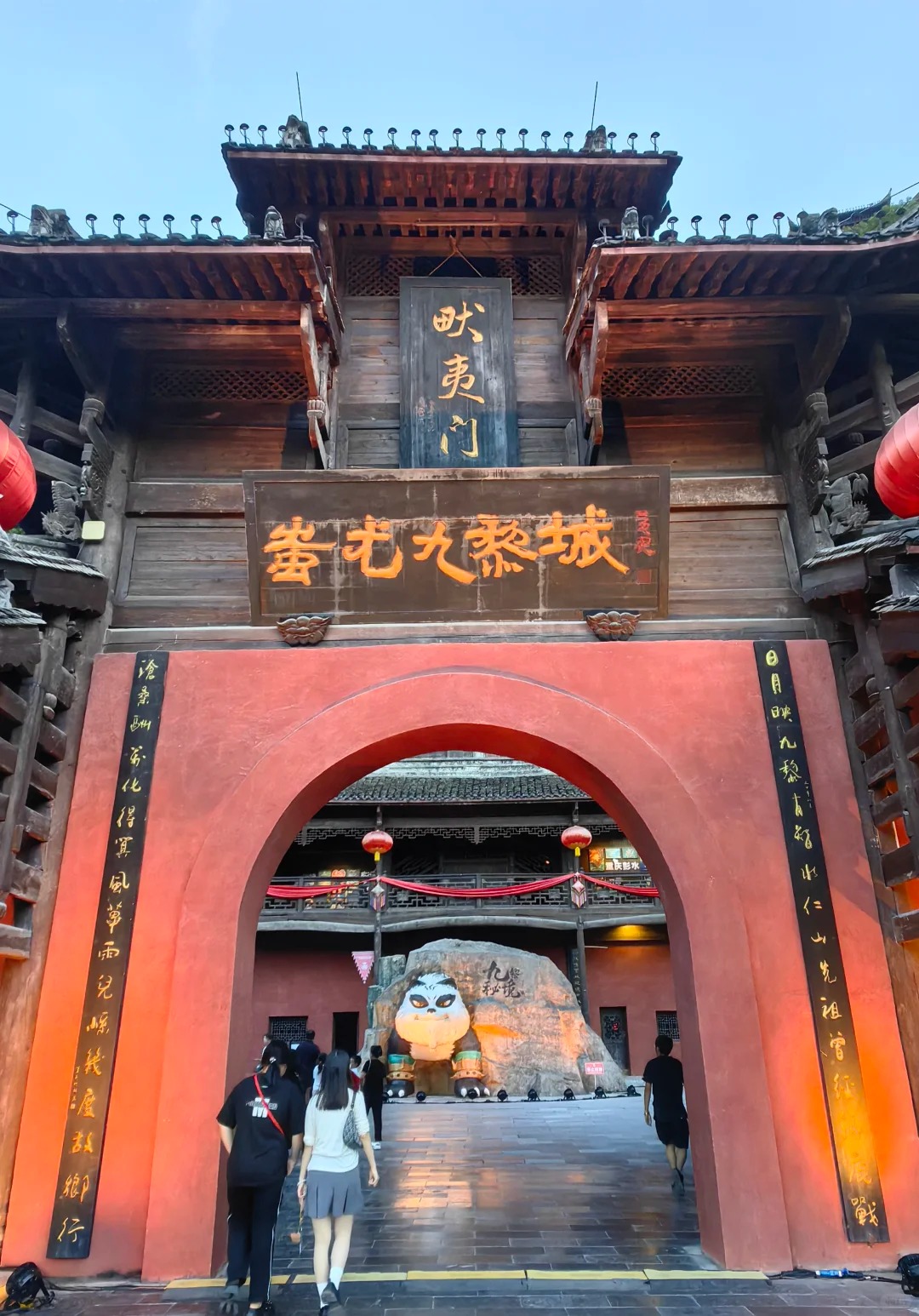
Chiyou Jiuli City, located in Pengshui County, looks like something out of a fantasy novel. It doesn't look built; it looks grown. The wooden structures pile on top of each other, climbing the steep hillside in a chaotic, beautiful stack of stilt houses, pavilions, and towers.
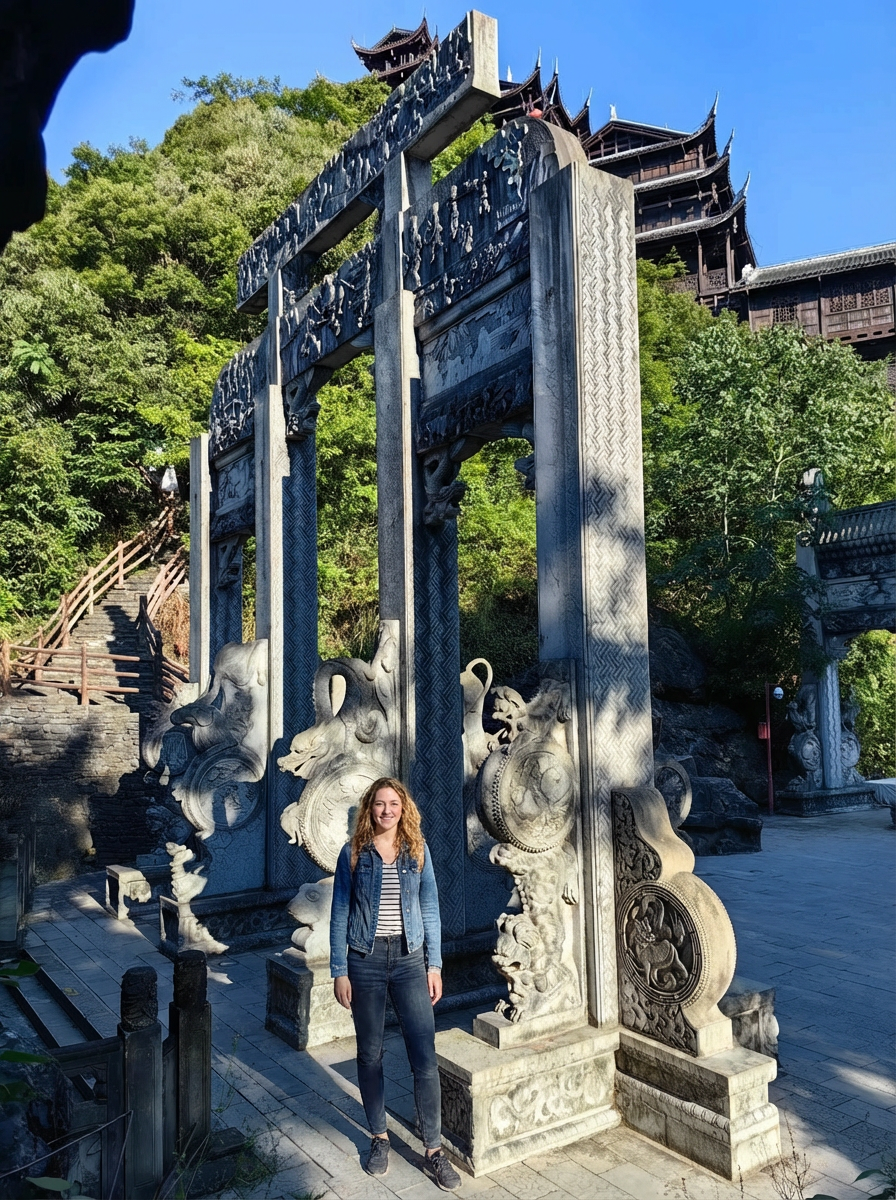
I walked through the massive stone gate. The air smelled of wood varnish and burning incense. This is the spiritual capital of the Miao people, dedicated to their mythical ancestor, Chiyou.
I started climbing. The architecture here is the star. It’s called Diaojiaolou (stilt houses), but on steroids. I ran my hand along the wooden pillars of the Jiuli Palace. The wood was cool and smooth. I was told that the entire structure—all nine stories of it—was built without a single iron nail. It’s all mortise and tenon joints, a giant 3D puzzle held together by gravity and genius.
As I climbed higher, the sound of jingling metal grew louder.
I turned into a courtyard and saw them: Miao women in full ceremonial dress. It was breathtaking. They wore pleated skirts that swirled like water when they moved, but it was the silver that stole the show. Massive silver crowns shaped like bull horns, heavy necklaces, intricate earrings. They weren't just jewelry; they were wearable history books.
One of the women, seeing me stare, waved me over. Her name was A-Mei. She didn't speak much English, and my Mandarin is rusty, but smiles are universal. She let me hold one of the silver necklaces. It was shockingly heavy. "For protection," she mimed, tapping her chest. "And for beauty."
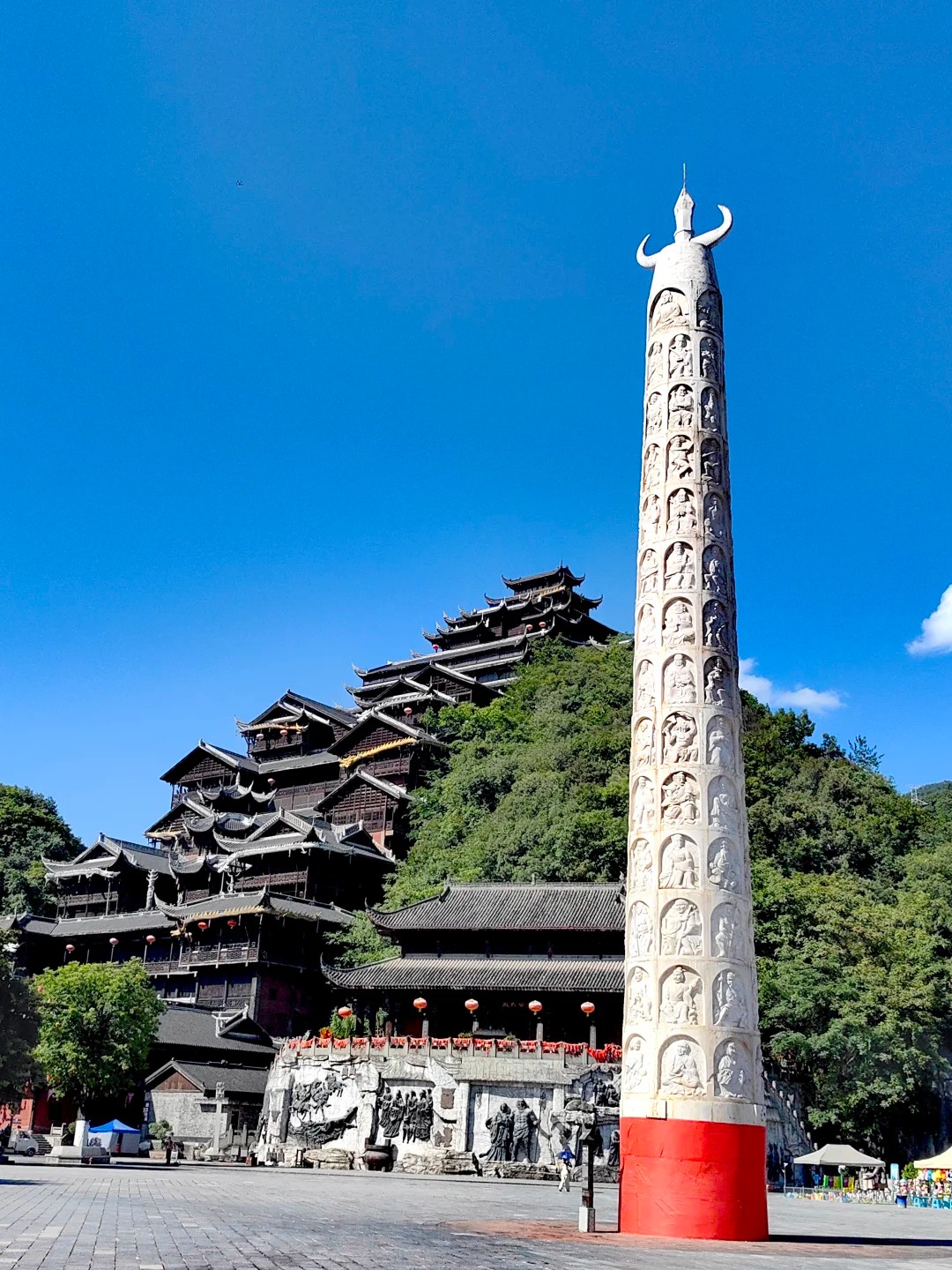
I watched a performance in the central square. It wasn't a polished Broadway show. It was raw. Men beat on massive drums that vibrated in my chest. Dancers stomped their feet in a rhythm that felt ancient. They enacted the battles of Chiyou, full of shouting and energy. It felt less like a performance for tourists and more like a ritual they would be doing even if we weren't there.
I was hungry, so I followed my nose to the food street. I ordered a bowl of Suan Tang Yu (Sour Soup Fish). The broth was bright red, made from fermented tomatoes and chilies. The first sip made my lips pucker—it was sharp, sour, and spicy all at once. The fish was tender, melting in my mouth. It was the kind of food that wakes you up.
I climbed to the very top of the highest pavilion as the sun went down. The view was spectacular. The Wujiang River flowed green and silent below. The lights of the city began to turn on, outlining the complex rooflines in gold.
Standing there, looking at the curved eaves that looked like bird wings ready to take flight, I realized that Chiyou Jiuli City is a statement. It says: "We are still here." In a modernizing China, where concrete boxes are replacing traditional homes, this wooden fortress is a defiant, beautiful shout of identity.