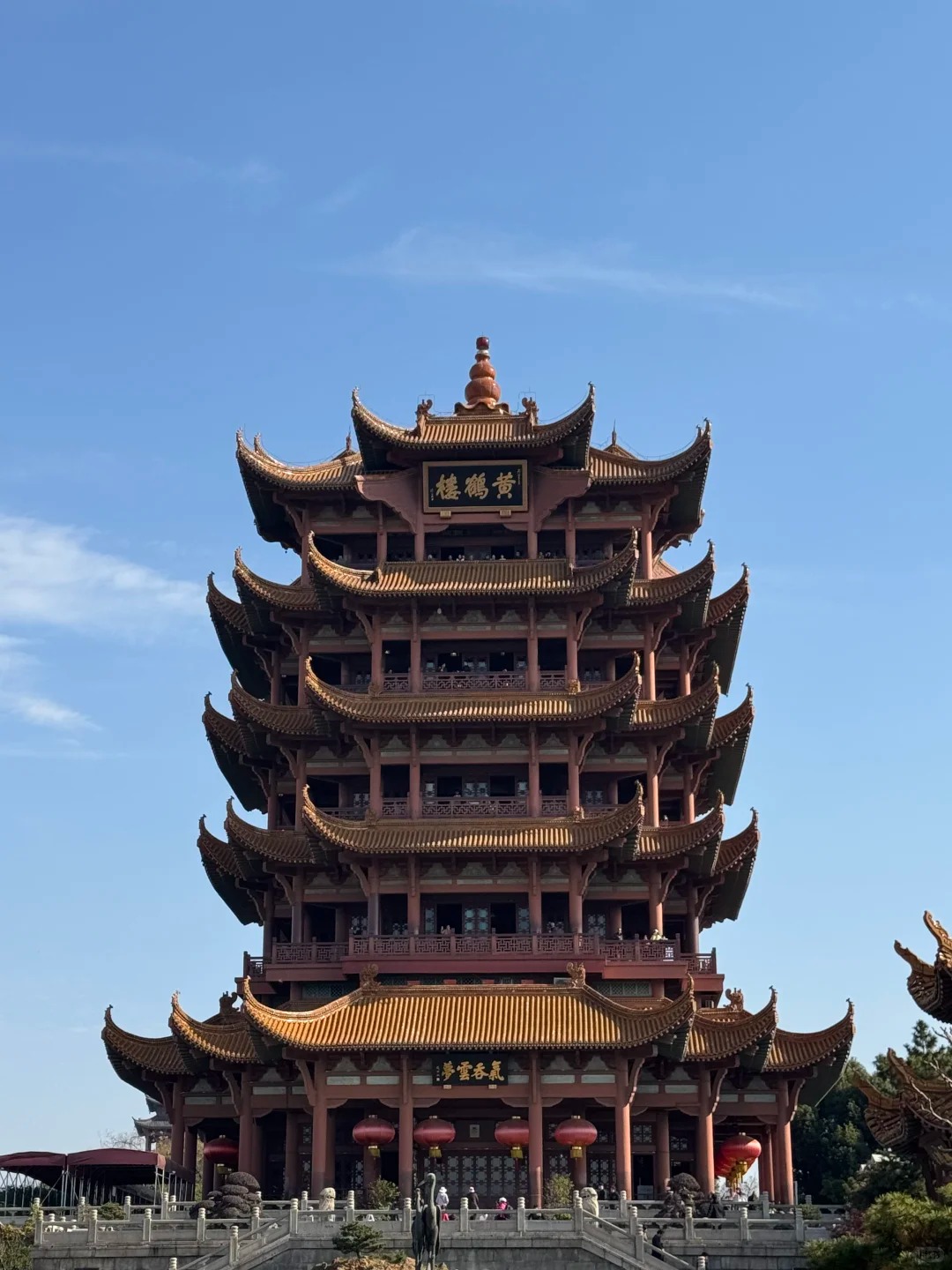
The elevator hummed softly, a modern anachronism in a structure that exists in the collective memory of a thousand years. As the doors slid open on the fifth floor of the Yellow Crane Tower, the humid air of Wuhan rushed in to greet me, carrying with it the faint, metallic tang of the Yangtze River.

I walked to the balustrade and looked out. This wasn't just a view; it was a collision of eras. To my left, the mighty Yangtze rolled eastward, a ribbon of brown silt and power that has defined Chinese civilization. Spanning it was the First Yangtze River Bridge, its steel truss looking like a toy set against the vastness of the water. Below, the urban sprawl of Wuhan—the "Chicago of China"—pulsated with life. Skyscrapers jostled for space, their glass facades reflecting the setting sun.
But here, gripping the red lacquered railing, I felt anchored in the Tang Dynasty. I closed my eyes and tried to summon the ghost of Cui Hao, the poet whose verses famously intimidated even the great Li Bai into silence. "The yellow crane has long since gone, leaving only the Yellow Crane Tower," I whispered. It’s a strange feeling, standing in a place that is a replica (rebuilt in 1981) yet feels spiritually original. The physical tower may be new, but the location—Snake Hill—and the intent remain unchanged.
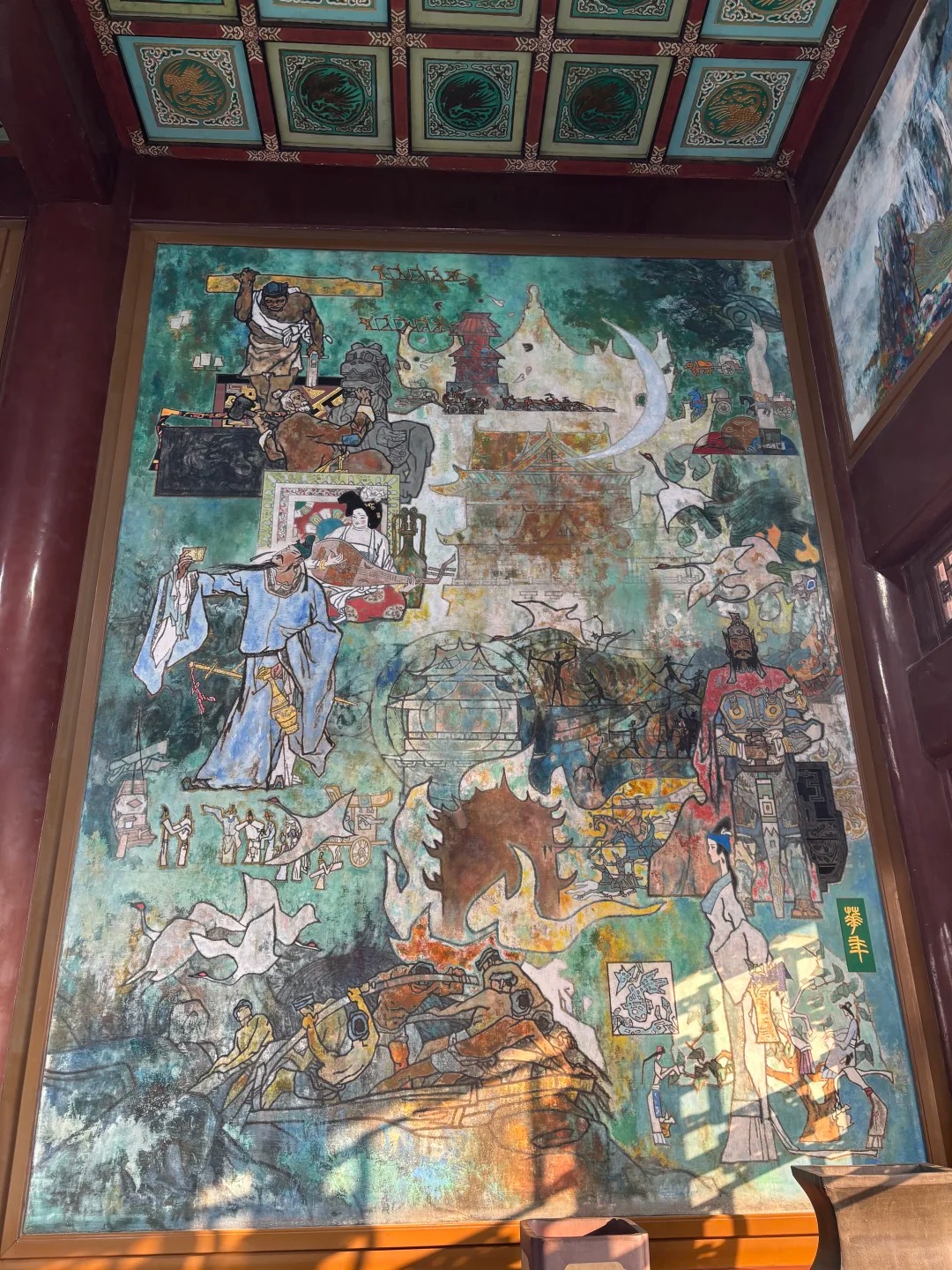
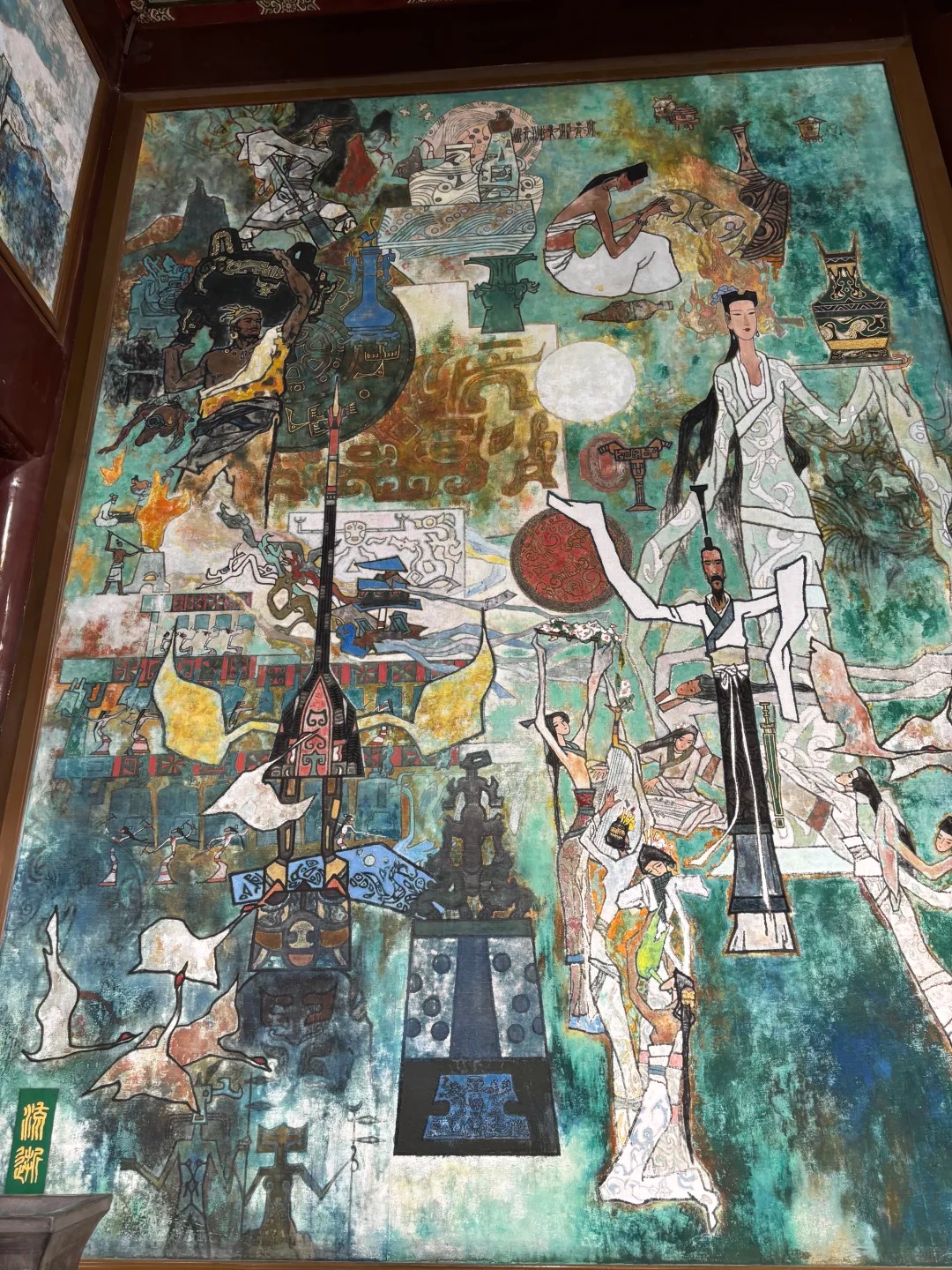
A local guide, a young woman named Mei with a bob haircut and a passion for history, tapped my shoulder. "You know," she said, pointing to a mural of a Taoist priest and a dancing crane, "it’s not just about the poetry. It’s about the longing. Everyone who came here was leaving for somewhere else, looking down at the river that would take them away."
That sentiment stuck with me. The Yellow Crane Tower isn't just a tourist spot; it’s a monument to farewells.
After descending, the philosophical weight of the tower gave way to the earthly delights of Hubu Alley nearby. I sat on a plastic stool, knees bumping against a low table, and ordered a bowl of Reganmian—Hot Dry Noodles. The vendor, a man with flour-dusted forearms, slapped the bowl down with a grin. The noodles were coated in a thick, rich sesame paste, topped with pickled beans and chili oil. The first bite was a shock of texture: the chew of the alkaline noodles, the crunch of the beans, the nutty explosion of sesame. It was the taste of Wuhan itself—bold, unpretentious, and fiery.
Looking back at the tower from the street, glowing golden under the night lights, it looked like a lantern hung in the sky to guide wandering poets home.