“Jianmen, the most dangerous pass under heaven.” I had read this line in history books when I was a child, reading about the Three Kingdoms. Li Bai, the famous poet, had written about its treacherous nature, describing the road as “steeper than climbing to the blue sky.” But reading about it is nothing compared to standing on the edge of a 300-meter cliff, gripping a rusty iron chain, and realizing just how terrifyingly true those words are. My journey to Jianmen Pass** was a step back into an era of warlords, strategy, and breathtaking natural defenses.
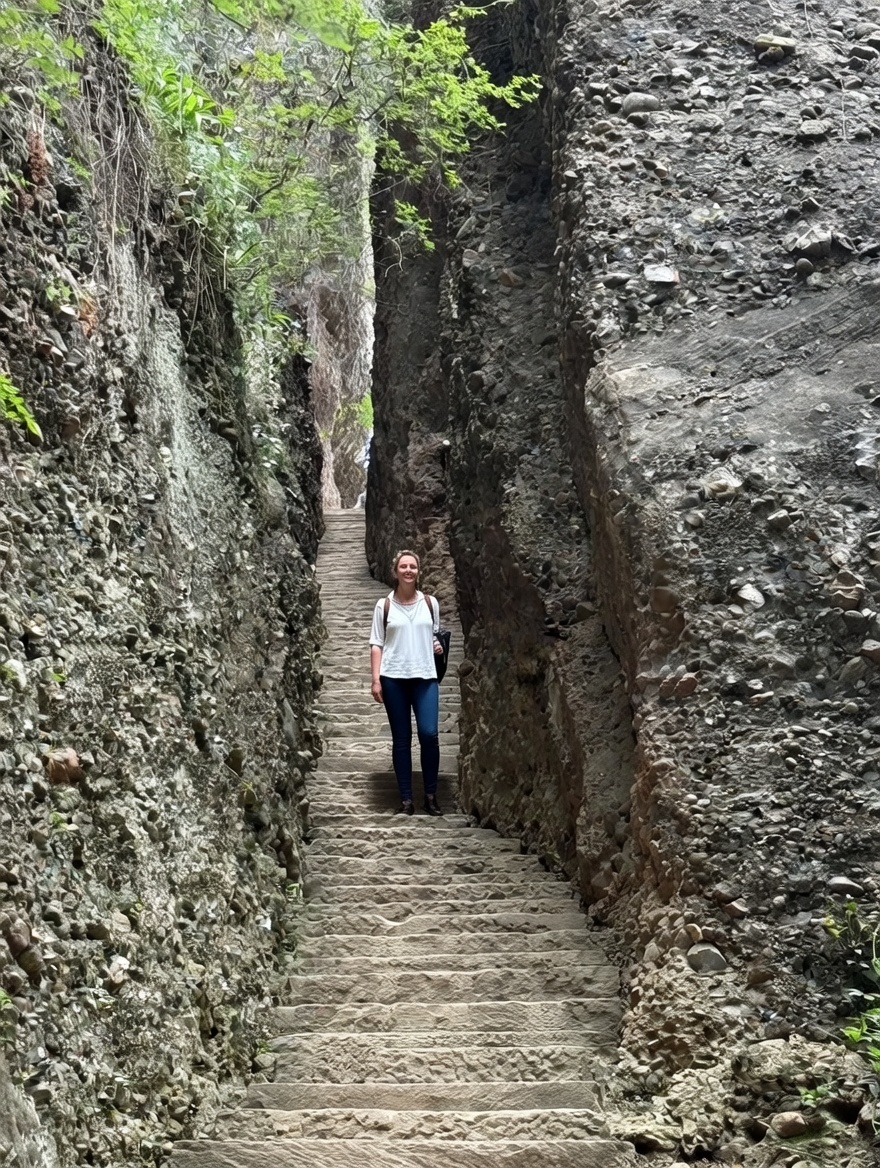
The pass is located in Guangyuan, about three hours north of Chengdu. As I approached the scenic area, the landscape began to change. The rolling hills of the Sichuan basin were replaced by jagged limestone peaks. The road wound through a valley that seemed to be getting tighter and tighter, as if the mountains were squeezing us. Suddenly, the bus stopped, and I looked out the window. There they were. The cliffs of Jianmen. They rise straight up from the valley floor, sheer and vertical, facing each other like two giant doors slammed shut in the face of invaders. It looked like the earth had cracked open.
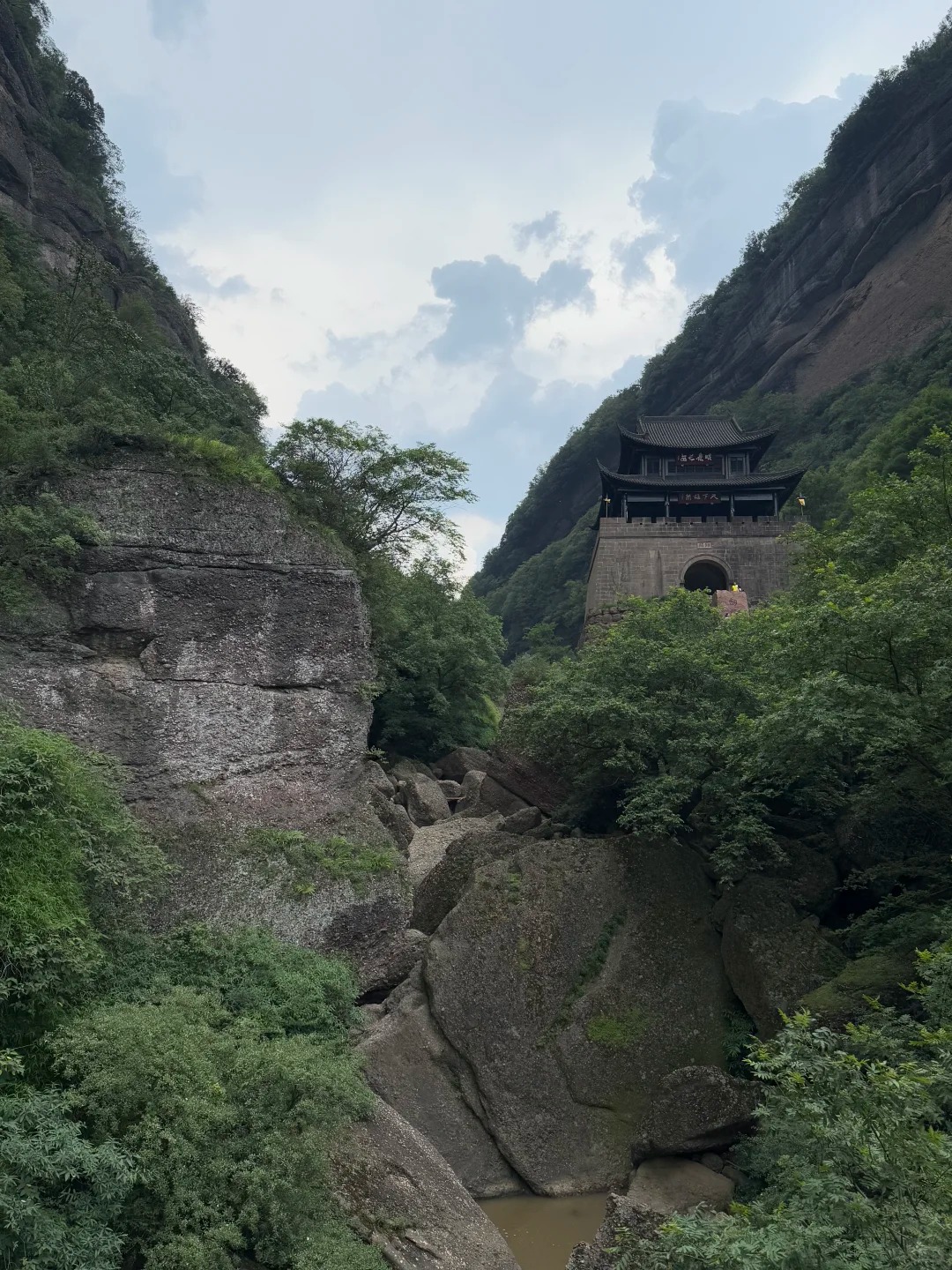
I started my trek from the bottom of the valley. The atmosphere was humid and heavy. I walked past the “Lion Rock,” a solitary peak that stands like a sentry. But the real challenge was the Bird Plank Road. This is a narrow walkway carved into the sheer face of the cliff. In ancient times, it was the only way through the pass. Some parts are tunnels chiseled through the rock; others are wooden planks bolted into the cliff face, with nothing but air between your feet and the valley floor hundreds of meters below.
I put on a safety helmet and started the climb. My hands were sweating. The path was barely wide enough for one person. I clung to the iron chains running along the cliffside. I looked down once, just once, and immediately regretted it. The drop was dizzying. The trees below looked like toys. The wind gusted through the canyon, howling like a ghost. It was terrifying, but also exhilarating. I tried to imagine the soldiers of the Shu Han army carrying spears and armor along this path. It must have been a nightmare. This was the ultimate defense. It didn’t matter how many soldiers the enemy had; only one person at a time could pass through here. If you defended the top, you could hold off an army of ten thousand. “One man guards the pass, ten thousand cannot open it.” Standing on that plank, I understood the genius of that strategy.
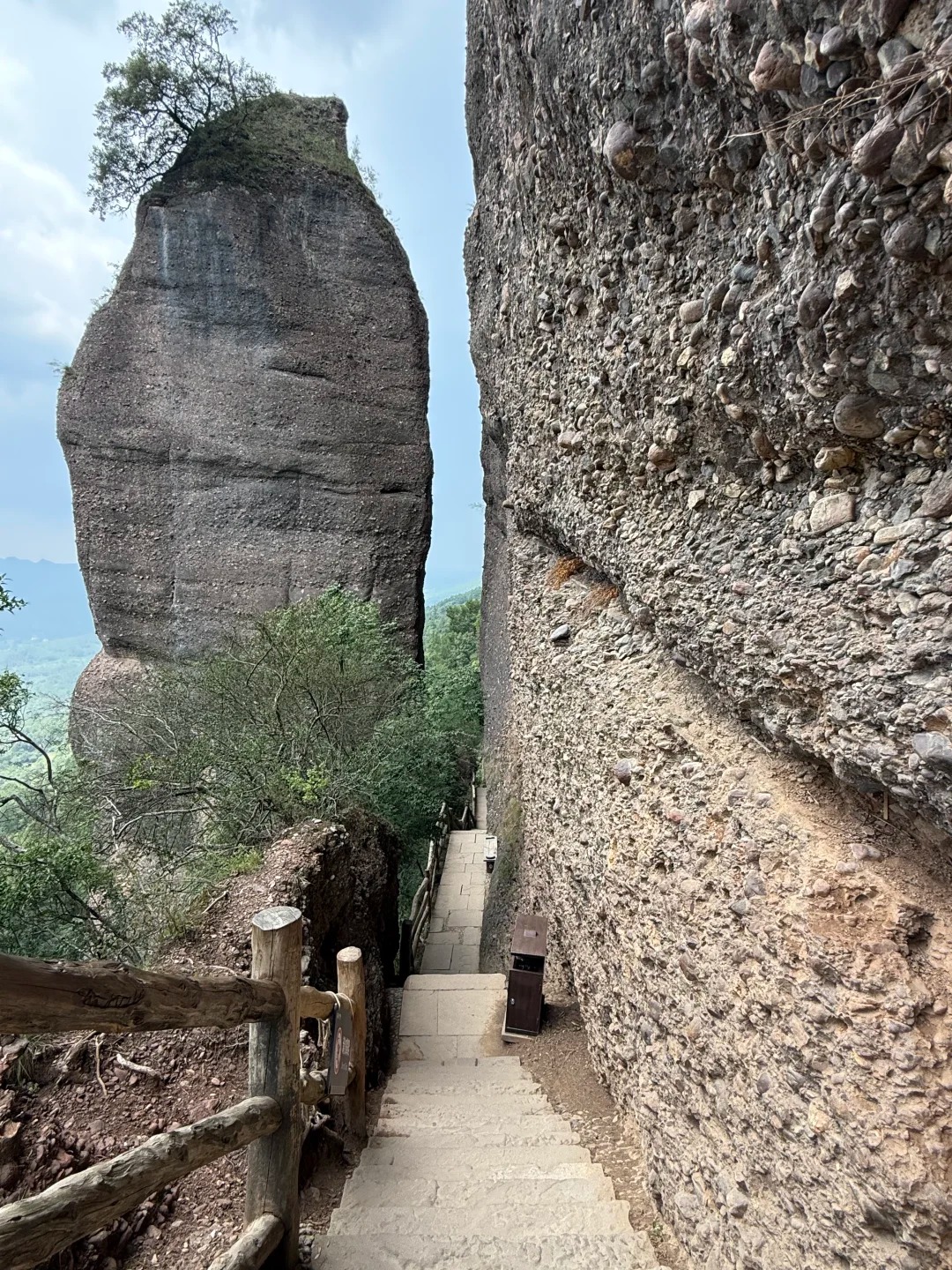
As I climbed higher, the path eventually widened, leading to the summit. The view from the top was spectacular. I could see the Jianmen Seventy-Two Peaks stretching out into the distance like a forest of swords. The view is unobstructed and dramatic. The main attraction at the summit is the Guanlou (Guan Tower). It is a majestic three-story wooden fort. I climbed to the top of the tower. The wind was fierce up there, flapping the flags that bore the name “SHU” (the ancient kingdom). Standing on the tower, looking down at the tiny valley entrance, I could almost hear the clash of swords and the war drums from 1,800 years ago. This was the border between the civilized Sichuan plain and the wild north. This is where the destiny of empires was decided.
I also visited the Guan Tomb, the burial place of a general who fell defending the pass. It was a quiet, solemn place, surrounded by ancient cypress trees. It served as a poignant reminder of the human cost of war. For every strategic genius of a general, there were thousands of young men who died trying to cross or defend these cliffs.

After hours of climbing and walking, I was starving. Jianmen Pass is famous for its Bean Curd (Tofu). They say, “Eat bean curd at Jianmen, and you won’t need to eat anywhere else.” I stopped at a small restaurant in the tourist village. The menu had hundreds of tofu dishes—spicy, sweet, braised, dry-fried. I ordered a spicy boiled tofu dish. It was incredible. The tofu here is special because the water is high-quality, making the tofu incredibly tender and firm, holding its shape even in boiling sauce. The Sichuan peppercorns numbed my tongue, and the chili oil warmed me up. Sitting there, wiping the sweat from my forehead, I felt recharged. It was a hearty, peasant meal that felt appropriate for a place with such a rugged history.
Before leaving, I walked across the Glass Trestle, a modern addition that offers a bird’s-eye view of the canyon. It was terrifying, looking down through the glass at the abyss, but it provided a clear view of the limestone strata that make this region so unique. It looked like the pages of a giant stone book, twisted and tilted by millions of years of geological movement.

Visiting Jianmen Pass is not just a sightseeing trip; it is a physical and historical immersion. It makes you appreciate the difficulty of travel in ancient times. We drive through tunnels and highways today, taking it for granted. But standing on that cliffside plank road, you realize that for our ancestors, crossing a mountain like this was a life-and-death struggle. It took courage, determination, and a bit of madness.
If you are interested in Chinese history, or if you just want to experience one of the most dramatic landscapes in China, you must go to Jianmen. Wear comfortable shoes, bring water, and don’t be afraid of heights. Stand on the tower, feel the wind, and look out at the “Sword Peaks.” You will feel like a general surveying his command. It is a place where history is carved into the rock, and where the spirit of the Three Kingdoms still lingers in the wind.