There is a tree that defines resilience in the heart of Asia's deserts: the Populus euphratica, or Euphrates poplar. And there is one place where its annual, defiantly brilliant performance is most spectacular: Ejina Banner, in the western reaches of Inner Mongolia. I timed my visit for mid-October, chasing what is arguably one of China's most ephemeral and breathtaking natural phenomena—the golden transformation of these ancient trees against the harsh Gobi Desert.

The journey there was part of the experience. From Jiuquan, you drive for hours through an increasingly barren landscape, a vastness of gravel and tawny earth. Just as the monotony begins to feel eternal, you see them. First, just a fringe of gold on the horizon. Then, as you enter the Heihe River basin—the lifeline of this oasis—the forest reveals itself. It’s not a dense, towering woodland. It’s a sparse, majestic gathering of veterans. Their forms are what captivate you first: twisted, gnarled, sculpted by decades of relentless wind and sand. Some look like dancers frozen in mid-twist; others like old scholars bowed under the weight of wisdom.

I rented a bicycle in Dalai Hubu Town and spent two days pedaling slowly along the dusty paths between the Eight Bridges area. The light was everything. At midday, the sun set the leaves on fire, a blinding, incandescent gold. But it was at dawn and dusk that the forest truly sang. I woke in the dark to reach a spot called "One to Four Bridges" for sunrise. As the first pink light touched the highest leaves, the entire forest seemed to ignite slowly from the top down. The still water of the river mirrored the spectacle, creating a world of double gold. The silence was profound, broken only by the rustle of falling leaves—a soft, golden rain.
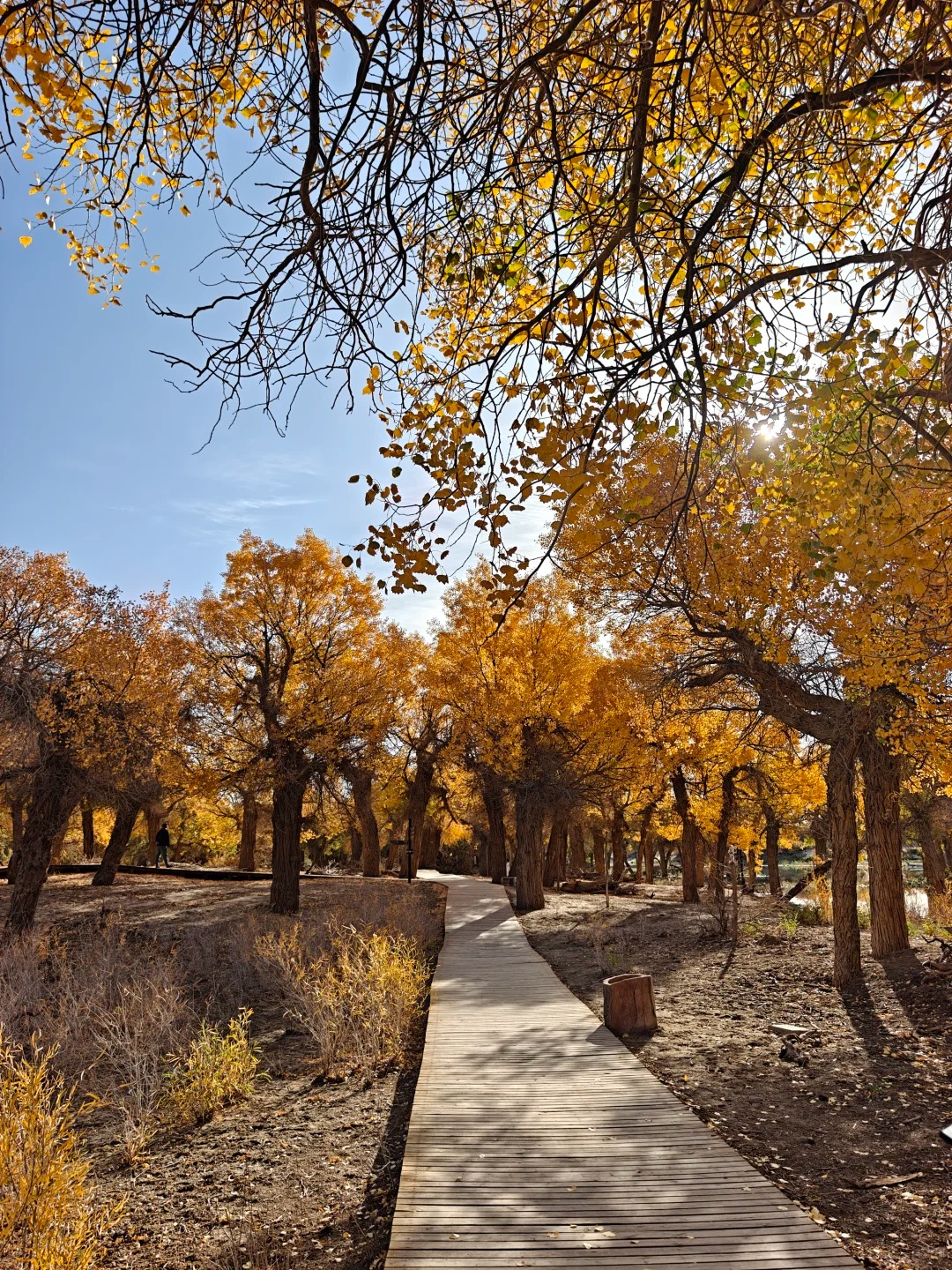
I met an elderly photographer who had been coming for twenty years. He told me, "These trees are not just about beauty. They are history. Their roots go down thirty meters to find water. They live for a thousand years, stand dead for another thousand, and take a final thousand to fall to dust. They are the true guardians of the desert." His words changed my gaze. I started to see not just color, but character in each trunk—the scars, the hollows, the defiant upward reach of branches long dead.
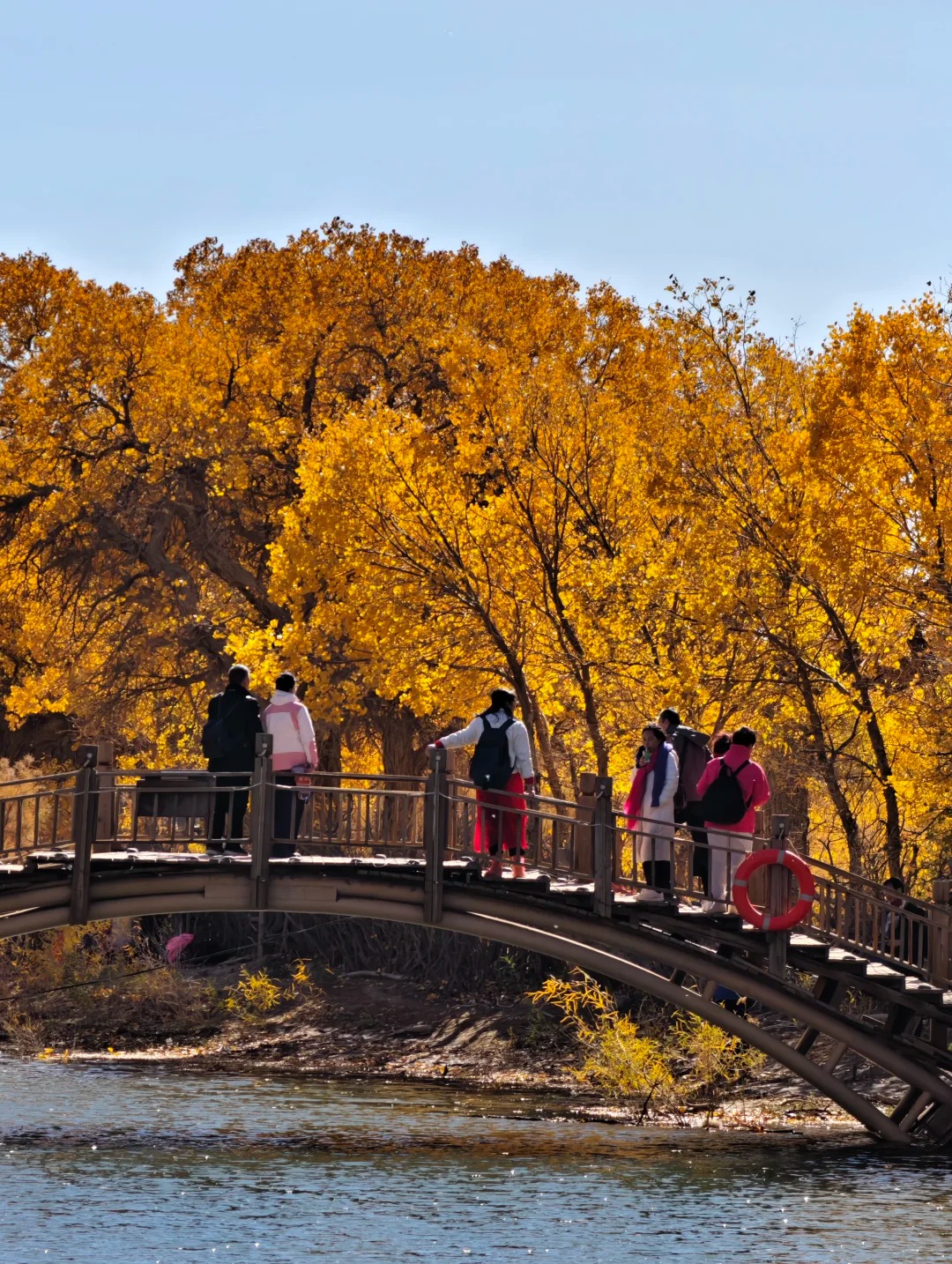
At the "Strange Forest," I wandered among trees that seemed to tell myths. Under one colossal, skeleton-like poplar, I sat for a long time. A local herder passed by with a few sheep. He nodded and said simply, "They are stubborn, like us." The golden leaves of Ejina are a celebration, yes. But it's a fierce, poignant celebration—a short, vibrant song sung at the edge of survival. Leaving, I took one last look at the sea of gold fading into the desert haze. It felt less like leaving a forest and more like witnessing a sacred, ancient ritual of light and endurance.