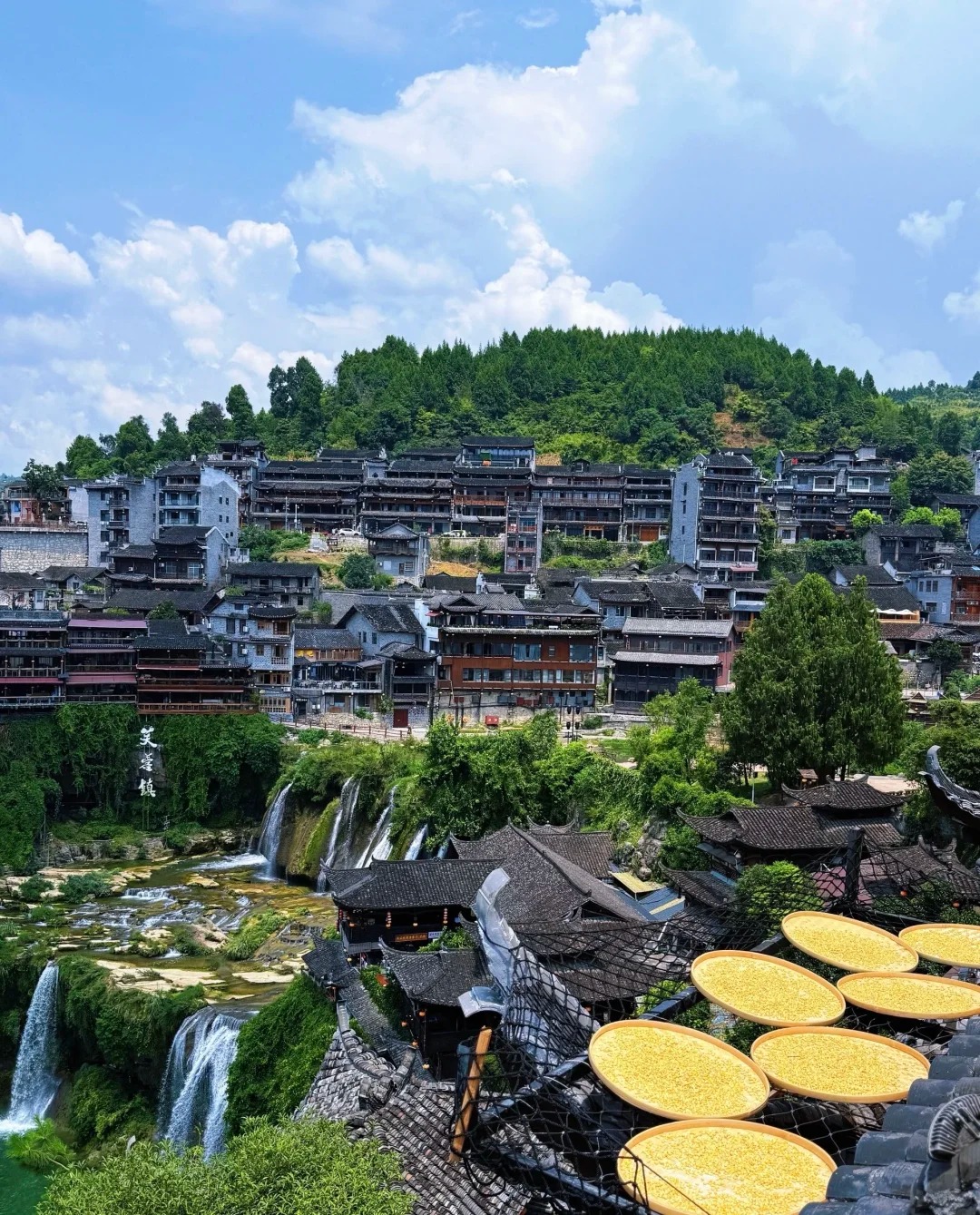
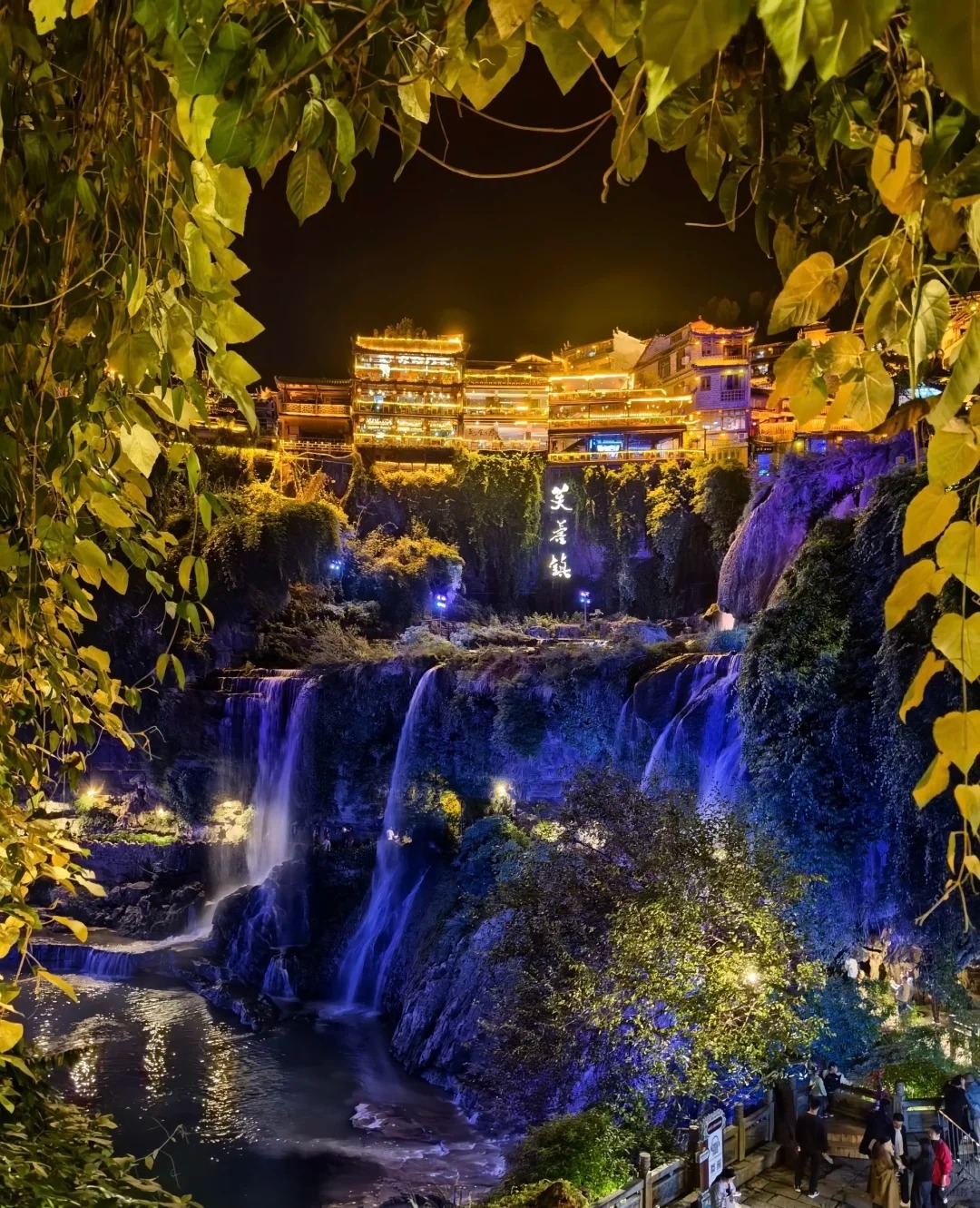
Furong Town, also known as Hibiscus Town, wasn’t on my original itinerary, but I am so glad I made the detour. It is smaller than Fenghuang, quieter, and it holds a secret that will stop you in your tracks: a massive waterfall that literally pours through the middle of the town.
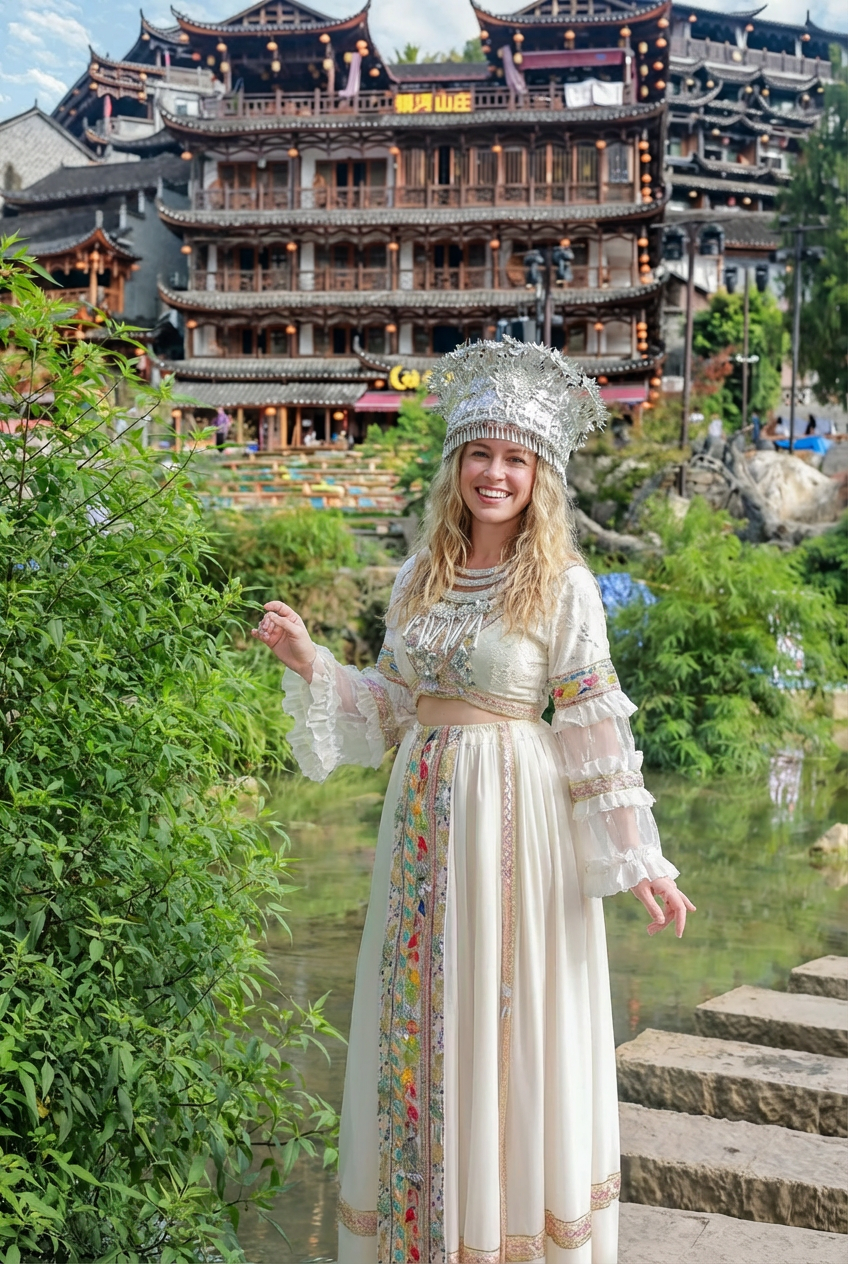
I approached Furong Town after a winding drive through the lush mountains of Hunan. The first thing that hits you is the sound—a constant, thundering roar that vibrates in your chest. As I walked down the narrow, winding stone streets lined with ancient wooden houses, I suddenly found myself standing on a precipice. Right there, tumbling down the cliffs and crashing into the river below, was a waterfall that seemed to swallow the town. The houses are built on stilts hanging over the falls, creating a scene that looks like a fantasy illustration.
I remember standing on the viewing deck, getting sprayed by the mist, watching the water cascade over the rocks. The grey stonework of the town contrasts beautifully with the white foam of the water. It’s visually arresting. I made my way down the stone stairs that hug the cliffside, descending into the canyon below. Looking back up, the town looks like it’s floating above the water.
But Furong Town is famous for more than just water; it’s famous for a movie—the 1986 film *Hibiscus Town* which won the Golden Rooster Award. Walking through the streets, I felt the weight of the recent cultural history of China. There is a bronze statue in the town center depicting the movie’s characters, a somber reminder of the turbulent times depicted in the film.
And then, there is the food. If you come here, you must eat the “Rice Tofu” . It was popularized by the movie, and it’s delicious. I stopped at a small stall run by a local lady. She served me a bowl of slippery, white tofu cubes in a spicy, sour broth topped with minced meat and peppers. It was the perfect lunch after the hike—tangy, filling, and distinctly Hunanese in its spiciness.
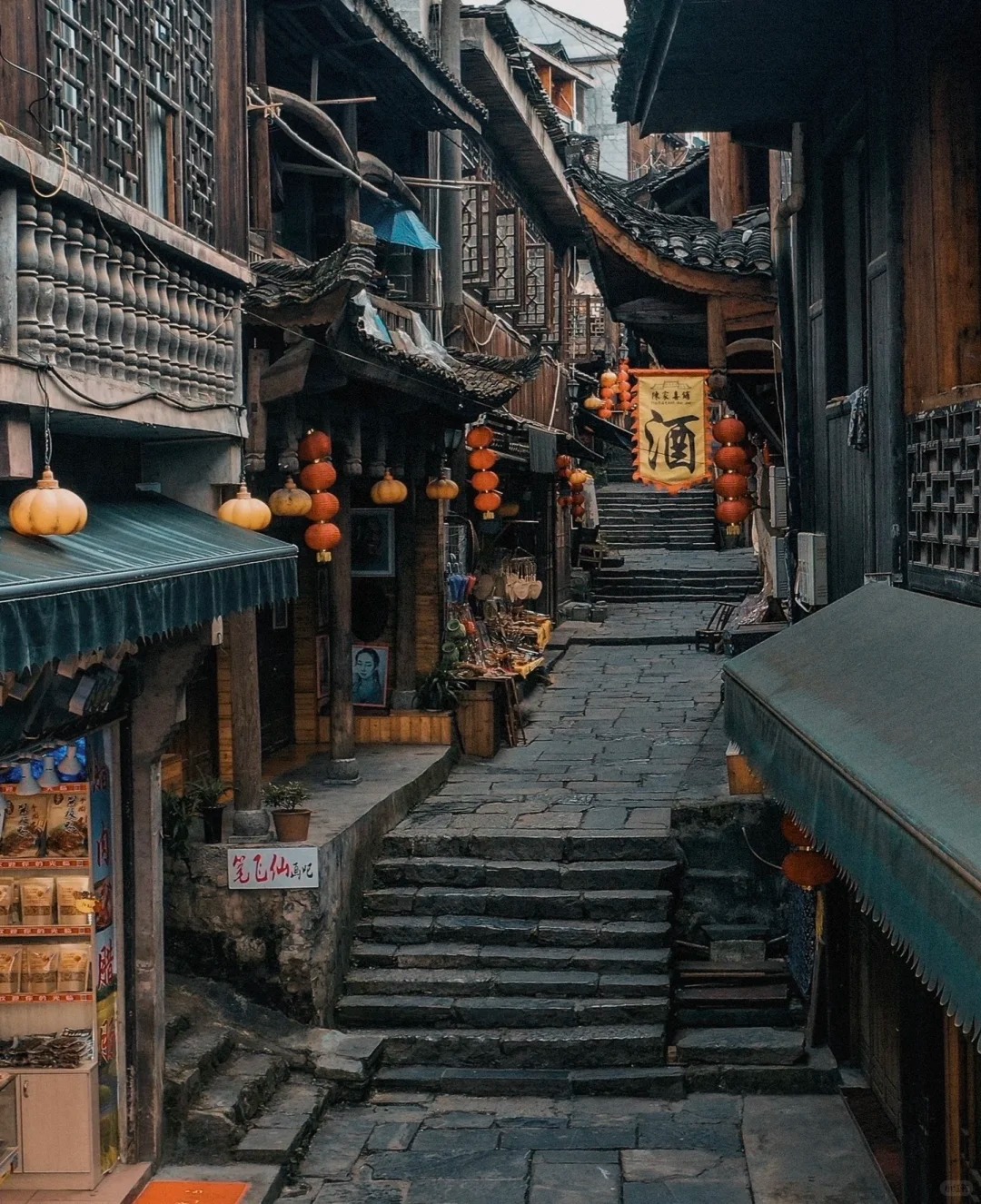
I spent the afternoon wandering the Tu Minority neighborhoods. The architecture here is distinct, with overhanging eaves and intricate carvings. Unlike the more commercialized tourist spots, Furong Town feels authentic. People were drying corn in the sun, and children played football in the alleyways. It’s a place where the grandeur of nature—the waterfall—is seamlessly integrated with daily life. Leaving Furong Town, I felt refreshed; it was a reminder that sometimes the most beautiful places in China are the ones that aren’t in all the guidebooks.