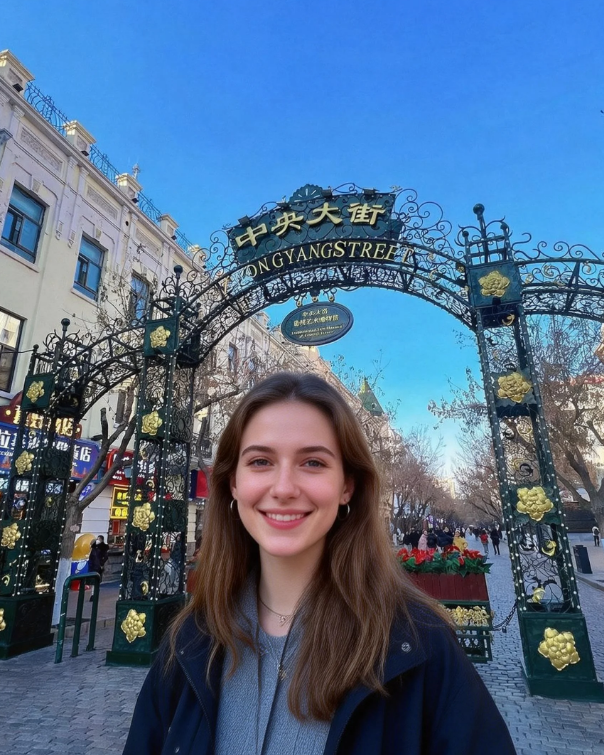
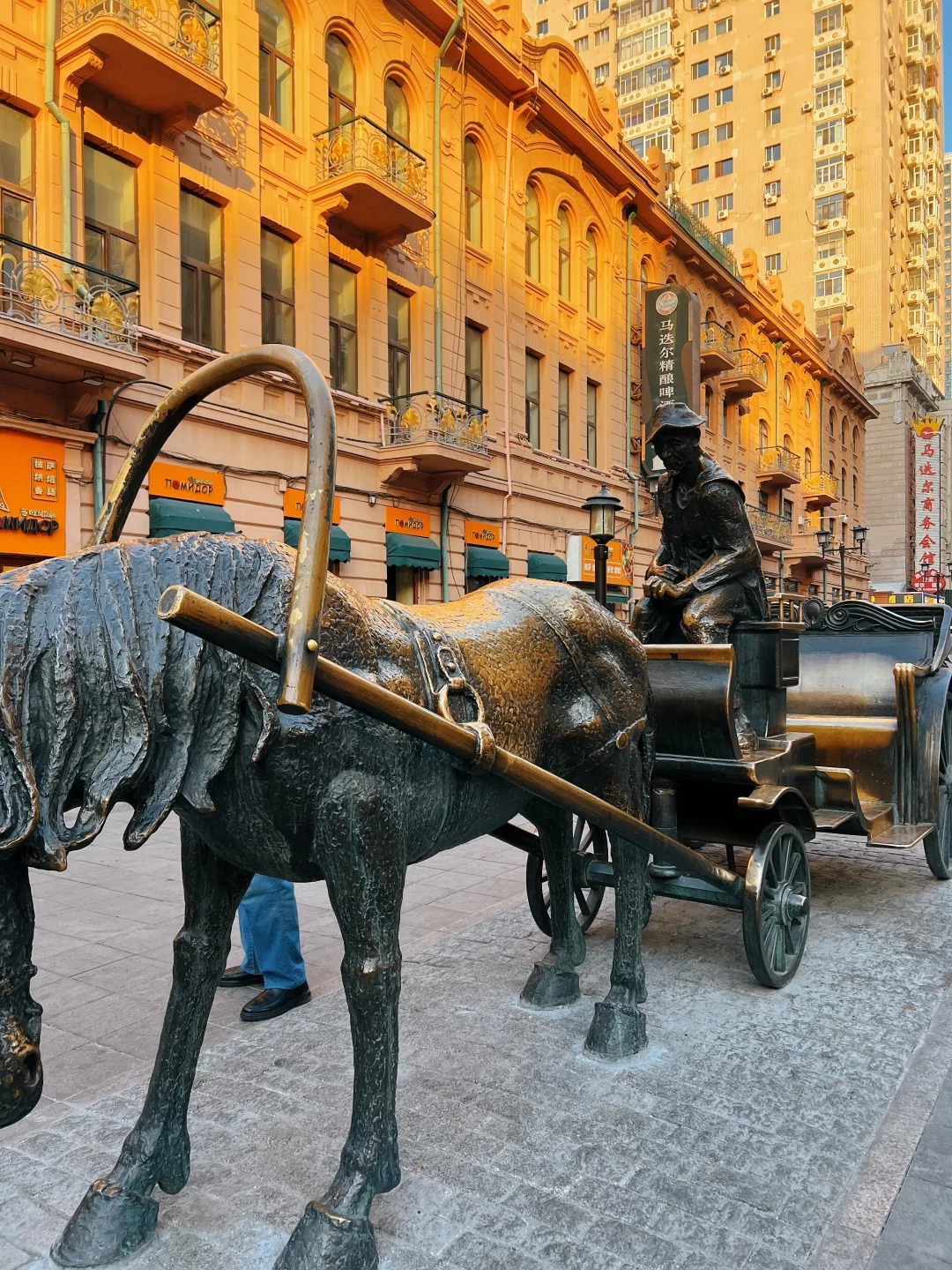
To understand Harbin, you must walk its Central Street (Zhongyang Dajie). This 1.4-kilometer pedestrian thoroughfare is not a preserved relic behind ropes; it’s the city’s vibrant, living aorta, pulsing with history, commerce, and the scent of garlic and pastry. Paved with smooth, rounded granitoid stones that glisten in rain and snow, each building is a chapter from Harbin’s unique past as a railway town shaped by Russian, Jewish, and other international influences.
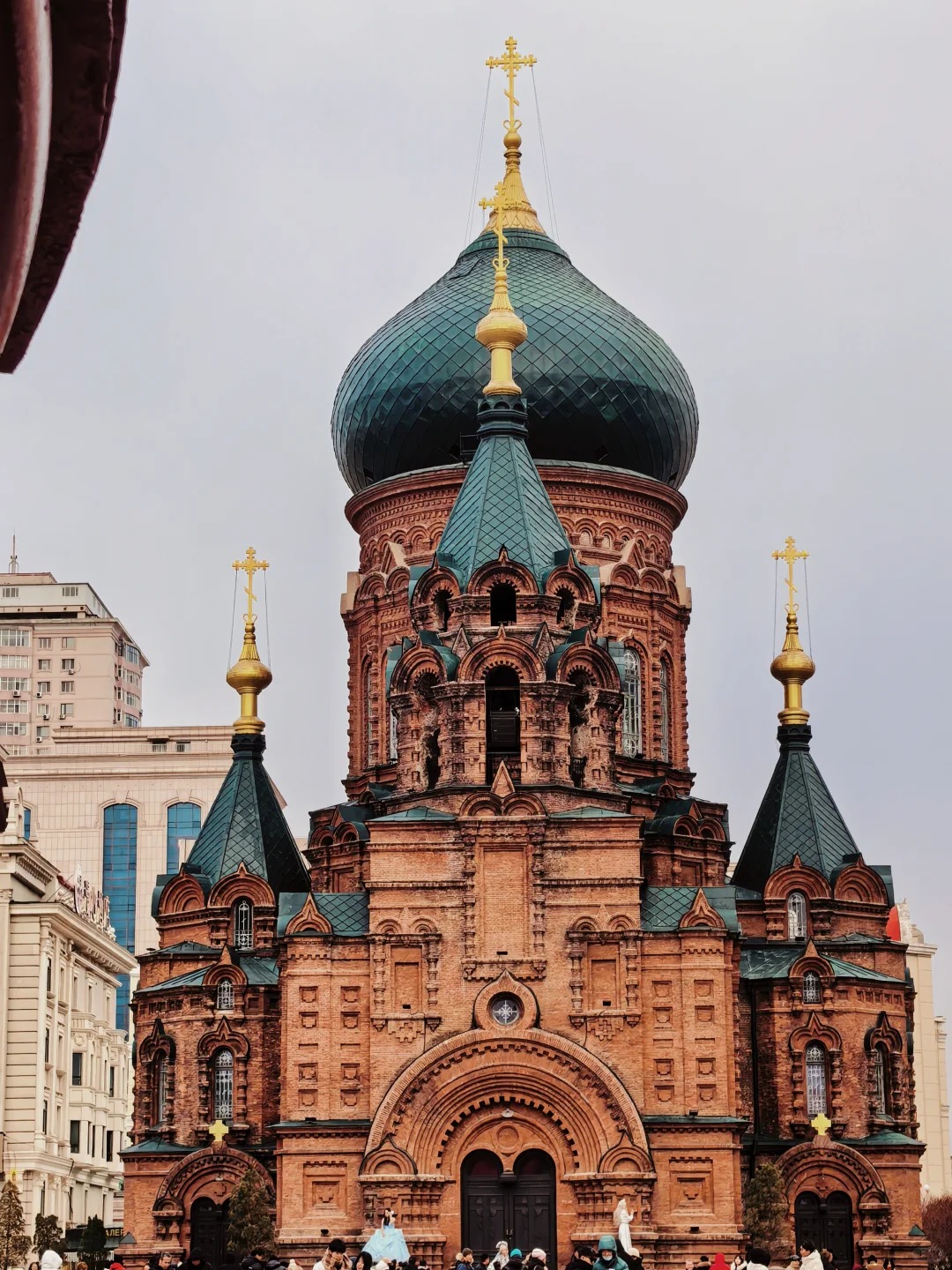
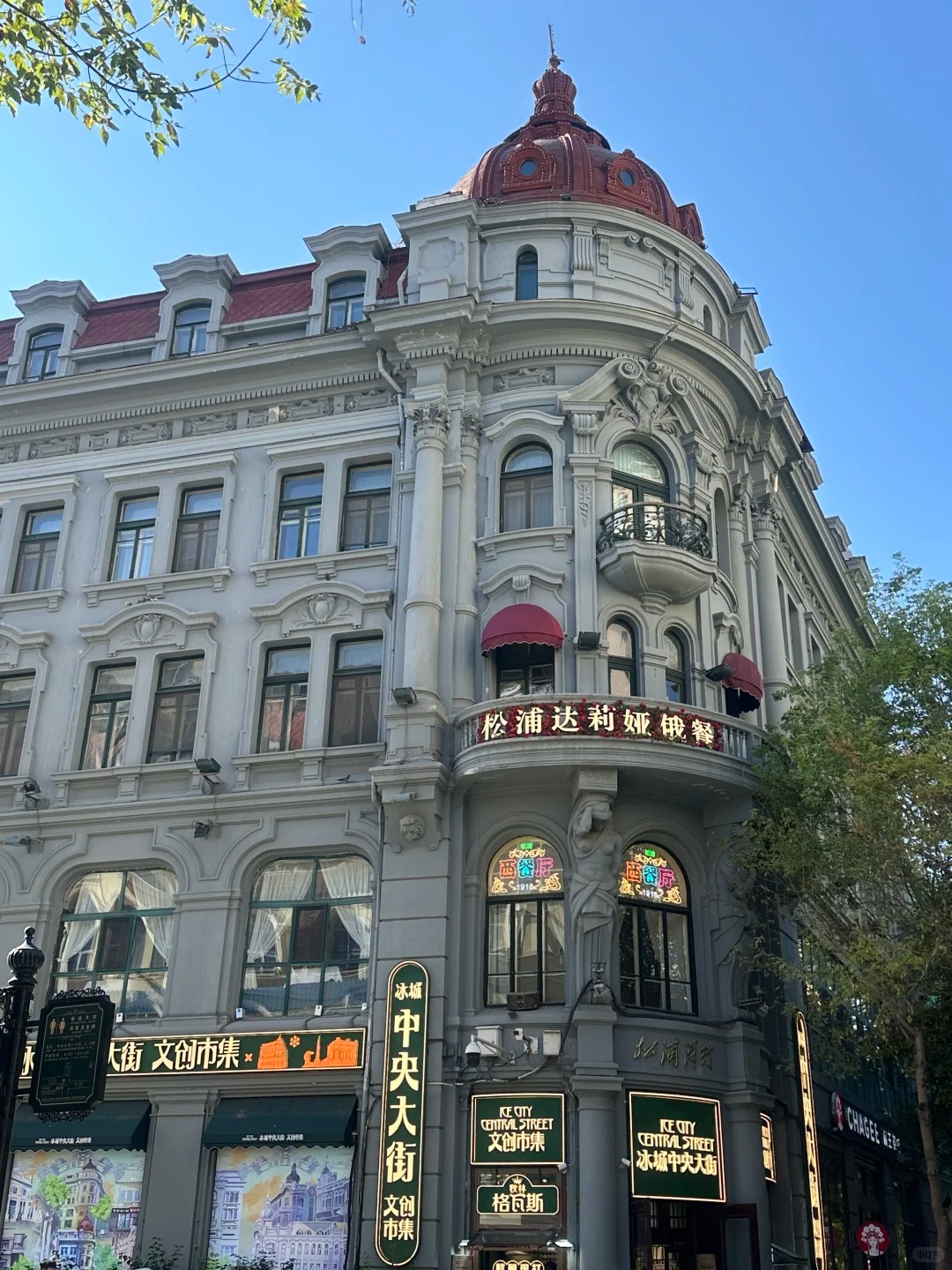
I started at the flood control monument by the Songhua River, where the street begins. The first impression is one of vertical grandeur. I craned my neck to take in the Modern Hotel, an Art Nouveau confection of green domes, arched windows, and intricate stucco work. Next door, the flamboyant Russian Revival style of the former Churin Department Store (now a shopping mall) boasts ornate turrets and bold red trim. Every façade tells a story, with plaques detailing its original function—bank, pharmacy, synagogue, hotel for exiled aristocrats.
The street is a feast for the senses. The air is a delicious collision of smells: the buttery, yeasty aroma of freshly baked lieba (Russian-style sourdough) from Maison de l'Orient, the sharp tang of hongchang (garlic red sausage) sizzling on grills, and the rich promise of coffee from century-old cafes like Cafe Russia. I ducked into the Central Bookstore, its interior a time capsule of wooden shelves, creaking floors, and the quiet rustle of pages.
As afternoon faded into evening, neon signs in both Chinese and Cyrillic script flickered on, casting a retro glow on the cobblestones. Street musicians played the balalaika, and the crowd thickened with families, couples, and tourists admiring the light-festooned buildings. I joined the queue at a small stall for a churro-like fried dough twist, dusted with sugar and piping hot—the perfect handheld winter snack.
Sitting on a heated terrace with a local Harbin Beer, I watched the parade of life. Elderly couples bundled in furs, young women in fashionable boots laughing, vendors hawking ice cream (yes, even at -20°C, it’s a tradition). Central Street is where Harbin’s past and present seamlessly merge. You’re not just looking at European architecture; you’re walking through the daily life of a city that proudly wears its hybrid heritage on its sleeve. It’s a bustling, open-air museum where the exhibits are living, breathing, and selling you ice cream. No visit to Harbin is complete without losing yourself, and finding the city’s soul, on this remarkable street.