Yangzhou’s Slender West Lake (Shou Xihu) is a masterpiece of flattery. In the 18th century, wealthy salt merchants, perhaps nostalgic for Hangzhou’s more famous West Lake, decided to recreate its essence on a long, narrow strip of water north of the city. But what they created surpassed mere imitation; it became a condensed, refined dream of Jiangnan.

I entered through the main gate on a crisp autumn afternoon. The lake truly is slender—a graceful ribbon winding between tree-lined banks, never more than a few hundred feet wide. This intimacy is its charm. You are always close to the water, to the willows that trail their fingers in it, to the delicate bridges that arch over it like rainbows.
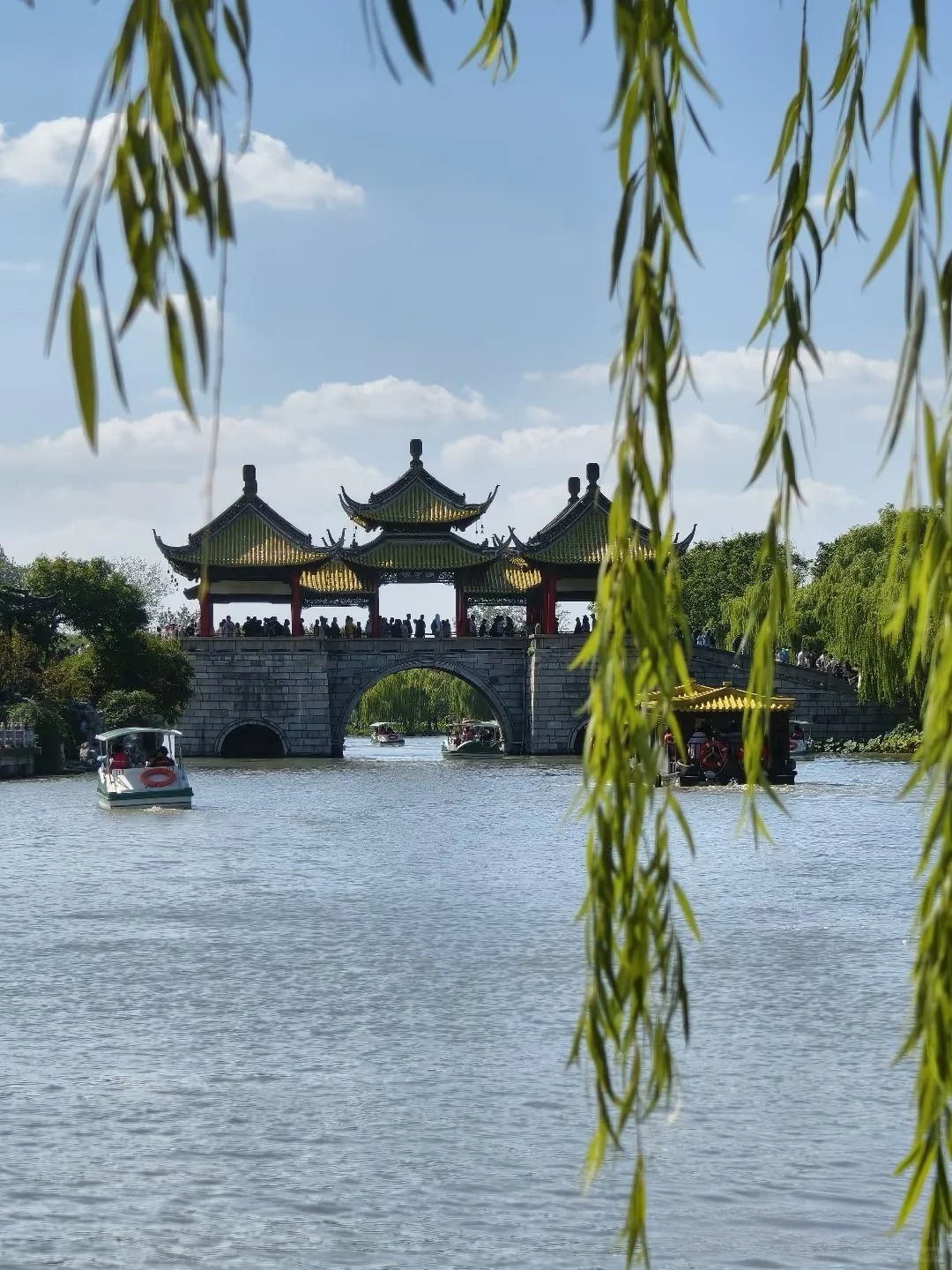
I rented a small, pedal-powered boat. From the water, the perspectives shifted magically. The Five-Pavilion Bridge (Wuting Qiao), the lake’s icon, appeared as a low, yellow-tiled palace floating on the water. As I passed under its fifteen arches, each frame offered a new painting: a distant white dagoba, a cluster of autumn-red maples, a lone fisherman on the bank.

The White Dagoba (Bai Ta), a striking pure-white stupa, adds a vertical punctuation mark to the otherwise horizontal landscape. Local legend says it was built in a single night to appease a homesick Qing emperor who missed a similar structure in Beijing. True or not, it speaks of the ambition and resources of Yangzhou’s golden age.
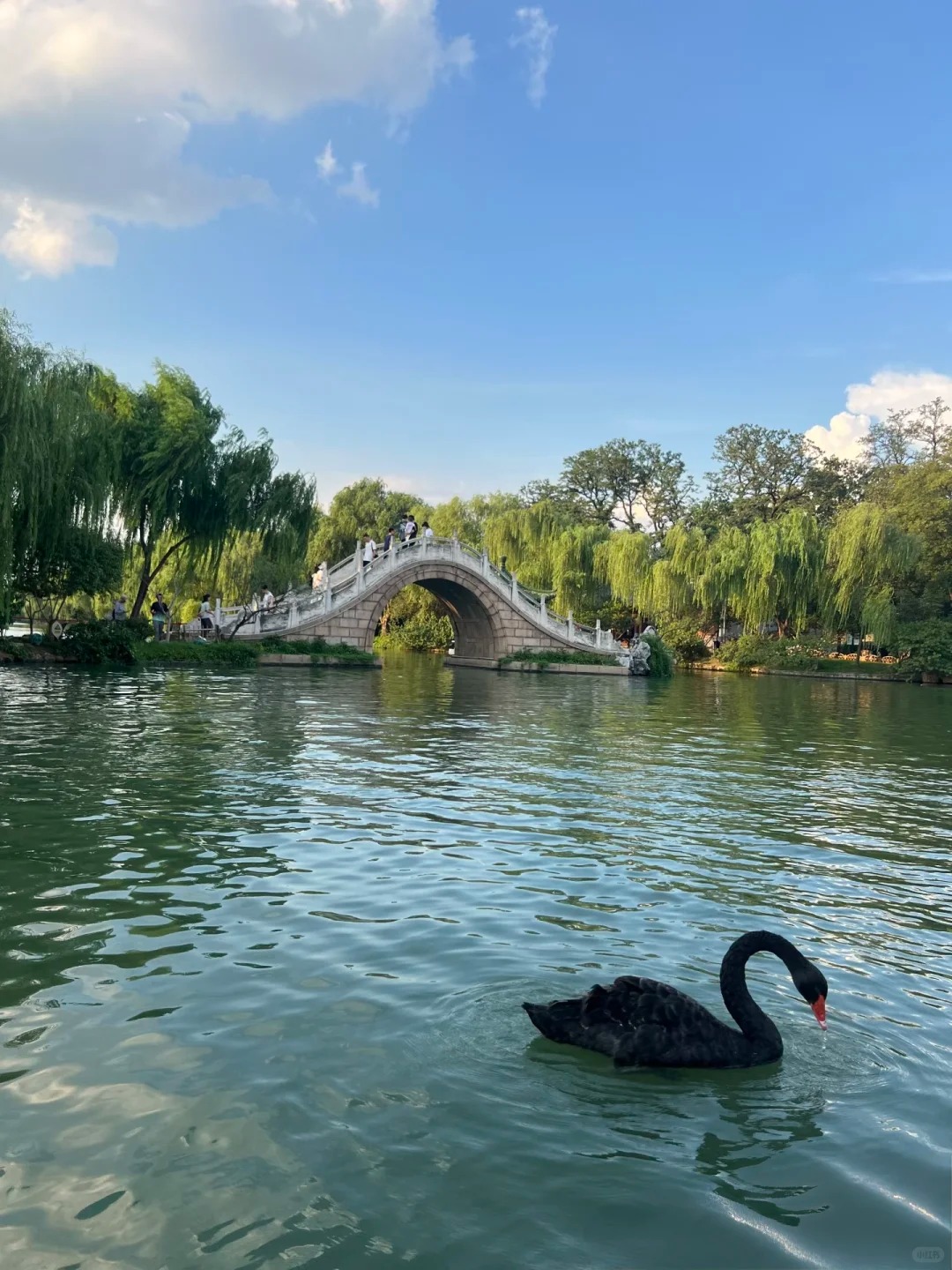
But the soul of Slender West Lake is in its quieter corners. I moored my boat near Xiao Jin Shan (Little Golden Hill), a tiny island topped with a pavilion. A stone inscription nearby read, “Moonlight, when it is bright, is not as good as that of Yangzhou.” I sat until dusk, watching the sky turn peach and then violet. As lights began to twinkle on, the lake transformed again. The bridges and pavilions were outlined in golden light, their reflections shimmering on the black water, creating a scene of impossible romance.
Slender West Lake isn’t wild nature. It is nature perfected, curated, and composed for maximum poetic effect. It feels like strolling through a never-ending scroll painting, where every bend in the path reveals a scene designed to evoke a specific emotion or literary allusion. It’s a testament to the human desire not just to enjoy beauty, but to craft it into an ideal.