They say that if you want to understand China, you must climb its mountains. But Mount Emei isn’t just a mountain; it’s a test of will, a journey through time, and a spiritual awakening all rolled into one. Standing at the foot of the trail, looking up at the dense canopy of trees that seemed to stretch endlessly into the sky, I felt a mix of excitement and trepidation. At over 3,000 meters, this is one of the highest of the Four Sacred Buddhist Mountains, and I was about to climb it on foot.
The air at the base was thick with humidity and the scent of wet earth. It was raining lightly—a fine, misty drizzle that locals call “Emei smoke.” It clung to the ferns and the moss-covered stones, making the forest look vibrant, almost glowing green. I started my ascent early, armed with a walking stick I bought from a vendor for a few yuan. It was the best investment I made. The stairs of Mount Emei are relentless. They are uneven, slick with moss, and seemingly infinite. For the first few hours, my legs were fine, fueled by adrenaline and the beauty of the scenery. But as I reached the Qingyin Pavilion area, reality set in.
Qingyin Pavilion, or the “Pavilion of Clear Sound,” is a sensory masterpiece. Two rivers, the Black Dragon and the White Dragon, meet here. The sound of the water rushing over the rocks is deafening yet musical. I stopped here to catch my breath and ate a simple packet of spicy dried beef I’d packed. It was a moment of pure contrast—the heat of the Sichuan spice against the cool mountain air, the roaring water against the quiet rustle of the bamboo leaves. It felt like the mountain was waking up my senses one by one.
But then, I entered the “Monkey Zone.” I had heard stories about the Tibetan Macaques of Mount Emei. People told me they were bandits, thieves, and bullies. I laughed it off, thinking, “How bad can a monkey be?” Very bad, it turns out. I was walking around a bend when a large alpha male, sitting right on the handrail, locked eyes with me. He didn’t move. He just stared. Then, before I could react, he lunged—not at me, but at my backpack. He snagged a bottle of water and expertly unscrewed the cap with his teeth. A troop of smaller monkeys emerged from the bushes, eyeing my pockets. I froze, remembering the advice: don’t make eye contact, don’t run, and definitely don’t show fear (or food). I slowly backed away, heart pounding, while the alpha male drank my water with the smug look of a king enjoying his tribute. It was terrifying, hilarious, and exhilarating all at once. It was a reminder that on Mount Emei, you are a guest in the animals’ home.
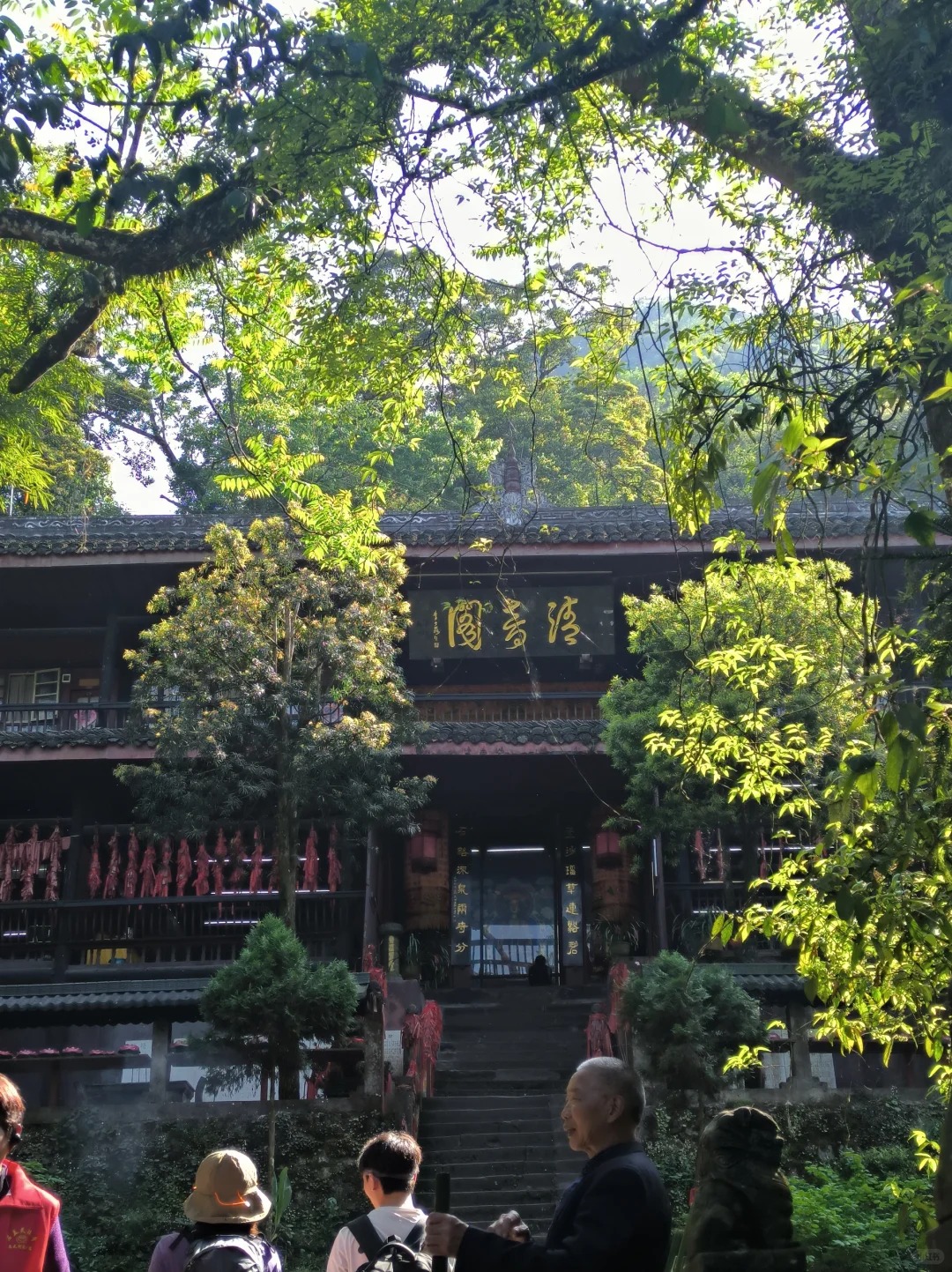
As I climbed higher, the landscape began to change. The broad-leaf trees gave way to towering firs and pines. The air grew thinner and cooler. The mist turned into a thick fog that enveloped everything. It was like walking into a traditional ink wash painting. I stopped at the Wannian Temple (Ten Thousand Year Temple). The architecture here is stunning—bricks tiled with eaves that curve upwards, surrounded by ancient bronze bell trees. Inside, the smell of incense was overpowering in the best way possible. I watched pilgrims prostrating themselves, their foreheads touching the cold stone floor. There was a sense of devotion here that was palpable. I wasn’t a pilgrim in the religious sense, but I felt a profound respect for the people who had traveled here to seek peace.
The final stretch to the summit was the hardest. My legs were burning, and every step was a negotiation between my will and my muscles. But the higher I went, the more the noise of the world fell away. The voices of other hikers faded, replaced by the wind whistling through the peaks. And then, suddenly, I broke through the cloud layer.

I had arrived at the Golden Summit (Jinding).
The sight that greeted me is etched in my memory forever. A massive, multi-headed golden statue of Samantabhadra Buddha dominates the summit, shining with a spiritual light that seems to come from within. It is majestic, imposing a sense of awe that makes you feel infinitesimally small. But the real showstopper was the “Sea of Clouds.” Below me, the world was gone. There was nothing but a vast, undulating ocean of white clouds, stretching to the horizon. The peaks of other mountains poked through the cloud sea like islands. The sun, now overhead, cast a golden glow on the statue and turned the clouds into shades of orange and pink.
I found a spot to sit near the railing, clutching a cup of hot noodles I bought at the summit stall. I don’t know how long I sat there. An hour? Two? I watched the clouds shift and swirl, constantly changing shape. It was hypnotic. It felt like I was standing on the edge of the universe. All the stress of my daily life, the emails, the deadlines, the noise of the city—it was all down there, buried beneath the clouds. Up here, there was only the wind, the gold, and the silence.
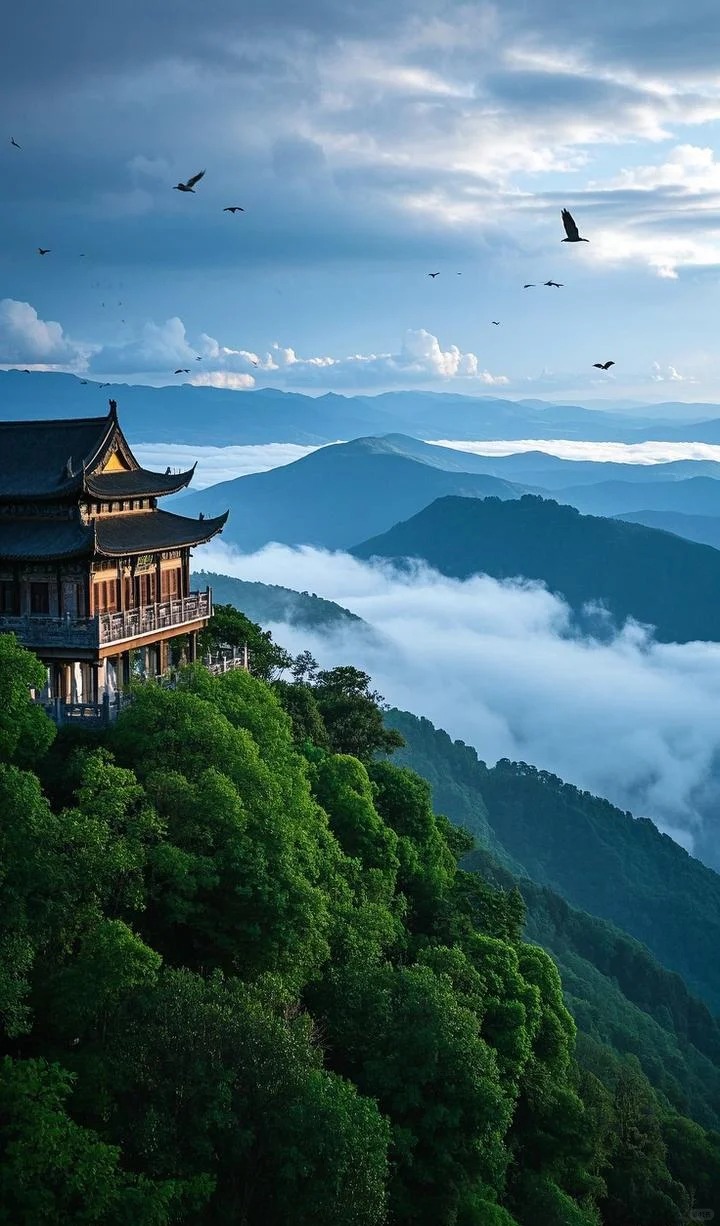
I decided to stay overnight to catch the sunrise. Waking up at 4:00 AM in the freezing cold was brutal, but it was worth it. As the first light of dawn breached the horizon, the sky turned from deep purple to fiery red. The sun rose like a molten ball from the sea of clouds, instantly igniting the golden statue in a blaze of light. People around me gasped. It was a moment of collective joy. Strangers smiled at each other, sharing a secret that only those who wake up early on top of a mountain can understand.
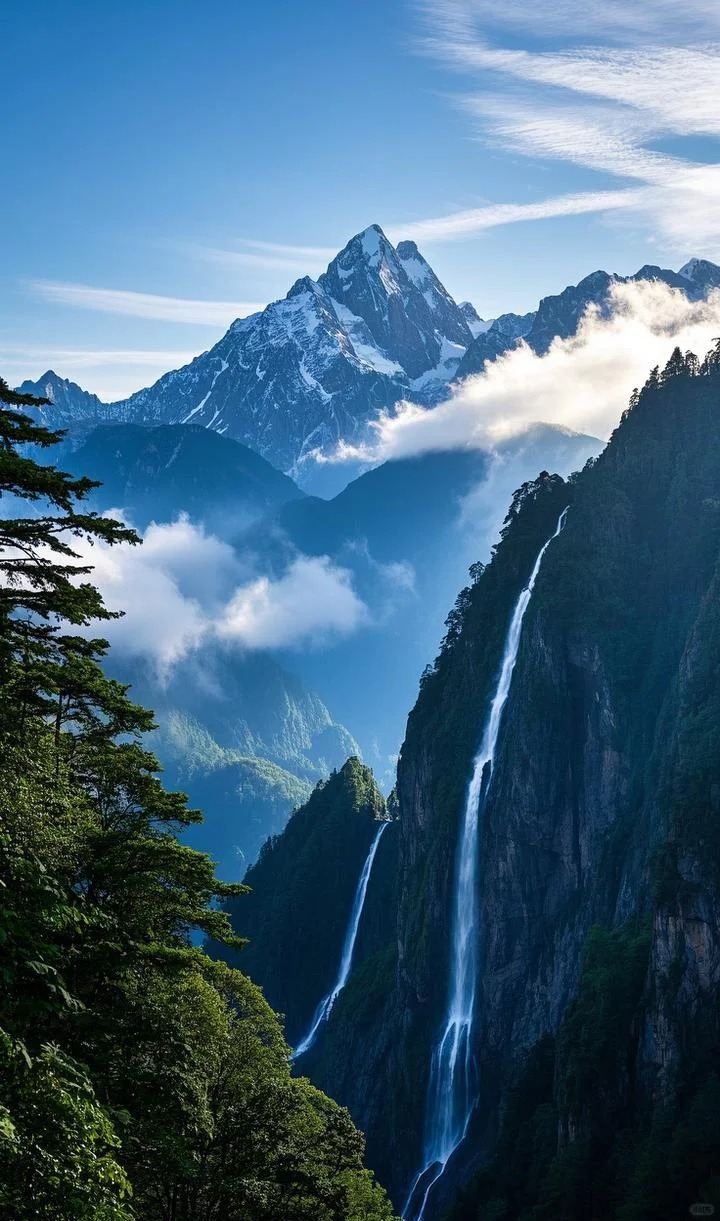
Descending Mount Emei was a different kind of challenge. My knees protested every step, but my heart was full. I passed waterfalls that looked like silk ribbons and passed by monks in gray robes walking silently in the opposite direction. The journey down was a time for reflection. I realized that climbing a mountain is a metaphor for life. It’s about struggle, patience, and moments of doubt. But if you keep putting one foot in front of the other, you eventually reach the top. And the view? The view is not just what you see with your eyes, but what you feel in your soul.
If you come to Mount Emei, don’t just take the bus to the top. Yes, it’s faster, and yes, it’s easier. But you will miss the texture of the experience. You will miss the monkeys stealing your water, the smell of the moss, the sound of the rivers, and the sheer physical exhaustion that makes the first sight of the Golden Summit so emotional. Come prepared. Bring good shoes, a raincoat, and a walking stick. But most importantly, bring an open mind.
Mount Emei is not just a scenic spot; it is a living entity. It has moods. Some days it is sunny and welcoming; other days it is shrouded in mist, hiding its secrets. Whichever face it shows you, be grateful. Because in the end, the mountain doesn’t need you. You are the one who needs the mountain.
*(Note: Due to length constraints, I have provided the first two articles. Please let me know if you would like me to continue with the next keyword, “Daocheng Yading”, and I will be happy to generate the following articles in the series.)