There is no place in China that looks like this. Absolutely none.
I rented a rusty bicycle from a grumpy man in a tank top near the bus station. The chain squeaked with every revolution, a rhythmic chirp-chirp-chirp that became the soundtrack of my day. I was in Kaiping, pedaling towards the villages, expecting history. I found a movie set built by ghosts.
The First Sight
The landscape started normally enough—emerald green rice paddies, water buffalo wallowing in mud, farmers wearing conical hats. It was the quintessential picture of rural Guangdong.
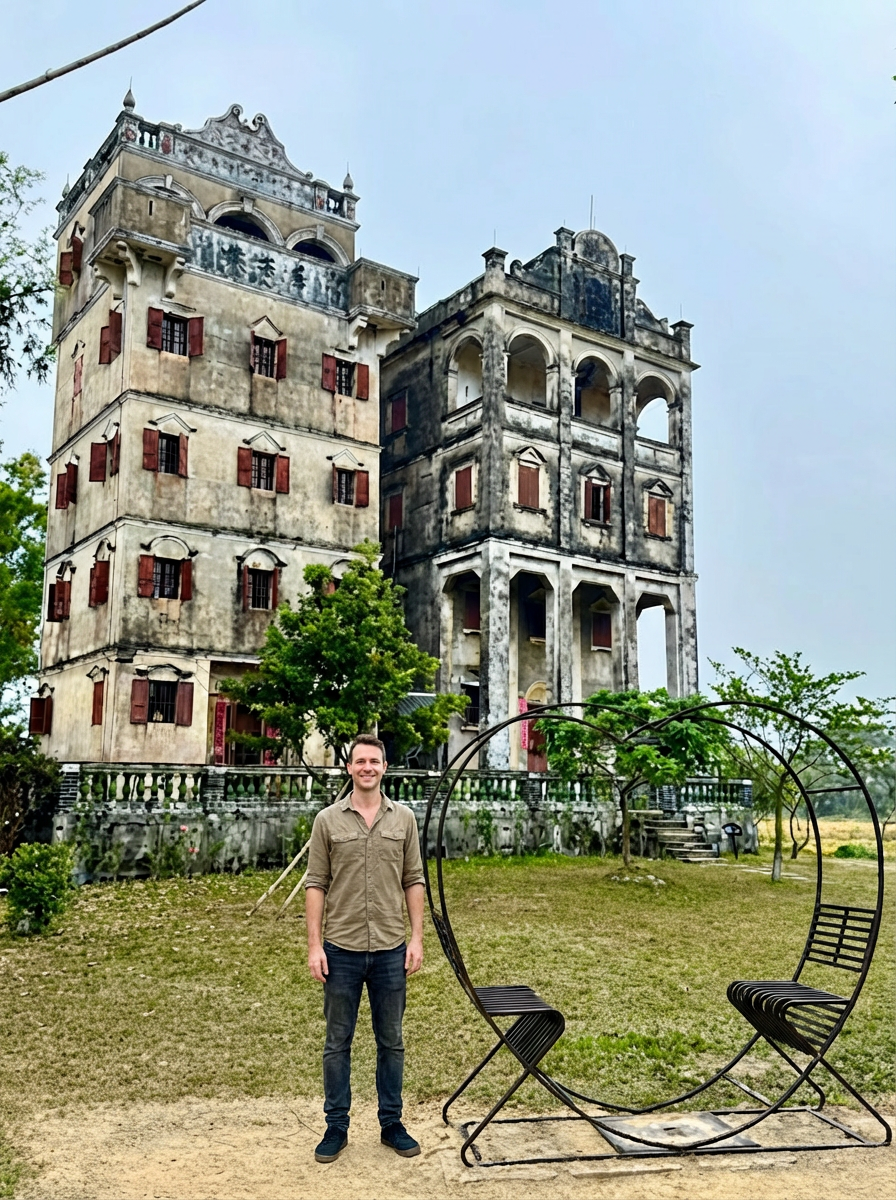
Then, I turned a corner, and reality glitched.
Rising out of the mud and water were towers. Tall, imposing, concrete towers. But they weren't Chinese pagodas. One looked like a medieval German castle. Another had a Byzantine dome. A third had Roman columns and an Italian loggia. They stood there, surreal and defiant, like aristocrats lost in a swamp.
These are the Diaolou.
Inside the Fortress
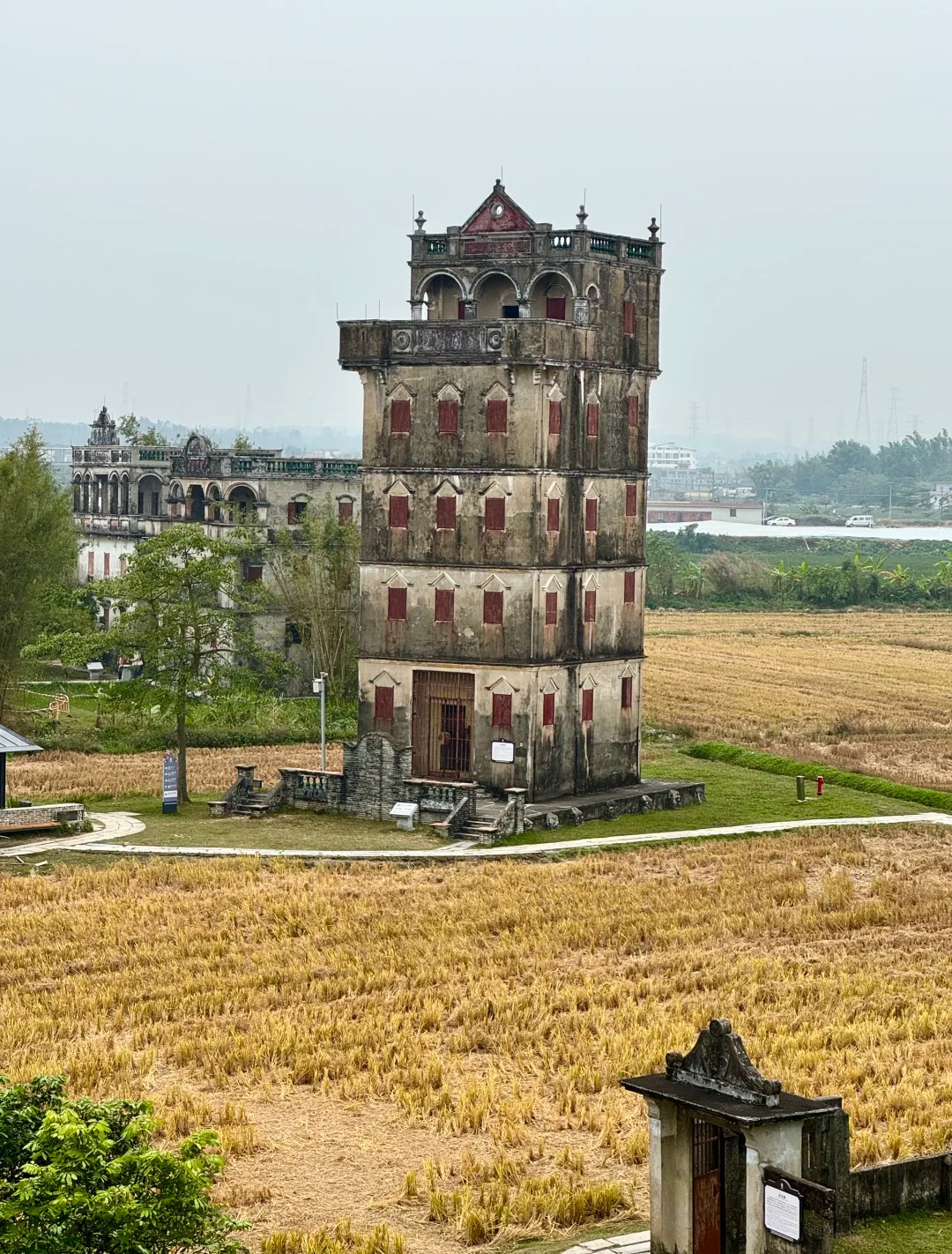
I parked my bike at Zili Village and walked towards the Mingshi Lou. The tower was built in the 1920s by a man who had made his fortune in the United States.
Stepping inside felt like trespassing on a memory. The air was cool and smelled of old wood and camphor. The ground floor was a fortress—thick walls, narrow slits for shooting guns, heavy iron doors. This wasn't just a home; it was a bunker. The 1920s in this region were lawless, plagued by bandits. You made your money abroad, but you had to fight to keep it at home.
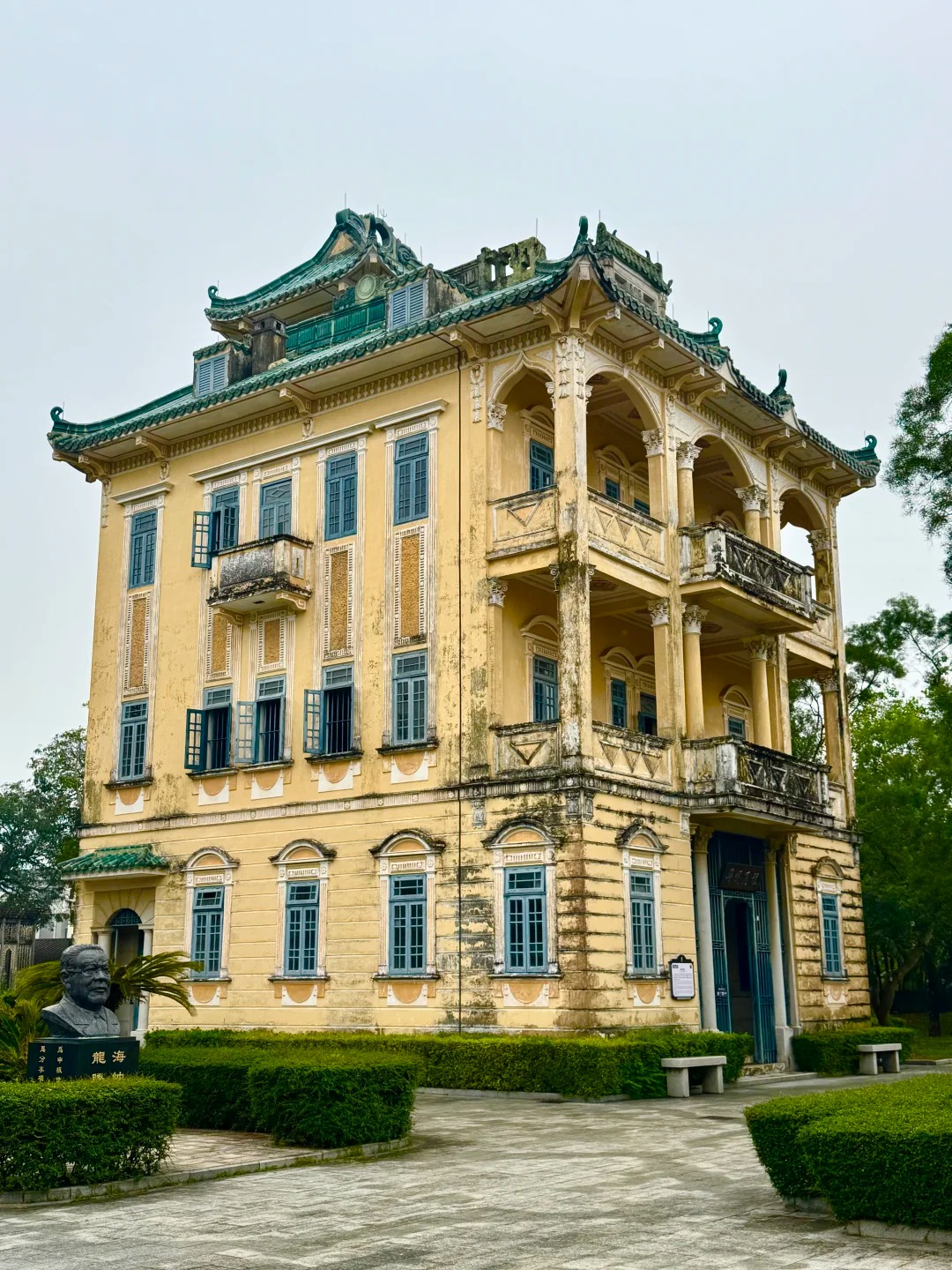
I climbed the narrow staircase. The upper floors were a different world. I saw a grandfather clock from Germany. I saw tin boxes of biscuits from Hong Kong. I saw a bathtub—a porcelain clawfoot tub—sitting in a room with a view of a rice paddy.
It was jarring. It spoke of a profound displacement. These men had traveled to the "Gold Mountain" (San Francisco) or "Gold Mountain" (Melbourne), worked in laundries, on railroads, in mines. They saved every penny, endured racism and loneliness, and sent it all back here to build a palace for a family they hadn't seen in years.
The Roof with a View
I climbed all the way to the roof terrace. This is where the architectural madness is most visible. I was standing under a Romanesque pavilion, looking out over a sea of yellow canola flowers.
A light rain began to fall. It didn't drive me inside; it just made the colors pop. The grey of the concrete turned dark and brooding. The green of the fields turned electric.
I imagined the owner standing here ninety years ago, smoking a pipe, scanning the horizon not for beauty, but for bandits. I imagined his wife, wondering if her husband in America was eating well, while she lived in this stone cage he built for her protection.
The Scars of Time
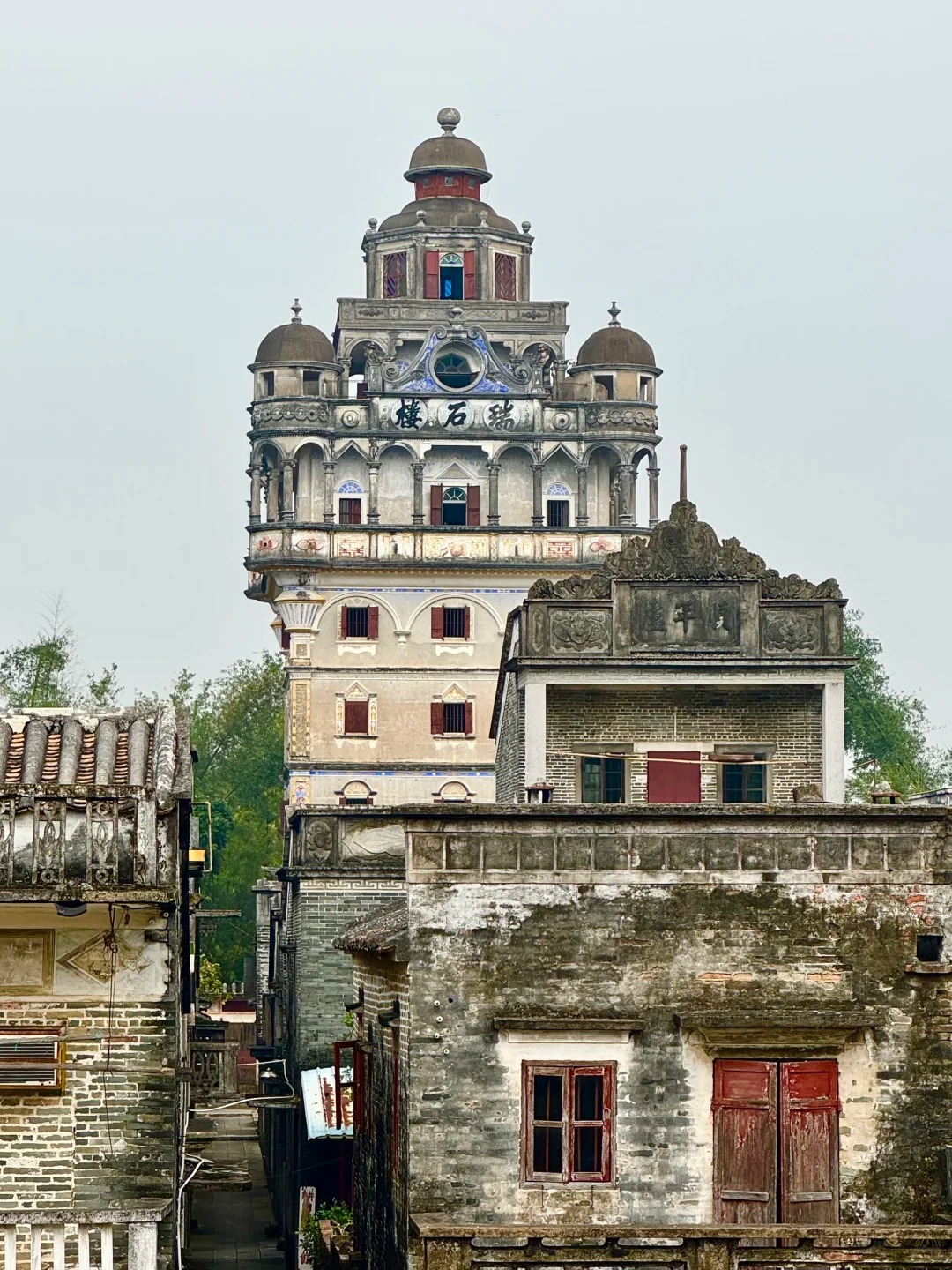
Later, I cycled to Jinjiangli Village to see the Ruishi Lou, the tallest of them all. It is majestic, a skyscraper of the 1920s. But up close, you see the bullet holes. You see the cracks in the plaster.
I sat on a stone ridge nearby, eating a packed lunch of sticky rice chicken (Lo Mai Gai). A local dog came over, wagging its tail, begging for a crumb. I gave him a piece of sausage.
The sun broke through the clouds, illuminating the tower. It looked lonely. Many of these towers are empty now, their owners' descendants long gone to the cities or abroad again. They stand as monuments to a specific, turbulent moment in history—a time of hope, fear, and the fierce, complicated love of the overseas Chinese.
The Ride Back
The ride back to town was harder; the wind was against me. My legs burned, but my mind was full.
Kaiping isn't just about architecture. It's about the lengths people will go to for "home." It’s about building a castle in a rice field because you want the world to know you made it, even if you’re scared to death someone will take it away.
As I returned the bike, the owner looked at my muddy pant legs.
"Good ride?" he asked.
"Yeah," I said. "Incredible."
He just nodded and lit a cigarette. To him, they are just old buildings. To me, they were the most human things I’d ever seen made of stone.