If Chaka Salt Lake is the charming, photogenic sister, then Qarhan Salt Lake is the rugged, industrial, and awe-inspiring elder king. Most tourists flock to Chaka for the mirror effect, but I wanted to see the real deal—the massive, working salt lake that feeds an industry. Qarhan is not just a lake; it is a salt kingdom, the largest of its kind in China. Stepping onto Qarhan felt like landing on an alien planet.
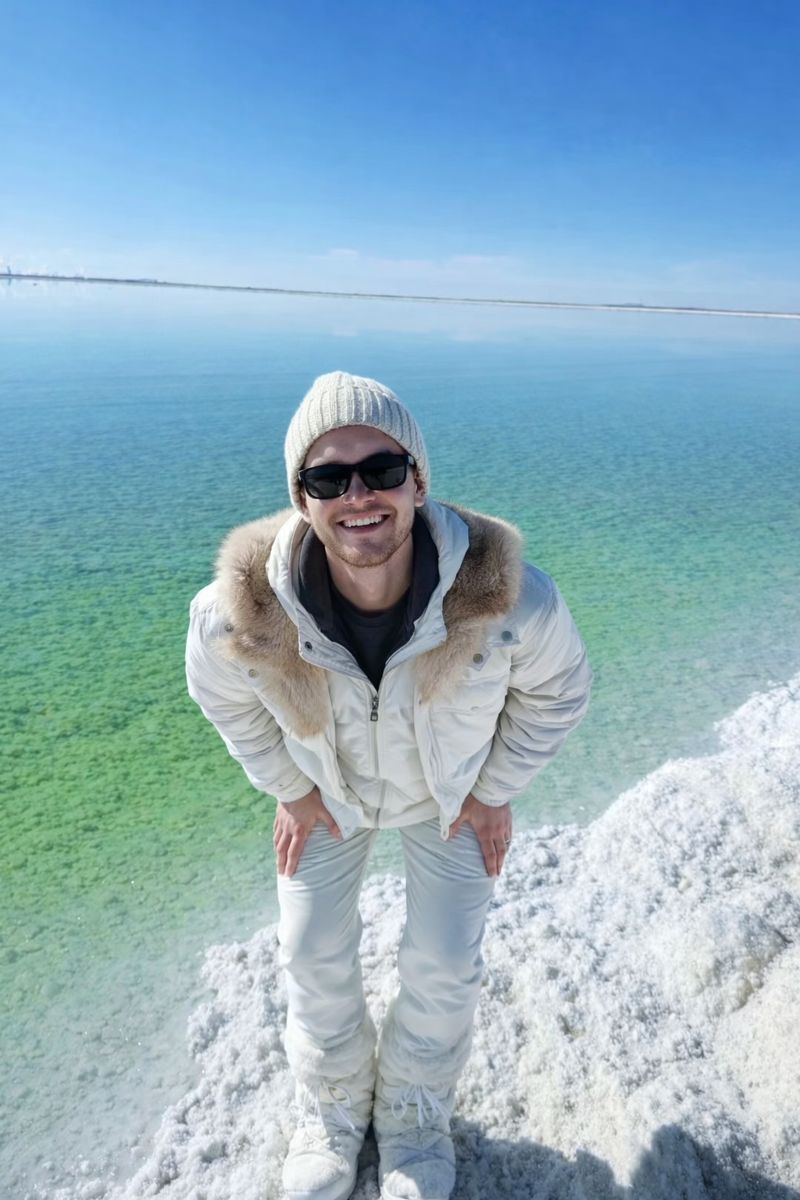
My guide picked me up from Golmud, a city that exists largely because of the nearby mines. As we drove out of the city, the vegetation disappeared, replaced by a blindingly white expanse. Qarhan covers an area of over 5,000 square kilometers. That’s roughly the size of a small country. As far as the eye could see, everything was white. The ground, the mountains in the distance, the piles of salt—white.
The most striking feature of Qarhan is the “Salt Bridge.” It is a 32-kilometer highway built entirely of salt. Yes, you drive on salt. It feels like a normal asphalt road at first, but if you look closely at the edges, you can see the crystalline structure. My guide told me that if there’s a crack in the road, they simply pour salt water over it, and it hardens like concrete. It is engineering alchemy.
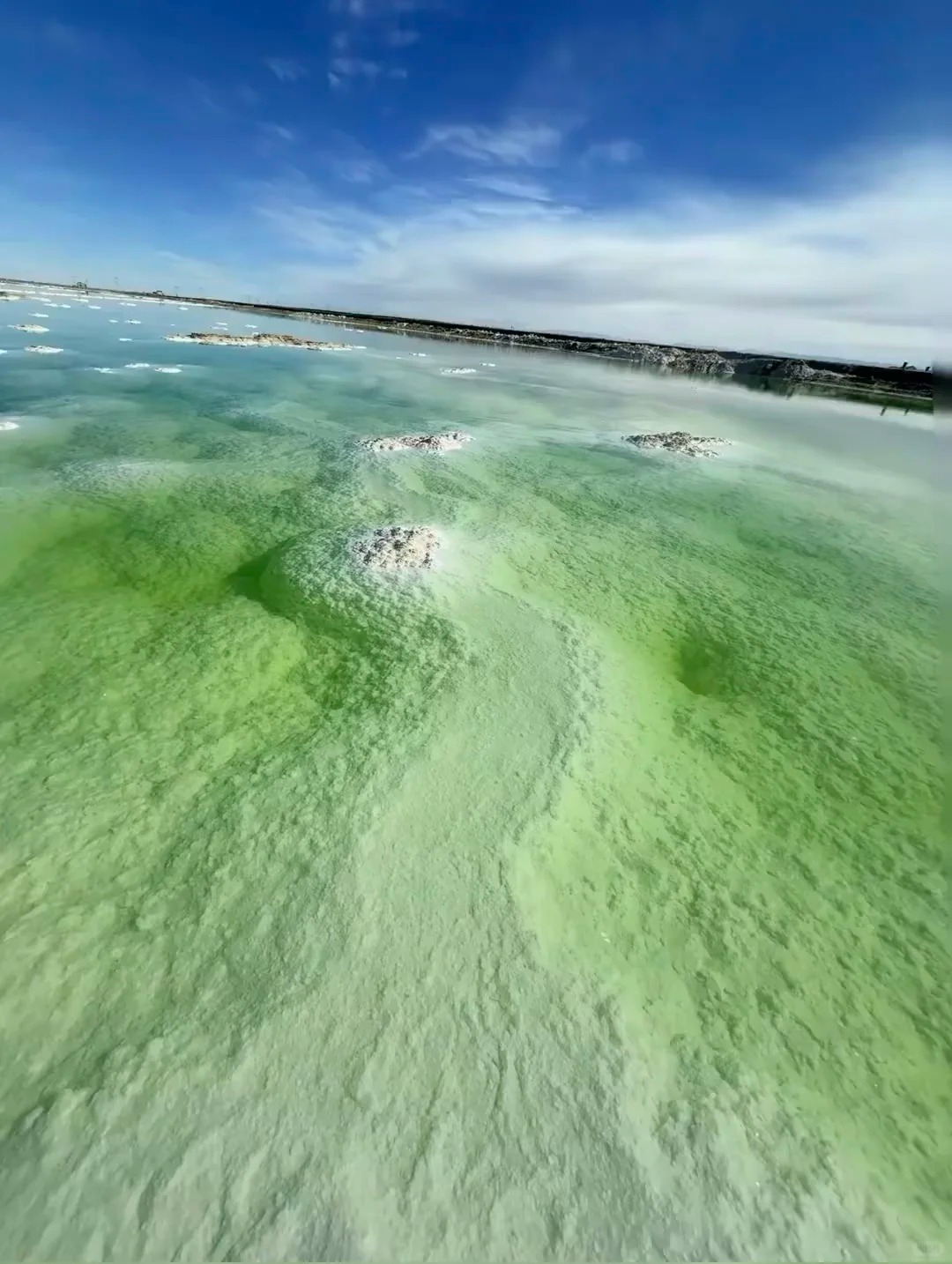
I asked him to pull over. I wanted to stand on the bridge. The silence here is different from Chaka. It’s not a peaceful silence; it’s a heavy, crushing silence. The heat rising from the salt flats created shimmering mirages on the horizon. I saw trucks lumbering in the distance, carrying mountains of raw salt. This is a working landscape. It feels raw and powerful.
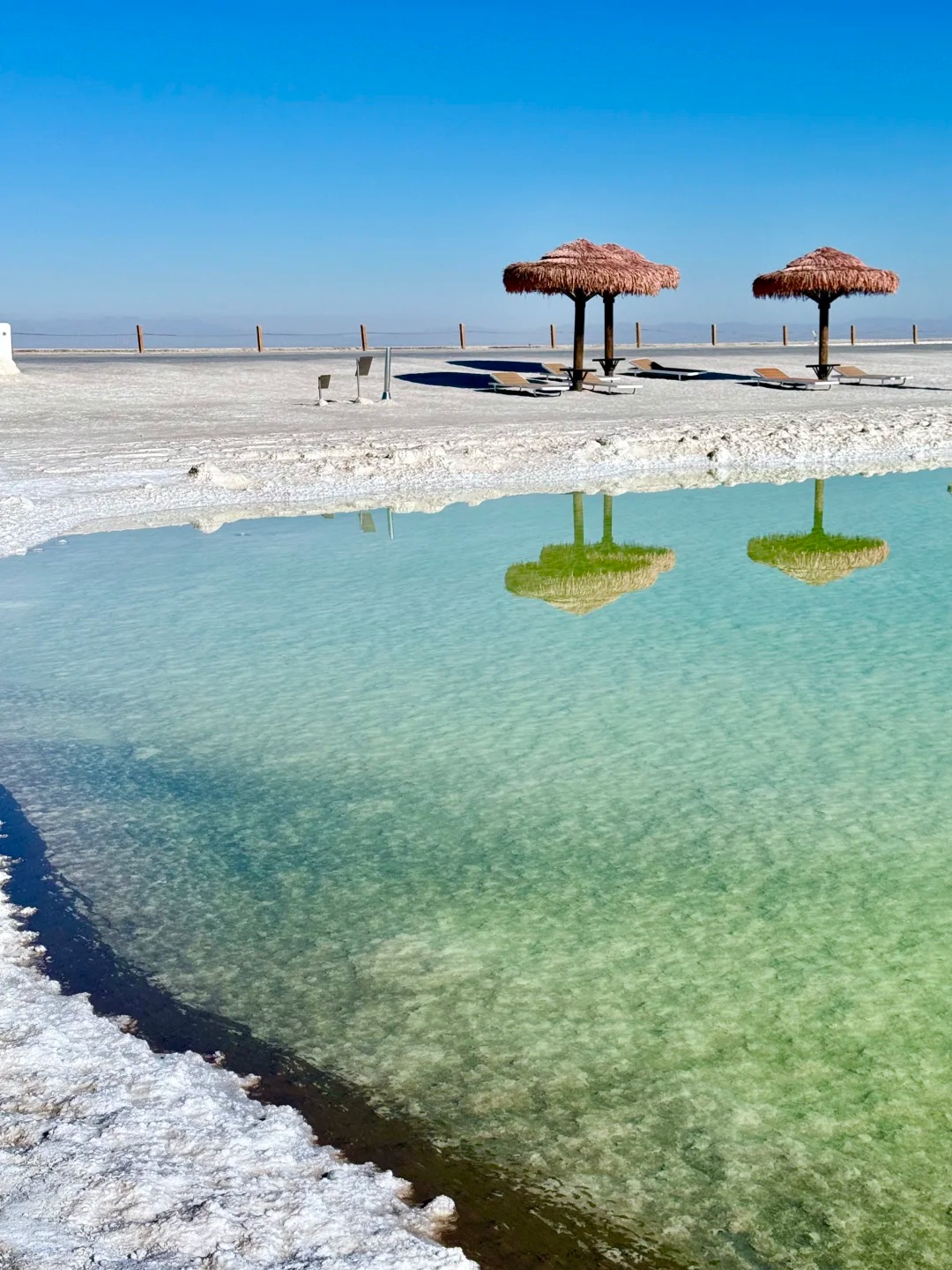
One of the highlights of Qarhan is the Wanzhang Salt Bridge. Standing there, looking at the endless expanse, I felt incredibly small. The salt crystals here are different too—they are thicker, chunkier, mixed with mud and minerals. The water in some areas is a strange, vivid green, teeming with algae, creating a stark contrast against the white salt. It looked like a giant marble cake.
I visited a salt carving workshop in the middle of the flats. The artisans here carve everything from statues of Buddha to life-sized replicas of the Forbidden City out of salt blocks. I ran my hand over a carving of a dragon. It felt cold and rough. It’s ephemeral art, I suppose; eventually, humidity will reclaim it. But for now, it stands in the middle of nowhere, a testament to human creativity in the harshest of environments.
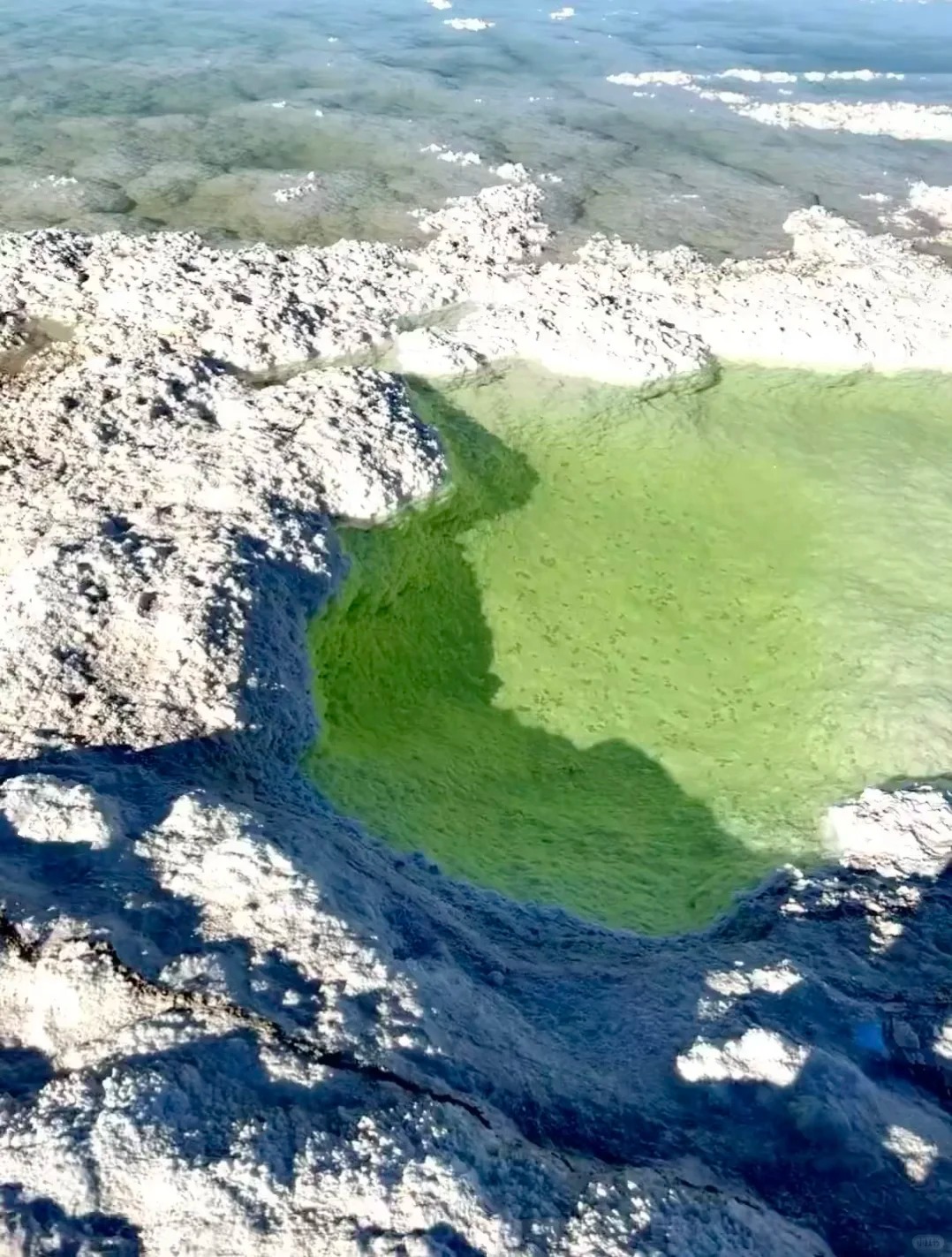
We drove deeper into the complex until we reached a place called the “Salt Flower” sea. Here, the salt concentration is so high that crystalline shapes form on the surface of the water, looking like coral reefs or blooming flowers. They are sharp and intricate. I walked carefully, watching my step. The ground was a mosaic of geometric salt patterns. It was mesmerizing.
The sun was setting, turning the white landscape into a pink and orange haze. We stopped at a makeshift canteen used by the truck drivers. I had the simplest meal of my trip: plain noodles and tea. But the atmosphere was unforgettable. I sat with drivers who had been driving across these salt flats for decades. They spoke of the “Salt Wind” that blows in from the mountains, drying your skin in minutes. They shared stories of getting stuck in the salt mud. These were the people who tame this white desert.
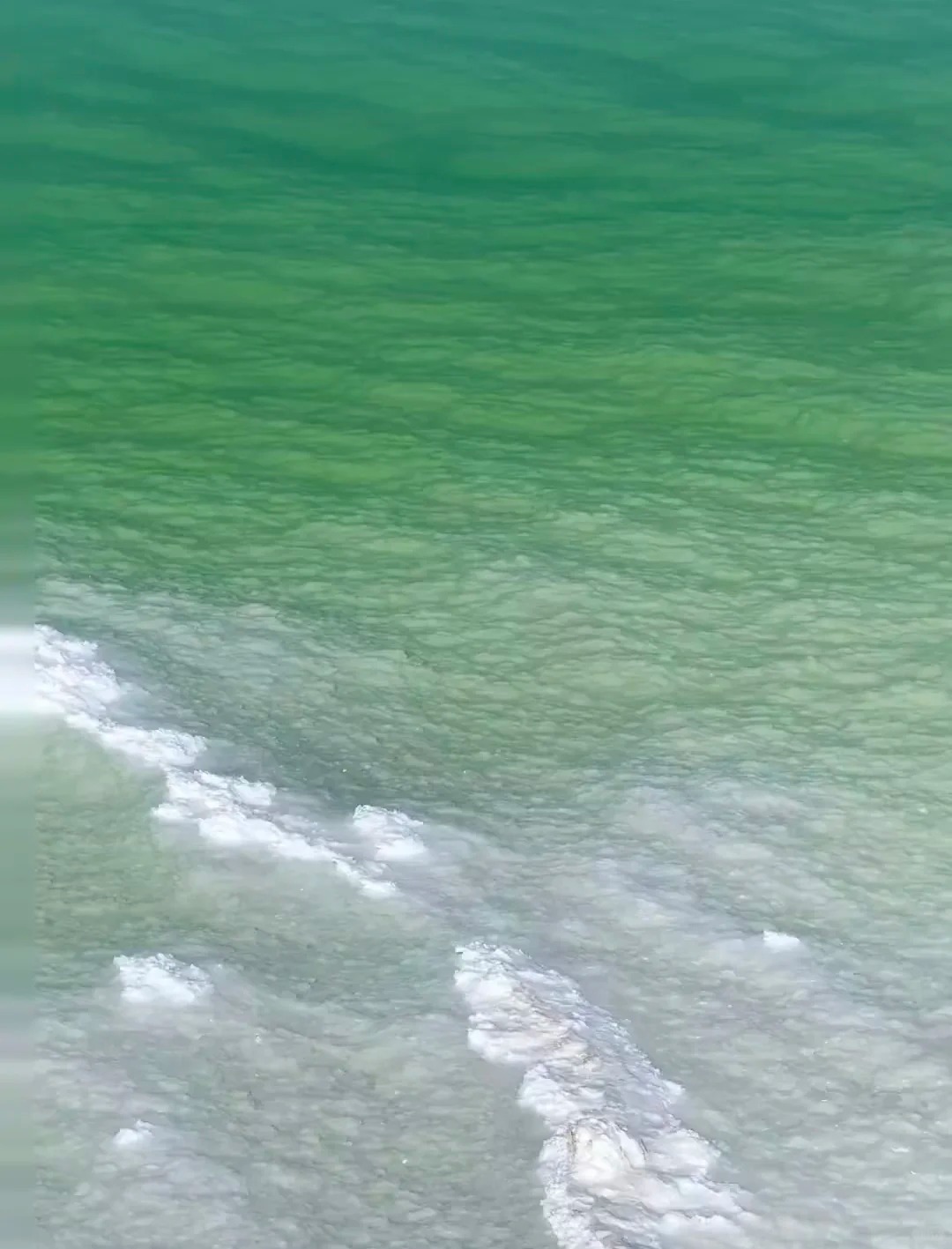
As I watched the trucks roll by with their headlights piercing the twilight, I realized that Qarhan is the heartbeat of this region. It provides the salt that ends up on tables all over China, the chemicals for industry. It is a place of extraction and endurance.
Before leaving, I filled a small jar with salt from the ground. It’s coarse, greyish, and unrefined—very different from the table salt we use. It contains grit and minerals. It feels primal.
Qarhan Salt Lake is not for everyone. There are no cute photo spots with props. No small trains. It is gritty, hot, and vast. But if you want to see the scale of China’s natural resources, if you want to witness a landscape that looks like Mars, then this is the place. It left me with a profound respect for the planet’s geological forces and the people who work in this harsh environment. It was a trip that stripped away the romance of travel and replaced it with a gritty, awe-filled reality.