Legends often exaggerate, but in the case of Heavenly Lake (Tianchi), the myth is almost an understatement. Located high in the Tianshan Mountains, just a short drive from the bustling city of Urumqi, Tianchi is often touted as a must-see. I admit, I was skeptical. A tourist hotspot so close to a major city is often synonymous with crowds, noise, and disappointment. But I was determined to find the soul of this place beyond the selfie sticks and the tour buses.
I arrived early in the morning, while the mist was still clinging to the mountains. The road up is a winding ribbon of asphalt, climbing through a dense forest of Siberian firs and spruces. The air grew noticeably cooler and fresher with every switchback, washing away the dust of the city. When the car finally parked at the visitor center, I stepped out and felt a chill that demanded a jacket. This was a welcome change.
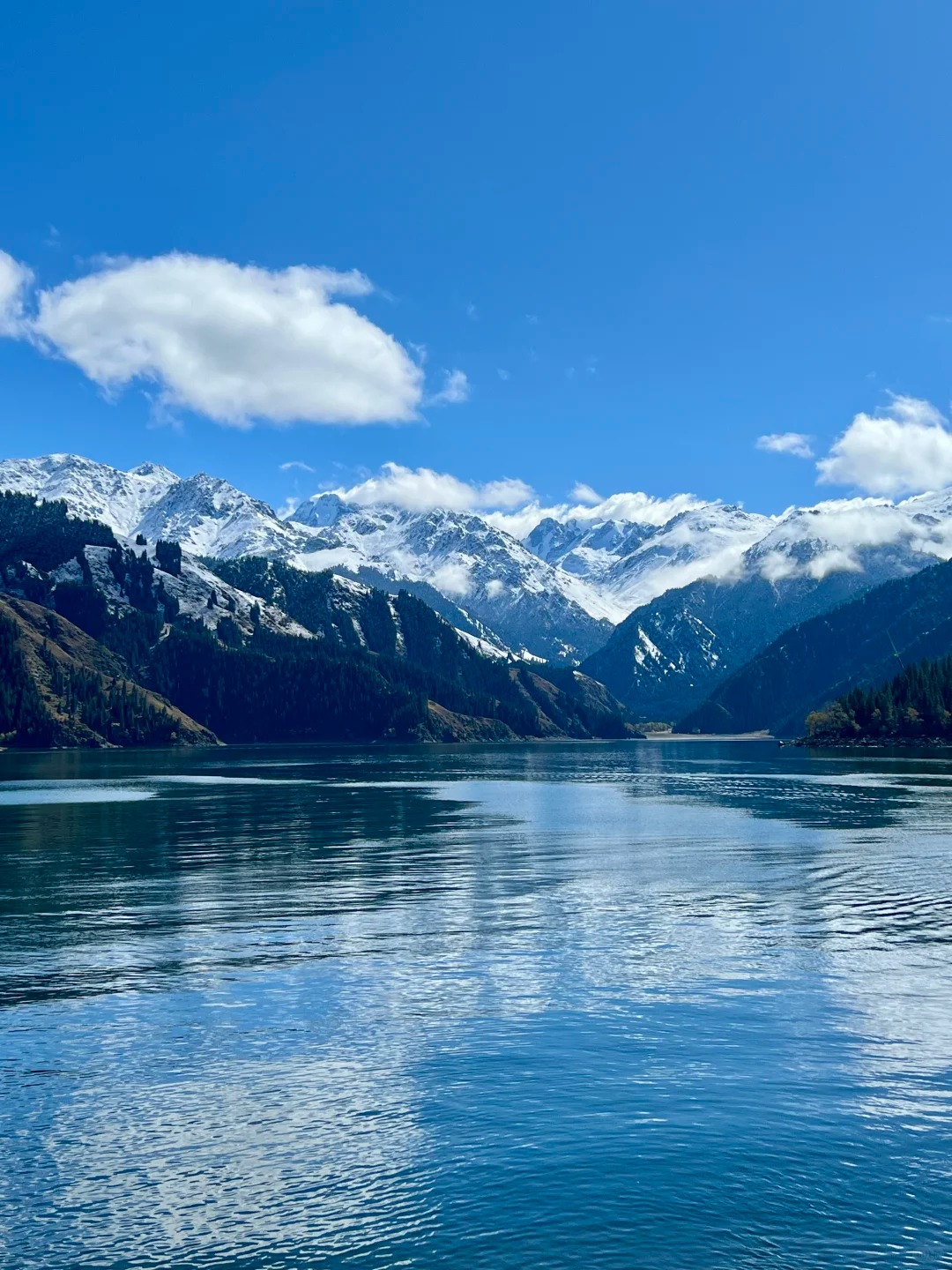
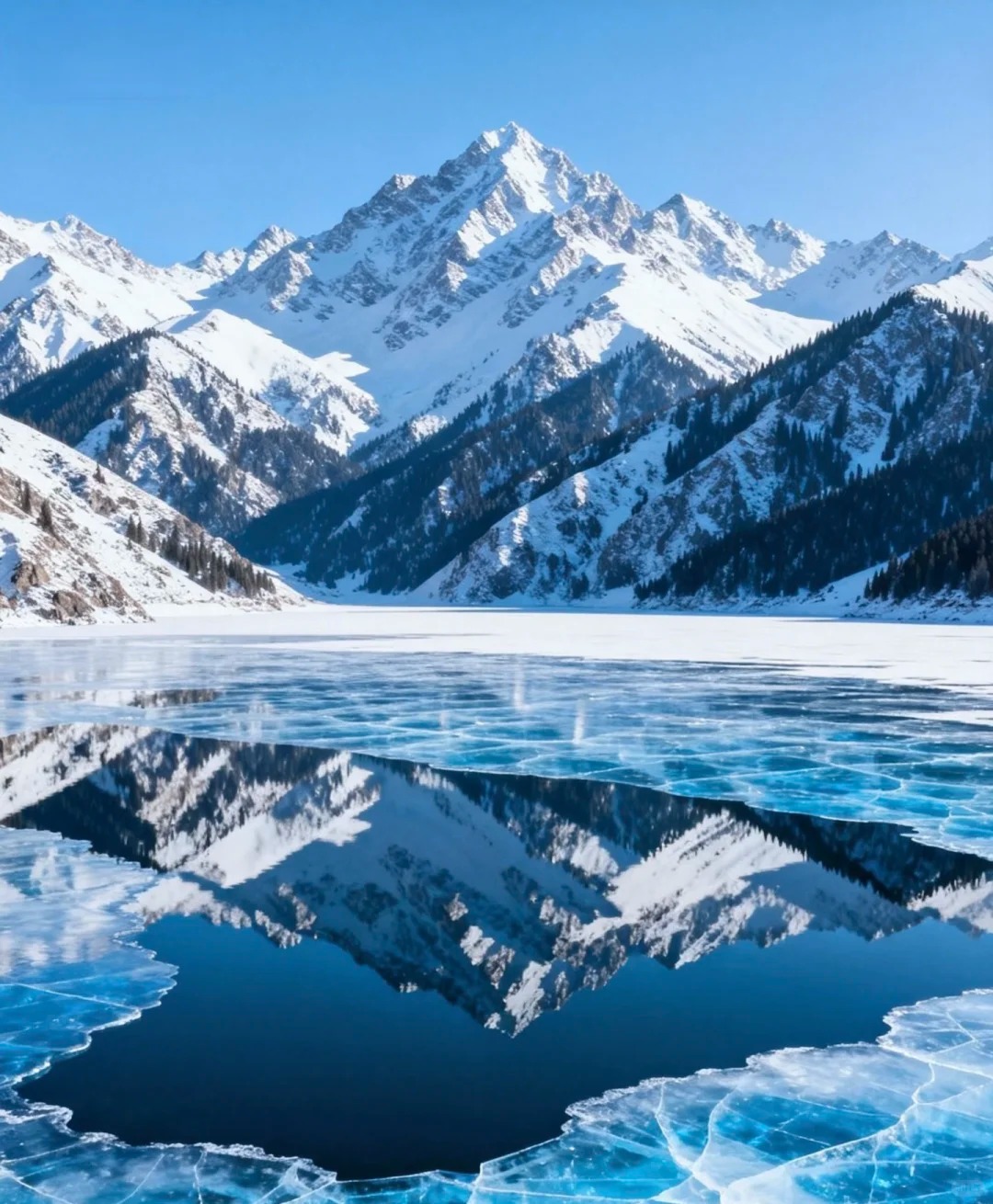
My first glimpse of the lake came through a gap in the trees. It was a shock of blue—a deep, concentrated azure that seemed to vibrate with intensity. The lake sits at an altitude of 1,900 meters, cradled by a circle of snow-capped peaks dominated by the majestic Bogda Peak. The contrast is striking: the white snow, the dark green of the coniferous forest, and the jewel-blue of the water.
I decided to hike the boardwalk trail that skirts the lake. While many tourists choose the boat ride or the cable car, I wanted to walk. Walking allows you to see the details. The boardwalk is well-maintained, winding through ancient trees. Some of these firs are hundreds of years old, their trunks thick and gnarled, covered in moss. The silence of the forest is profound, broken only by the rustling of leaves and the distant splash of water.
As I walked, the lake revealed its different moods. In the center, it was a calm, unbroken sheet of glass. Near the shore, the water was crystal clear, and I could see the logs resting on the bottom, preserved by the cold. Tianchi is a moraine lake, formed by glacial activity millions of years ago. Knowing this added to the sense of antiquity. I wasn’t just looking at water; I was looking at a melted glacier, a piece of the mountain that had turned to liquid.
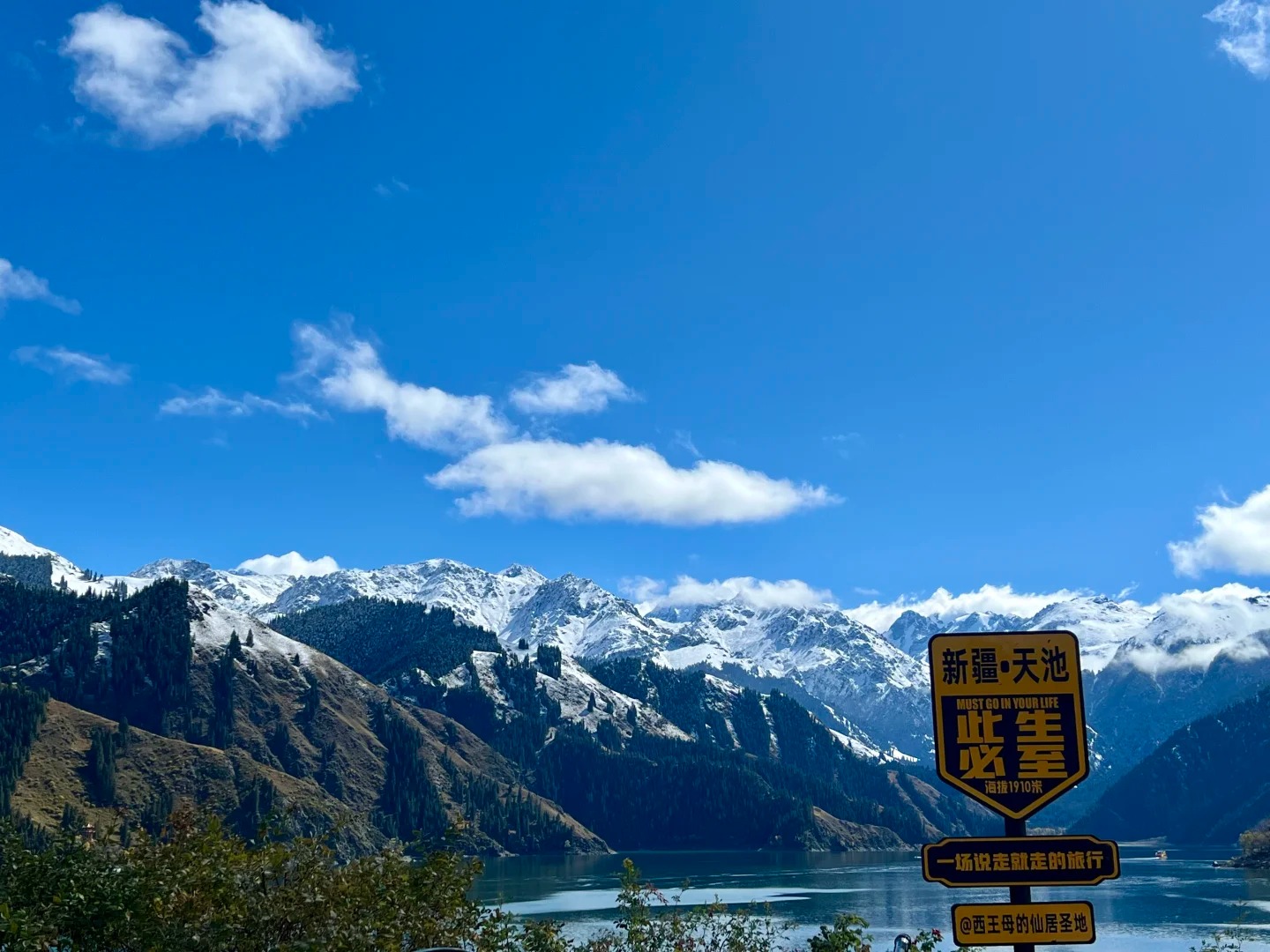
One of the most poignant sights at Tianchi is the “Dragon King Temple” (Longwang Miao). It is a small, traditional wooden structure perched on a rocky outcrop overlooking the water. While it is a place of worship, it also serves as a perfect frame for the landscape. I sat on the steps of the temple for a long time, watching the light play on the water. It is said that the Western Queen Mother (Xi Wangmu) once bathed here, making the lake a sacred site in Taoism. Standing there, it was easy to understand why people would consider this place divine. It feels separated from the mortal world.
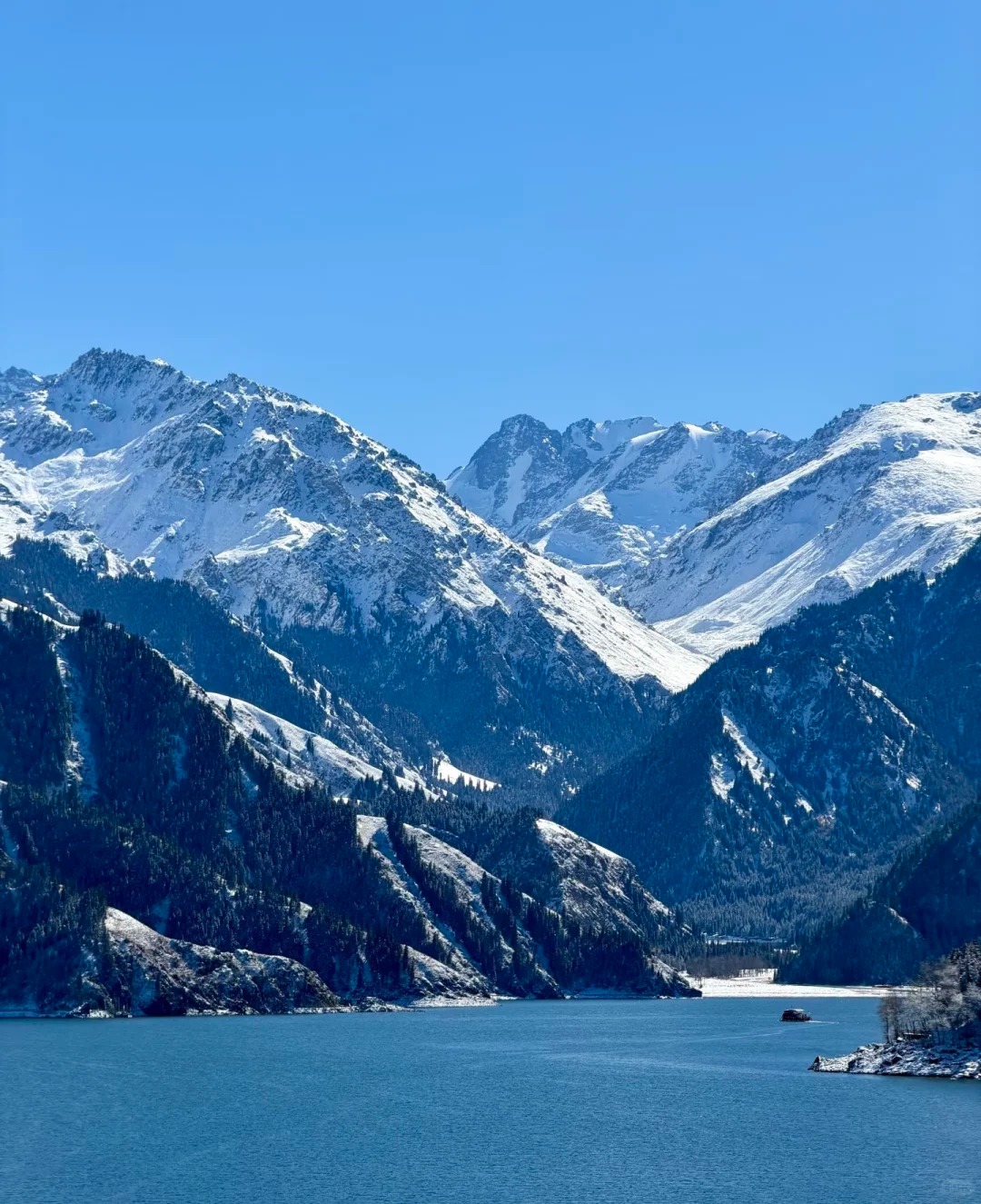
I continued hiking up to the “Wawu Mountain” (Bowl Mountain). It was a steep climb, but the view from the top was worth the sweat. From this vantage point, the lake looks like a teardrop falling from the eye of the sky. The perspective allows you to see the full grandeur of the Bogda Peak. The mountain stands as a guardian, watching over the water with a solemn, snow-capped dignity.
What struck me most about Tianchi was not the lake itself, but the ecosystem surrounding it. The Tianshan Mountains are a biodiversity hotspot. I saw marmots darting between the rocks and birds of prey circling in the thermal currents above. The flora is equally diverse, with alpine meadows bursting into color during the summer months. It is a living, breathing system, not just a scenic backdrop.
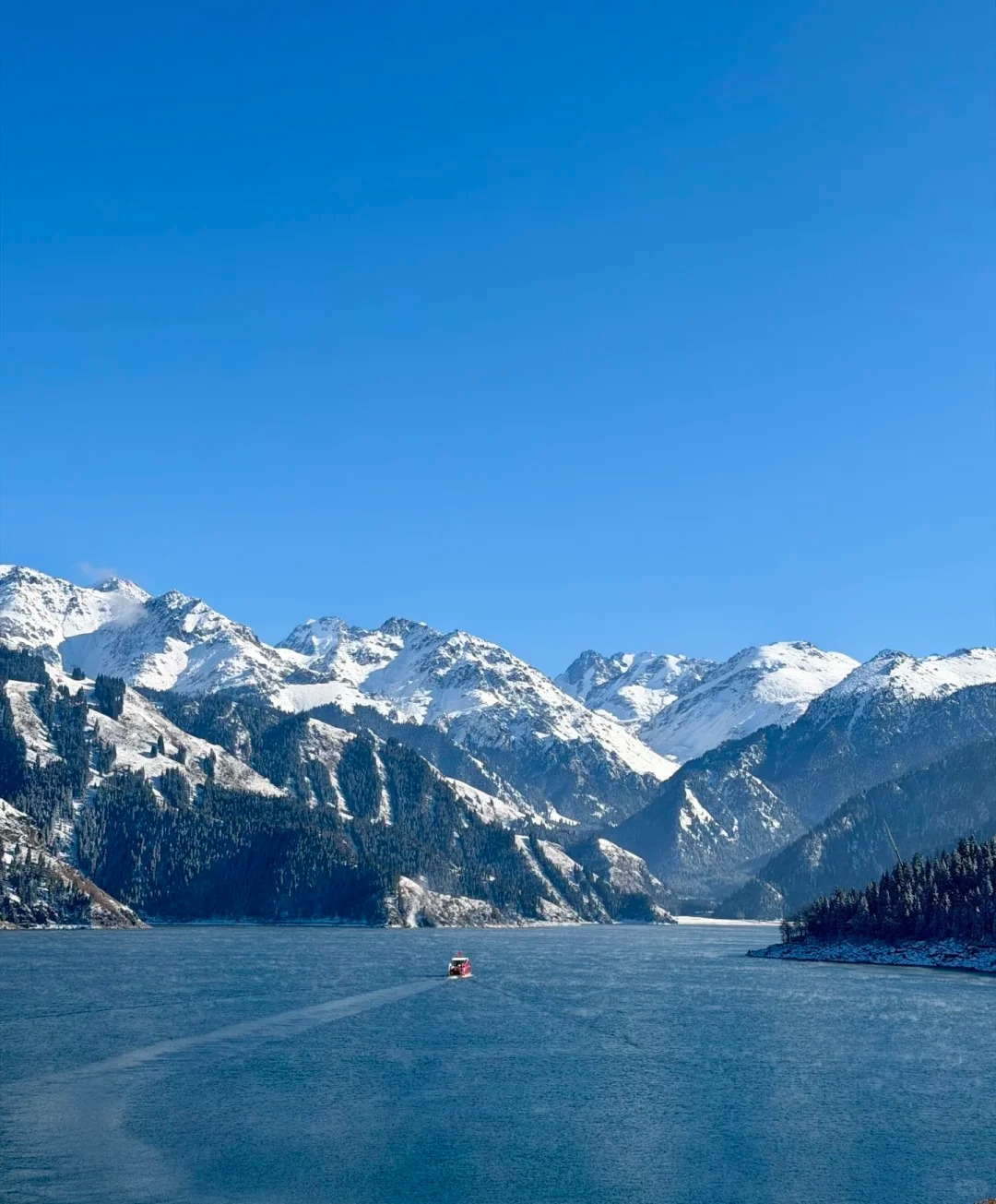
Of course, Tianchi is popular. By midday, the area around the dock was bustling with people. But I found that if you are willing to walk a little further, past the main viewpoints, the crowds thin out. I found a secluded bay where the only sound was the lapping of the water against the pebbles. I sat there and ate a simple lunch of bread and cheese, feeling incredibly grateful. It is rare to find such natural beauty so accessible, yet still capable of offering solitude.
On the way down, I visited the Kazakh yurts set up near the shore. The Kazakh people are the stewards of this mountain region. I was invited inside to drink *sute chai* (milk tea). The interior of the yurt was warm and cozy, filled with the smell of sheep wool and smoke. I chatted with a young Kazakh man who was working there for the summer. He told me that his family moves their livestock to higher pastures in the summer and comes down here for the tourist season. He spoke proudly of the lake. “This is our home,” he said. “It is beautiful in the winter, too, when the lake freezes and the snow is deep.” His words reminded me that this place is not just a postcard; it is a living space for the people who call these mountains home.
As I drove back to Urumqi, the sun setting behind me, I reflected on my day. Tianchi had defied my expectations. It was commercial, yes, but the beauty was undeniable. It had a power that transcended the crowds.
Tianchi Lake is a place where the sky kisses the earth. It is a place where the elements—water, ice, rock, and forest—come together in perfect harmony. Whether you are a pilgrim seeking a sacred site, a nature lover looking for a hike, or just a tired soul needing a break from the city, Heavenly Lake has something to offer.
If you go, take the time to look beyond the obvious. Look at the texture of the rocks, the way the light hits the snow, and the silence between the trees. You will find that the “Heavenly” in its name is well-deserved. It is a pearl that shines brightly in the crown of the Tianshan Mountains.