If Beijing is the polished face of modern China, then Kashgar Old City is its beating, ancient heart. It is a place where time seems to have stood still, not for hours or days, but for centuries. Located at the crossroads of Central Asia, Kashgar has been a hub of trade and culture for millennia. As a traveler, there are few places on earth that can match the intensity of color, sound, and smell that hits you the moment you step into the Old City.
My visit began at dawn. I woke early to catch the sunrise over the city. The call to prayer echoed from the Id Kah Mosque, a deep, resonant sound that rolled over the rooftops like a wave. The sky turned from purple to gold, illuminating the mud-brick walls of the old town. The texture of the city is what strikes you first. It is a maze of earth-toned buildings—parchment brown, dried apricot orange, and dusty yellow. The walls are rough, handmade, and seem to grow organically from the desert soil.
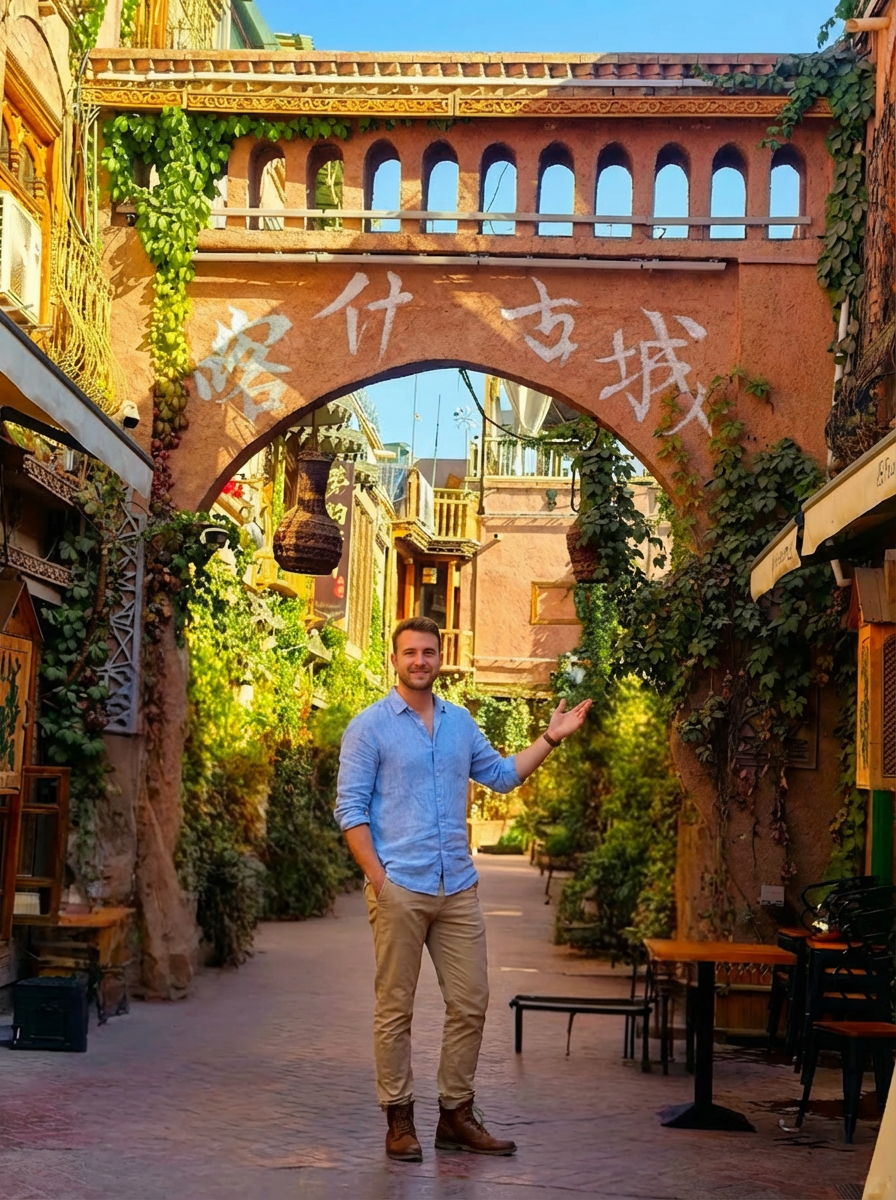
I started walking without a map. To explore Kashgar Old City, you must get lost. The streets are a tangled web of narrow alleyways, barely wide enough for two people to pass. Some are covered by wooden ceilings, creating cool, shaded tunnels. Others are open to the sky, revealing intricate wooden balconies and lattice windows that look down on the passersby.
The sensory overload is immediate and constant. The air is filled with the smell of fresh bread from the *tondir* ovens—round, flat naan bread that is staple food here. I watched an old baker slap a piece of dough onto the inner wall of the clay oven with a practiced flick of his wrist. The bread emerges charred and puffy

I passed by workshops where artisans were working at crafts that have been passed down for generations. I saw a copper smith hammering intricate patterns into a pot, the rhythmic *clang-clang* echoing in the alley. I saw a wood carver chiseling a doorframe with a design so complex it must have taken months. The people here are not just preserving history; they are living it. I met a man making musical instruments—the *satar* and the *duttar*. He invited me to sit and listen while he played a melancholic tune. The music seemed to capture the loneliness and the beauty of the desert.
One of the most fascinating aspects of the Old City is the architecture of the homes. Many of the houses are multi-story, built around a central courtyard. I was lucky enough to be invited into the home of a local guide named Mahire. Inside, the courtyard was a sanctuary of peace. Vines grew on trellises, providing shade. The rooms were decorated with colorful rugs and traditional Uighur embroidered cushions. The walls were thick, keeping the heat out. Mahire explained that these structures are earthquake-resistant, built with a flexible wooden frame that absorbs the shock. It was a brilliant display of ancient engineering meeting aesthetic beauty.
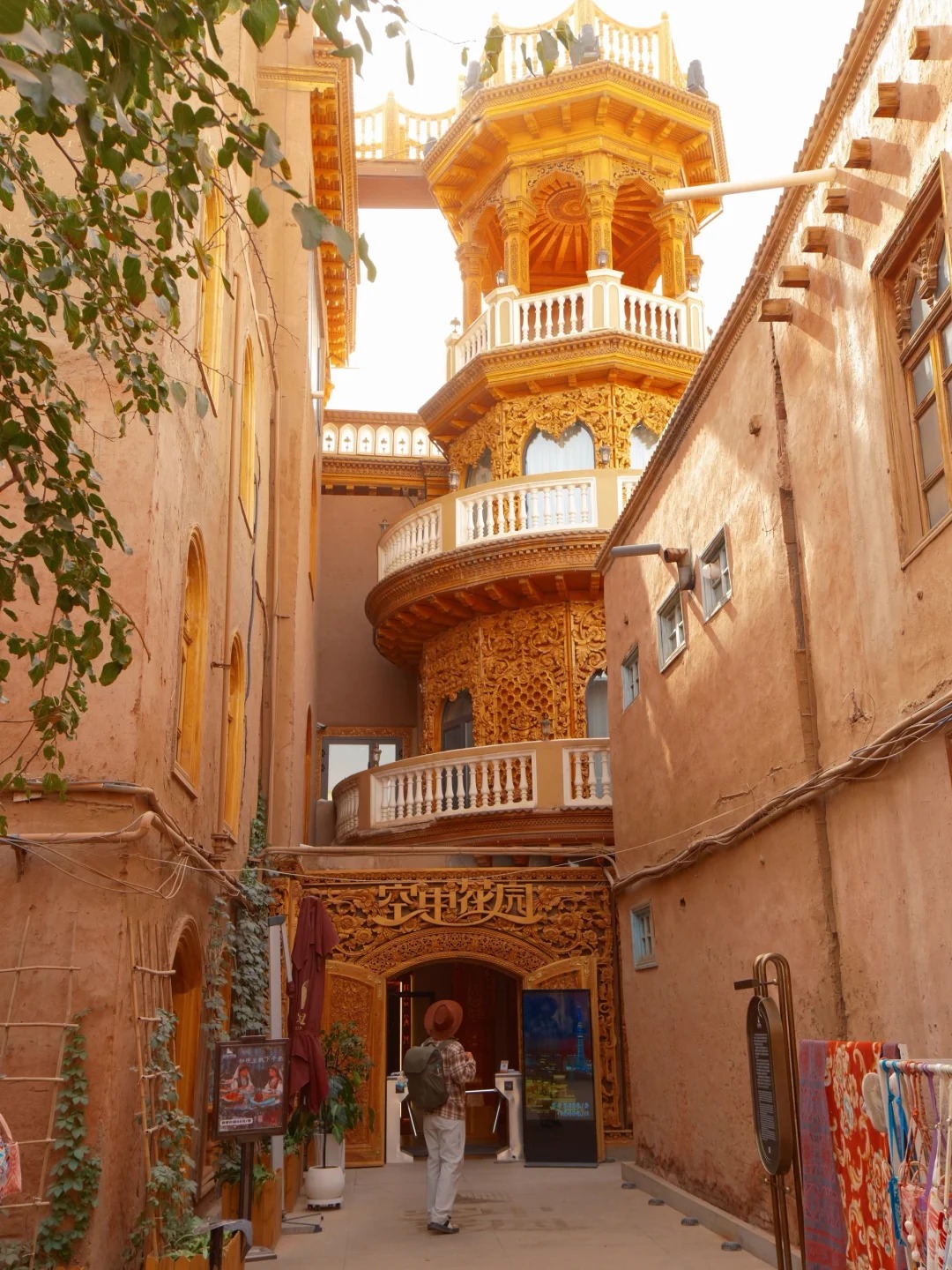
We climbed to the roof of her house. From this vantage point, the Old City looks like a sandcastle kingdom. You can see the mud-brick walls stretching out endlessly, punctuated by the minarets of mosques and the taller buildings of the new city in the distance. The contrast is jarring—modernity pressing in on tradition. But on these rooftops, looking out over the labyrinth, the old world still feels dominant.
I made my way to the famous livestock market. While it is technically a Sunday event, the energy of trade permeates the city every day. However, the energy is most concentrated in the Grand Bazaar. This is not a tourist trap filled with cheap souvenirs; this is a functioning market where locals buy their groceries, clothes, and tools. The piles of spices alone are worth the trip—mounds of chili powder, saffron, cumin, and star anise, their colors vibrant enough to burn your retinas. I saw baskets of dried fruits, nuts, and sweets that I couldn’t even name. The noise of bargaining, the smell of roasted meat, and the press of the crowd create an atmosphere that is chaotic yet vibrant.
But the true highlight of Kashgar is the people. I sat in a teahouse on the edge of the Id Kah Square, sipping green tea sweetened with rock sugar. Around me, old men with long white beards and *doppa* hats sat chatting, playing chess, or just watching the world go by. The hospitality was overwhelming. Despite the language barrier, smiles were exchanged freely. Someone handed me a piece of naan. Another offered me a piece of melon. I didn’t feel like a tourist; I felt like a guest in their living room.
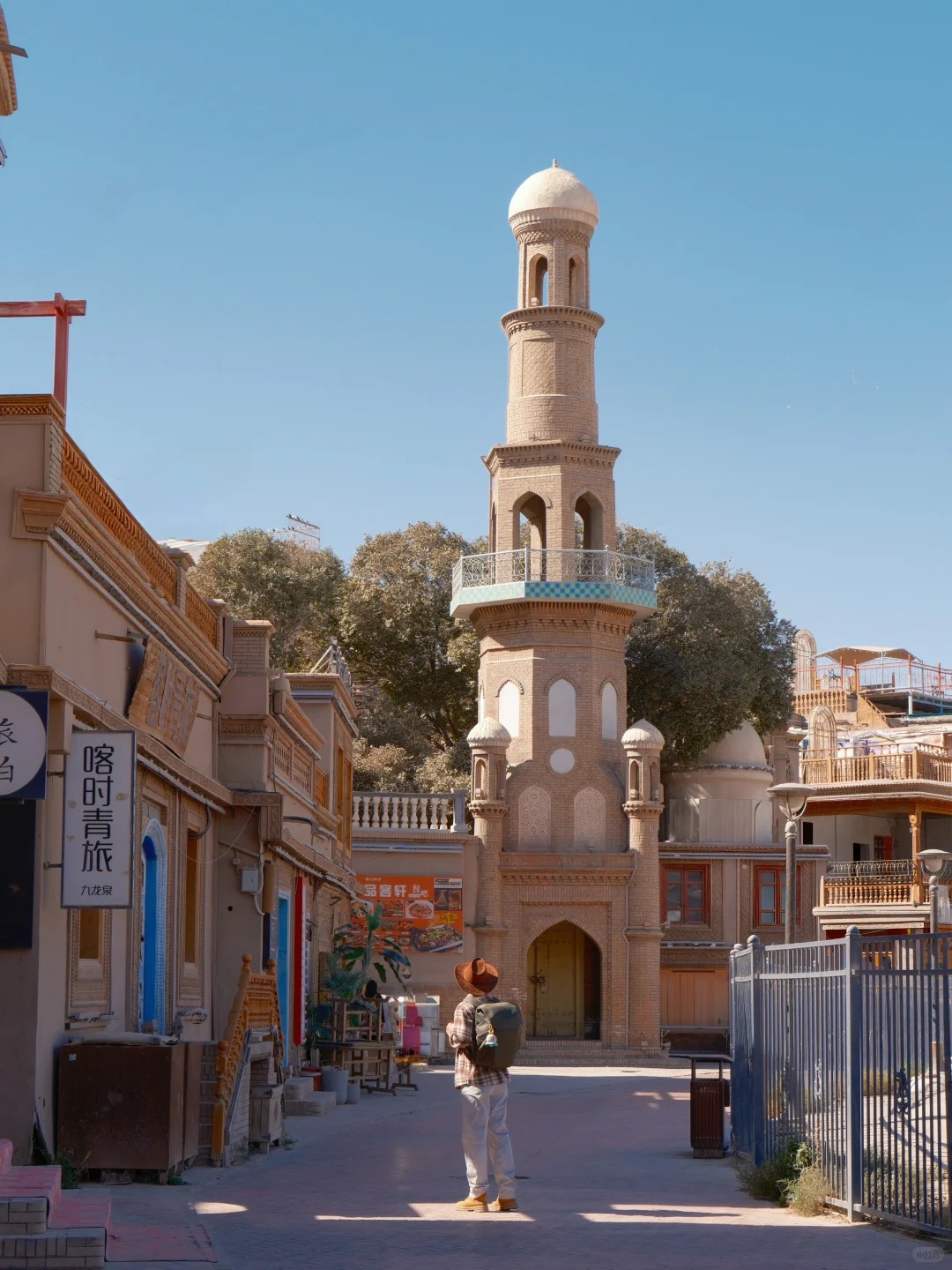
As the sun began to set, the mud-brick walls turned a deep, glowing red. The shadows lengthened in the alleyways. I found myself back at a tandoor bakery. The smell of the bread drew me in. I bought a fresh loaf, tearing off a piece and eating it as I walked. It was warm, chewy, and real.
Kashgar Old City is a place that forces you to slow down. You cannot rush here. You have to stop, look at the textures, listen to the sounds, and taste the flavors. It is a sensory immersion.
Renovations have changed parts of the city, modernizing the infrastructure for safety, which is a necessary evil. But the spirit remains. The spirit of the Silk Road—the meeting of cultures, the exchange of ideas, the hustle of commerce—is alive in every corner.
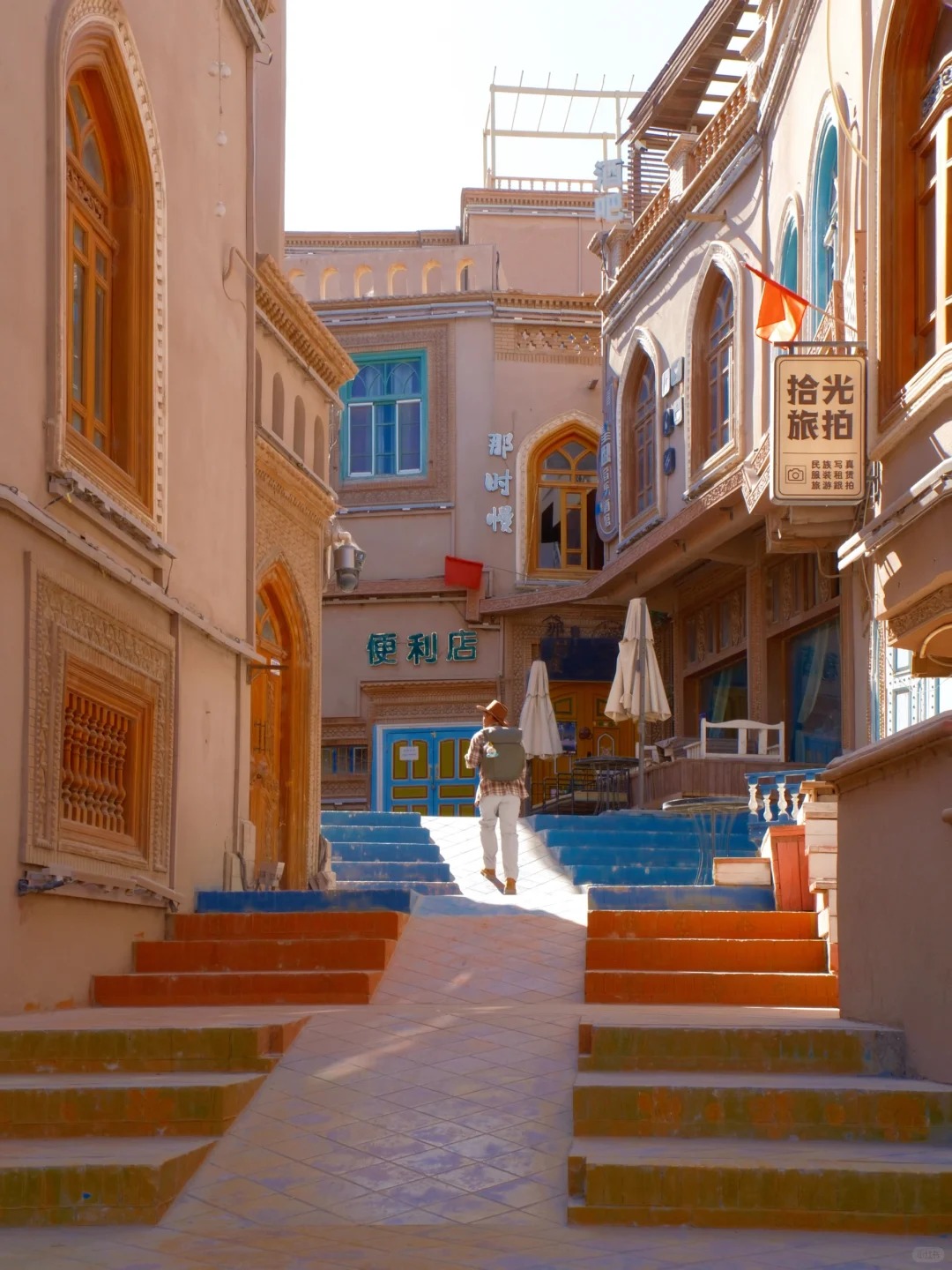
Leaving Kashgar, I felt a pang of sadness. It felt like I was leaving a dream. It is a city that stays with you, a reminder of a time when the world was bigger and travel was an adventure. If you visit Xinjiang, you must start or end your journey here. To miss Kashgar Old City is to miss the soul of the region.