Ancient towns in China can sometimes feel like movie sets—beautiful, but hollow. Qingyan is different. It feels lived-in. It feels fortified. It feels like it has secrets buried under its stone slabs.
Located just south of Guiyang, Qingyan was originally built as a military outpost in the Ming Dynasty. You can feel that martial history the moment you approach the massive stone walls. They aren't decorative; they are thick, imposing, and built to keep people out. But today, the gates are open, and I walked right in.
The first thing that hit me wasn't the architecture, but the smell. It was a rich, savory, slightly herbal aroma that seemed to permeate the very stones of the town.
"Pig's trotters," a local guide whispered to me, seeing my nose twitch. "Qingyan style."
Indeed, the "Champion's Trotters" (Zhuangyuan Ti) are everywhere. Huge piles of braised pork feet, glistening with collagen and soy sauce, stacked high in shop windows. I’m not usually one for gnawing on feet, but when in Rome (or Qingyan)... I bought one. It was sticky, tender, and incredibly flavorful, infused with over a dozen Chinese herbs. I walked down the street, feeling very medieval, tearing into a trotter with one hand and holding my camera with the other.

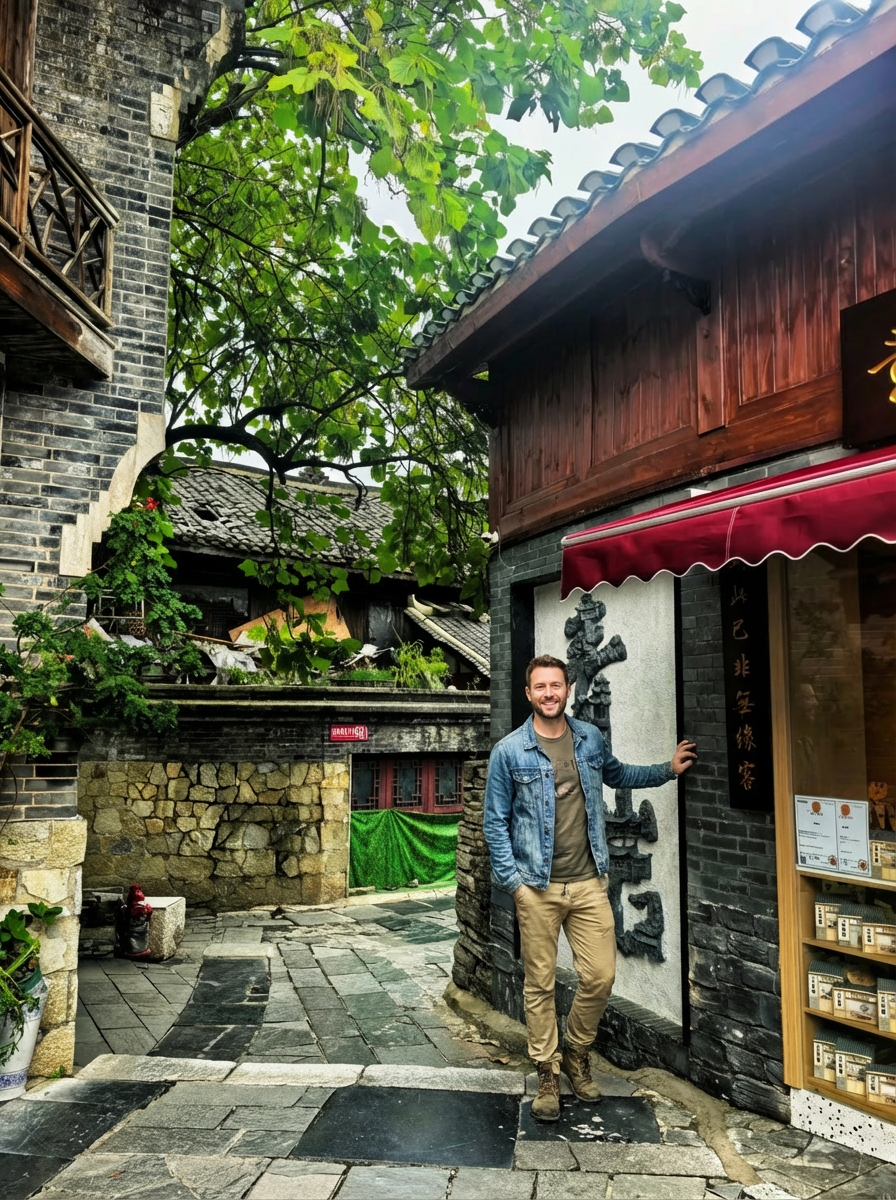
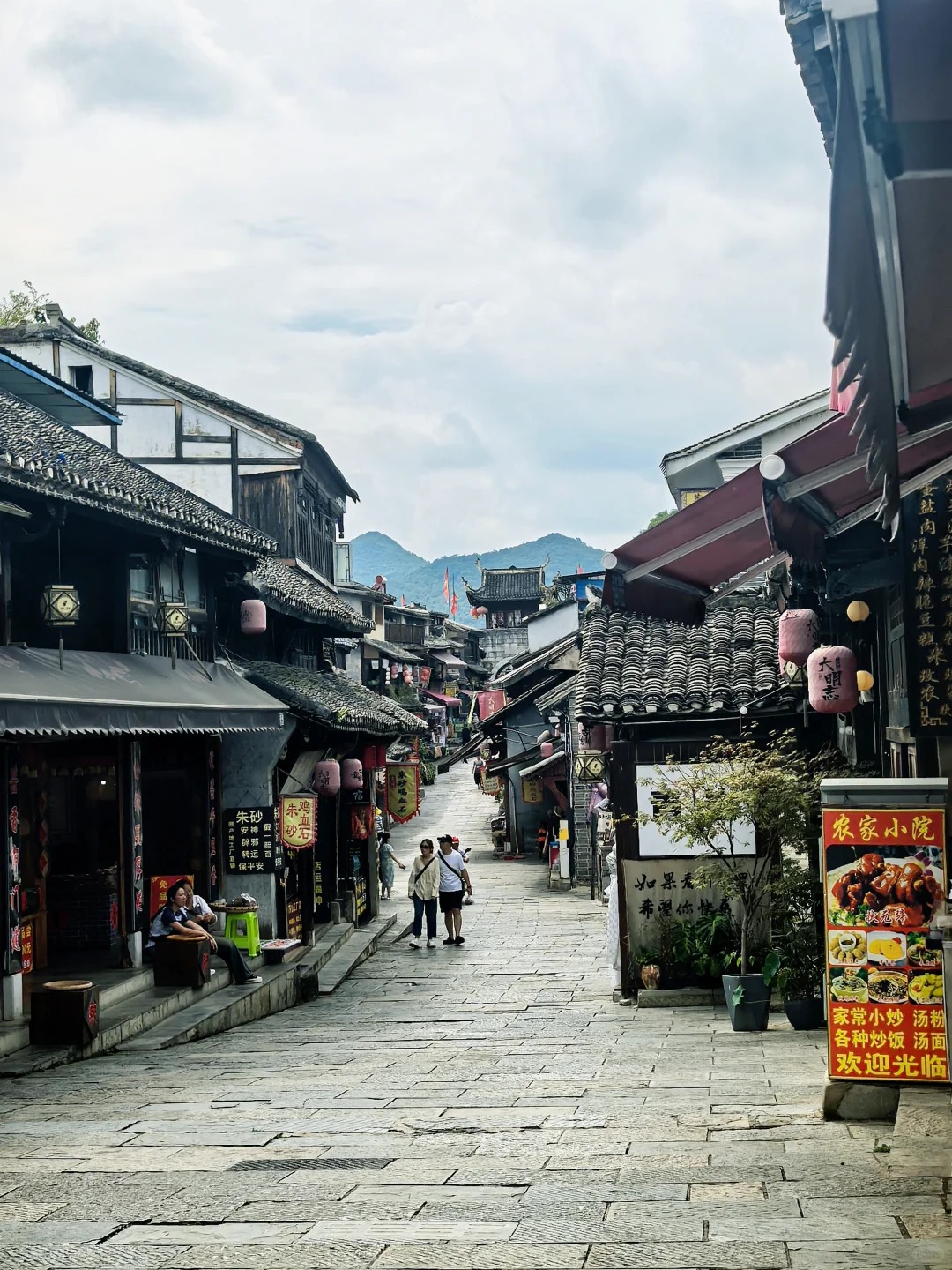
The architecture here is a fascinating mix. Unlike the wooden stilted houses of the Miao or Dong, Qingyan is built of stone. Stone walls, stone pillars, stone pathways. It gives the town a grey, stoic beauty. But what surprised me most was the diversity. within a few hundred meters, I walked past a Buddhist temple, a Taoist palace, a Christian church, and a Catholic cathedral.
I stepped into the Catholic church. It was quiet, the sunlight filtering through stained glass onto the wooden pews. An old woman was kneeling in prayer, whispering in the local dialect. Just down the street, incense was burning in front of a Taoist deity. This coexistence amazed me. In a place built for war, four religions have found a way to live side by side for centuries.
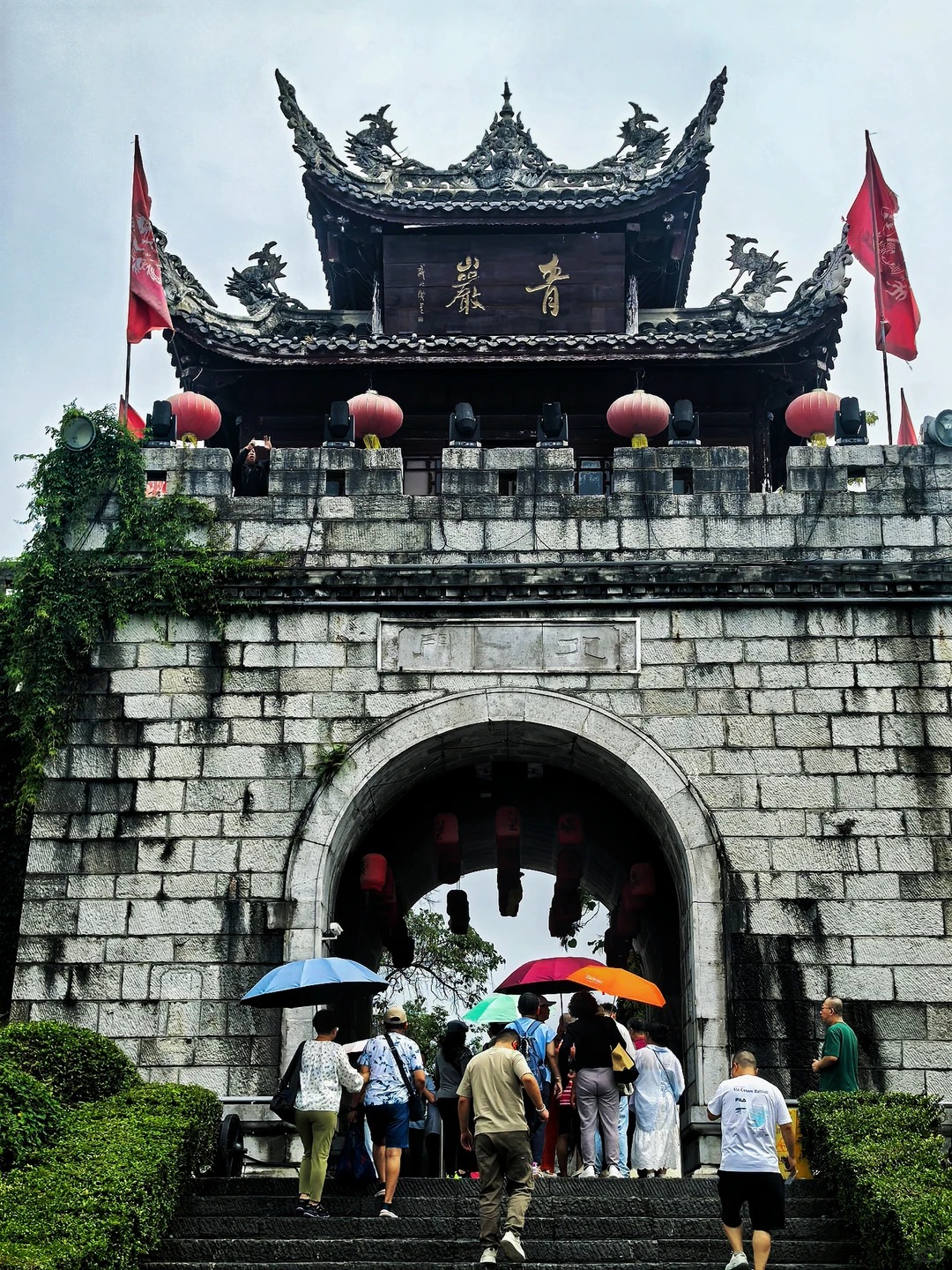
I decided to climb the "Dingguang Gate" and walk along the city wall. The path is steep—bordering on vertical in some places. My legs, still recovering from Fanjingshan, protested, but the view was worth it. From the top, you can see the layout of the town—a maze of grey tile roofs nestled in the green basin. You can see the defensive design, the way the streets twist and turn to confuse potential invaders.
Descending back into the maze, I found a tea house tucked away in a quiet courtyard. It wasn't one of the flashy ones on the main street. The owner, a man in his sixties, was playing a traditional instrument, the erhu. The melancholic, sliding notes drifted through the air. I ordered a cup of local rose tea. We sat in silence for a while, just listening to the music and the distant chatter of tourists.
"Many people come here to look," he said eventually, putting down his bow. "But few stay long enough to listen."
Qingyan isn't about grand vistas. It’s about textures. The rough grain of the stone walls, the smooth polish of the flagstone streets worn down by centuries of footsteps, the sticky richness of the pork, and the layered harmony of its faiths. It’s a town that has survived wars and time, and now, it just sits comfortably in its own history, waiting for you to slow down and notice.