I’ve seen a lot of fishing. I’ve fished in Florida for bass and in Norway for cod. But I had never seen anything like the winter fishing at Chagan Lake.
Chagan Lake (Chagan Hu) is a vast, shallow lake in the Songyuan area. It’s freezing. I mean, bone-chillingly cold. But for the local Mongolian fishermen, this is the harvest season.
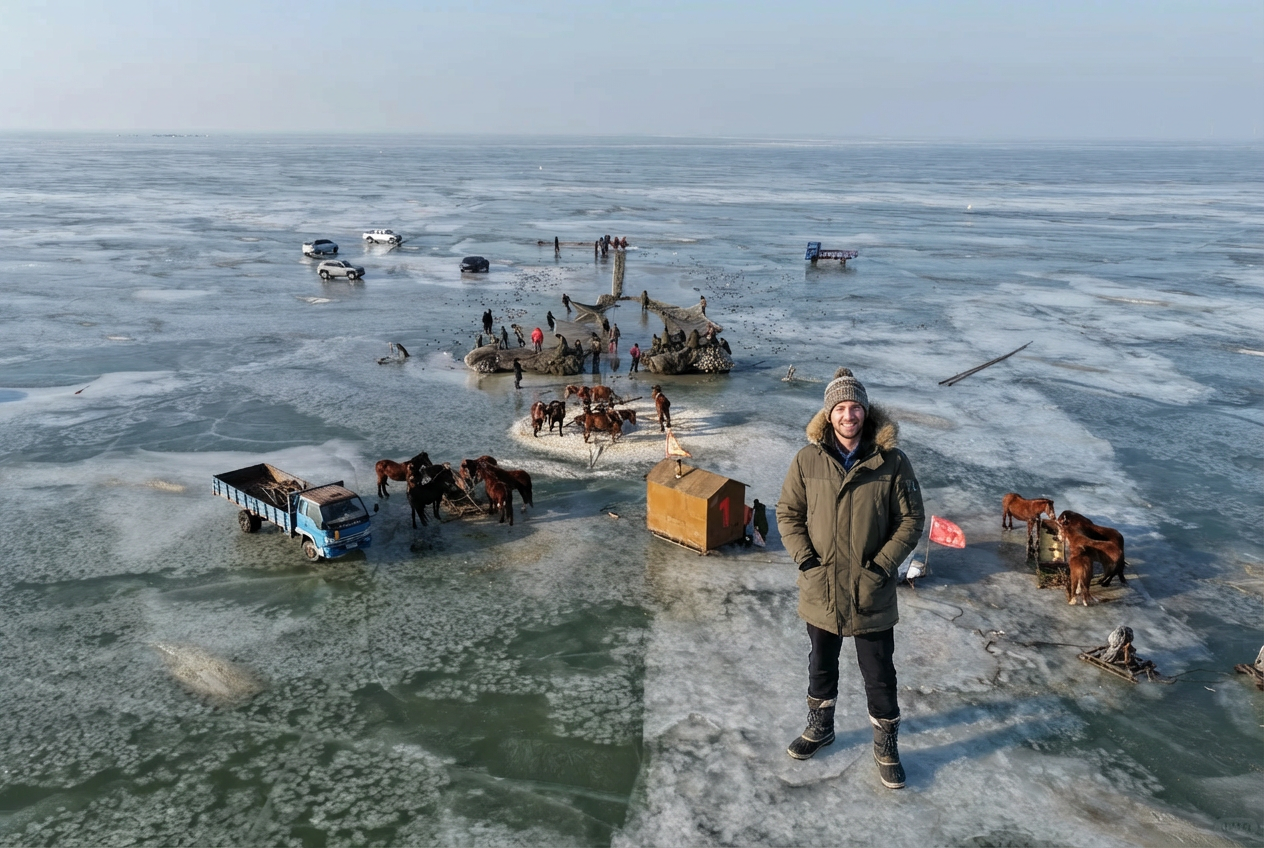
They are the last descendants of the Khitan people who maintained a primitive fishing method that dates back to the Liao Dynasty (over 1,000 years ago). They don’t use sonar. They don’t use modern nets. They use horses and ice.
I arrived at 4:00 AM. It was dark. The temperature was -30°C. On the ice, there were dozens of horses, their breath pluming in the torchlight. The fishermen were dressed in heavy sheepskin coats, looking like yetis.
The ritual begins with "Awakening the Net." The shaman (or the master fisherman) chants in Mongolian, offering vodka to the lake god, burning incense, and bowing to the four directions. It’s solemn. It’s spiritual. It’s about respecting nature so nature provides.

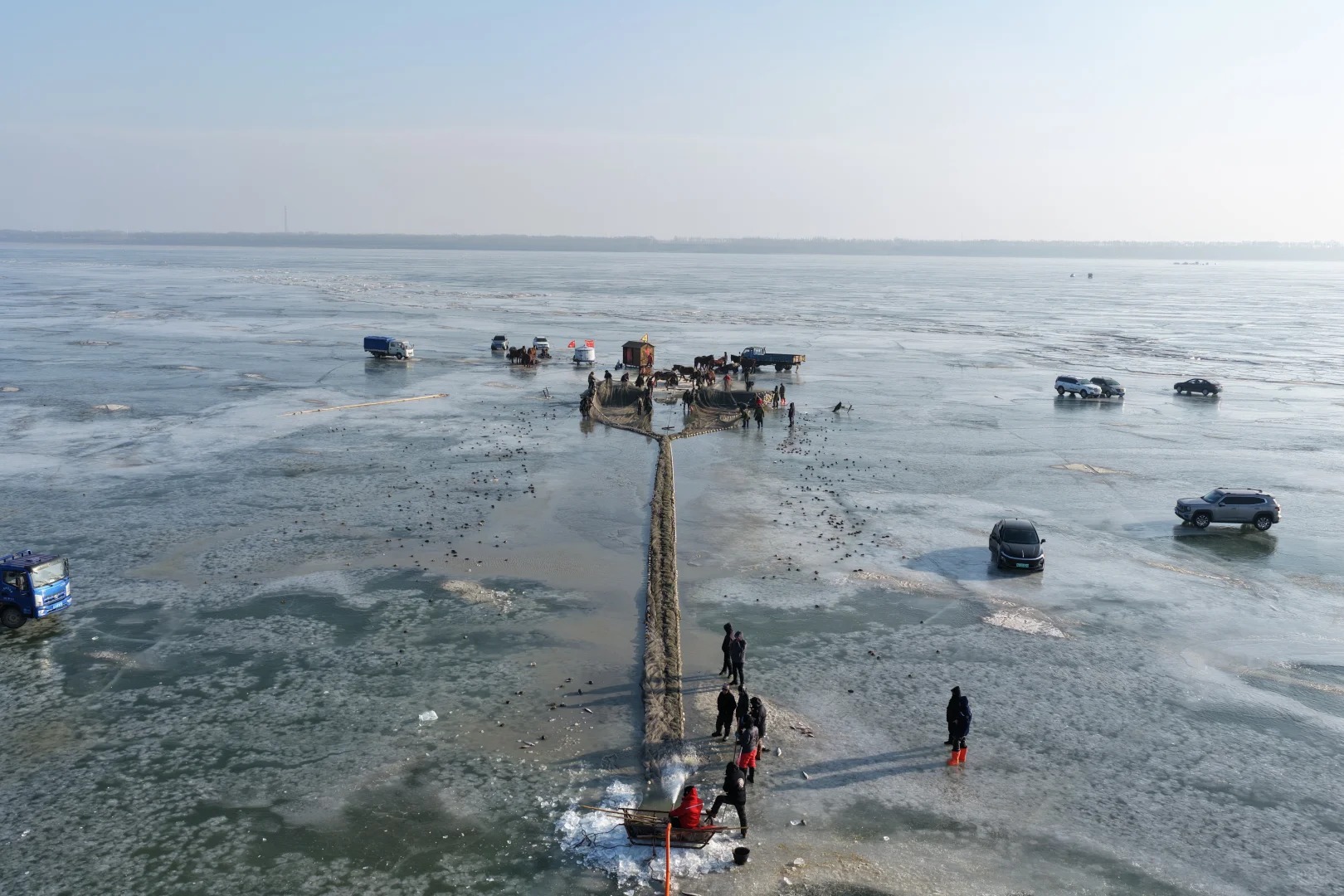
Then, the horses start walking. They pull a wooden windlass, dragging a massive net (2,000 meters long!) under the ice. It takes hours. The tourists (and there were thousands of us) stood in a semicircle, shivering, stamping our feet, waiting.
When the net finally surfaced, it was heavy. So heavy. The fishermen pulled it by hand, inch by inch. And then... the fish.
They aren't small. We’re talking 10kg, 20kg Big Head carp. They flew out of the hole, flopping on the ice, flashing silver and gold in the sun. The "Head Fish" (the biggest one) is always auctioned off for good luck. One year it sold for millions of yuan!
I bought a fish right there on the ice. They gutted it in the snow, threw chunks into a pot of boiling lake water with just some scallions and ginger. No oil. No seasoning. Just fresh water and fresh fish. I ate it with a chunk of frozen bread. It was the best fish soup I’ve ever had. It tasted of the lake, of the cold, of the hard work.
Chagan Lake isn’t just a scenic spot; it’s a living museum of human survival.