By Lila, a French exchange student studying in Beijing
I’ve heard Shanghai called “the Paris of the East” since I moved to China, but nothing prepared me for the way this city blends old and new like a perfectly tailored suit—classic yet modern, elegant yet edgy. My 24-hour adventure started at dawn, when I took the high-speed train from Beijing to Shanghai (a smooth 4.5-hour ride, by the way—worth every yuan for the scenic views of rice fields and rivers). By 9 AM, I was checking into my boutique hotel in the French Concession, a tree-lined neighborhood with colonial-era villas that made me feel momentarily homesick… until I smelled the sweet aroma of xiaolongbao (steamed soup dumplings) wafting from a nearby stall.
My first stop was Yuyuan Garden, a 400-year-old classical Chinese garden tucked between skyscrapers. As I walked through the Moon Gate, I felt like I’d stepped into a painting: winding stone paths, a lotus-filled pond with goldfish darting beneath a zigzag bridge, and pavilions with curved eaves that seemed to dance in the breeze. A group of elderly locals was practicing tai chi near the Garden of Ten Thousand Rocks, their movements slow and graceful against the backdrop of red lanterns. I sat on a stone bench and watched, sipping a cup of jasmine tea I’d bought from a vendor. When one of the tai chi masters noticed me staring, he waved and invited me to join. My attempts were clumsy—my arms kept getting tangled—but he laughed and said, “Shanghai teaches patience. You’ll get it next time.”
By 11 AM, my stomach was growling, so I headed to Yuyuan Bazaar, the bustling market adjacent to the garden. I’d researched beforehand that Nanxiang Steamed Bun Restaurant was a must-try, and the line outside confirmed it. I waited 20 minutes (worth it!) for a plate of their signature crab roe xiaolongbao. The trick, a local beside me explained, is to bite a tiny hole first, suck out the hot soup, then dip the dumpling in black vinegar and ginger. I burned my tongue a little, but the burst of savory crab flavor made it impossible to complain. I also tried lygus bug candy (a crispy, sweet treat shaped like insects—surprisingly delicious!) and osmanthus cake, which melted in my mouth like honey.
After lunch, I took the subway to Wukang Road, a trendy stretch known for its Art Deco buildings and Instagram-worthy spots. The Wukang Building, a curved, 1920s apartment building modeled after Paris’s Arc de Triomphe, was even more stunning in person. I joined a small group of photographers (locals and tourists alike) taking photos of its green copper roof and white facade. As I was adjusting my camera settings, a street artist named Leo approached me and asked if I wanted a portrait. “Your French accent matches the building’s style,” he said with a grin. I agreed, and 15 minutes later, I had a sketch of myself leaning against the building—now one of my favorite travel souvenirs.
Leo recommended I stop by Manner Coffee, a tiny, popular café nearby. I ordered an Americano and sat at the only window seat, watching as locals in designer clothes and students in sneakers hurried past. The café was so small that customers often stood outside to drink their coffee, chatting with baristas who remembered their orders. It felt like a microcosm of Shanghai: busy, friendly, and unapologetically cool. I struck up a conversation with a university student named Sophie who was sitting next to me. She told me she came to Wukang Road every weekend to “people-watch and escape the chaos of downtown.” We talked about our favorite Paris and Shanghai spots—she’d studied abroad in Lyon—and she gave me a list of hidden bookstores to visit later.

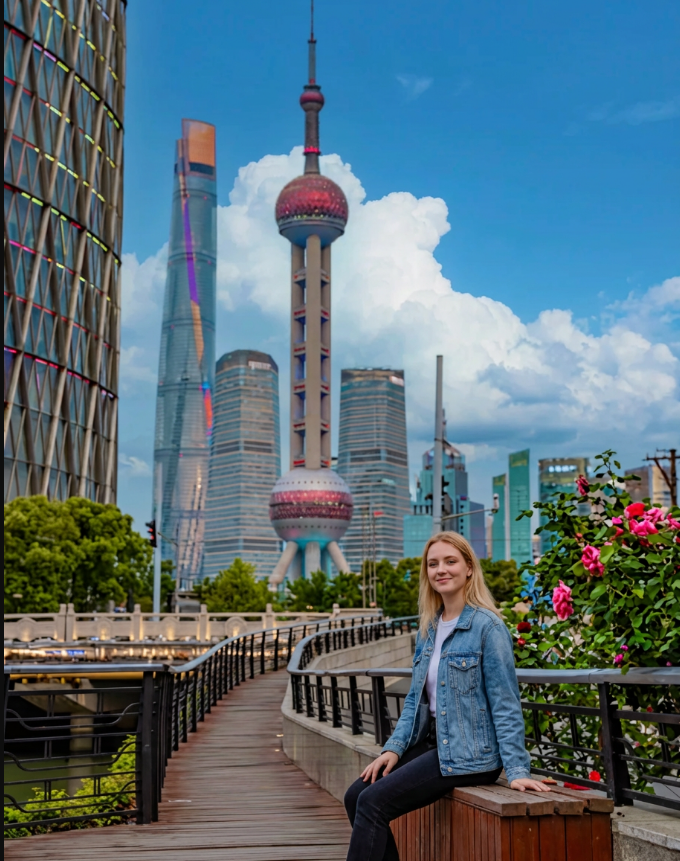
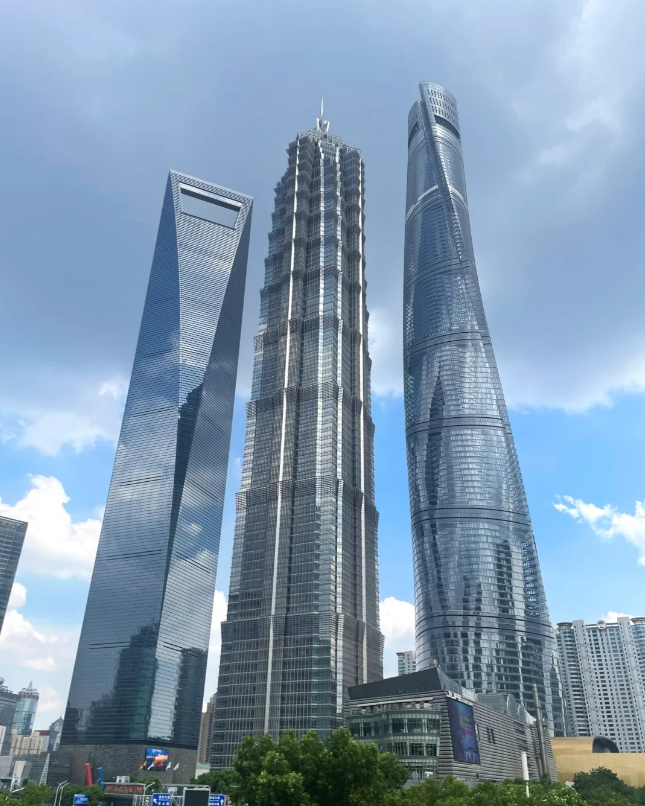
By late afternoon, I made my way to the Bund, Shanghai’s iconic waterfront promenade. Stretching along the Huangpu River, the Bund is lined with 52 Western-style buildings—Gothic, Baroque, Renaissance—built in the early 1900s when Shanghai was a major international trading port. I walked along the river, stopping to admire the Peace Hotel (with its famous green pyramid roof) and the Custom House, whose clock tower chimes “Westminster Quarters” every 15 minutes. Across the river, the Lujiazui Financial District rose into the sky: the Oriental Pearl Tower with its glowing spheres, the Shanghai Tower (the tallest building in China), and the Jin Mao Tower. It was a surreal contrast—100-year-old European-style buildings on one side, futuristic skyscrapers on the other—and it hit me why Shanghai is so unique: it doesn’t choose between East and West; it embraces both.
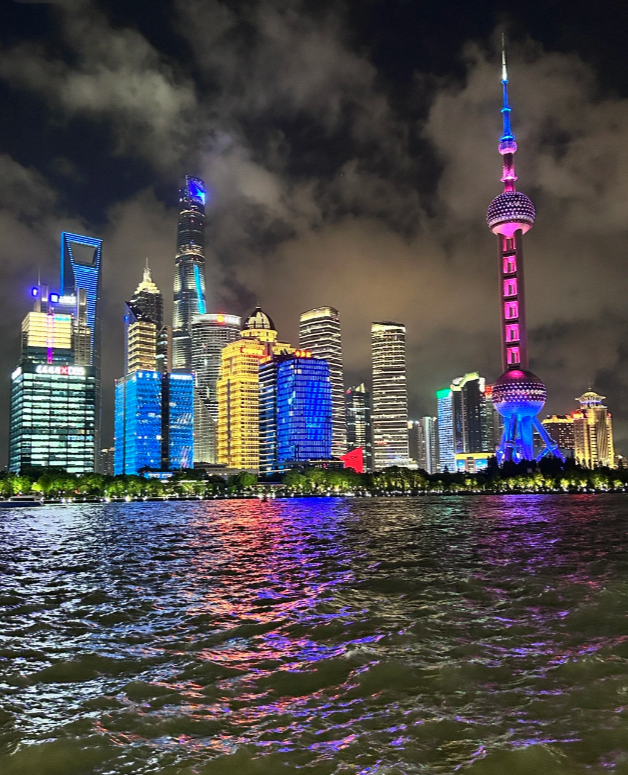
As the sun began to set, I boarded a Huangpu River cruise (I’d booked a cheap ticket online earlier) to watch the skyline light up. The cruise was packed with families and couples, all oohing and aahing as the buildings’ lights turned on one by one. The Oriental Pearl Tower’s spheres glowed pink and blue, and the Shanghai Tower’s facade lit up with a moving light show. I stood at the bow of the boat, feeling the wind in my hair, and thought about how different Shanghai was from Beijing. Beijing is grand and historical, like a wise elder telling stories of emperors. Shanghai is dynamic and young, like a friend who’s traveled the world and brought back the best parts.
After the cruise, I headed to Nanjing Road, Shanghai’s famous shopping street, but instead of hitting the big malls, I followed Sophie’s advice to explore the side alleys. I found a tiny bookstore called “Old Shanghai Books” run by an 80-year-old man named Mr. Chen. He spoke a little French (he’d worked in a French concession bookstore in the 1960s!) and showed me vintage postcards of Shanghai from the 1920s. I bought a postcard of the Bund in black-and-white and wrote a note to my parents on the back. “This city feels like home and adventure at the same time,” I wrote.
For dinner, I went to a hole-in-the-wall Sichuan restaurant on Xiangyang Road that Sophie had recommended. The restaurant was so small that the tables were crammed together, and the walls were covered in photos of celebrities who’d eaten there. I ordered mapo tofu and kung pao chicken, and the chef came out to ask if I could handle the spice. “I’m French, not weak,” I joked, but I asked for mild. He laughed and said, “Smart—Shanghai spice is tricky.” The food was incredible—spicy but full of depth, with fresh garlic and Sichuan peppercorns that made my tongue tingle.
My day ended with a late-night walk through Tianzifang, a historic neighborhood of narrow alleyways filled with art galleries, boutique shops, and jazz bars. I stopped at a small jazz club called “JZ Club” and listened to a local band play a mix of American jazz standards and Chinese folk songs. A woman at the next table bought me a glass of red wine and said, “Welcome to Shanghai—stay as long as you can.” As I walked back to my hotel at midnight, the city was still buzzing: food stalls were serving late-night snacks, couples were strolling hand in hand, and the skyscrapers’ lights twinkled in the distance. I fell asleep with the taste of xiaolongbao on my tongue and the sound of Shanghai’s heartbeat in my ears.
Travel Guide: Your Essential Shanghai Companion
1. Transportation: Get Around Like a Local
Shanghai’s public transportation is efficient and easy to use, even for foreigners. Here’s what you need to know:
- Subway: The subway is the best way to get around—lines cover almost all major attractions. To use it, download the “Metro Shanghai” app (available in English) or buy a one-day pass (24 yuan) at any subway station. You can also use Alipay: search for “Shanghai Subway Electronic Card” and scan the QR code at the gate. Note that during rush hour (7:30-9:30 AM, 5:30-7:30 PM), trains get crowded—avoid if possible.
- Shared Bikes: For short trips (like between Wukang Road and the Bund), shared bikes are perfect. Download apps like Mobike or Hellobike, register with your passport, and scan the QR code on the bike. Rates are about 2 yuan per 30 minutes.
- Taxis: Taxis are affordable and convenient for late nights. Look for taxis with blue or green roofs (official ones). Drivers rarely speak English, so have your destination written in Chinese (your hotel can help). A 10-kilometer ride costs about 30-40 yuan.
- High-Speed Train: If you’re coming from Beijing or other cities, the high-speed train is the way to go. Book tickets on the official “12306” app (English version available) or at the train station. First-class tickets from Beijing to Shanghai cost about 933 yuan, second-class about 553 yuan.
2. Top Attractions: What to See & When to Go
- Yuyuan Garden & BazaarHours: Garden 8:30 AM-5 PM (closed Mondays for maintenance), Bazaar 8 AM-10 PM.
- Tickets: Garden 40 yuan, Bazaar free.
- Pro Tip: Arrive at the garden by 9 AM to avoid crowds. Visit the Bazaar in the afternoon for snacks—lines at Nanxiang Steamed Bun Restaurant are shorter after 2 PM.
Wukang RoadBest Time to Visit: 2-5 PM (golden hour for photos of Wukang Building).
Hidden Gems: Check out “The Press” (a café in a historic newspaper building) and “Wukang Bookstore” (a tiny shop with rare Shanghai-themed books).
The BundBest Time to Visit: Sunset (6-7 PM) for the light show. The light show runs from 7 PM-10 PM every night, with 15-minute intervals.
Pro Tip: Walk along the Bund from south to north for the best views of Lujiazui. Avoid weekends—crowds are much smaller on weekdays.
TianzifangHours: Most shops 10 AM-10 PM, bars open until midnight.
Pro Tip: Visit after 8 PM to avoid tourist crowds—local artists often perform in the alleys at night.
3. Food: Eat Like a Local (Avoid Tourist Traps!)
Shanghai’s food scene blends Huaiyang (local) cuisine with influences from all over China. Here are the must-tries and where to find them:
- Xiaolongbao (Steamed Soup Dumplings): Nanxiang Steamed Bun Restaurant (Yuyuan Bazaar) is famous, but for a more local spot, try “Din Tai Fung” (multiple locations, including Nanjing Road). Order crab roe xiaolongbao (seasonal, autumn-winter) or pork xiaolongbao.
- Hairy Crab: A Shanghai specialty in autumn (September-November). Try it at “Lao Zheng Xing” (a historic restaurant on Fuzhou Road)—steamed with ginger and vinegar.
- Sichuan Food: “Ma La Xiang Guo” (Spicy Hot Pot) is popular—try “Hai Di Lao” (chain) for great service, or the hole-in-the-wall on Xiangyang Road (ask locals for directions).
- Desserts: Osmanthus cake (Yuyuan Bazaar), red bean soup (any local dessert shop), and “double skin milk” (a creamy dessert from Guangdong, available at “Hui Lau Shan” chain).
- Street Food Spots: Xiangyang Road Night Market (5 PM-midnight), Tianshan Road Food Street (cheap and authentic), and the alleys near Fudan University (student-friendly prices).
4. Accommodation: Where to Stay
- French Concession: Perfect for travelers who want charm and convenience. Try “The Middle House” (luxury, 1,500+ yuan/night) or “Bund 1919 Hotel” (mid-range, 600-800 yuan/night)—both have easy access to Wukang Road and the Bund.
- Nanjing Road: Great for shopping lovers. “Shanghai World Financial Center Hotel” (luxury, 2,000+ yuan/night) has stunning skyline views, while “Home Inn” (budget, 300-400 yuan/night) is clean and affordable.
- Lujiazui: For futuristic views. “Park Hyatt Shanghai” (luxury, 2,500+ yuan/night) is in the Shanghai Tower, while “CitizenM Shanghai Pudong” (mid-range, 700-900 yuan/night) is trendy and family-friendly.
5. Cultural Etiquette & Tips
- Photography: Ask permission before taking photos of locals (especially elderly people or children). Some historic buildings (like parts of Yuyuan Garden) prohibit photography—look for signs.
- Queuing: Chinese culture values queuing—always wait in line at restaurants, subway stations, and attractions. Cutting lines is considered rude.
- Payment: Most shops, restaurants, and taxis accept Alipay or WeChat Pay. Carry a small amount of cash (100-200 yuan) for small stalls or rural areas, but Shanghai is mostly cashless.
- Language: Most young people speak basic English, but learning a few Chinese phrases helps: “Ni hao” (hello), “Xie xie” (thank you), “Duo shao qian?” (how much?), and “Bu yao la” (no, thank you—for avoiding pushy vendors).
- Weather: Shanghai is hot and humid in summer (June-August, 30-35°C) and cold in winter (December-February, 0-10°C). Spring (March-May) and autumn (September-November) are the best times to visit—mild temperatures and less rain.
6. One-Day Itinerary (Perfect for First-Time Visitors)
- 1. 8:30 AM: Arrive at Yuyuan Garden, explore the garden.
- 2. 10:30 AM: Visit Yuyuan Bazaar, eat xiaolongbao at Nanxiang.
- 3. 12:30 PM: Take subway to Wukang Road, visit Wukang Building, have coffee at Manner.
- 4. 3:30 PM: Walk to the Bund, explore the waterfront.
- 5. 6:00 PM: Take Huangpu River cruise to watch sunset and light show (book tickets online in advance).
- 6. 8:00 PM: Dinner at a local Sichuan restaurant or Huaiyang restaurant.
- 7. 10:00 PM: Explore Tianzifang or Nanjing Road, then head back to hotel.