I have seen the video. You have seen the video. The whole world has seen the video: a monorail train emerging from the lush green side of a mountain and disappearing straight into the belly of a massive apartment complex. It’s the ultimate internet meme of "Cyberpunk China."
But standing there, on the street level of Liziba in the scorching mid-day sun, the meme dissolved into something much more complex and human.
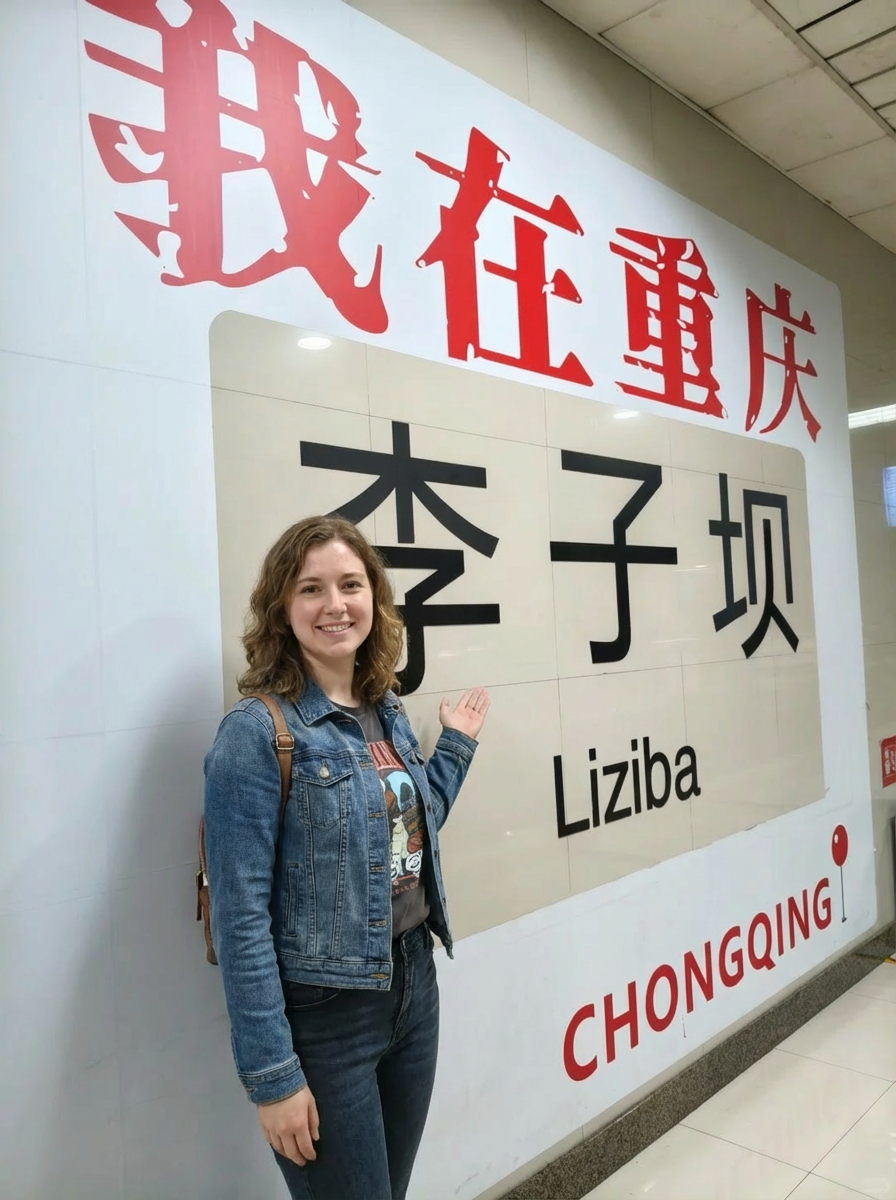
I decided not to take the easy route. Most people take a taxi to the viewing platform, snap the photo, and leave. I wanted to understand the anatomy of this concrete beast. So, I started my journey from Eling Park, winding my way down the steep, confusing pedestrian paths that connect the upper levels of Chongqing to the riverbanks.
Walking in Chongqing is not walking; it is urban hiking. My calves were burning. The humidity acted like a soft focus lens, blurring the edges of the distant bridges. As I descended, the sound of traffic grew louder, echoing off the canyon of high-rises. And then, I looked up.
There it was. The residential building looks overwhelmingly ordinary from the outside—white tiles, barred windows, air conditioning units hanging like warts on the façade. But then, you notice the hole. It’s not a dark tunnel; it’s an open mouth between the 6th and 8th floors.
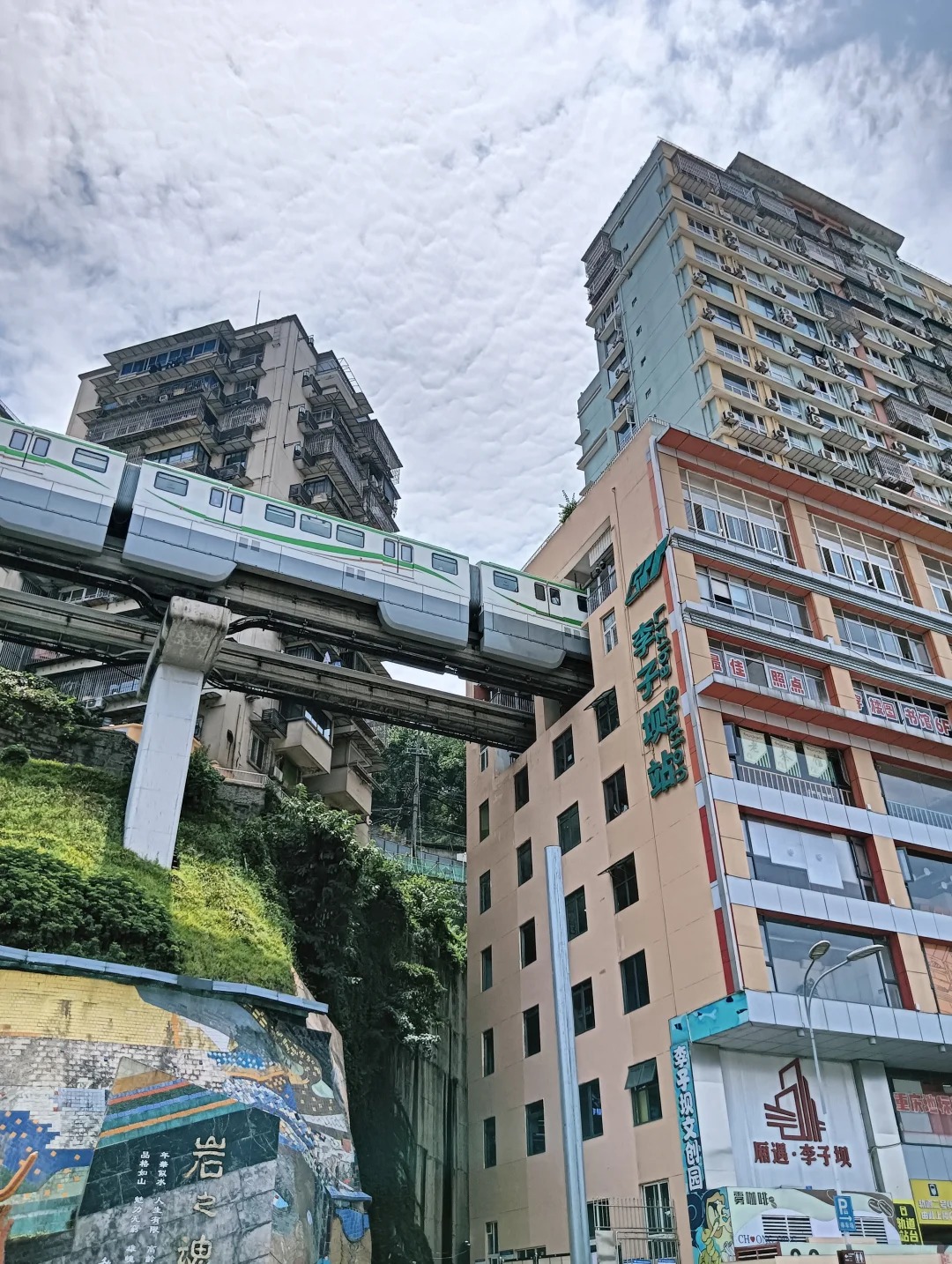
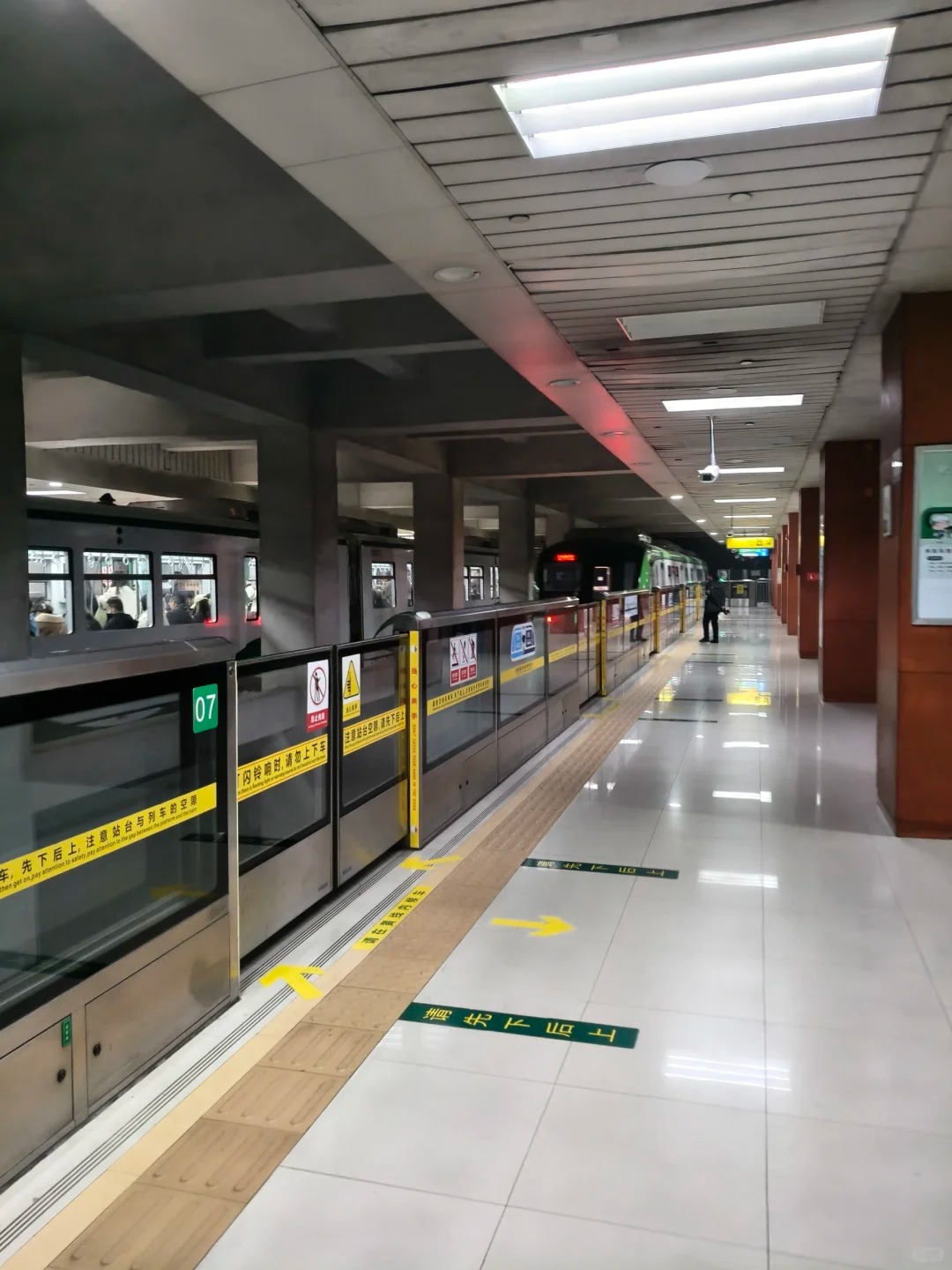
I walked into the station entrance on the ground floor. Or was it the ground floor? In Chongqing, you never really know. I took the elevator up. The station itself, tucked inside the building, felt surprisingly normal. There were turnstiles, a security check, and a bored-looking guard. But the vibration was different. I placed my hand against a pillar. I expected a rumble, a shaking that would rattle the tea cups of the residents living upstairs.
Nothing. Just a faint, rhythmic hum.
I later learned that the station and the building were built together, independent of each other, separated by a 20-centimeter gap. The train never actually touches the apartment frame. It’s an engineering magic trick.
I bought a ticket and waited on the platform. When the train arrived, it didn't screech. It slid in on rubber tires—Monorail Line 2 is famous for being quiet. I boarded and snagged a seat by the window. As the doors closed and we pulled out of the "stomach" of the building, the transition was jarring. One second, I was inside a dim, cool concrete shell; the next, I was suspended fifty meters in the air, with the Jialing River glittering blindly below me.
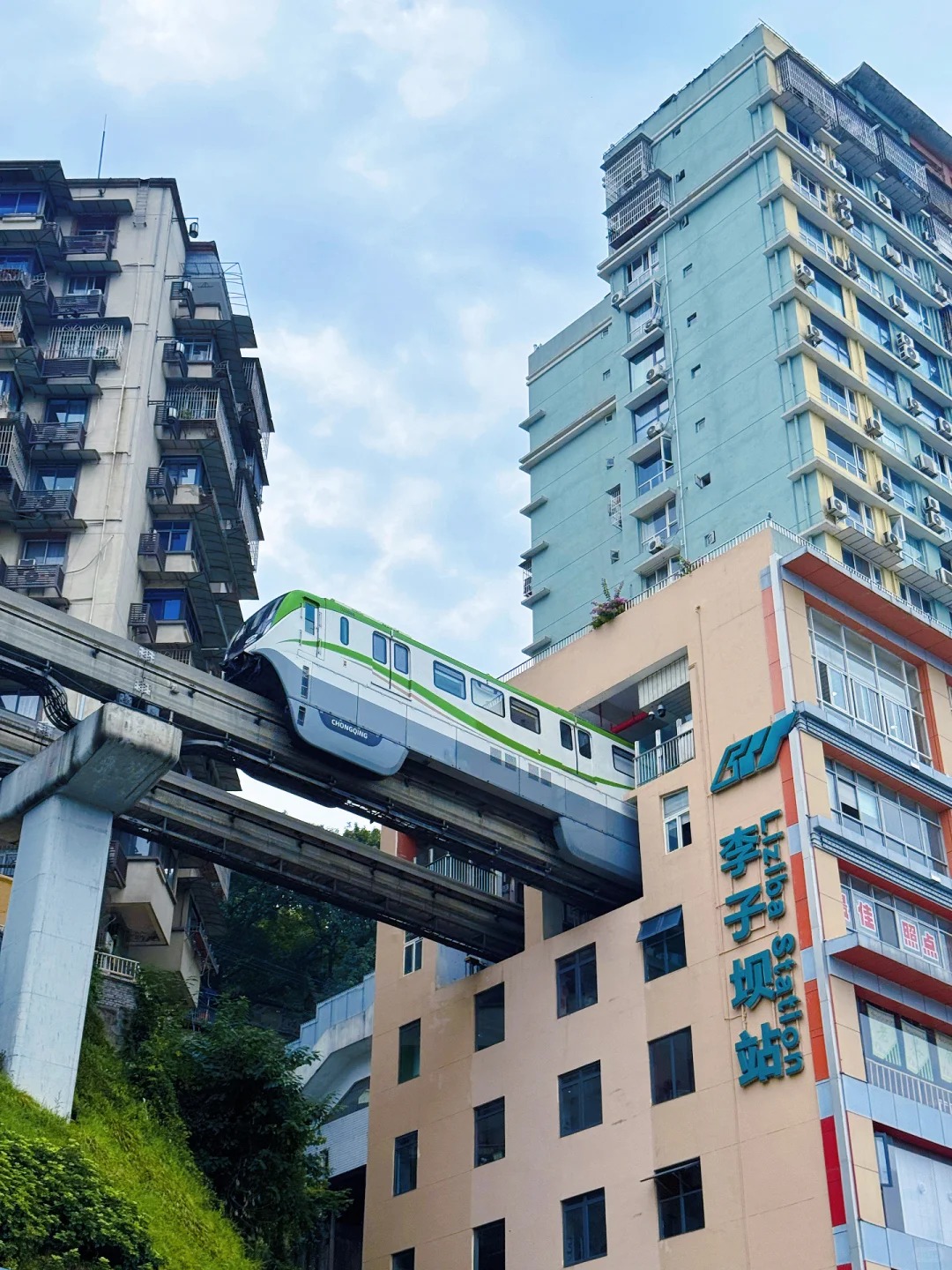
It felt like flying. The train hugged the curve of the mountain, banking sharply. I looked back at the building we had just exited. I could see laundry drying on a balcony just two floors above the track. A woman was watering her plants. She didn't even look up as the train passed. To her, this miracle of engineering was just 2:00 PM.
I got off at the next stop and doubled back, because I wanted to stand on the famous viewing deck below. The crowd was dense. Selfie sticks fenced like swords. People were posing with their mouths open, pretending to "eat" the train in forced perspective photos.
I sat on the curb, away from the influencers. I watched the trains come and go for an hour. Every few minutes, the building swallowed a train, digested it, and waited for the next.
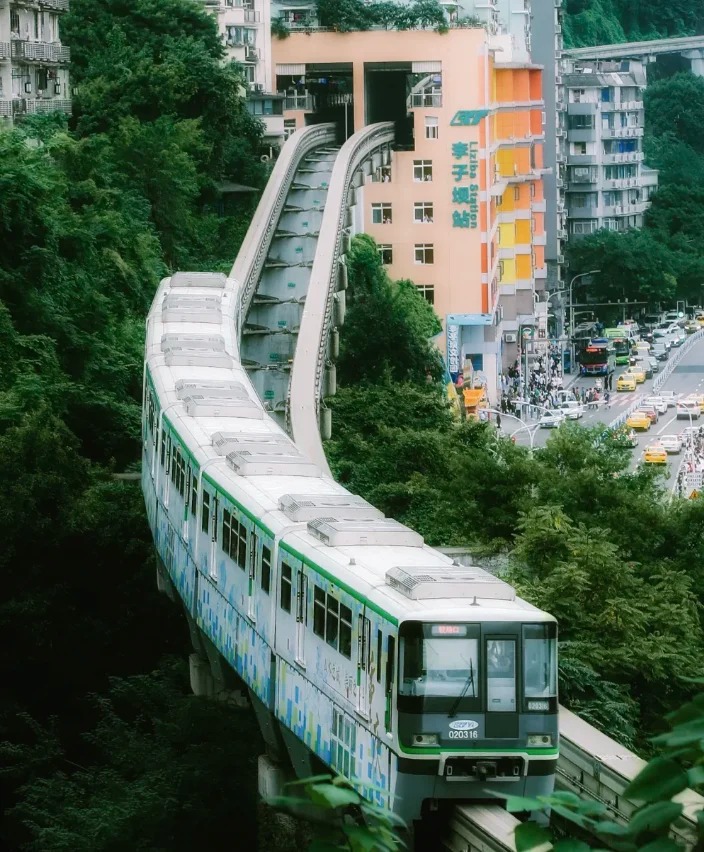
What struck me wasn't the "weirdness" of it, but the pragmatism. In any other city, a mountain in the way means you stop building. In Chongqing, a mountain is just a suggestion. No space for a track? Put it in the building. No space for a road? Put it on the roof.
I started talking to a local man selling bottled water nearby. "Is it noisy living there?" I asked, pointing up.
He chuckled. "The cars on the road down here are louder than the train up there," he said. "Besides, living above the station is convenient. You wake up, go downstairs, and you're at work in twenty minutes. In this city, convenience is worth more than silence."
He was right. Liziba isn't just a gimmick. It’s a solution. It represents the refusal of Chongqing people to surrender to geography. They adapt. They carve, they stack, they weave.
As the sun began to dip, casting long shadows over the Jialing River, I took the train back towards the city center. Riding into the building again, I felt a strange sense of comfort. It felt like returning to a hive. We were all just bees, buzzing in and out of our concrete comb. The "Train That Eats the Building" isn't a monster; it’s the heartbeat of a city that has learned to live in three dimensions while the rest of the world only lives in two.