Introduction: More Than Just Watching
We have all seen the videos. A fluffy baby panda clinging to a keeper’s leg. A tourist feeding a panda an apple, inches away from those black-patched eyes.
It is the ultimate bucket-list dream for animal lovers.
But here is the reality check: This is not a petting zoo. You cannot just walk up to the Chengdu Research Base and ask to hug a panda. In fact, due to strict conservation laws, "hugging" pandas has been banned for years to protect them from human viruses.
However, you can get closer than 99% of tourists ever will.
The Panda Volunteer Program allows you to step behind the "Staff Only" doors and work as an honorary keeper for a day. It is sweaty, expensive, and involves scooping poop. And for our clients at Sunny China Travel, it is consistently rated as the best day of their lives.
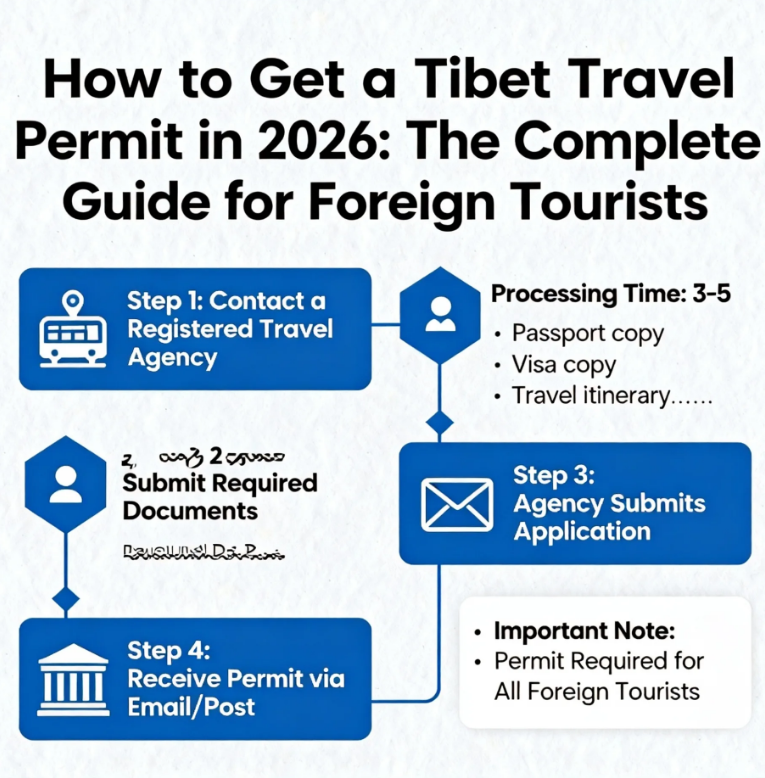
This guide will break down exactly what happens, which base to choose, and whether it’s worth the price tag in 2026.
Part 1: Where Can You Do It? (The Base Dilemma)
Most tourists go to the famous "Chengdu Research Base of Giant Panda Breeding" (the one near the city center). You cannot volunteer there. That base is strictly for tourists and researchers.
To volunteer, you must travel about 1.5 hours outside of Chengdu to one of the conservation bases. There are two main options:
Option A: Dujiangyan Panda Base (The Popular Choice)
Location: ~60km from Chengdu.
The Vibe: Accessible and well-organized. This base focuses on disease control and rescue. It’s set in a beautiful bamboo forest but feels like a professional facility.
Pros: Easy to reach; can be combined with a visit to the ancient Dujiangyan Irrigation System.
Cons: Can get booked out very fast.
Option B: Wolong Shenshuping Base (The "Wild" Choice)
Location: ~130km from Chengdu (deeper in the mountains).
The Vibe: This is the real panda habitat. It’s surrounded by misty mountains and feels much wilder. This is where pandas are trained to be released into the wild.
Pros: Fewer tourists, stunning scenery, cooler weather in summer.
Cons: The drive is longer (2.5 - 3 hours one way). You might need to stay overnight nearby.
My Recommendation: For most families, Dujiangyan is perfect. If you are a hardcore nature lover and have an extra day, go to Wolong.
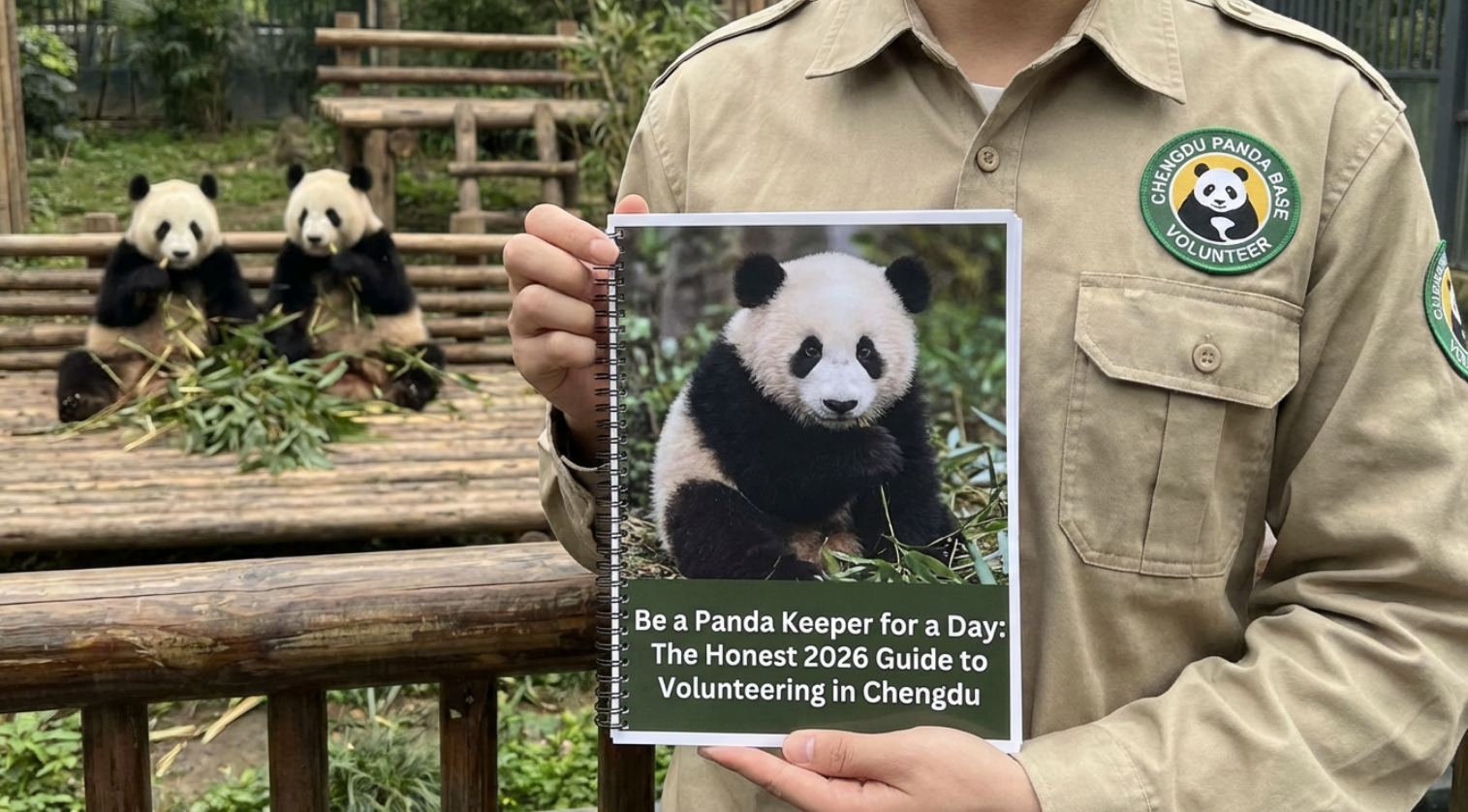
Part 2: A Day in the Life of a Volunteer (Timeline)
What exactly are you paying for? Here is a typical schedule from a trip I organized last month.
07:00 AM: Pick up from your hotel in Chengdu. Yes, it’s an early start. Pandas are most active in the morning.
08:30 AM: Arrival & Registration. You’ll be issued your official jumpsuit and gloves. (Great for photos, but also necessary for hygiene).
09:00 AM: The "Dirty" Work
You are assigned a panda enclosure. Your first job? Cleaning.
You will sweep out leftover bamboo.
You will scoop up panda poop.
Surprising Fact: Panda poop (called "Green Balls" by keepers) is surprisingly clean. It’s 99% undigested bamboo and smells earthy, almost like tea. It’s not gross at all!
You will hose down the floor. It’s manual labor, but doing it while a panda watches you from the next room is surreal.
10:30 AM: The "Panda Tour"
While the keepers prepare the food, you get a guided tour of the base. Since you are a volunteer, you often get access to quieter areas away from the loud tour groups.
11:30 AM: Feeding Time (The Highlight)
This is it. You don't just throw bamboo over a wall. You stand at a designated feeding window. The panda will sit right there, maybe 20 centimeters from your face (behind bars for safety).
You will hand-feed them special "Panda Cakes" (made of grain, egg, and vitamins), apples, and carrots.
The Feeling: Hearing the crunch, seeing their dexterity as they grab the food... it’s a connection you can't describe.
12:00 PM: Lunch
You eat at the staff canteen. It’s simple, cafeteria-style Chinese food. You are eating alongside the real scientists and keepers.
13:00 PM: Panda Movie & Education
You watch a documentary about the release-into-the-wild program. It’s a good time to rest your legs.
14:00 PM: Afternoon Cleaning & Feeding
One more round of bamboo carrying. You’ll be hauling fresh bamboo shoots. They are heavier than they look!
15:00 PM: Certificate Ceremony
You receive an official "Panda Volunteer Certificate" stamped by the base. It’s a fantastic souvenir.
Part 3: Requirements & Restrictions (Read Carefully!)
The bases are very strict. We have had clients turned away because they didn't meet the criteria.
Age Limits:
Generally, you must be between 12 and 65 years old.
Under 12? You can still come and watch your parents, but you cannot enter the cage or feed them.
Over 65? Strict no. It’s an insurance and safety rule.
Health Check:
You must be healthy. If you have a bad cold, flu, or fever, do not come. Pandas are susceptible to human flu (which can be deadly for them).
Paperwork: You often need a doctor’s note or a signed health declaration form stating you are disease-free. We provide the template for this.
No Perfume / No Nail Polish:
Pandas have a sensitive sense of smell. Do not wear strong perfume. Also, bright nail polish or dangling jewelry is forbidden as the panda might try to grab it.
Part 4: The Cost & "Why is it so expensive?"
I believe in transparency.
A standard "Panda Volunteer Tour" usually costs between $300 - $500 USD per person (depending on group size).
Clients often ask: "Why? The entrance ticket is only $10!"
Here is the breakdown:
The Donation Fee: A huge chunk of that money (usually around 700-1000 RMB) goes directly to the Panda Conservation Fund. This isn't a "ticket"; it’s a donation that funds the bamboo, the research, and the breeding program. You are directly supporting the species.
Private Transport: We have to drive 150km round trip.
Guide Service: You need a translator. The keepers speak limited English. Your guide ensures you understand the safety instructions so you don't lose a finger.
Is it worth it?
If you just want a photo of a panda, no. Go to the city zoo.
If you want to contribute to conservation, learn from the experts, and look a panda in the eye while you feed him lunch? Every single penny.
Part 5: How to Book (The "Quota War")
This is the hardest part.
The bases limit volunteers to 20-40 people per day. For the whole world.
During summer (July/August) and holidays, spots sell out weeks in advance.
The "Sunny China Travel" Advantage:
We have a standing relationship with the booking office. While we can't "print" tickets, we know exactly when the slots open and how to secure them.
My Advice: Do not book your flights to Chengdu until you have confirmed your volunteer slot with us.
Conclusion: A Memory for a Lifetime
I’ll leave you with a story.
Last year, I had a client, Sarah, a 14-year-old girl from Canada. She was going through a tough time at school. Her parents brought her here.
When she fed the panda, she started crying. She told me later, "It was the first time I felt totally peaceful in months."
That’s what this program is. It’s not just tourism. It’s therapy. It’s connection.