I have walked across suspension bridges in the Alps and gazed into the Grand Canyon, but nothing prepared me for the Zhangjiajie Grand Canyon Glass Bridge. When it opened, it was touted as the highest and longest glass bridge in the world, and standing at the entrance, looking at the sleek structure stretching across the vast abyss, my knees were shaking just a little.
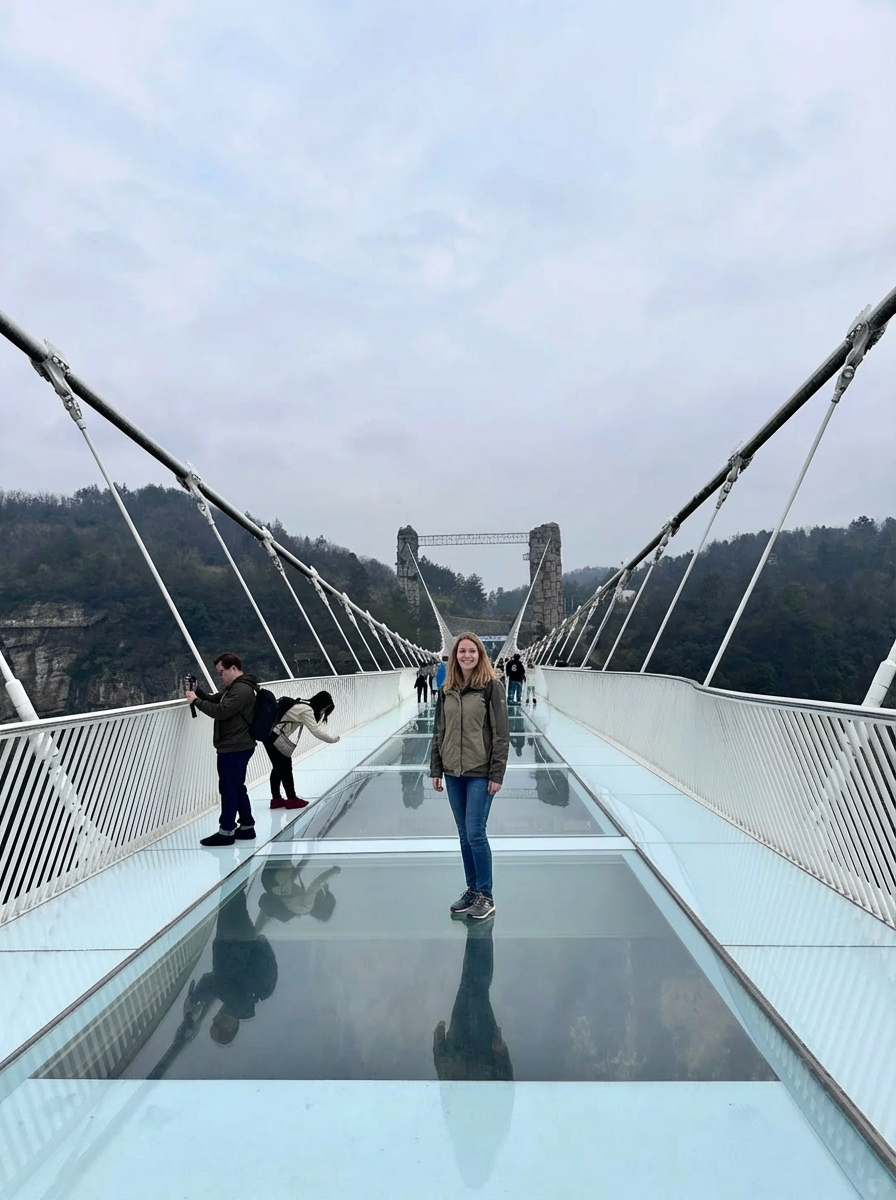
The bridge spans the canyon between two steep cliffs, connecting two sheer drops. Before you even step onto the glass, you have to wear fabric shoe covers to protect the surface—almost like putting on slippers for a dangerous dance. I remember the first step. There is a split second where your brain refuses to accept what your eyes are seeing. You see the canyon floor 260 meters below, but your foot feels solid ground.
As I walked out further, the bridge came alive. It wasn’t just me; the bridge actually bounces. It’s designed to be flexible, but feeling the movement beneath your feet while looking down at the trees that look like broccoli adds a whole new layer of adrenaline. The transparency is disorienting. There were moments when I had to look at the steel sides to steady myself.
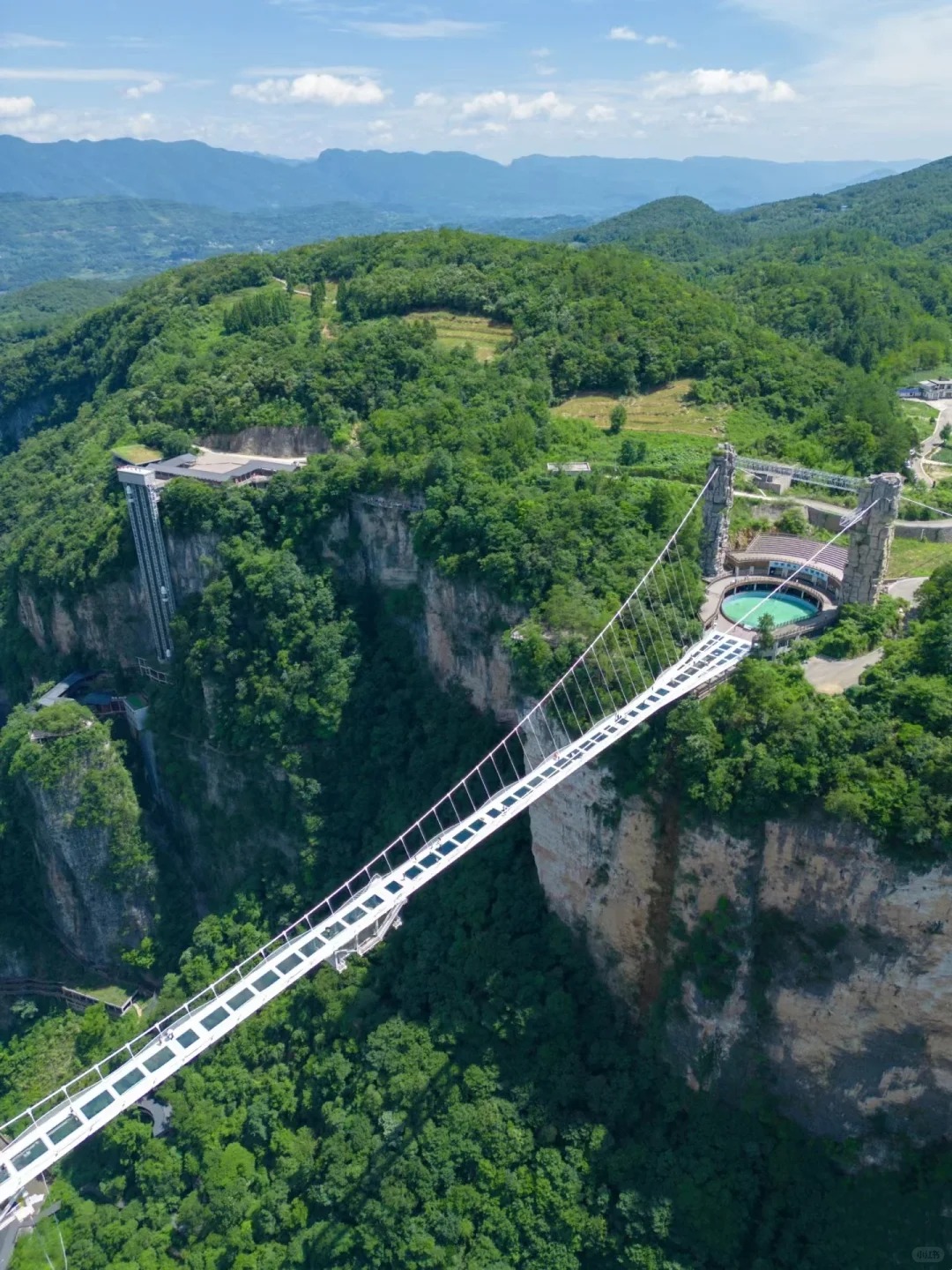
About a third of the way across, I encountered the “bungee jump” platform. Standing there, watching thrill-seekers plummet off the side, screaming until they became tiny dots against the green backdrop, was surreal. I didn’t jump—my stomach wasn’t ready for that—but the energy of the crowd was electric. People were taking selfies, lying flat on the glass to get the most dramatic shot, and helping each other overcome the paralyzing fear.
What I loved most, however, was the view that the bridge provides. Usually, to see a canyon like this, you are looking *down* from a rim. Here, you are *in* it. You are part of the landscape. The steep cliffs on either side were covered in lush vegetation, waterfalls trickling down the rock face like white ribbons. The contrast between the high-tech glass and the raw, ancient nature was striking.
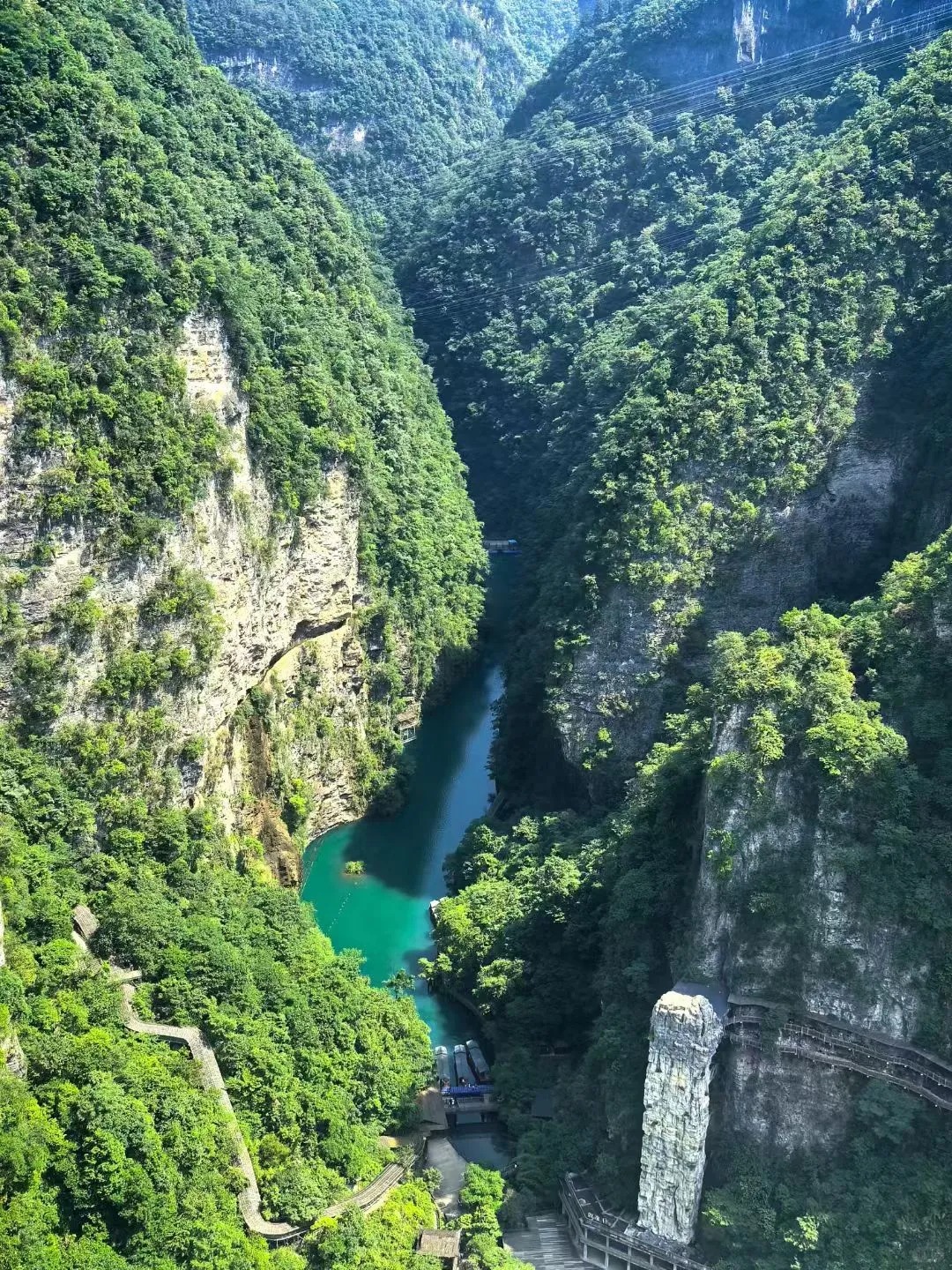
Halfway across, there is a section with a special 3D effect—paintings of flowers and wild animals on the glass—but honestly, the reality of the drop is scary enough without optical illusions. I spent a long time just standing in the middle, looking down at the stream that carved this canyon over millions of years. The silence of the deep canyon rises up, contrasting with the chatter of the tourists. Crossing the Zhangjiajie Grand Canyon Glass Bridge isn’t just a tourist activity; it’s a confrontation with your own fears and a unique way to witness the geological power of our planet.