Before I arrived in Chengdu, I thought of dams as massive walls of concrete—immovable barriers that choke rivers into submission. But then I visited Dujiangyan, and my entire understanding of engineering and harmony was flipped upside down. Standing on the banks of the roaring Min River, watching the water divide and flow with a calm purpose, I realized I was looking at a masterpiece. This isn’t just a tourist site; it is the beating heart of Sichuan, the reason Chengdu exists, and the reason the region has been the “Land of Abundance” for over two millennia.
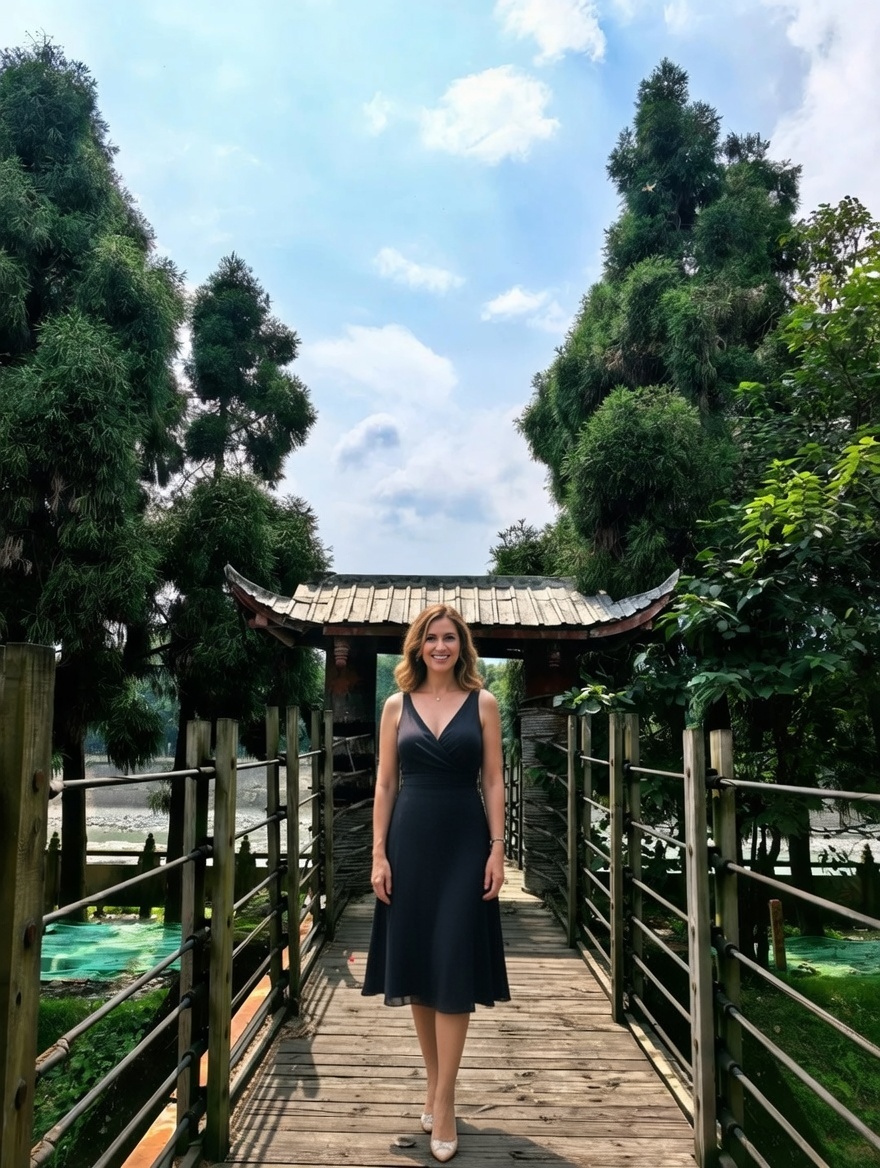
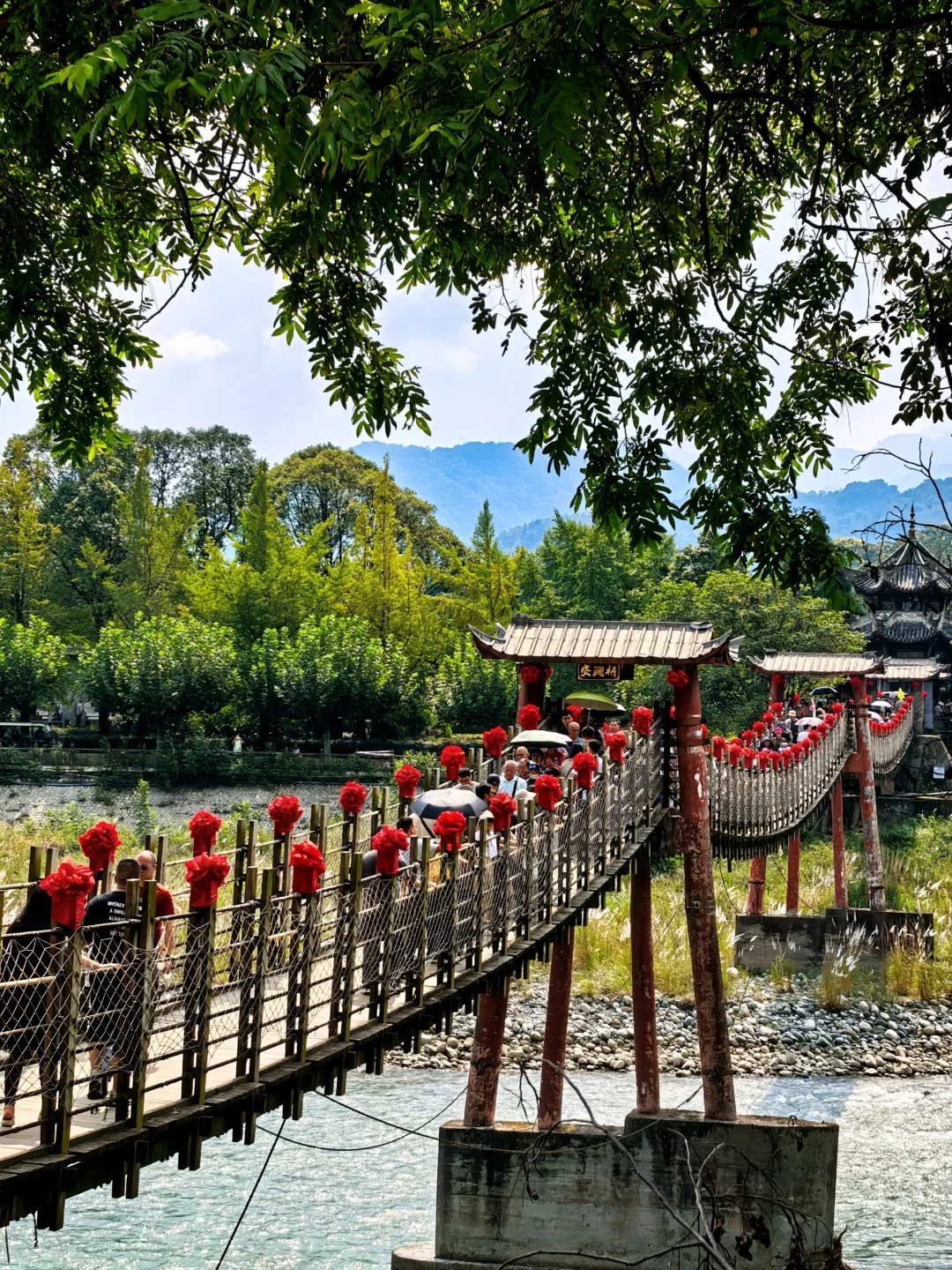
My visit began on the Anlan Suspension Bridge. It stretches across the river like a long, dark dragon, swaying gently with the wind and the footsteps of thousands of visitors. As I walked onto the wooden planks, the bridge bobbed up and down. Below me, the Min River rushed past, churning and white with foam. The sound was deafening—a low, constant roar that vibrated in my chest. It was a visceral reminder of the power of nature. Before this system was built, this river was a beast, flooding the plains and destroying crops. Today, it is tamed, yet still wild.
Crossing the bridge, I arrived at the Fish Mouth (Yuzui). This is the core of the genius behind Dujiangyan. It is a levee built into the middle of the river that looks exactly like the mouth of a fish pointing upstream. Its purpose is simple yet brilliant: it divides the water. About 60% of the river flows into the outer river to flood discharge, while the remaining 40% flows into the inner river for irrigation. I stood there for a long time, watching the water crash against the stone. What fascinated me most was that there is no dam here. The water is not blocked; it is guided. I learned that the designer, Li Bing, utilized the natural curvature of the river and the topography. He didn’t try to conquer the river; he negotiated with it. It is a perfect physical manifestation of Taoist philosophy: *Wu Wei*, or effortless action.
Walking further along the riverbank, I reached the Feisha Weir. This section is designed to flush out sand and silt. Again, the intelligence of the design floored me. When the water level rises too high during floods, the excess water and silt spill over the weir and back into the main river. It works purely on gravity and physics, requiring no electricity or computer controls. I watched as debris floated effortlessly over the weir, knowing that this same mechanism has kept the irrigation channels clear for over 2,000 years. It felt like watching a machine that breathes.
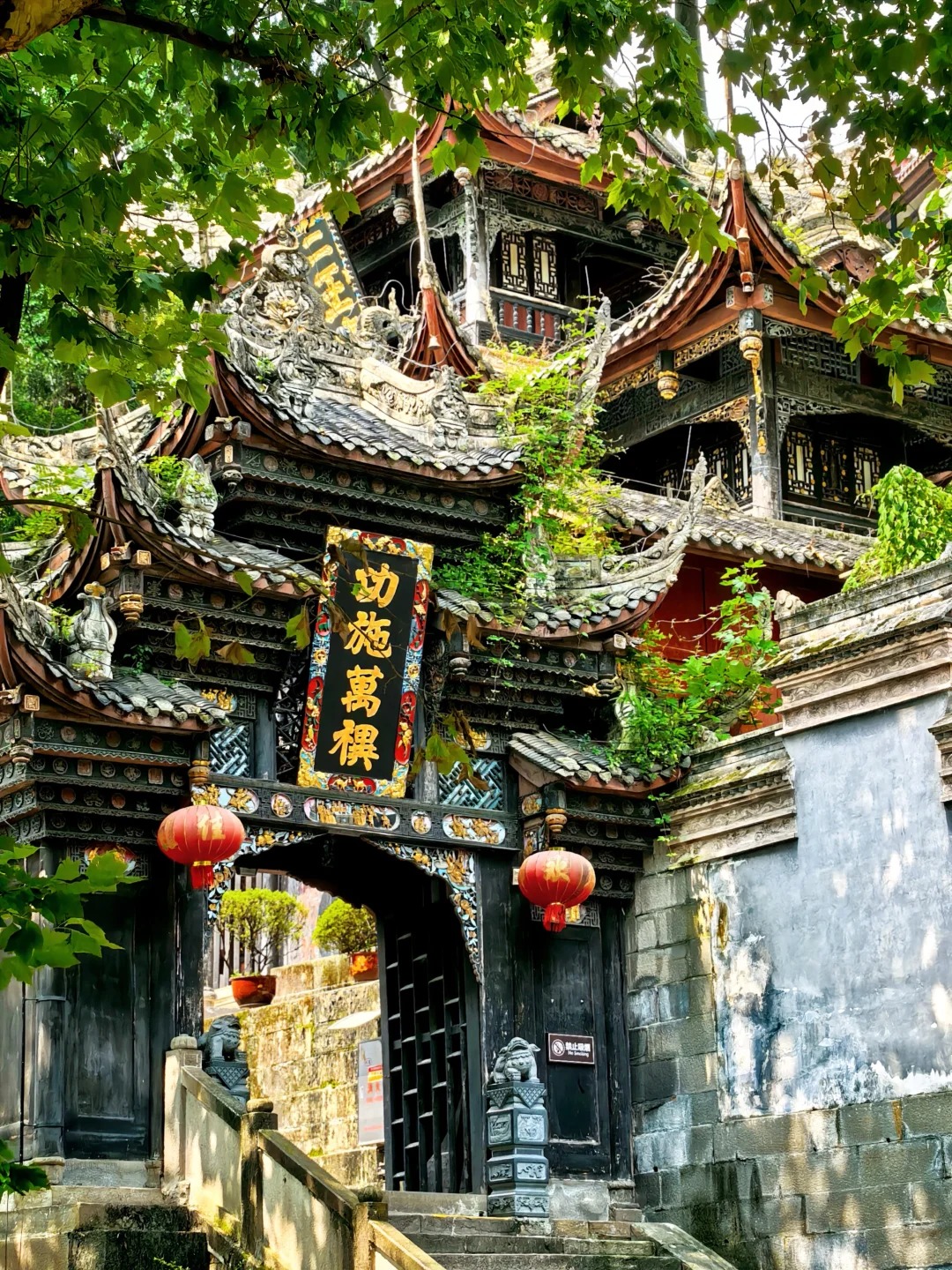
The most dramatic moment came at the Baopingkou (Bottle-Neck Channel). This is the inlet where the water enters the irrigation system for the Chengdu Plain. I hiked up the hill to the Erwang Temple (Two Kings Temple) to get a bird’s-eye view. The temple is dedicated to Li Bing and his son, who are revered as gods here. Climbing the stairs, surrounded by ancient cypress trees, I felt a sense of reverence. The view from the top was spectacular. From this vantage point, I could see the entire system—the Fish Mouth splitting the river, the Feisha Weir regulating the flow, and the water pouring into the Bottle-Neck Channel like a controlled torrent.
Inside the temple, the atmosphere was thick with incense smoke. I saw locals praying to Li Bing, not just as a historical figure, but as a spiritual guardian of their water supply. A young father was showing his son the statue of Li Bing, explaining how he brought water to their fields. It was a touching reminder that this is not dead history; it is a living, essential part of daily life in Sichuan. Every grain of rice, every cup of tea in Chengdu owes its existence to this spot.
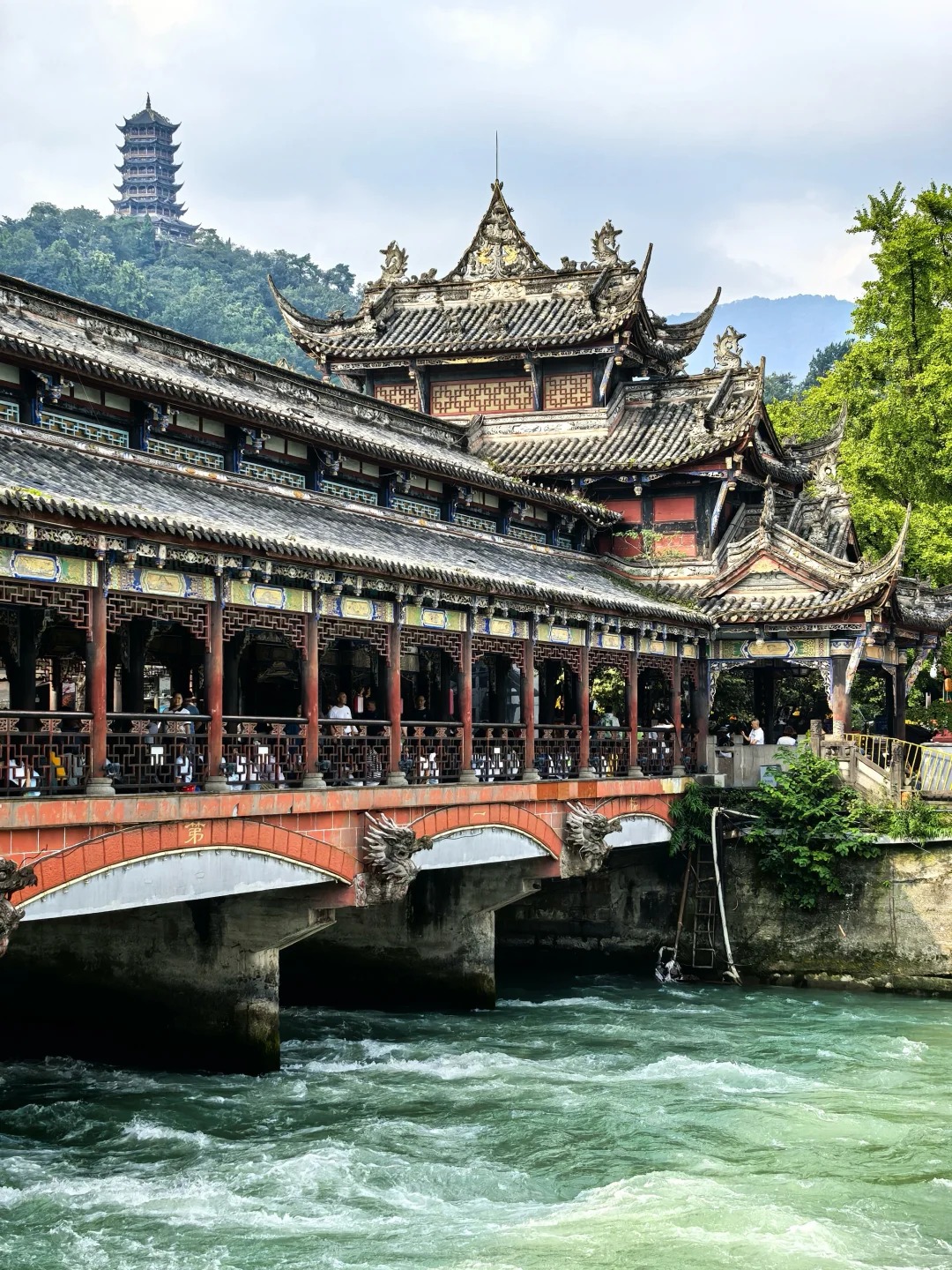
I spent the afternoon wandering through the Old Street near the scenic area. It is a maze of wooden buildings, traditional tea houses, and vendors selling local crafts. I sat down in a tea house overlooking the river, ordered a cup of jasmine tea, and watched the world go by. I tried some local snacks—“Zongzi” (sticky rice dumplings) and spicy tofu—which felt like a fitting reward for the hiking.
Leaving Dujiangyan at sunset, the water was glowing golden in the fading light. I thought about the world today, where we are constantly trying to overpower nature with concrete and steel. And then I thought about Li Bing, who looked at a raging river 2,300 years ago and saw a partner, not an enemy. He built a system that creates instead of destroys. Visiting Dujiangyan is a humbling experience. It teaches you that true strength is not about blocking the flow, but about finding the balance. It is a place where history flows as freely as the river, and where you can see the wisdom of the past still working to sustain the future.