They say you don't just see Huangguoshu Waterfall; you feel it.
I arrived in Anshun during the rainy season, in July, when the rivers of Guizhou are swollen and brown with silt. I had read the statistics: Huangguoshu is one of the largest waterfalls in Asia, 77.8 meters high and 101 meters wide. But numbers are dry, sterile things. They don't prepare you for the roar.
My day started early, trying to beat the tour buses that descend on the park like clockwork. The scenic area is massive, a sprawling complex of karst landscapes, smaller cascades, and strange rock formations, all connected by shuttle buses and walkways. But let’s be honest, everyone is there for the main event: the Grand Waterfall.
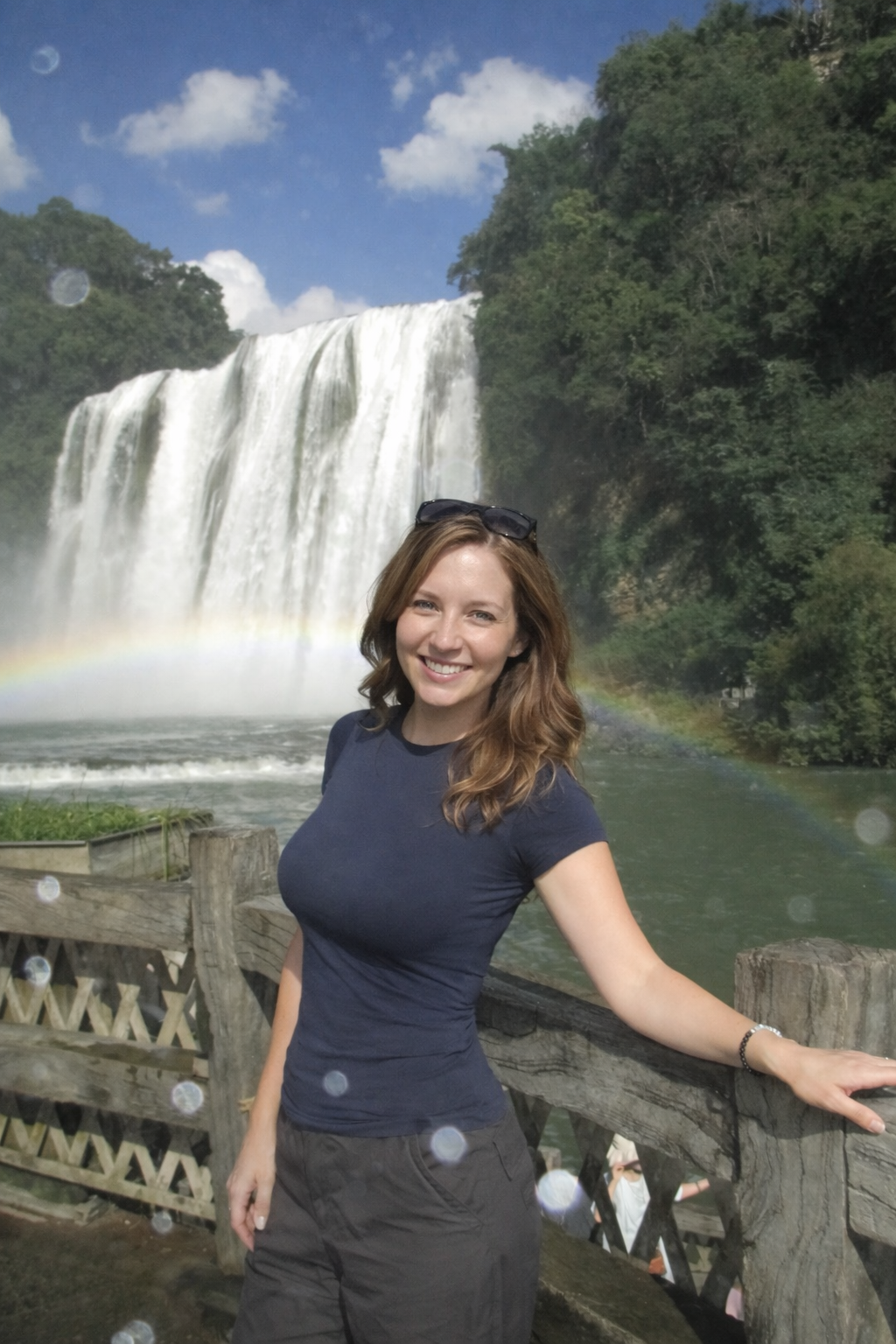
As I walked along the path toward the falls, the sound hit me first. A low, vibrating thrum that you feel in your chest more than you hear with your ears. The air grew heavier, cooler, saturated with moisture. Then, turning a corner through a grove of bamboo, the vegetation opened up, and there it was.
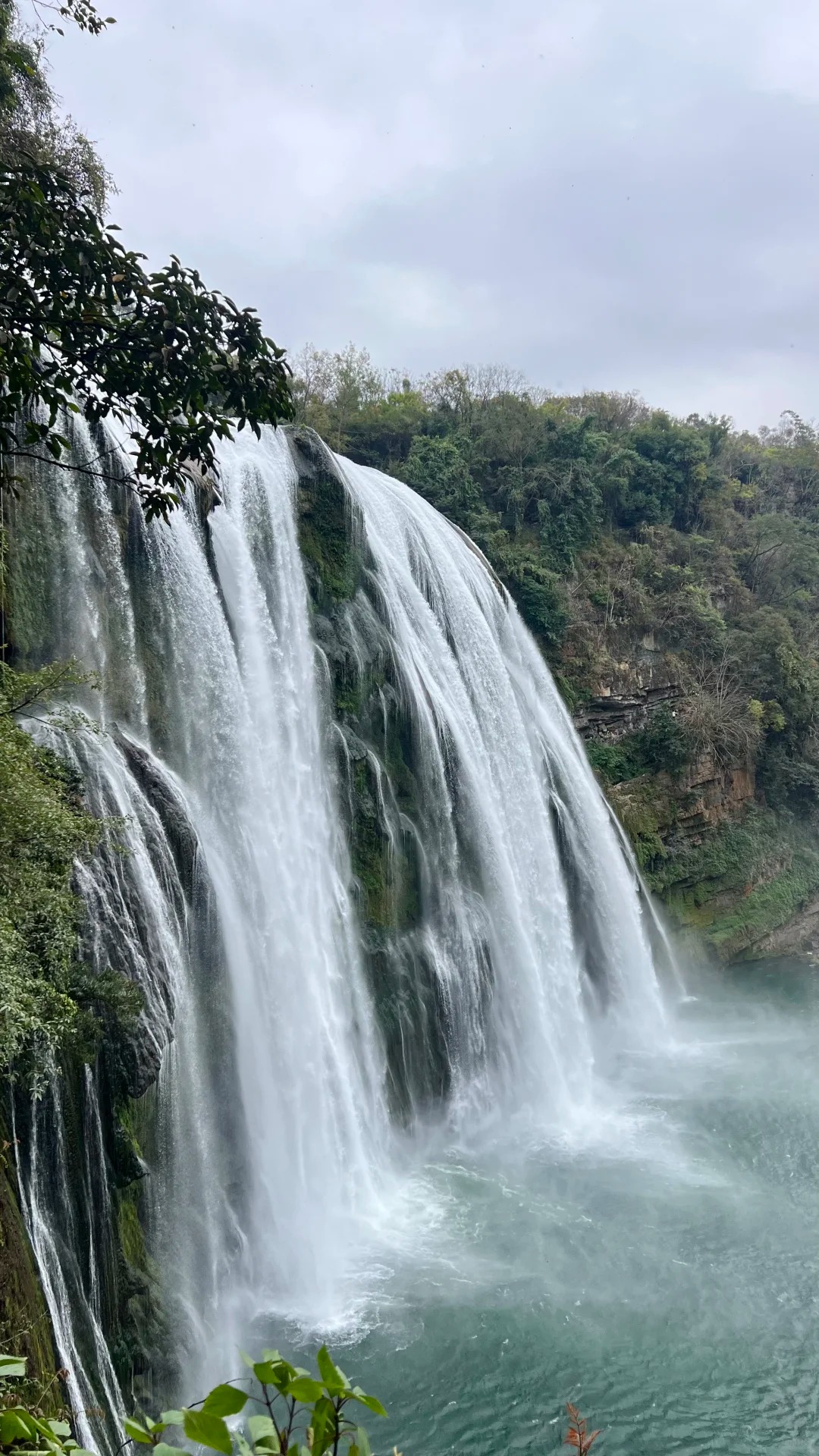
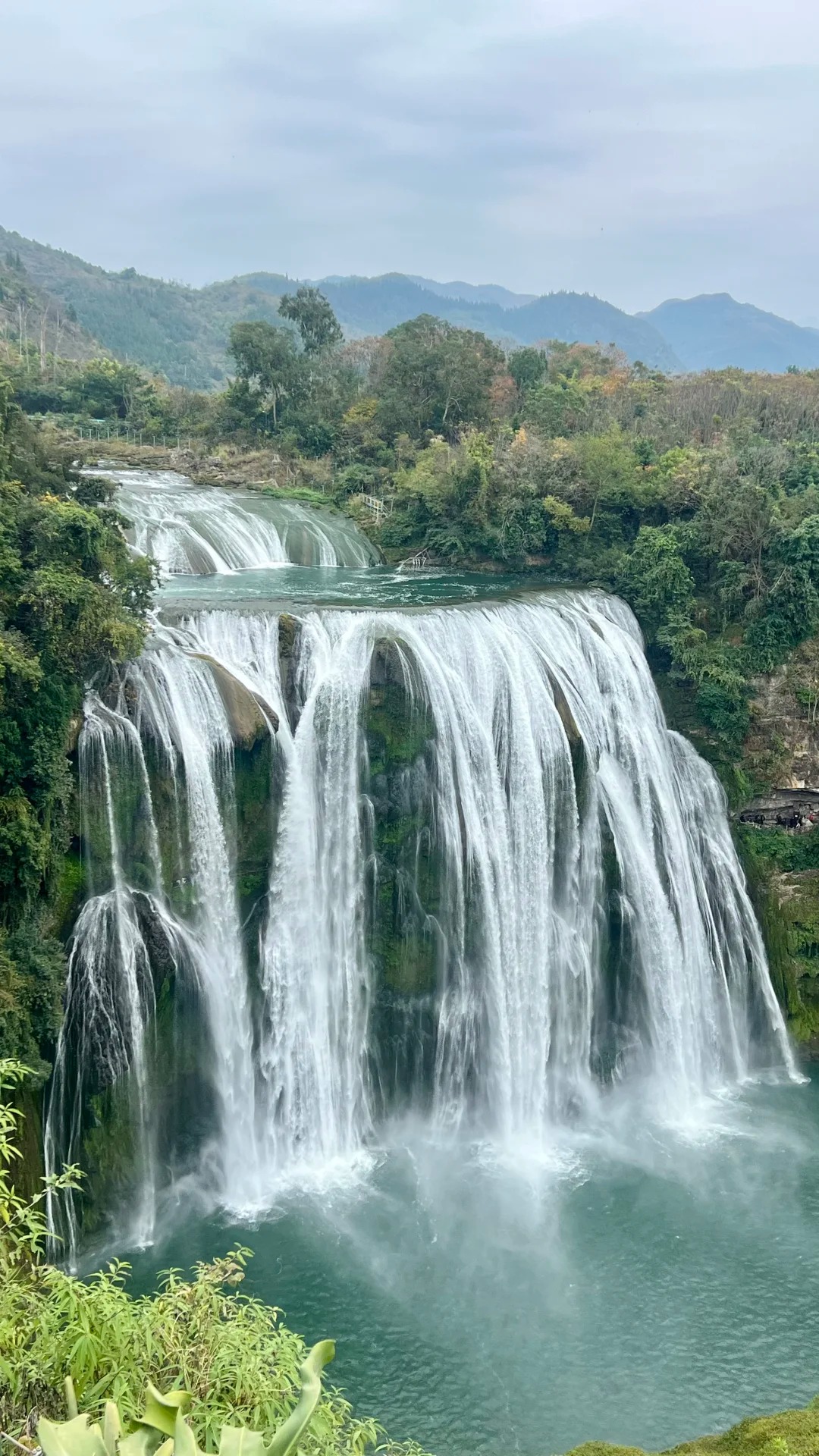
It was violent. That’s the only word for it. In the dry season, Huangguoshu can be a graceful curtain of white lace, elegant and poised. But in July? It was a beast. A massive wall of angry, churning water crashing down into the Rhinoceros Pool below, sending up a mist so thick it looked like steam rising from a cauldron. The noise was deafening, a continuous explosion that drowned out the shouts of tourists and the click of camera shutters.
Most waterfalls are viewed from a distance, a postcard moment kept safely behind a railing. Huangguoshu is different. It invites you inside. Literally.
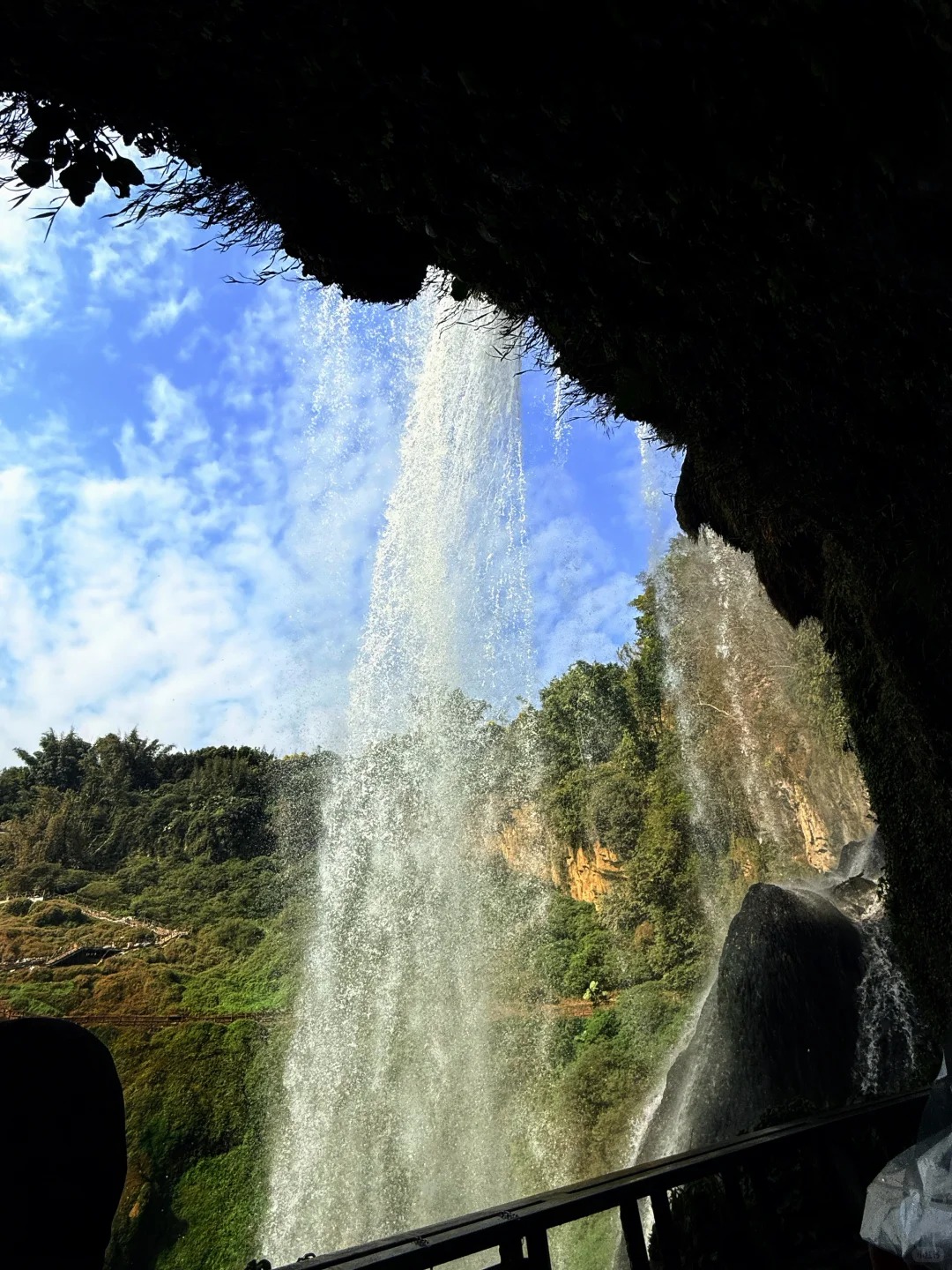
I put on my flimsy blue plastic poncho—a ubiquitous fashion statement in Chinese tourist spots—and headed for the Water Curtain Cave. This is a natural cave naturally carved into the cliff face right behind the waterfall. I had to inch along a wet, slippery path, the rock wall weeping moisture on my left, the roaring curtain of water on my right.
Entering the cave felt like entering the belly of the waterfall. It was dark, dripping, and loud. The path winds for over 100 meters through the cliff.
At several points, natural "windows" open up, allowing you to reach out and almost touch the falling water. I stood at one of these openings, water spraying onto my face, watching the sheet of white plummet past me. The sheer power of it was terrifying and exhilarating. I was inches away from a force that could crush me, protected only by a lip of limestone. Through the falling water, the world outside was a blurred, impressionistic painting of green trees and grey sky.
Emerging from the other side of the cave, I was soaked. My poncho had failed miserably. My shoes squelched with every step, and my hair was plastered to my forehead. But I was grinning like a child. There is something primal about getting that close to raw nature.
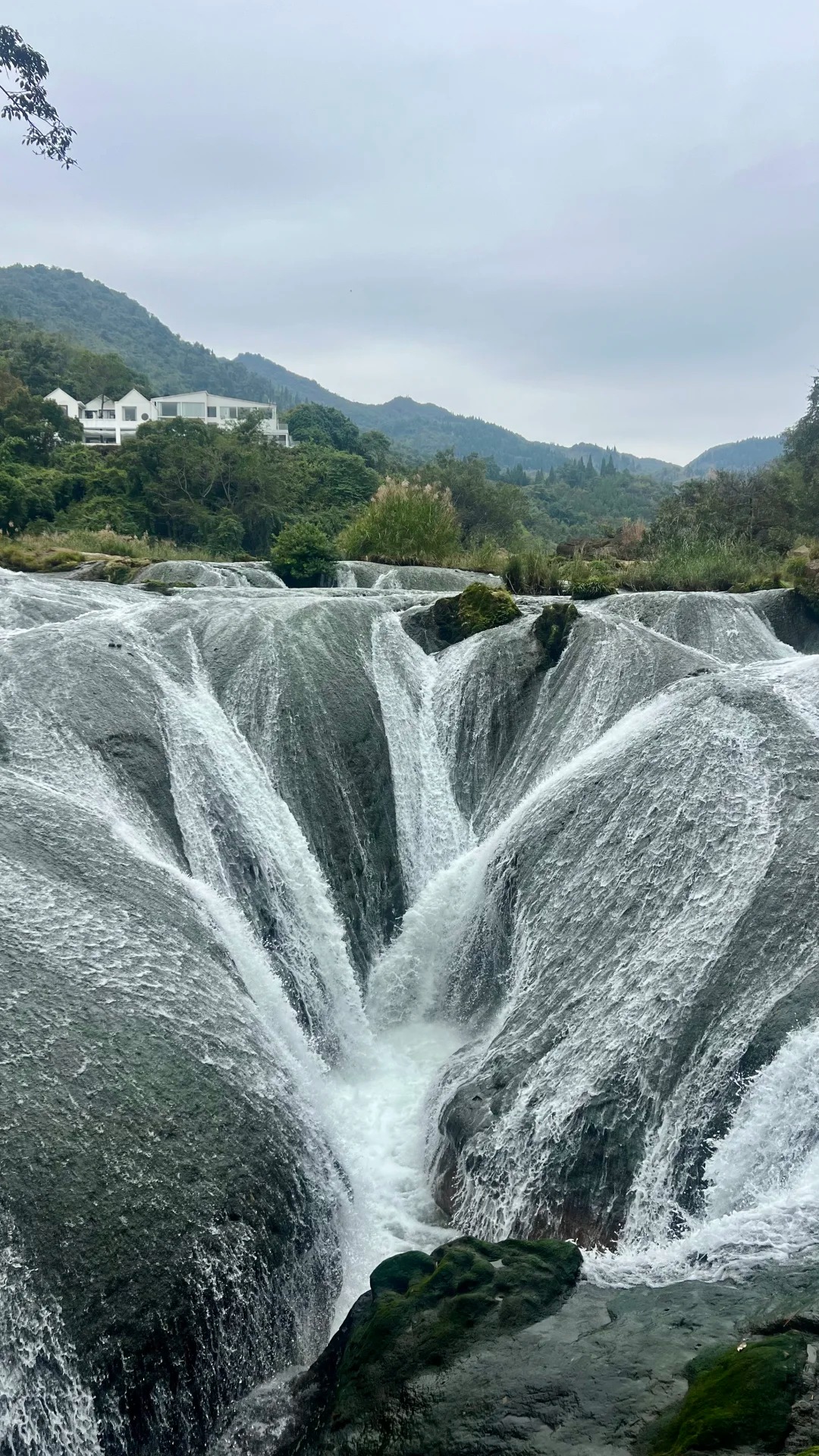
After the adrenaline of the Grand Waterfall, I wandered downstream to the Doupotang Waterfall. If the Grand Waterfall is a vertical crash, Doupotang is a horizontal roar. It’s the widest waterfall in the group, and it has a distinct, rumbling sound that locals used to call "roaring waterfall" before the rain arrived. Fans of the 80s TV show Journey to the West recognize this spot immediately—it’s where the Monkey King and his master walked across the top of the falls in the closing credits. Seeing it in real life, with the water cascading over the jagged rocks like a spilled milky way, was a nostalgic kick.
By late afternoon, my legs were heavy. The park is huge, and despite the escalators (yes, there is a massive outdoor escalator to save you the climb back up from the Grand Waterfall—a surreal mix of convenience and nature), you still walk kilometers.
I ended my day at the Tianxingqiao area, a quieter section of the park often skipped by rushed tour groups. Here, the water isn't a crashing wall but a playful weaver. It flows through a "water stone forest," disappearing under rocks and reappearing in unexpected pools. I walked across stones stepping through the water, each one marked with a day of the year. I found my birthday stone, stood on it, and made a silly wish.
Sitting on a bench near the exit, drying off in the late afternoon sun, I watched a rainbow form over the mist of the distant falls. Guizhou is a place of water and stone, of harsh landscapes made beautiful by erosion. Huangguoshu is the crown jewel of this geology. It’s crowded, yes. It’s commercialized, certainly. But when you are standing in that cave, with the thunder of the river vibrating in your bones, none of that matters. It’s just you and the water.