I expected a museum. I expected glass cases, "Do Not Touch" signs, and the dry, academic air of history class. What I found at Dazu was a mountain that breathes.
It’s a two-hour drive from downtown Chongqing, leaving the fog of the city for the rolling green hills of the countryside. When I arrived at the Baodingshan site, the morning mist was still clinging to the trees.
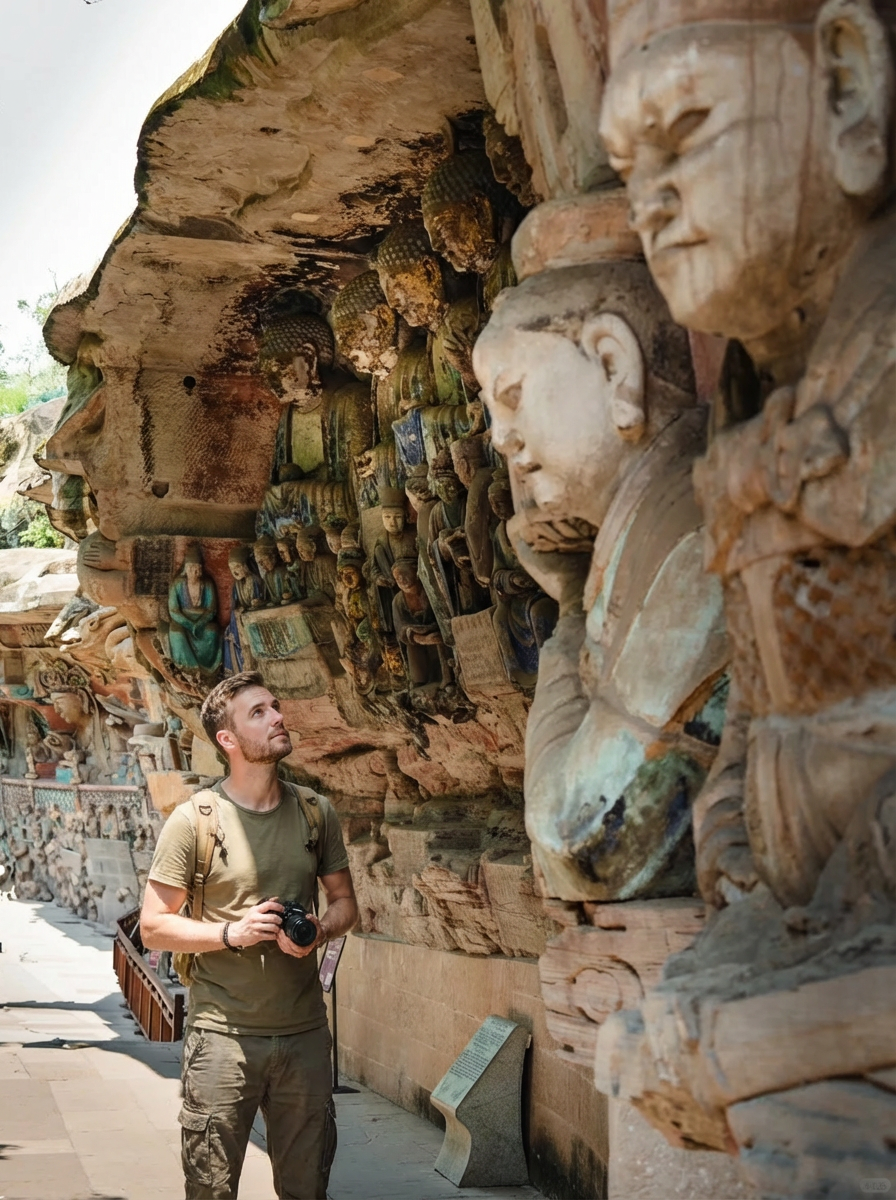
The first thing you need to know about Dazu is that it’s not just about Buddhism. Unlike the solemn, distant statues I’ve seen elsewhere, the carvings here are startlingly human.
I walked into the U-shaped gully. The cliff face, stretching for 500 meters, is covered in over 10,000 statues. They were carved 800 years ago, during the Song Dynasty, but the colors are still there—faded blues, earthy reds, and flashes of gold leaf that catch the sun.
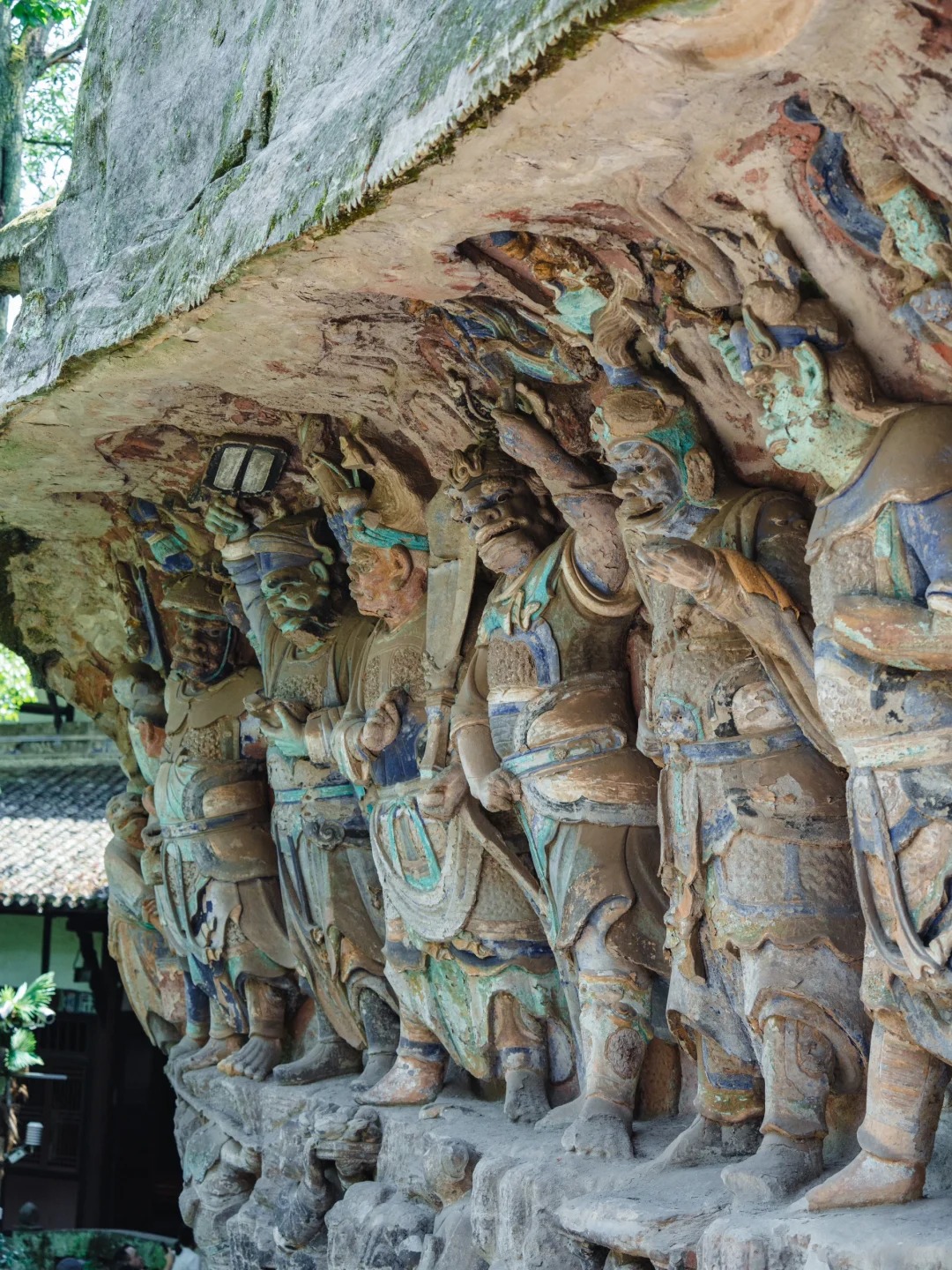
I stopped in front of a relief called "The Sutra on the Heaviness of Parents' Kindness." It sounds heavy, I know. But looking at it, I didn't see religion; I saw life. There was a carving of a mother pregnant, her hand resting on her belly with a look of quiet exhaustion. There was a scene of a father anxiously watching over a sick child. It was so intimate. I could feel the worry in the stone. It struck me that 800 years ago, people worried about the exact same things we do today: family, health, aging. The stone wasn't cold; it was a mirror.
Then, I turned the corner and gasped.
The Thousand-Hand Guanyin (Avalokitesvara).
I had seen pictures, but pictures lie. They flatten the scale. Standing in front of her, I felt tiny. She sits in a cavernous niche, glowing with gold. And the hands… oh, the hands. 1,007 of them, fanning out like the plumage of a divine peacock.
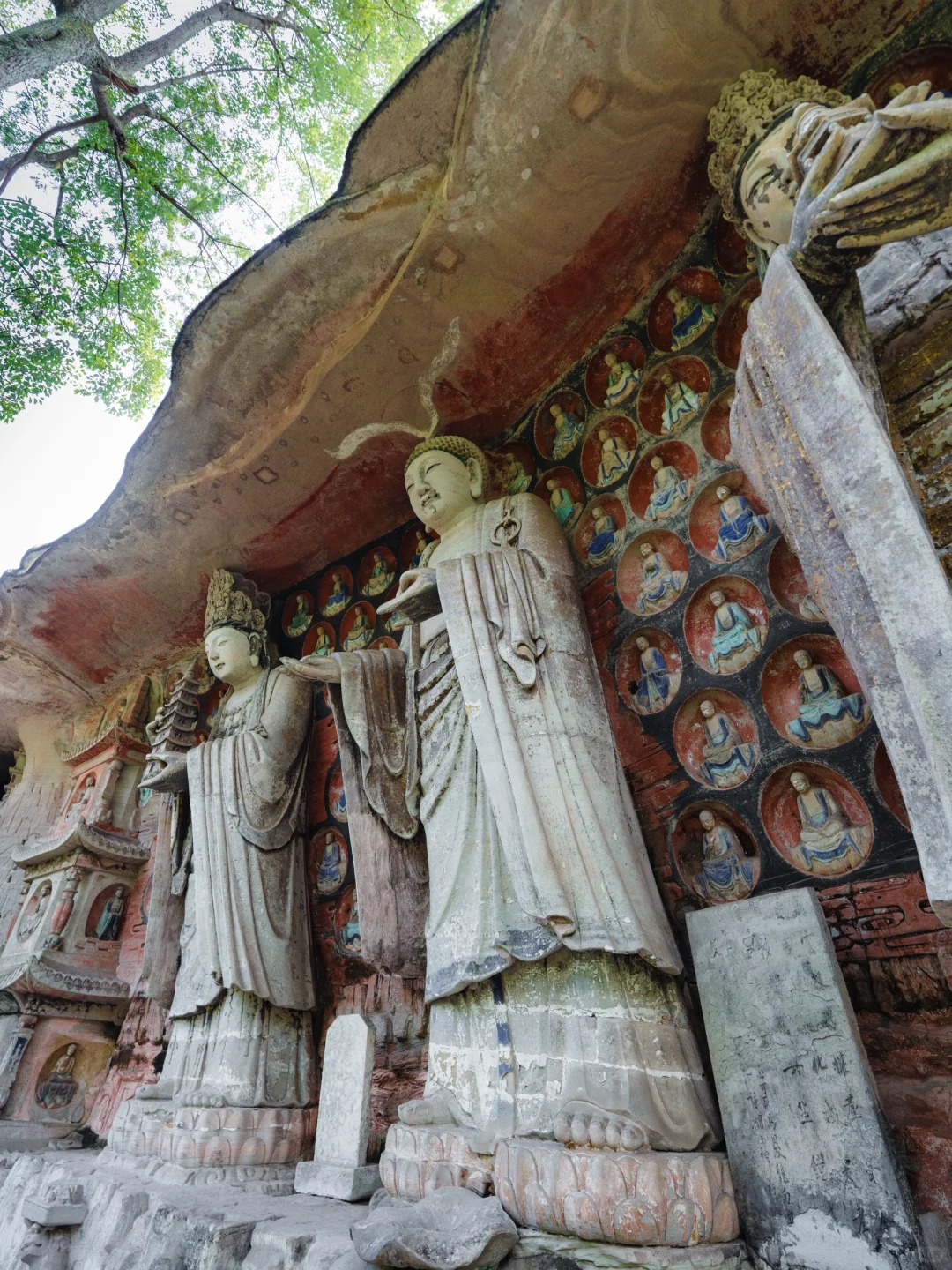
I walked closer, squinting to see the details. Each hand is different. Some hold swords, some hold mirrors, some hold skulls, some hold lotus flowers. It’s a visual representation of infinite compassion—the idea that no matter what suffering you are going through, she has a hand specifically designed to help you.
I noticed a small detail: one of the hands on the far left was holding a tiny hoe. A farming tool. It moved me. Even a farmer digging in the mud was worthy of divine help.
The restoration work here is incredible. I read a plaque saying it took them eight years to repair this one statue. Looking at the seamless blend of ancient stone and modern gold leaf, I realized this wasn't just restoration; it was an act of devotion, just as powerful as the original carving.
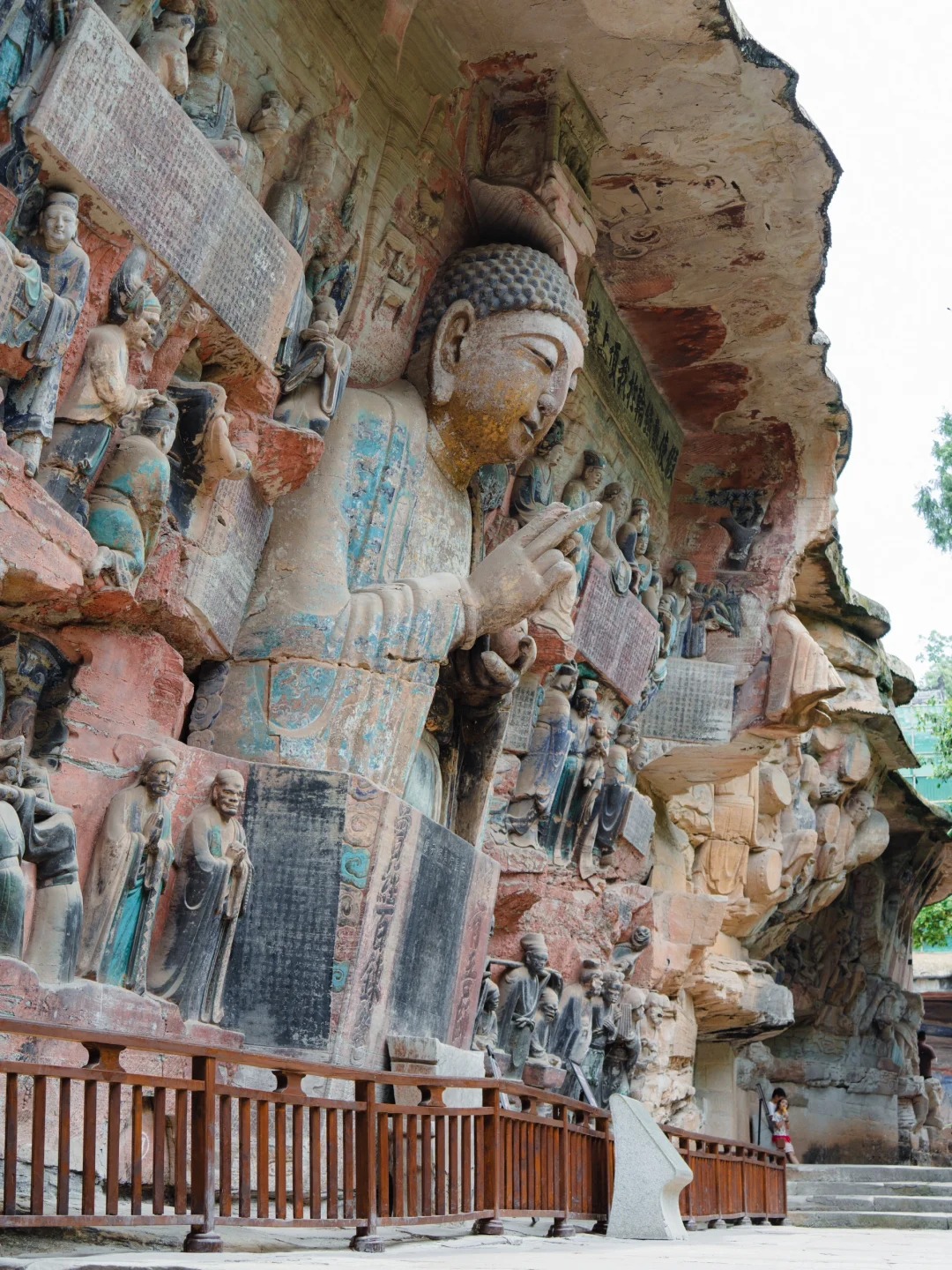
Further down, I found the "Sleeping Buddha." He is massive, lying on his side, his eyes half-closed in eternal peace. But here’s the genius part: they only carved the upper half of his body. The rest "disappears" into the mountain. It forces your mind to complete the image, making him feel infinite, as if the whole mountain is his body.
I sat on a stone bench opposite the Sleeping Buddha for a long time. The wind rustled the bamboo leaves overhead. A group of monks walked by, their saffron robes bright against the grey rock.
Dazu isn't just about art history. It’s about storytelling. The monk Zhao Zhifeng, who planned this whole site centuries ago, wanted to create a place where ordinary people—illiterate farmers and merchants—could understand the meaning of life just by looking.
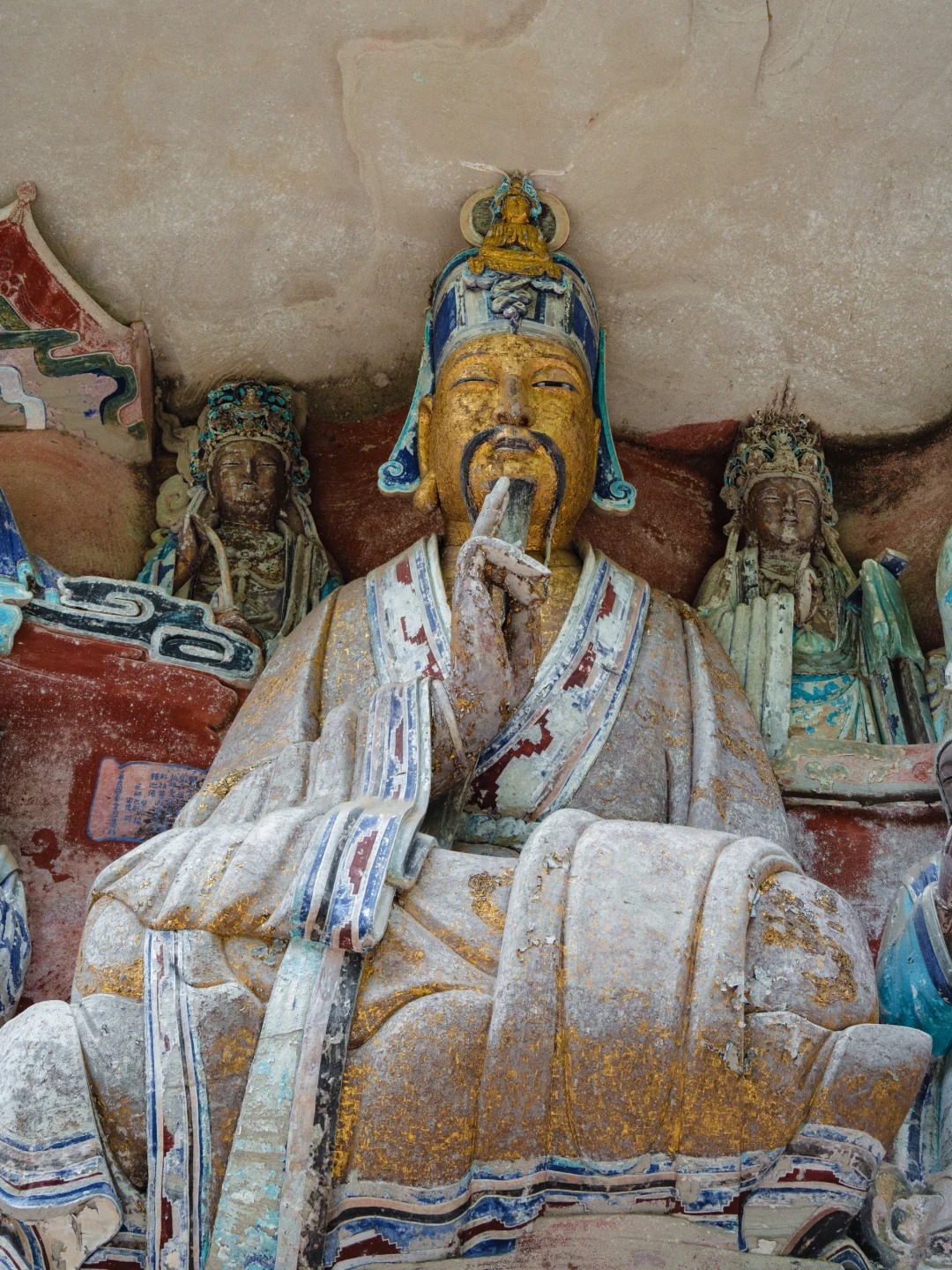
Walking out, I touched the rough bark of an old banyan tree near the exit. I felt a strange sense of connection. Not to a god, but to the artisans who held the chisels. I could almost hear the tink-tink-tink of their hammers echoing across the centuries, carving their fears and hopes into the eternal rock.