The first time I heard about Baishishan, it was from an old hiker I met in a small inn in Hebei. He described it as “a place where the mountains touch the clouds and the paths wind through fairyland,” and I’ll admit, I was a little skeptical at first. Having traveled to many famous mountains in China, from the majestic Huangshan to the sacred Emei, I thought I’d seen all the mountain scenery there was to see. But when I finally set foot on Baishishan in early autumn, I realized how wrong I was. This hidden gem in the Taihang Mountains not only stunned me with its unique karst landforms but also touched me with the quiet warmth of the local people and the unexpected little moments along the way.
I arrived at Baishishan Scenic Area early on a Saturday morning. The air was crisp and cool, carrying the faint scent of chrysanthemums and pine needles. Unlike the crowded scenic spots I’d visited before, there were only a few scattered tourists at the entrance, which made the whole mountain feel like a private retreat. I bought a ticket and started my hike along the Shibapan Trail, which the locals told me was the best way to experience the true beauty of Baishishan. The trail was paved with stone slabs worn smooth by years of footsteps, and on both sides were dense forests of oak and pine. The sunlight filtered through the leaves, casting dappled shadows on the ground, and the only sounds were the rustling of the wind, the chirping of birds, and the crunch of my boots on the fallen leaves.
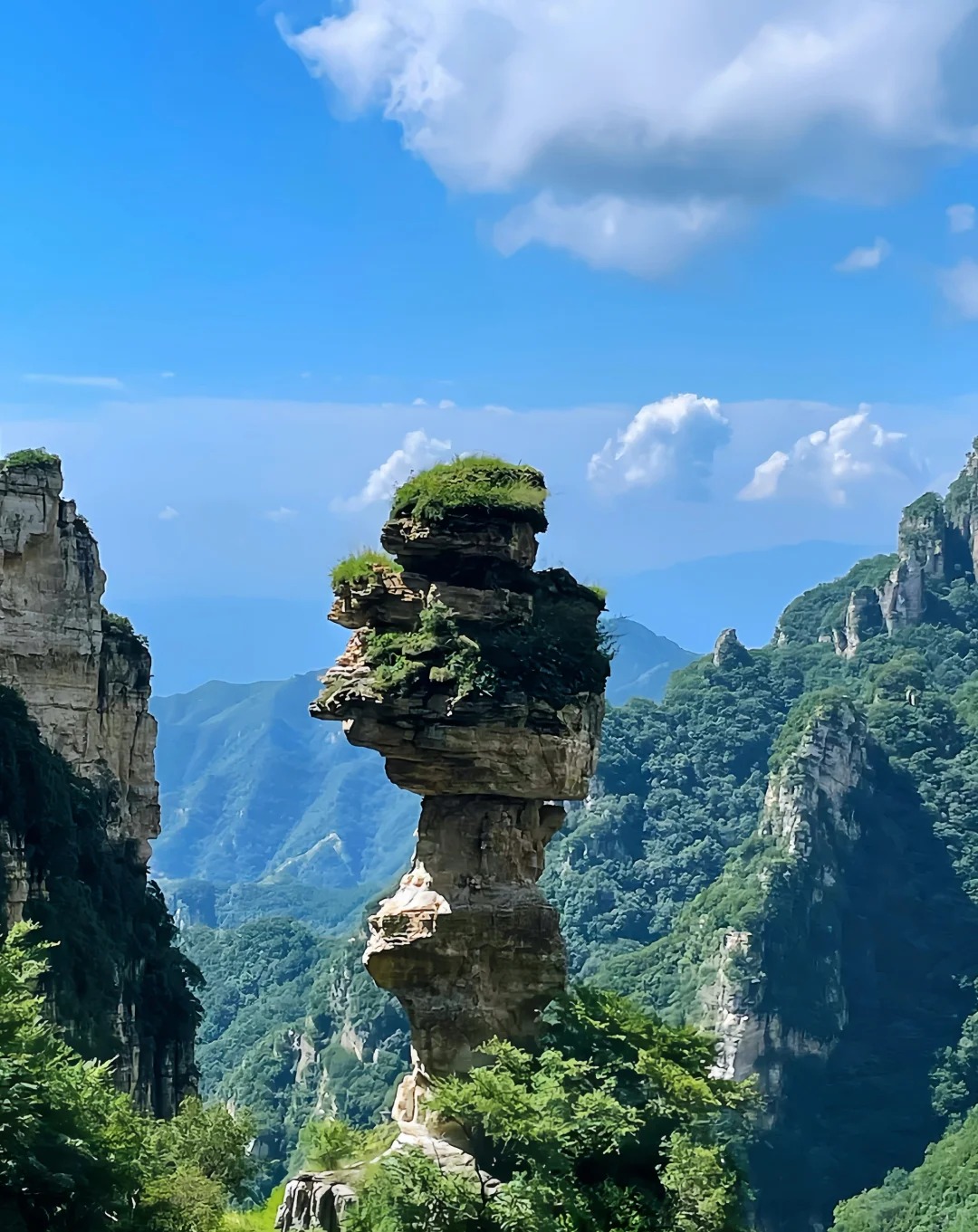
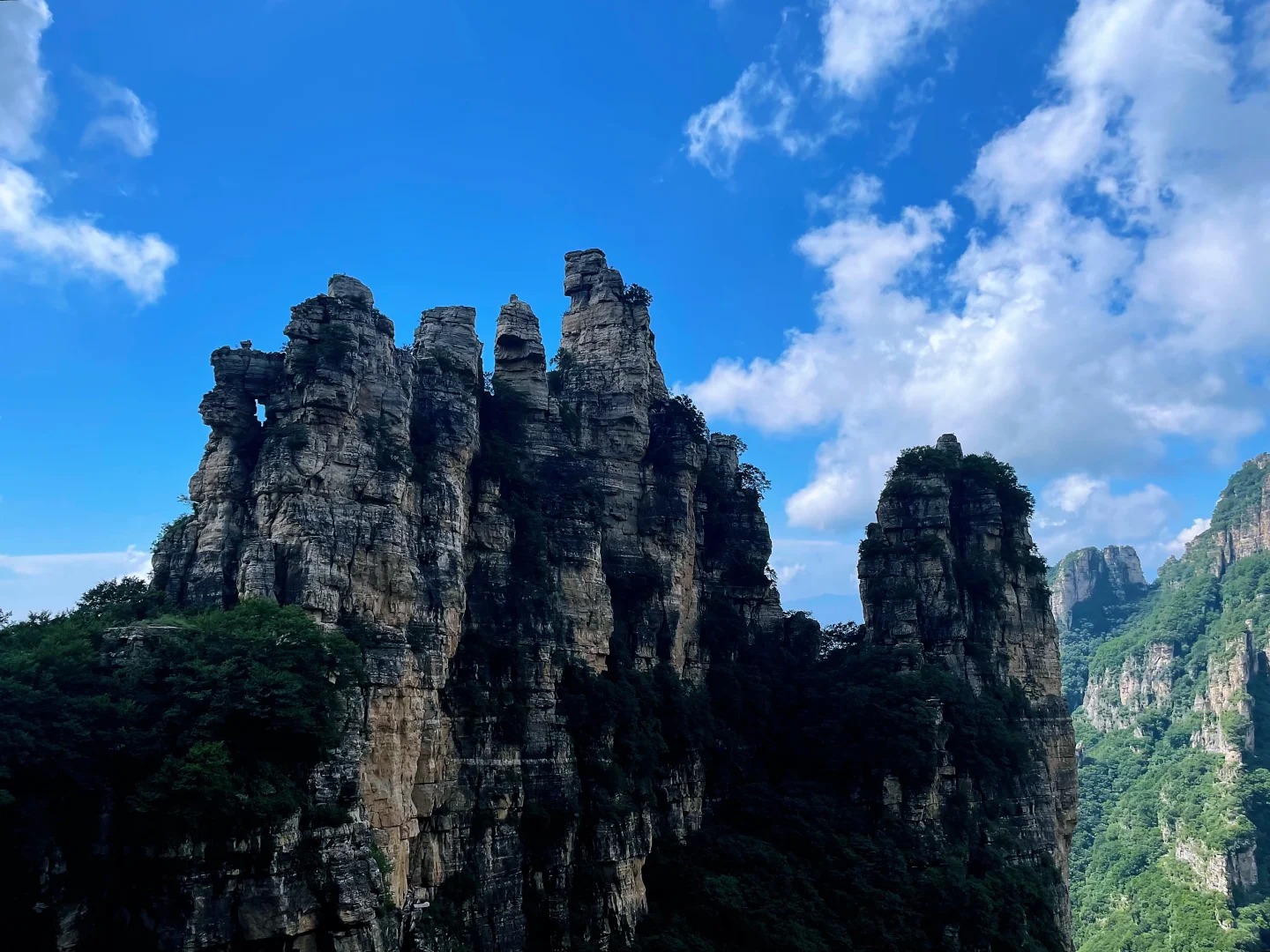
After hiking for about an hour, the forest thinned out, and suddenly, a breathtaking view appeared in front of me: rows of jagged karst peaks stood tall, their grayish-white rocks contrasting sharply with the blue sky. Some peaks were shaped like giant pillars, piercing the clouds; others looked like mythical beasts, lying quietly between the mountains. What surprised me most was the sea of clouds that surrounded the peaks. As the wind blew, the clouds drifted slowly, sometimes covering the peaks completely, making them look like islands in the sky; sometimes clearing up, revealing the steep cliffs and lush vegetation on the mountainsides. I stood there for a long time, forgetting to take photos, just staring at the ever-changing scenery in front of me. It was like walking into a traditional Chinese painting, where every stroke was full of poetic charm.
As I continued hiking, I met an old local guide named Uncle Li. He was in his sixties, with a sun-tanned face and a pair of calloused hands. He saw me stopping to admire the scenery and took the initiative to come over and chat with me. “Young man, you’re lucky today,” he said with a smile. “The sea of clouds here only appears on clear autumn mornings. Most tourists come in the afternoon and miss this view.” He told me that Baishishan’s karst landforms were formed over 100 million years ago, through the erosion of water and wind. Each peak has a unique name, such as “Lion Peak” and “Elephant Trunk Mountain,” which are named after their shapes. He also pointed out some hidden natural wonders, like a small cave halfway up the mountain that was filled with stalactites, and a clear spring that gushed out from under a rock, whose water was so pure that you could drink it directly.
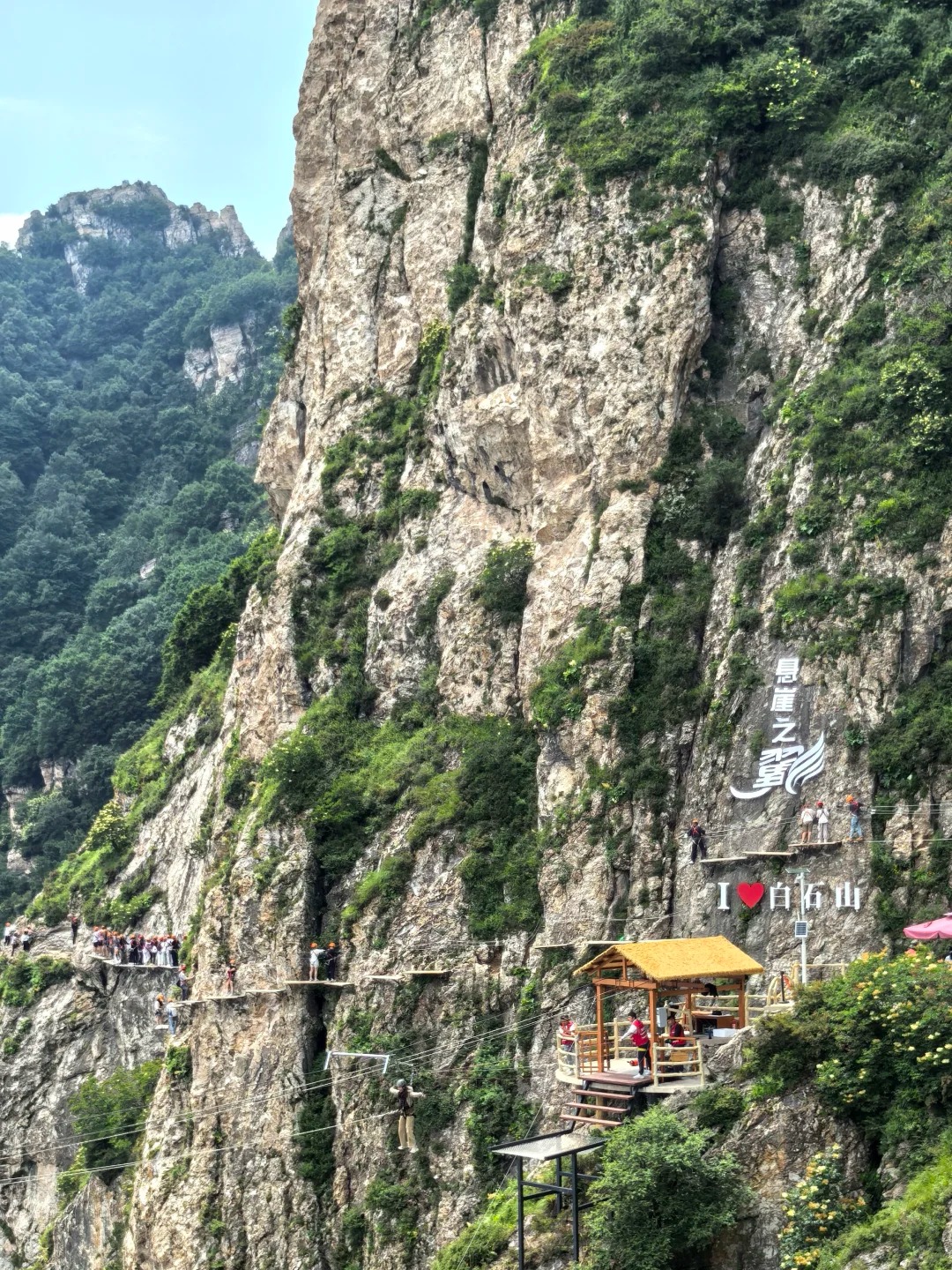
Following Uncle Li’s guidance, I came to the Glass Plank Road, one of the most popular attractions in Baishishan. The plank road is built on the side of a cliff, over 1,900 meters above sea level, and is made of transparent glass. When I first stepped on it, my legs couldn’t help but tremble. Looking down through the glass, I could see the abyss below, and the wind blowing from the cliff made me feel like I was walking in the air. But after a few steps, I got used to it and began to enjoy the unique view. From the plank road, I could see the entire mountain range stretching out in front of me, with the sea of clouds rolling below. It was an exhilarating experience, a mix of fear and excitement that I’d never felt before.
By noon, I reached the top of Baishishan, where there was a small restaurant run by a local family. I ordered a bowl of hand-made noodles with wild vegetable sauce and a plate of fried potatoes with chili. The noodles were chewy, and the wild vegetable sauce had a unique earthy flavor. The owner, an aunt in her fifties, told me that all the vegetables used in the restaurant were grown by themselves in the mountains, without any pesticides or fertilizers. While eating, I chatted with other hikers at the next table. They were a group of college students from Beijing, who had come to Baishishan for a weekend trip. We shared our hiking experiences and exchanged photos, and for a moment, the distance between strangers disappeared.
In the afternoon, I started my descent. The sun was lower in the sky, casting a golden glow on the mountains. The sea of clouds had dissipated, but the peaks still looked magnificent in the golden light. On the way down, I passed a small village nestled at the foot of the mountain. The village was surrounded by terraced fields, where farmers were busy harvesting crops. The houses were made of stone, with red tiles on the roofs, and smoke was curling up from the chimneys. I stopped to talk to a farmer who was drying corn in the yard. He told me that the village had a history of over 200 years, and most of the villagers were descendants of the people who used to guard the mountain. He invited me to try some of their homemade persimmon cakes, which were sweet and chewy, with a strong flavor of persimmon.
As the sun was setting, I finally left Baishishan. Looking back at the mountain, which was now bathed in the golden light of the setting sun, I felt a sense of reluctance. Baishishan is not just a mountain; it’s a place where nature and humanity coexist in harmony. It has the grandeur of famous mountains and the tranquility of a hidden paradise. The beautiful scenery, the warm local people, and the unforgettable experiences all made this trip one of the most memorable in my life. If you’re looking for a place to escape the hustle and bustle of the city and get close to nature, Baishishan is definitely worth a visit.