If Jiuzhaigou is the fairy queen of the water world, then Huanglong Scenic Area is her mysterious, golden sister. I had heard the comparison many times: “Go to Jiuzhaigou for the green, go to Huanglong for the gold.” But standing at the foot of the valley, looking up at a mountainside that seemed to be glowing under the midday sun, I realized that descriptions fall short. Huanglong, which means “Yellow Dragon,” isn’t just a place; it feels like a living myth.
The journey to get there is an adventure in itself. I traveled from Jiuzhaigou, driving over the snow-covered Xuebaoding Mountain. The road twisted and turned like a ribbon, hugging the cliffs. Outside the window, the world was a stark contrast of white snow and dark green pines. My driver, a jovial local named Tashi, stopped the car at the summit pass. It was freezing. The wind cut right through my jacket. “Look back,” Tashi said. I turned and saw the entire valley spread out below, a sea of clouds breaking against the peaks. It was a dramatic overture to the main event.
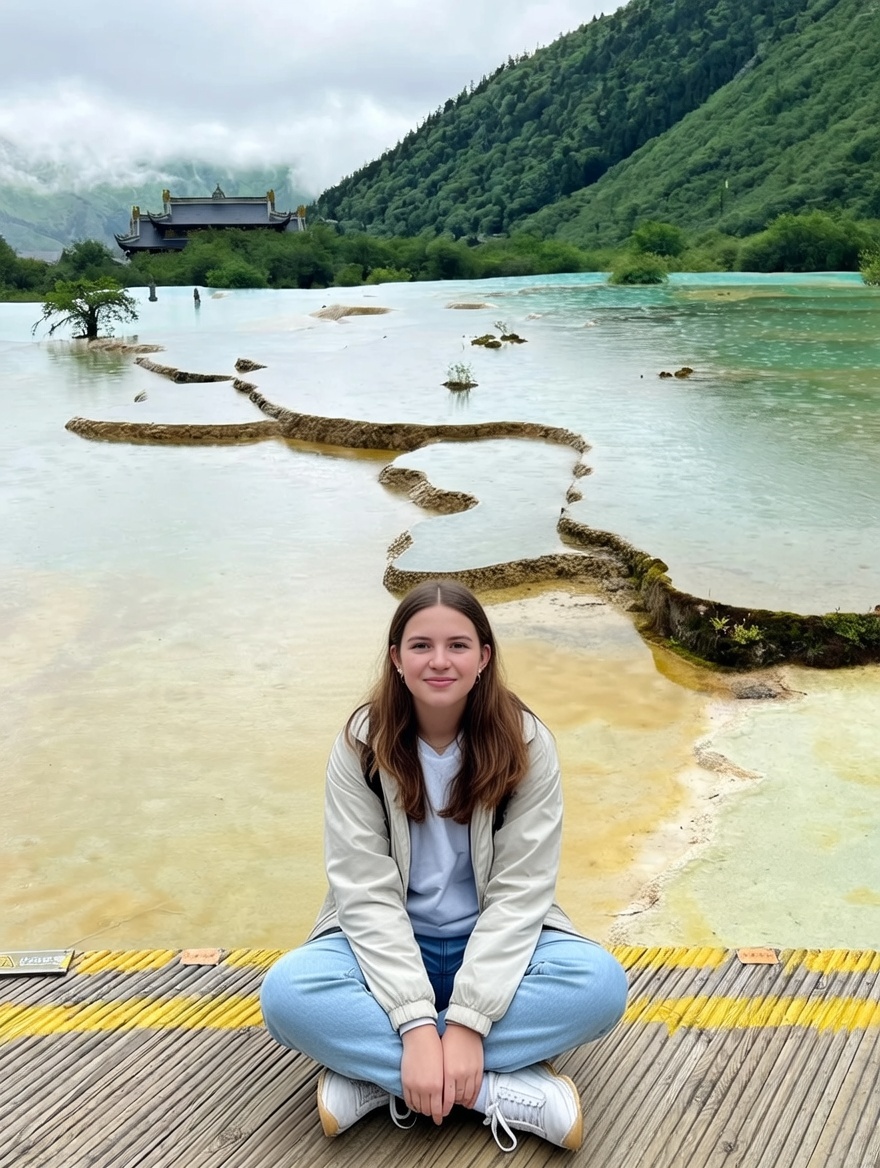
Arriving at the park entrance, the air was thin and crisp. Huanglong sits at an elevation of over 3,000 meters, and the highest point, the Five-Color Pond, is nearly 3,600 meters. I knew I had to pace myself. I decided to take the cable car up to the top and walk down. This is the best strategy if you want to save your legs for the scenery and avoid the brutal uphill climb in low oxygen.
As I ascended in the cable car, the view changed dramatically. Below me, dense forests gave way to alpine shrubs, and then, suddenly, the dragon appeared. It was a massive, calcified slope, cascading down the mountain like a frozen golden waterfall. The travertine deposits—calcium carbonate left by mineral-rich spring water over thousands of years—have created a landscape that looks alien. It glows yellow, gold, and orange against the stark grey rock.
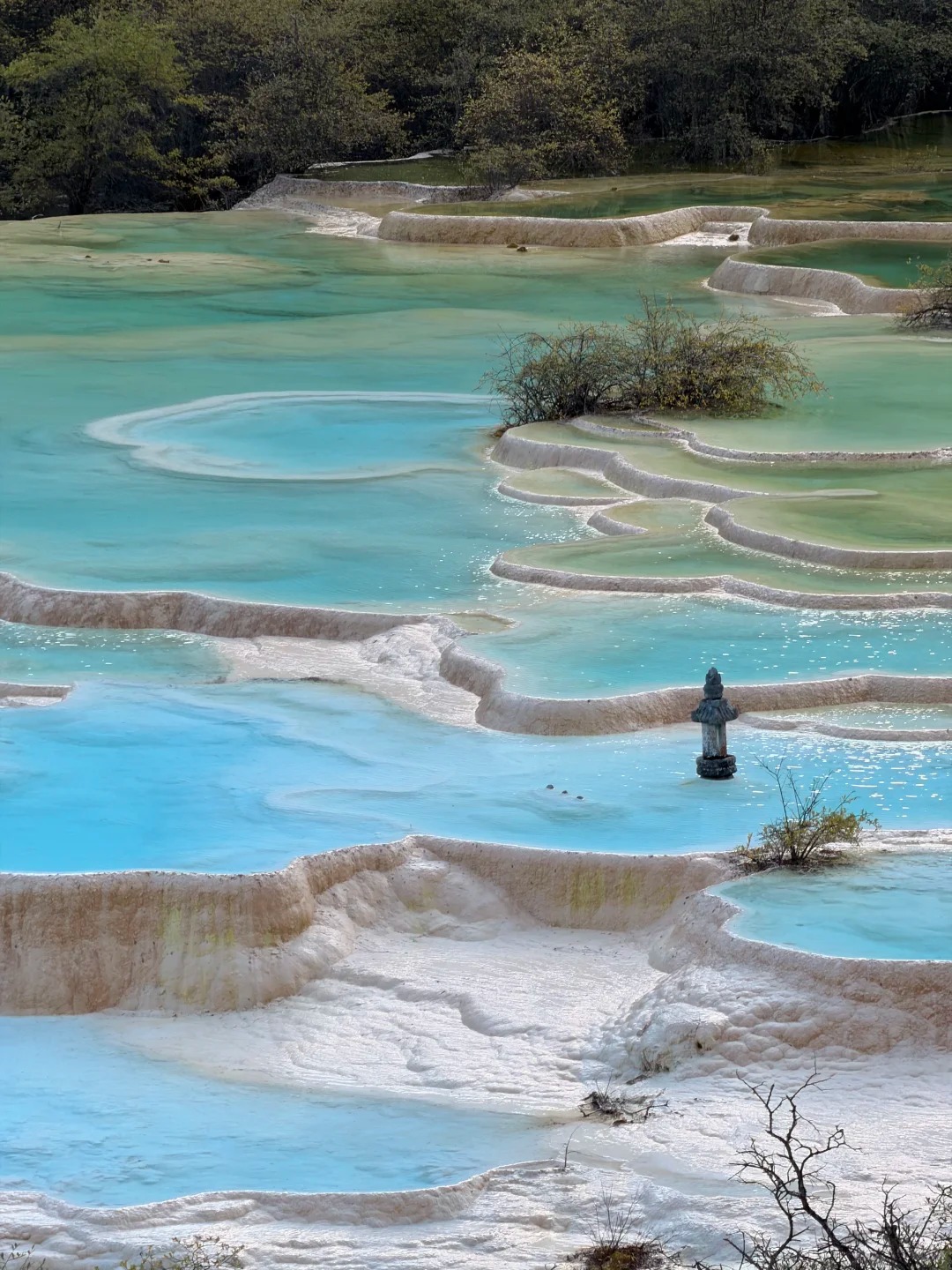
I got off the cable car and began my trek toward the Five-Color Pond (Wucaichi). The boardwalk here is well-maintained but winding. Every few steps, I had to stop to catch my breath. My heart was racing, a reminder that I was walking on the roof of the world. But as I neared the top, the trees disappeared, replaced by a barren, windswept plateau.
And then, I saw it.
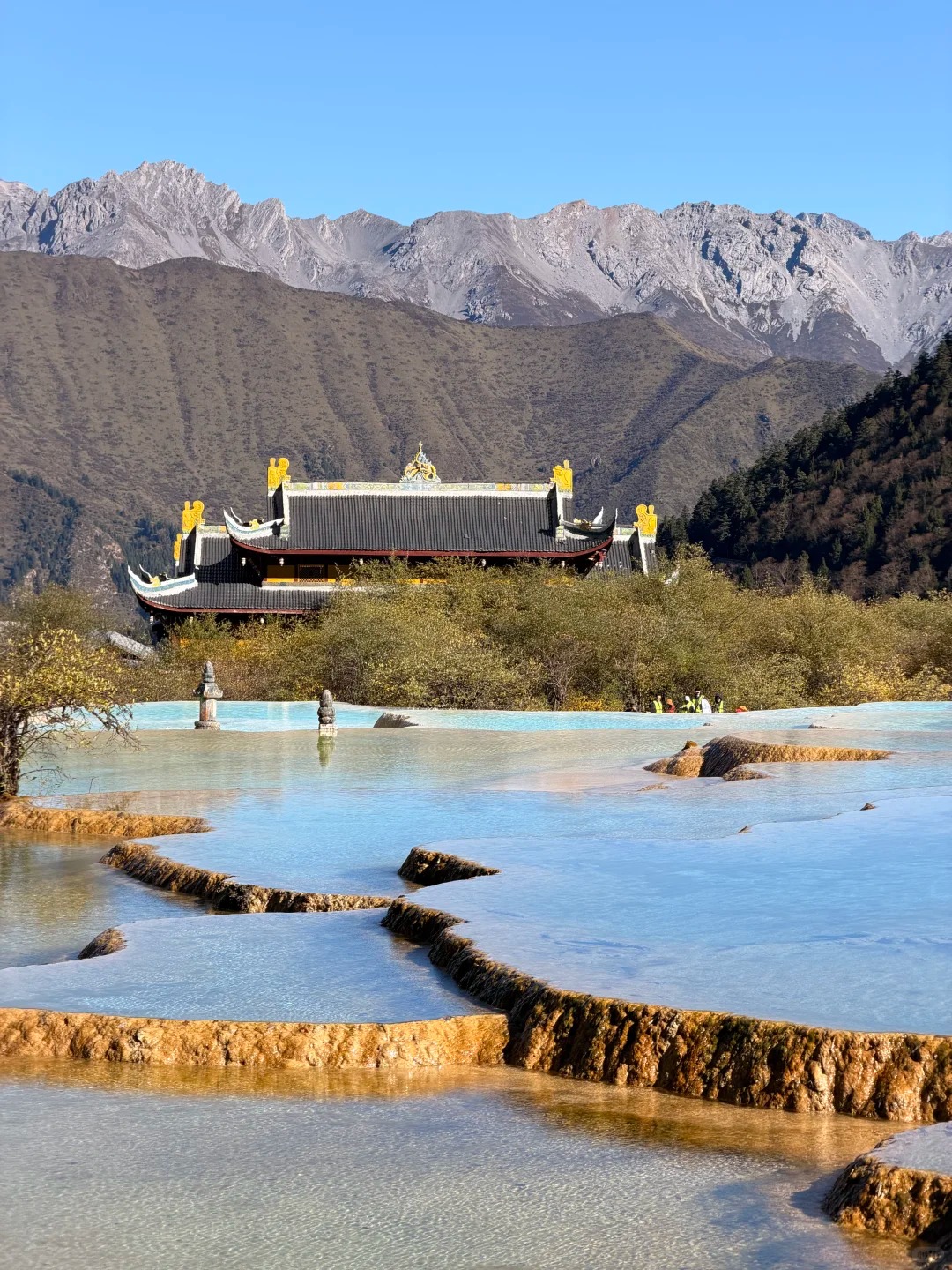
The Five-Color Pond is the crown jewel of Huanglong. It is a group of small pools clustered on a ridge, with the snow-capped peak of Mount Minya Gongga towering behind them. The water is the clearest I have ever seen. But the magic is in the color. Depending on the angle of the sun, the water reflects blue, green, yellow, and orange. It’s not paint; it’s the mineral content, the algae, and the light playing tricks. Standing there, I felt like I was on another planet. The wind was howling, biting my face, but the water was calm and still. It was a moment of intense stillness amidst the chaos of the wind. I sat on a rock, wrapped my scarf tighter, and just watched the water change hues. It felt like looking into a kaleidoscope. I understood why the locals believe this water has healing powers. Just looking at it felt like it was washing the stress out of my soul.
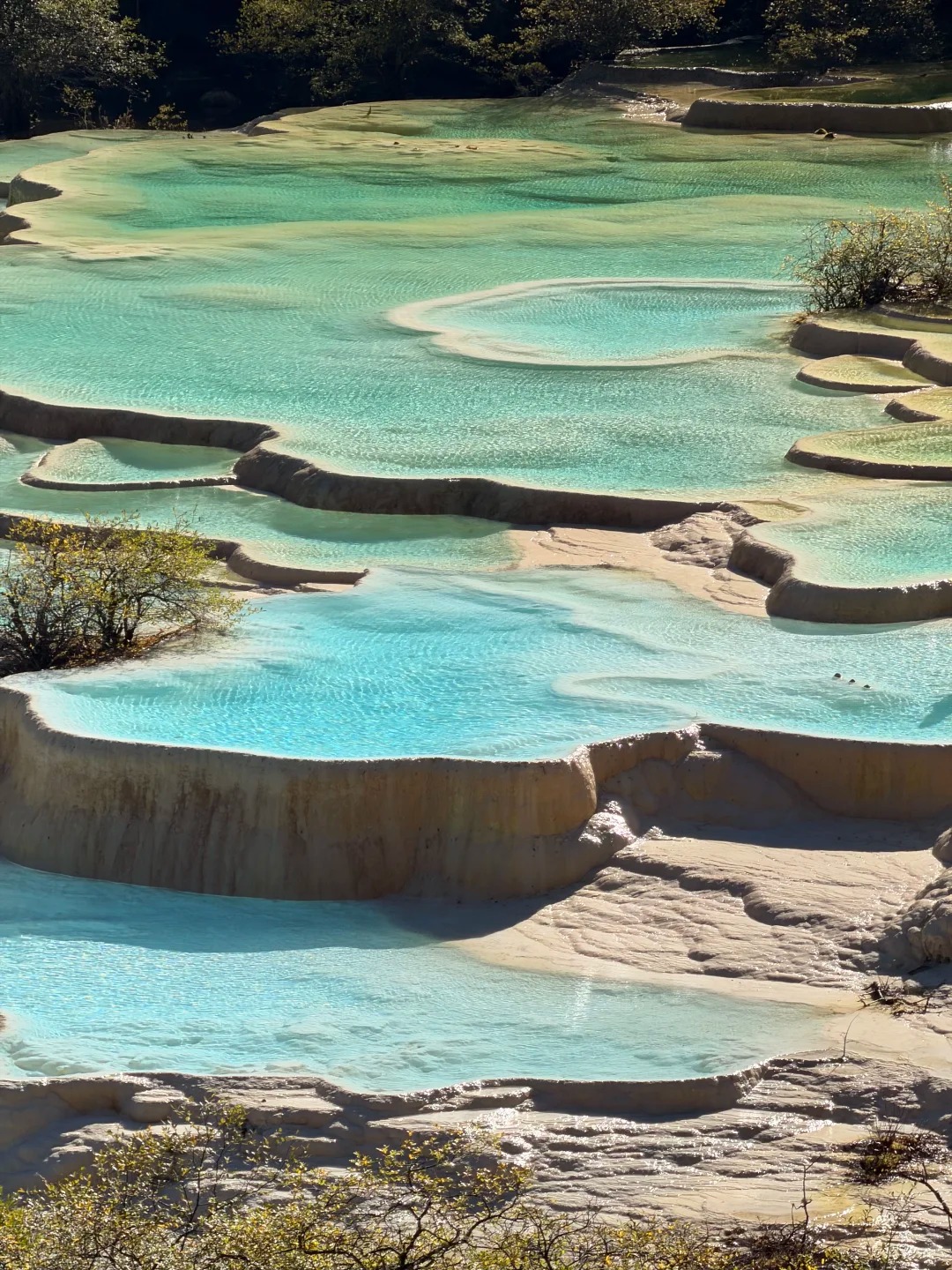
The walk down from the top is a long, winding journey that follows the “body” of the Yellow Dragon. The travertine formations are fascinating. They look like scales, ripples, and terraces. Water flows over them in thin sheets, creating a constant, soothing sound. In some places, the water collects in large pools, like the Flying Waterfall of the Yellow Dragon. In others, it trickles down through small crevices.
One of the most striking sections is the Golden Sand. Here, the travertine slope is steep and wide, and the water flows over it like a silk sheet. The yellow color is so intense it looks like the mountain is made of gold ore. I walked carefully along the edge, fascinated by the texture. It’s hard and brittle in some places, soft and slippery in others. I resisted the urge to touch the water directly—we have to protect this delicate ecosystem—but I dipped my fingers in the air right above it. It was cold, numbingly cold.
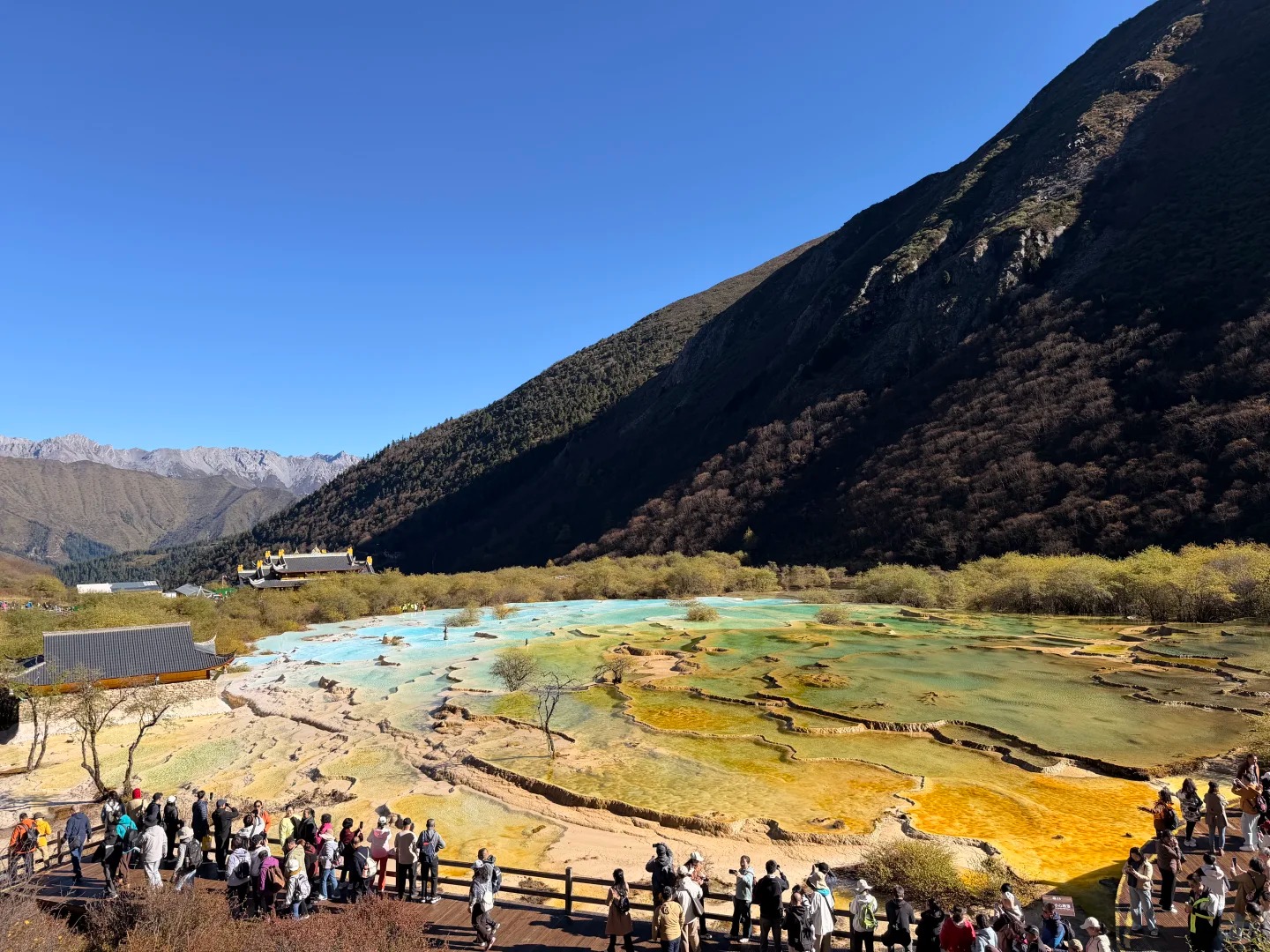
As I descended further, the air became warmer and richer in oxygen. The vegetation returned. I passed by ancient temples and wooden pavilions built into the cliffs. I stopped at the Huanglong Ancient Temple. It’s a quiet place, smelling of incense and old wood. An old monk was sweeping the courtyard, seemingly oblivious to the stunning view right behind him. I asked him in broken Mandarin if he ever got tired of the view. He smiled, revealing a few missing teeth, and said, “The mountain changes every day. How can I get tired?”
I also encountered the distinct smell of sulfur near the lower pools. It’s a rotten egg smell that some people find off-putting, but I found it grounding. It reminds you that this beauty is born from the earth’s volcanic and tectonic activity. This isn’t a man-made garden; it’s a geological force in motion.
Hiking down the entire valley took me about four hours. My knees were aching by the time I reached the bottom, but my spirit was soaring. The scenery changes constantly. From the icy, blue pools at the top to the lush, green forests at the bottom, Huanglong is a journey through ecosystems.
If you plan to visit Huanglong Scenic Area, please respect the altitude. It is not a joke. Drink water, walk slowly, and listen to your body. But do not let the challenge deter you. The sight of that golden dragon winding through the valley, and the ethereal colors of the Five-Color Pond, are rewards that are worth every gasp of thin air.
Leaving the valley, I looked back one last time. The sun was setting, casting long shadows across the travertine terraces. The yellow stone turned a fiery orange. It looked like the dragon was waking up, preparing to fly into the night sky. It was a magical end to a day spent in a place that truly feels like the dragon’s lair. Real, wild, and absolutely unforgettable.