Introduction: Why This Guide Exists (And Why It’s Different)
I’ll never forget my first time helping a dear friend from Canada apply for her Chinese visa. She’d meticulously filled out the form online, printed everything perfectly, only to be turned away at the visa center because she’d missed one tiny detail on her invitation letter. The frustration in her eyes mirrored my own past experiences. That’s why I’ve written this guide: to be the resource I wish I’d had—a blend of official requirements and street-smart wisdom, all filtered through the lens of someone who’s been there, made those mistakes, and learned how to make the process almost… enjoyable.
This isn’t just about forms and fees. It’s about understanding the why behind each step, anticipating hidden hurdles, and approaching the application with the calm confidence of a local. Let’s begin your journey to China, right from the very first stamp.
Step 1: Determine Your Visa Type – The Foundation of Your Application
The Chinese visa system categorizes entries based on your purpose of visit. Choosing the wrong type is the single most common reason for delays or rejections. Here’s a breakdown of the most relevant types for travelers:
- L Visa (Tourist Visa): This is the golden ticket for the vast majority of leisure travelers. You’ll need this if your primary purpose is sightseeing, visiting friends or family (who are not providing formal sponsorship), or general cultural exploration. My personal recommendation? Even if you have a loose plan to meet a friend, apply for an L visa unless they are formally inviting you through their employer or local police station (which is rare for casual visits).
- M Visa (Business Visa): Required if you’re traveling for commercial activities like attending trade fairs, negotiating contracts, or short-term consultations. You’ll need an official invitation letter from a Chinese company registered with the local commerce bureau.
- Q2 Visa (Family Visit - Short Term): For visiting relatives who are Chinese citizens or foreign residents with permanent residence in China. This requires a formal invitation letter from your host, often verified by local authorities.
- F Visa (Exchange, Visits, Study Tours): For academic exchanges, short-term study (less than 180 days), or attending conferences. An invitation from a Chinese educational or governmental institution is mandatory.
- S2 Visa (Private Affairs - Family of Work/Student Visa Holders): For spouses, parents, or children of foreigners holding valid Z (Work) or X1 (Long-term Student) visas in China.
For 95% of independent travelers reading this, the L Visa is your target. Don’t overcomplicate it. If your trip is about experiencing China’s culture, history, and food—like wandering through the Terracotta Warriors or bargaining for silk in Suzhou—you’re an L visa applicant.
Step 2: Gather Your Core Documents – The Non-Negotiables
Your application is only as strong as its weakest document. Here’s your essential checklist:
- 1. Your Passport:
- Must be valid for at least 6 months beyond your intended stay in China.
- Must have at least two blank visa pages (not just any blank page; they must be marked “Visa” or “Amendments”).
- My Pro-Tip: Make a photocopy of your passport’s bio-data page before you submit it. The visa center will keep your original for several days, and having a copy is invaluable for hotel check-ins or emergencies.
- 2. Completed Visa Application Form (Form V.2013):
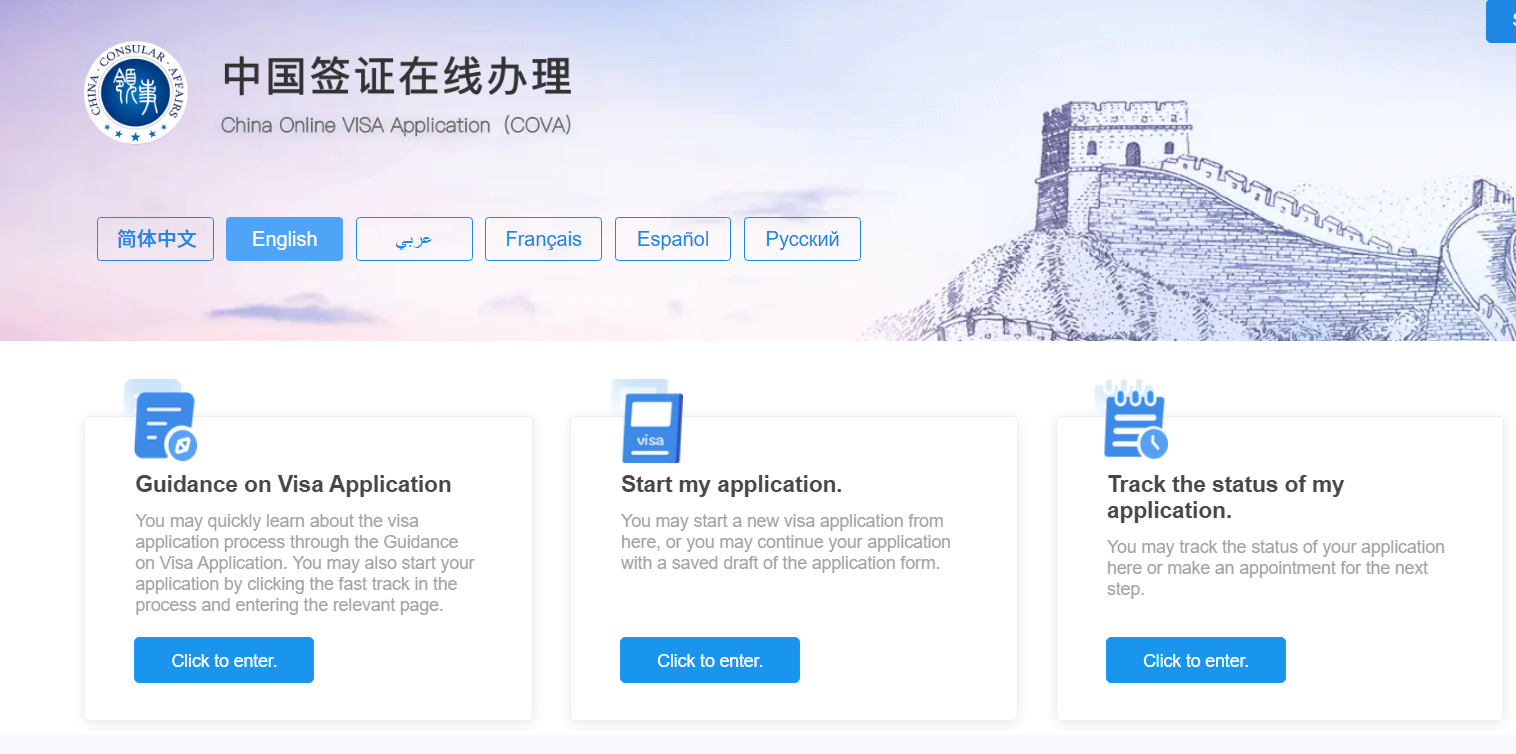
- You must fill this out online via the official Chinese Visa Application Service Center website for your country (e.g., https://consular.mfa.gov.cn/VISA/ followed by your city code like /LON2_ZH/).
- Crucial Advice: Fill it out in one sitting if possible. The system can be finicky, and saving progress isn’t always reliable. Double-check every field, especially your name (it must match your passport exactly, including middle names or initials).
- After submission, you’ll get a barcode. Print this entire form on A4 paper, single-sided. Do not alter or hand-write on it.
- 3. A Recent Passport Photo:
- Specifications are strict: 48mm x 33mm, in color, taken within the last 6 months.
- Plain white or off-white background. No shadows.
- Full face, front view, eyes open, neutral expression. No uniforms or hats (religious headwear is acceptable if it doesn’t obscure the face).
- My Experience: I always get my photos taken at a professional pharmacy or post office that knows international visa specs. Phone selfies, even with apps, often get rejected for subtle lighting or size issues.
- 4. Proof of Legal Stay or Residence (If applicable):
- If you’re applying from a country where you are not a citizen (e.g., you’re a Brazilian citizen living in Germany), you must provide proof of your legal status there (e.g., a valid residence permit or visa).
Step 3: Prepare Your Supporting Documents – Where Most Applications Live or Die
This is where your application gains credibility. For an L (Tourist) Visa, you typically need:
- Round-Trip Flight Itinerary: A confirmed booking showing your entry into and exit from China. You do NOT need to purchase non-refundable tickets. A hold reservation from your airline or a travel agent is sufficient. Many online services offer temporary flight holds for a small fee specifically for visa purposes.
- Hotel Reservation Confirmation: A detailed itinerary showing your accommodation for the entire duration of your stay in China. Again, a refundable booking is fine. If you’re staying with a friend, you’ll need their ID copy and a signed letter of invitation (though for an L visa, a hotel booking is far simpler and more universally accepted).
- Detailed Travel Itinerary: While not always requested, having a day-by-day plan (e.g., “Day 1-3: Beijing – Forbidden City, Great Wall; Day 4-6: Xi’an – Terracotta Army…”) demonstrates a clear, genuine tourist purpose. I always include this—it shows you’re a serious traveler, not someone with ambiguous intentions.
For other visa types, the supporting documents are more specific:
- M Visa: Original Invitation Letter from a Chinese company (on company letterhead, with a business license copy, and often a verification QR code from the local commerce bureau).
- Q2 Visa: Invitation letter from your relative in China, a copy of their Chinese ID or residence permit, and proof of relationship (e.g., birth certificate, marriage certificate).
Step 4: Navigate the Chinese Visa Application Service Center (CVASC)
China outsources its visa processing in most countries to the CVASC. This is your physical point of contact.
- Find Your Nearest Center: Go to the official CVASC website (https://consular.mfa.gov.cn/VISA/) and select your country/city. This site is your bible for all local procedures, fees, and appointment booking.
- Book an Appointment Online: Walk-ins are rarely accepted. Use the CVASC portal to book a slot. Book as early as possible! Popular travel seasons (spring, autumn, holidays) can see slots booked weeks in advance.
- What to Bring to Your Appointment:
- Your printed appointment confirmation.
- Your completed application form with the barcode.
- Your original passport and the photocopy.
- Your passport photo.
- All supporting documents (flight, hotel, itinerary).
- The visa fee (check the CVASC site for the exact amount and accepted payment methods—often credit card or cash in local currency).
- At the Center: The process is usually efficient. You’ll submit your documents, have your fingerprints scanned (mandatory for most applicants aged 14-70), and pay the fee. They’ll give you a pick-up slip with a tracking number.
Step 5: The Waiting Game – Processing Times & What to Expect
- Standard Processing: Usually 4 working days. This is the norm for most applications.
- Expedited Processing: Often available for an extra fee (e.g., 2-3 working days). Only request this if you have a genuine emergency; don’t use it as a crutch for poor planning.
- Tracking Your Application: Use the tracking number on your pick-up slip on the CVASC website. It will show the status (e.g., “Application Received,” “Under Review,” “Ready for Collection”).
- Be Patient and Realistic: The embassy/CVASC does not give updates over the phone for standard inquiries. Constantly calling won’t speed things up. Trust the process.
Step 6: Collecting Your Visa – The Final Hurdle
- You can usually collect your passport in person with your pick-up slip, or authorize someone else to do it (they’ll need a signed authorization letter and their own ID).
- Inspect Your Visa IMMEDIATELY: Check every detail: your name, passport number, visa type (should be “L”), number of entries (usually “01” for single-entry), validity dates, and duration of stay (e.g., “30” days). Any error must be reported to the CVASC immediately for correction. Once you leave the counter, fixing it becomes a major headache.
Critical Insider Tips from a Veteran Traveler
- 1. Start Early: Begin your application at least one month before your planned departure. This gives you a buffer for any unexpected requests for additional documents or processing delays.
- 2. Consistency is King: Every piece of information—your name, dates, addresses—must be consistent across your application form, flight itinerary, and hotel bookings. Inconsistencies raise red flags.
- 3. The “Invitation Letter” Trap: For a standard tourist trip, you do not need an invitation letter from a Chinese entity. Relying on a hotel booking is cleaner and avoids potential complications with unverified letters.
- 4. Multiple Entries: If you plan to visit Hong Kong or Macau and then re-enter mainland China during your trip, you’ll need a double-entry (02) or multiple-entry (M) visa. Specify this clearly on your application form and be prepared to explain your itinerary.
- 5. Tibet is Special: A regular Chinese visa is just the first step for Tibet. You’ll need a separate Tibet Travel Permit, which must be arranged through a registered Tibetan tour operator after you have your visa. Don’t mention Tibet on your initial visa application; just list your entry point as Chengdu or Xi’an.
- 6. Keep Digital Backups: Scan or take clear photos of every document you submit. Store them securely in the cloud. You might need them for hotel check-ins or internal flights within China.
Conclusion: Your Gateway to the Middle Kingdom
Securing your Chinese visa isn’t just a bureaucratic chore; it’s the ceremonial unlocking of a door to one of the world’s most captivating civilizations. I remember the thrill of seeing that bright green L visa stamped in my passport before my first solo trip to Yunnan—the anticipation was electric. With this guide, I hope I’ve transformed your anxiety into a sense of empowered preparation.
Remember, the officials at the CVASC aren’t your adversaries; they’re gatekeepers ensuring orderly travel. By presenting a clear, complete, and honest application, you’re showing respect for their process and for the incredible country you’re about to explore.
Now, go forth! Your steaming bowl of hand-pulled noodles in Lanzhou, your silent contemplation among the karst peaks of Yangshuo, your awe beneath the ancient cypress trees of the Temple of Heaven—they’re all waiting. And it all starts with that one, beautifully stamped visa.
Safe travels, and may your journey through China be as smooth as the silk you’ll surely bring home.