They call Yunnan "The South of Colorful Clouds," but I call it the place where time decides to stop and smell the flowers.
If Beijing is the brain of China and Shanghai is its pocketbook, then Yunnan is its soul. My "Yunnan tour" was not a checklist of sights; it was a surrender to rhythm. It began in the cobblestone maze of Lijiang and ended in the thin, holy air of Shangri-La, a journey that felt less like travel and more like a lucid dream.
Lijiang: The Melody of Water and Stone
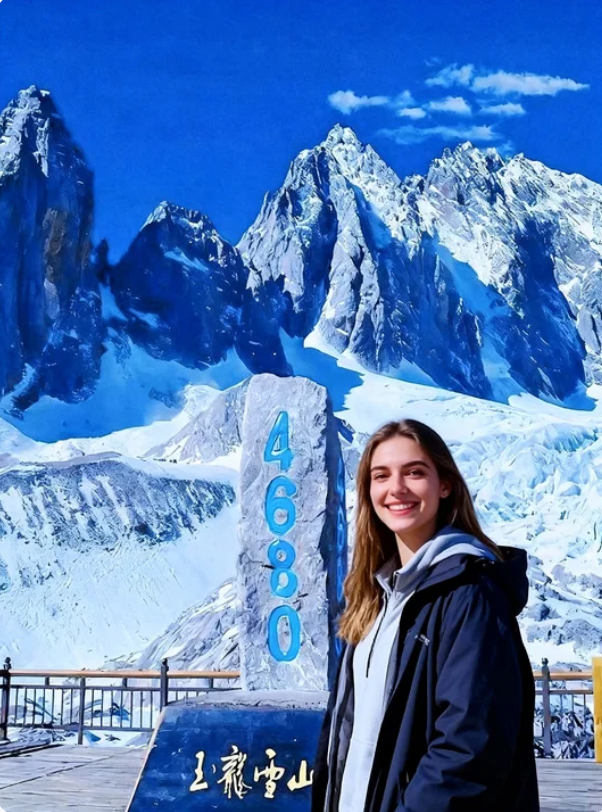
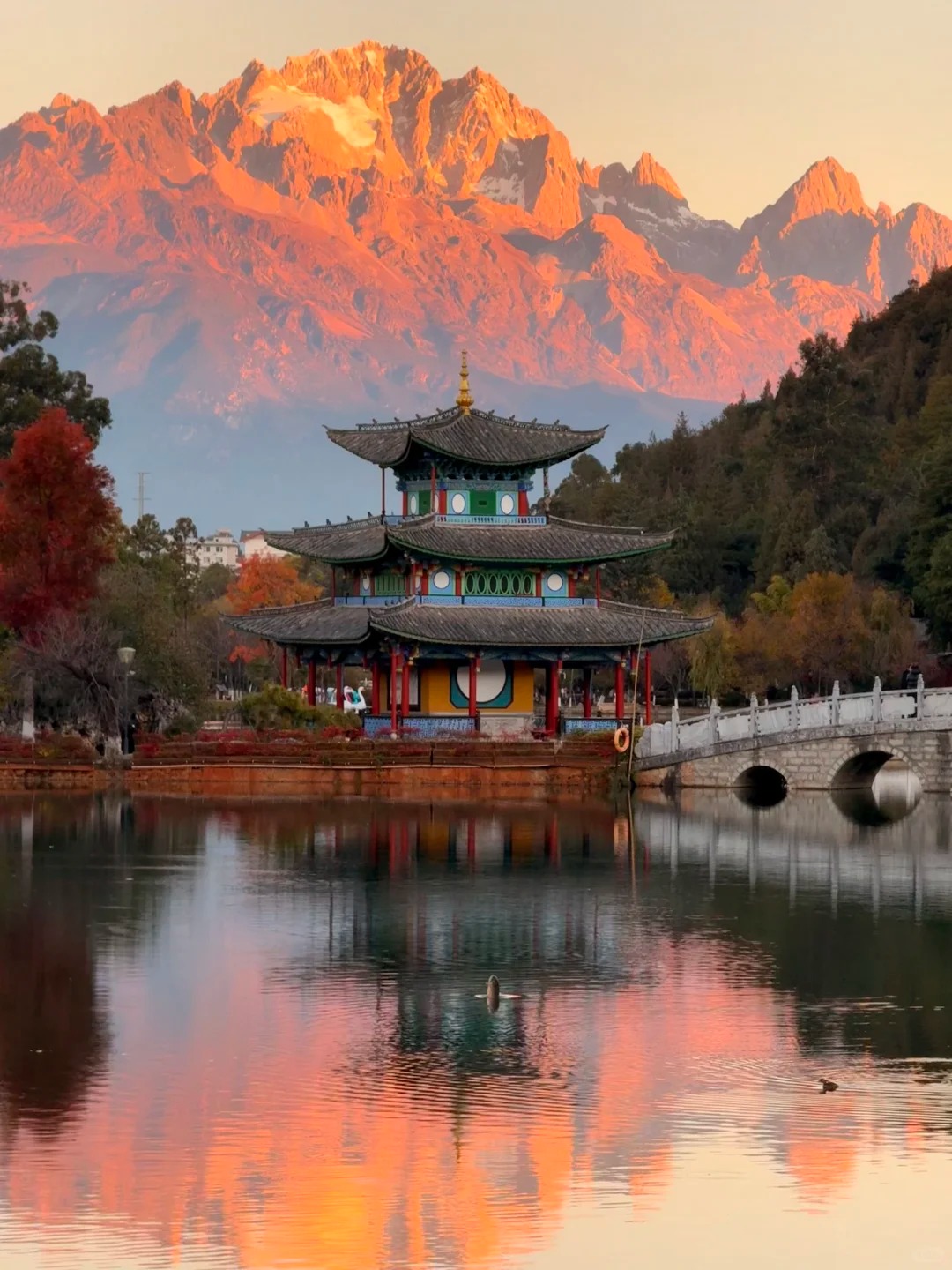
Arriving in Lijiang Ancient Town is like stepping into a watercolor painting that has suddenly sprung to life. The first thing you notice is the sound of water. The Jade River splits into countless streams that snake through the town, flowing under willow trees and centuries-old stone bridges.
I checked into a boutique inn run by a Naxi family. The Naxi people are the guardians of this land, famous for their matriarchal culture and their pictogram script, Dongba—the only living hieroglyphic language in the world.
My host, a smiling woman named A-Ma, greeted me with a cup of Pu'er tea. This isn't just tea; it's liquid history. Aged in compressed cakes, the tea was dark, earthy, and smooth, with a lingering sweetness that coated my throat. "Drink," she said. "It washes away the dust of the road."
That evening, I got lost. In Lijiang, getting lost is the point. I wandered away from the noisy bar street and found a quiet square where a group of elderly men were playing traditional Naxi ancient music. It was haunting—flutes, lutes, and weathered voices chanting songs about gods and mountains. I sat on a stone bench, the cool night air smelling of charcoal fires and grilling fish, and just listened. It was a sound from another century.
A Culinary Ritual: Crossing-the-Bridge Noodles
You cannot speak of Yunnan without bowing down to its cuisine. The next day for lunch, I sought out the legendary Crossing-the-Bridge Noodles (Guoqiao Mixian).
The waiter placed a massive bowl of boiling chicken broth in front of me. It was so hot a layer of oil sealed the steam inside. Then came the side dishes on small plates: paper-thin slices of raw pork, ham, squid, quail eggs, chrysanthemums petals, and chives.
"Meat first, then vegetables, then noodles," the waiter instructed.
I dropped the meat into the soup. It cooked instantly, turning white. I added the rest, creating a kaleidoscope of colors in the bowl. The first slurp was a revelation. The broth was rich and golden, the noodles silky and slippery. The floral note from the chrysanthemum petals added a delicate elegance that cut through the richness. It wasn't just lunch; it was a ceremony of freshness.
The Road to Shangri-La
Leaving Lijiang, I took a car north toward Shangri-La (formerly Zhongdian). The road climbed steadily. The lush green valleys gave way to alpine meadows dotted with yaks and Tibetan prayer flags flapping violently in the wind.
Shangri-La sits at 3,160 meters. The air here is thin and crisp, smelling of pine and incense. My destination was Dukezong Ancient Town, also known as the "Moonlight City."
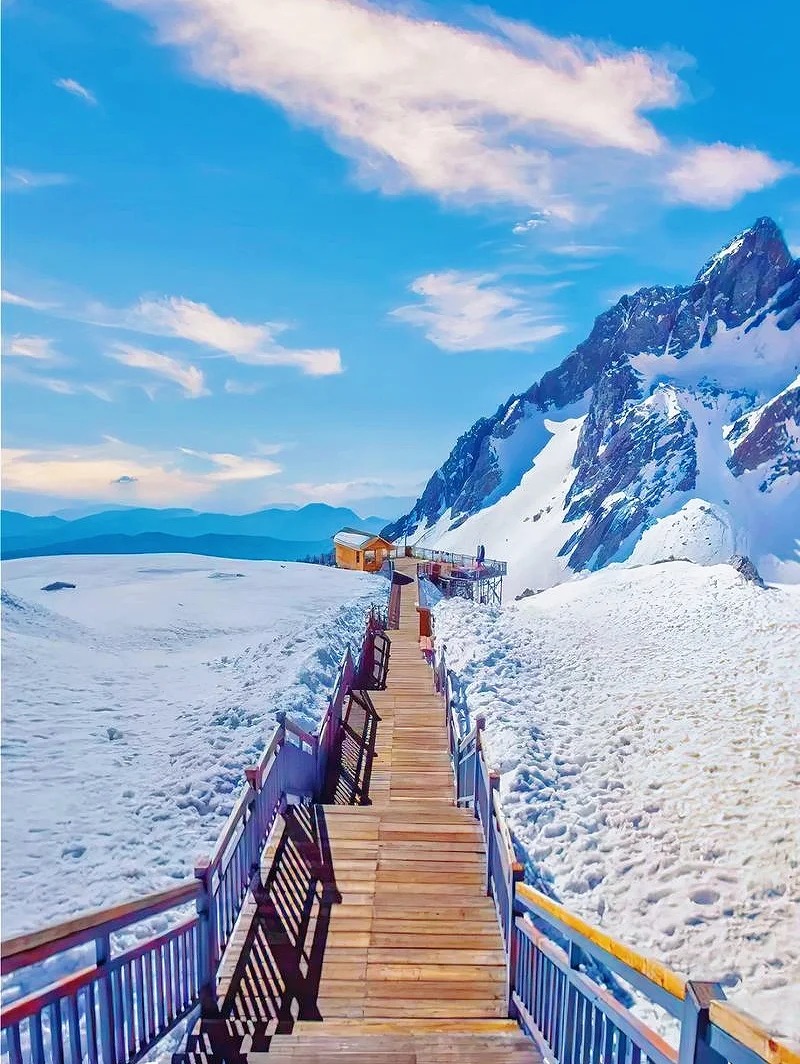
Walking through Dukezong is a workout. I climbed the hill to the Guishan Park to spin the world’s largest prayer wheel. It takes at least six people to move it. I joined a group of strangers—tourists and locals alike. "One, two, push!" we shouted in unison. As the giant gold cylinder began to turn, emitting a deep, resonant groan, I felt a strange sense of unity. We were all pushing the same wheel, sending the same prayers into the sky.
Meili Snow Mountain: The Golden Sunrise
The climax of my trip was the journey further north to Deqin to see the Meili Snow Mountain. This range is sacred to Tibetan Buddhists, and its main peak, Kawagarbo, has never been climbed.
I woke up at 5:00 AM, wrapping myself in every layer of clothing I owned. I stood on the viewing deck of the Feilai Temple with hundreds of others, shivering in the freezing dark.
We waited. Silence fell over the crowd as the sky began to lighten.
Then, it happened. The sun didn't rise; it struck the tip of Kawagarbo like a match. The peak turned a brilliant, burning gold, while the valley below remained in blue shadow. The "Sunshine over the Golden Mountain" (Rizhao Jinshan) is said to bring a year of good luck to those who witness it.
A collective gasp went up from the crowd, followed by the murmuring of prayers. Tears pricked my eyes—not from the cold, but from the sheer, overwhelming beauty of nature’s grandeur. It was a moment of pure humility.
Why Yunnan Stays With You
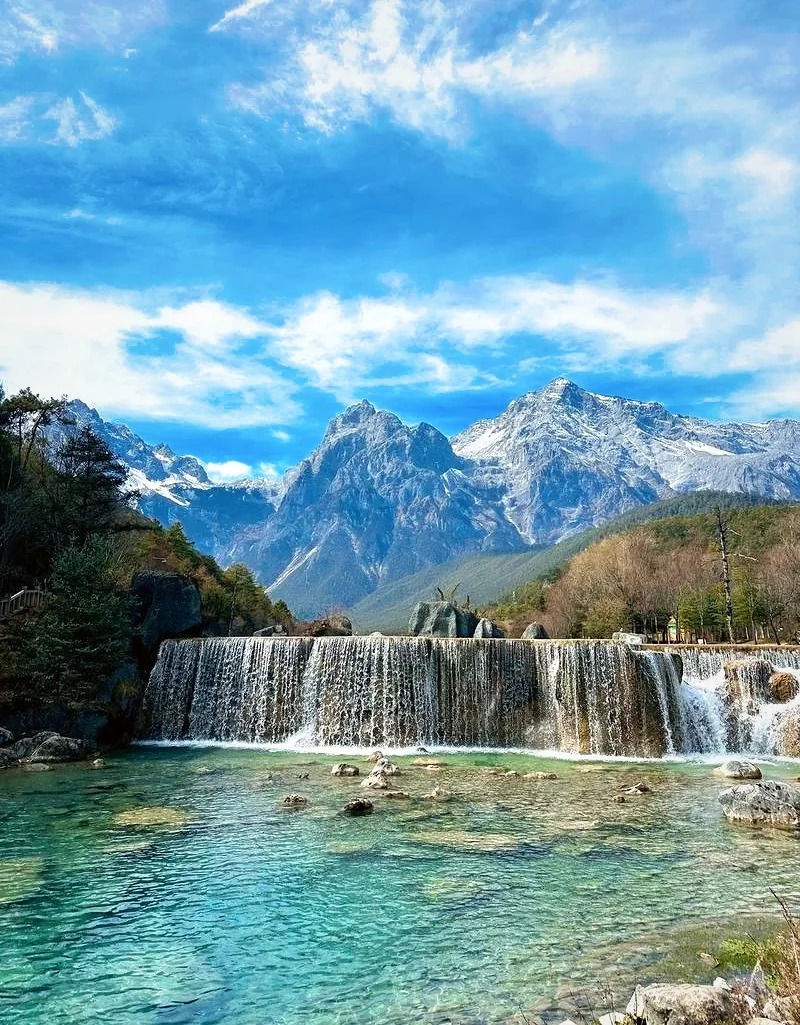
A "Yunnan tour" is diverse in every sense—landscapes that shift from tropical to alpine, flavors that range from spicy to sour to floral, and a tapestry of ethnic cultures that live in harmony.
As I flew out of Shangri-La, looking down at the mountains one last time, I realized I wasn't leaving with just photos. I was leaving with a slower pulse, a stomach full of memories, and a promise to myself to return. Because in Yunnan, spring isn't just a season; it's a state of mind.