I’ll be honest with you: before I went to Datong, my expectations were gray. Friends had told me, "It’s the coal capital of China. It’s industrial. It’s dusty." I packed extra face masks and prepared myself for a gritty, purely educational trip.
I was wrong. I was so spectacularly wrong that I now tell every traveler I meet: "Skip the overcrowded hotspots. Go to Datong." Because beneath that industrial shell lies the soul of a forgotten empire, gleaming like a diamond hidden in a lump of coal.
The Gaze of the Ancients: Yungang Grottoes
My journey began on a crisp, cold morning. The sky wasn't gray; it was a piercing, brilliant blue that you only get in Northern China. I took a taxi out of the city to the Yungang Grottoes.
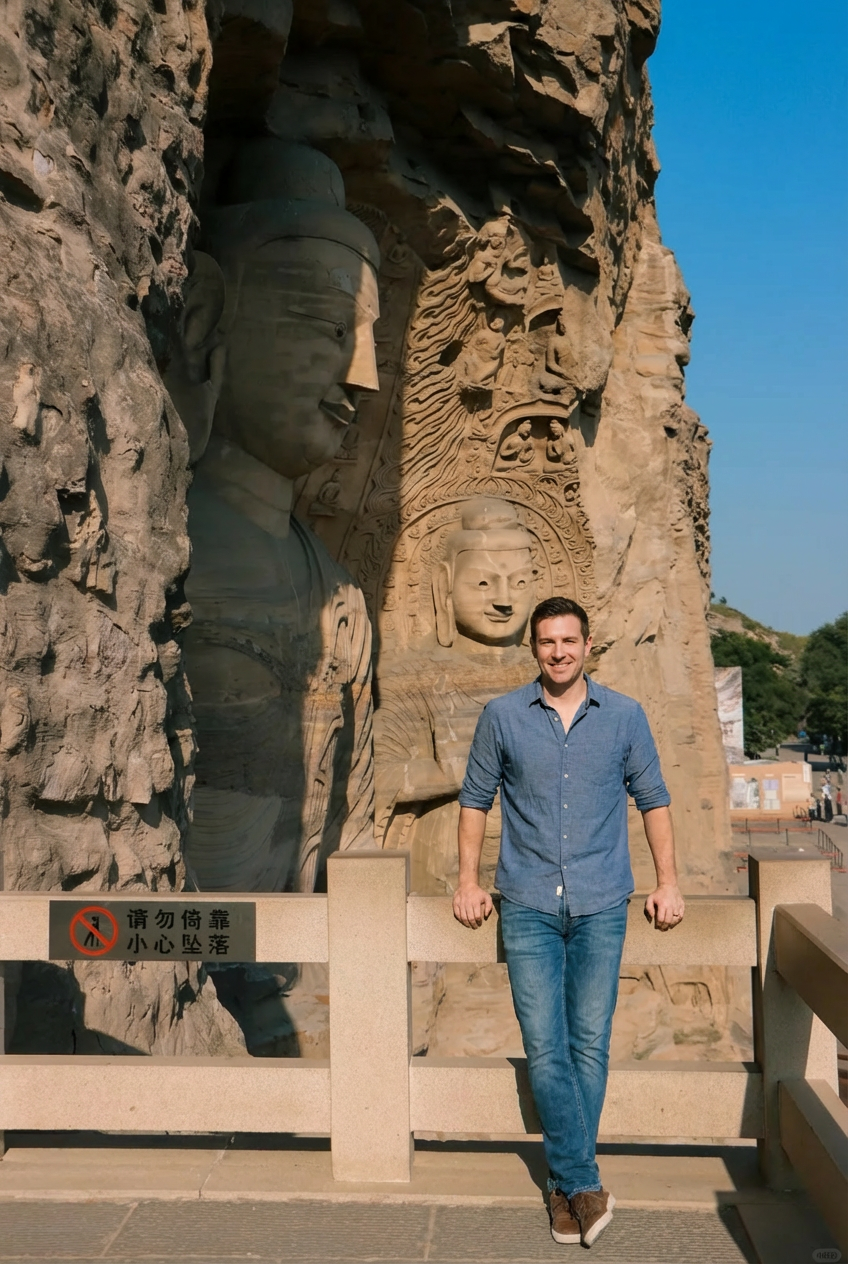
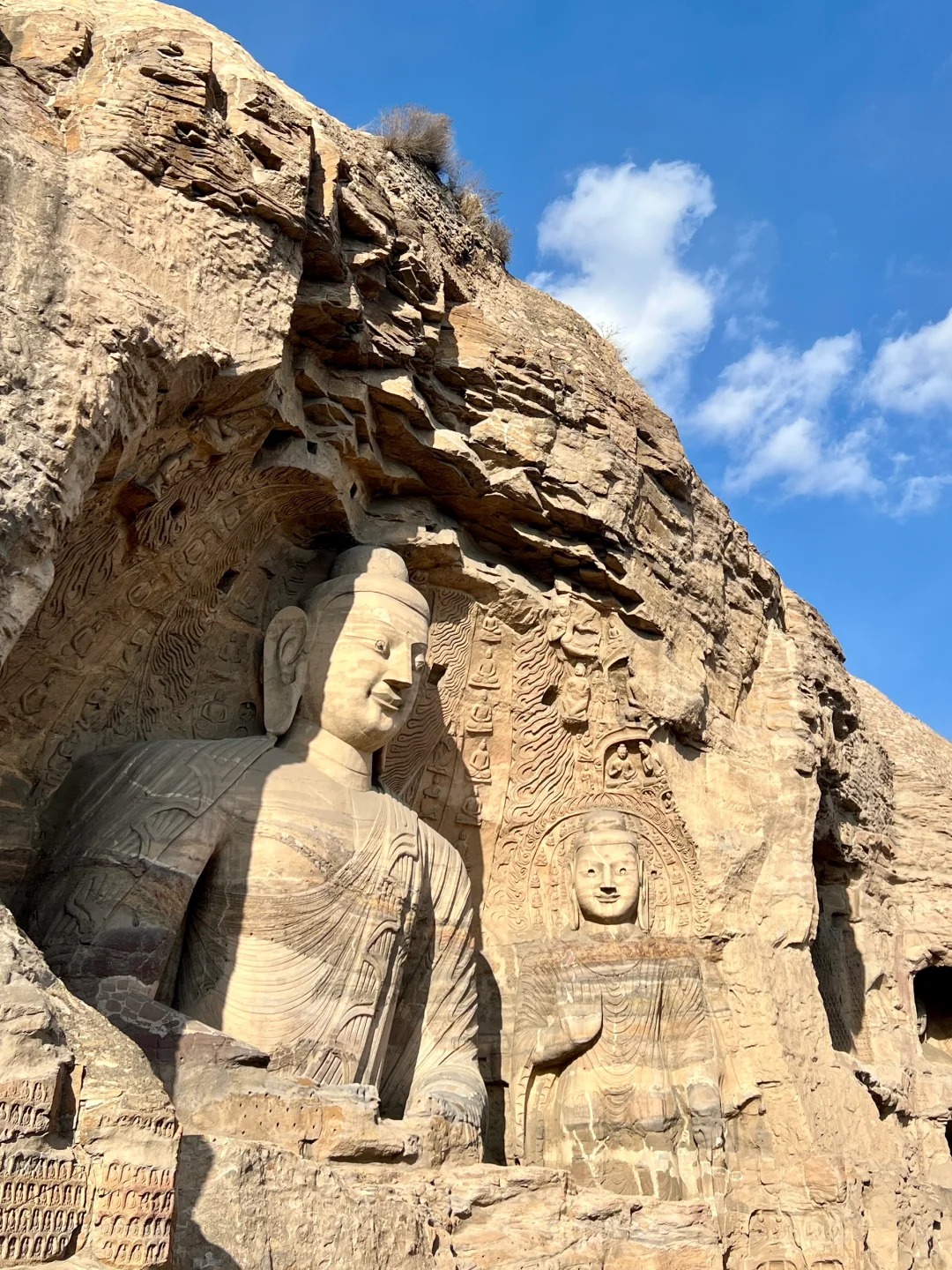
I have seen temples in Thailand, shrines in Japan, and cathedrals in Europe. But nothing prepared me for the sheer scale of Yungang. As I walked through the entrance, the mountain face opened up like a giant book of stone. Carved directly into the sandstone cliffs are over 50,000 statues of Buddha. 50,000!
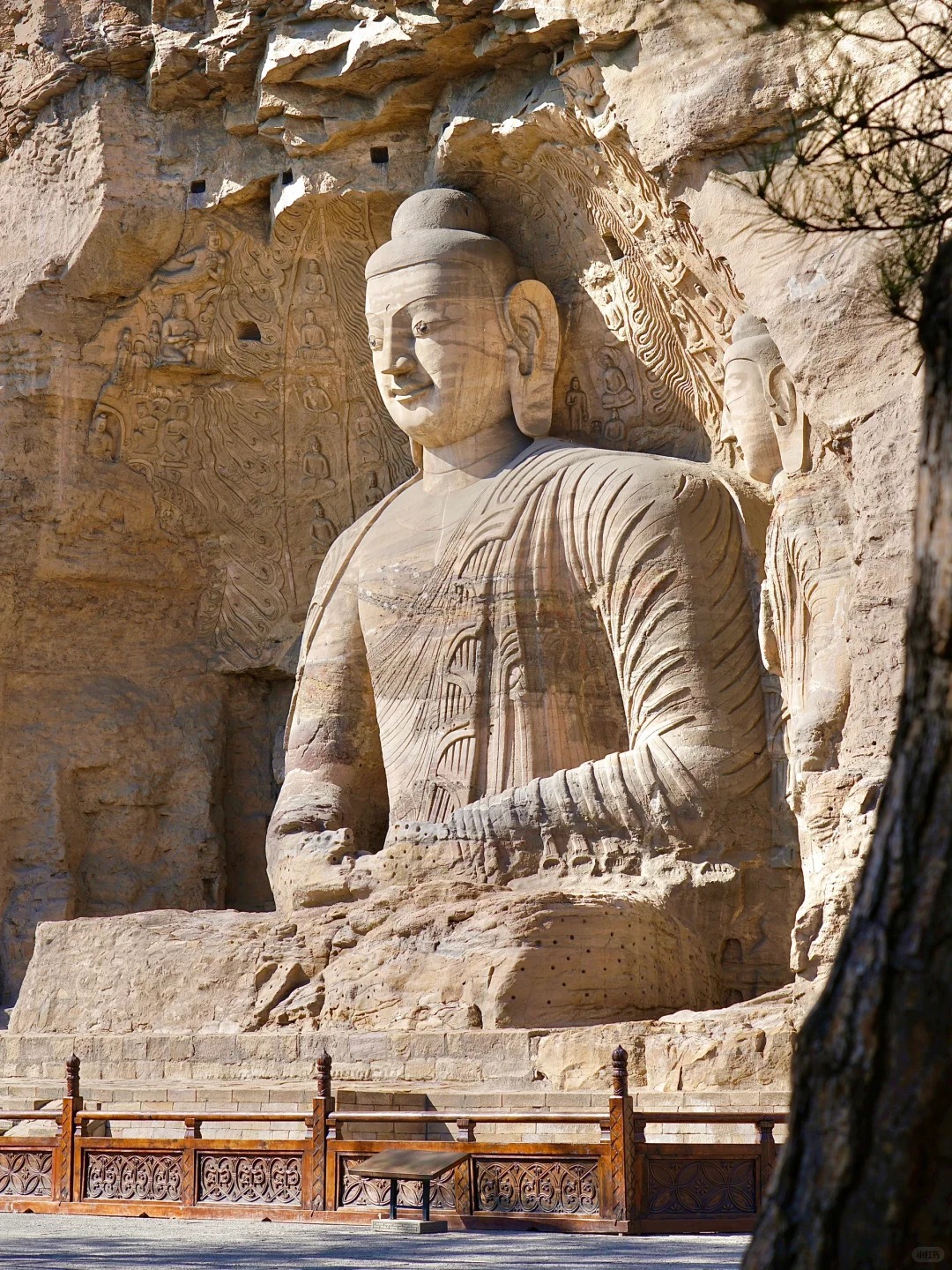
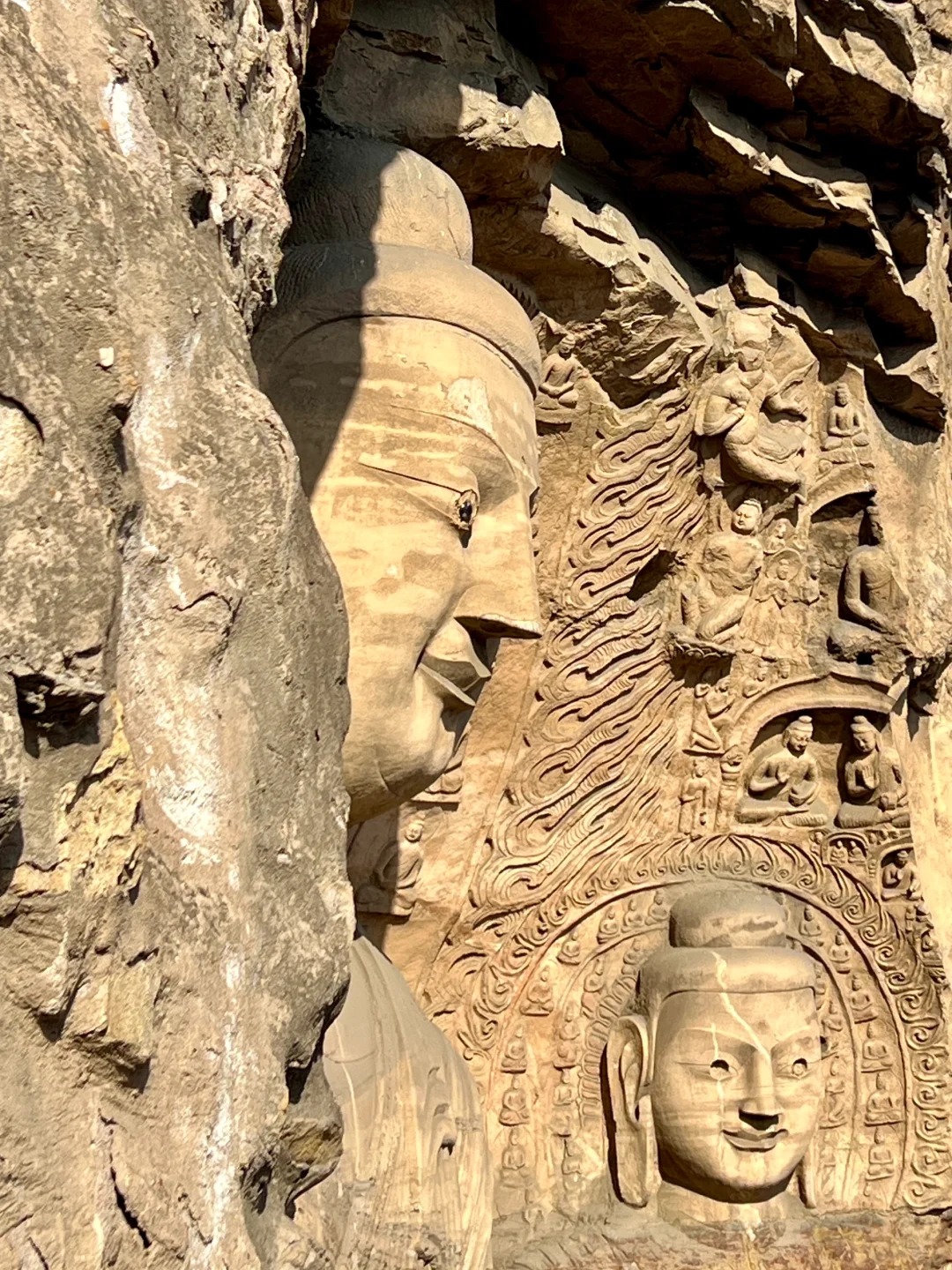
I stood in front of Cave 20, the iconic open-air Buddha. He is massive, sitting cross-legged, his shoulders broad and powerful. But it was his face that captivated me. He has a slight smile—gentle, knowing, eternal. It’s a smile that says, "I have watched empires rise and fall for 1,500 years, and I am still here."
I walked closer, craning my neck. The details are mind-blowing. You can see the traces of the Silk Road here—some statues have Greek noses, some have Indian robes. It was a tangible reminder that Datong wasn't always a coal town; it was once the cosmopolitan capital of the Northern Wei Dynasty, a place where East met West long before globalization was a word.
Inside the caves, the colors still cling to the walls. Vibrant reds, blues, and greens that have survived centuries. I found myself whispering, afraid to disturb the silence. I imagined the artisans, hanging from ropes in the freezing winter and scorching summer, chipping away at the rock with nothing but faith and a chisel. It was a humbling moment. I felt small, but in a good way—connected to a human endeavor much larger than myself.
Defying Gravity: The Hanging Temple
If Yungang was about spiritual peace, the Hanging Temple (Xuankong Si) was about pure adrenaline.
Located about an hour and a half from the city, this temple is sheer madness. It is built into the side of a vertical cliff, suspended 50 meters above the ground. When I first saw it from the bottom of the canyon, I laughed. It looked like a toy glued to a wall. "There is no way," I thought, "that I am walking on that."
But I did.
The wooden walkways are narrow—barely wide enough for one person. The railing reached only to my waist. I gripped it with white knuckles. The floorboards creaked with every step. I looked down through the cracks in the wood and saw... nothing but air and the rocks far below.
"Don't look down, don't look down," I muttered to myself.
But then I looked up, and the fear vanished. I was walking through a temple that combines Buddhism, Taoism, and Confucianism, all sharing the same precarious roof. The statues were serene, completely unbothered by the fact that they were hanging off a cliff. The engineering is genius; the temple is supported by crossbeams inserted deep into the rock, while the thin vertical pillars that look like supports are actually just there for psychological comfort (or so the guide claimed—I wasn't testing it!).
Standing on that fragile balcony, with the wind howling through the gorge, I felt a rush of exhilaration. It was terrifying, yes, but it was also the most alive I had felt in years. It was a testament to the stubborn, daring spirit of the Chinese people: "No flat land? Fine, we'll build on the sky."
The Soul of the City: Walls and Noodles
Back in the city of Datong, the sun was setting. I rented a bicycle to ride atop the City Wall. This is a controversial project—a massive reconstruction of the ancient fortifications. Some purists hate it. I loved it.
As I pedaled, the wind in my hair, I saw the duality of Datong. To my left, the "Old City," filled with reconstructed temples and courtyards, glowing with warm lanterns. To my right, the "New City," with its brutalist apartment blocks and smoking chimneys. It was a visual collision of the past and the present. It felt honest. It wasn't a Disney park; it was a city trying to reclaim its dignity.
And then, there was the food. Oh, the food.
I was starving. I found a noisy, crowded restaurant filled with locals—always a good sign. I ordered the local legend: Daoxiao Mian (Knife-Cut Noodles).
I watched the chef in the open kitchen. He held a block of dough in one hand and a curved metal blade in the other. Zip, zip, zip. Strips of dough flew through the air like willow leaves and landed perfectly in the boiling pot. It was fast, violent, and beautiful.
When the bowl arrived, it was huge. The noodles were thick in the middle and thin on the edges, giving them a perfect chewy texture. They were swimming in a spicy, rich pork broth, topped with minced meat and cilantro. I took a slurp. The broth was salty and savory, the spice warming my chest instantly. The noodles had a bite to them—they fought back a little. It was rugged food for a rugged city. I finished the bowl, sweat beading on my forehead, feeling completely satisfied.
Why Datong Matters
Datong is not the "pretty" China of travel brochures. It has grit. It has dust. But that is exactly why it captured my heart.
It is a city of resilience. It guards its treasures—the Buddhas, the cliff-side temples, the culinary traditions—with a fierce pride. It taught me that beauty isn't always polished. Sometimes, beauty is rough. Sometimes, it’s hidden in a canyon or a bowl of spicy noodles.
To my global friends: If you want to see a side of China that is raw, powerful, and deeply historic, get on the train to Datong. Look into the eyes of the giant Buddha. Walk the terrifying planks of the Hanging Temple. Eat the noodles. You will leave with dust on your shoes, but gold in your memories.