For international travelers eager to explore China, mobile payment apps and a well-planned itinerary are the keys to a smooth and enjoyable trip—especially during the Spring Festival, China’s most important traditional holiday. This guide will walk you through binding overseas credit cards to Alipay and WeChat Pay, and share essential tips to avoid common pitfalls during the Spring Festival rush.
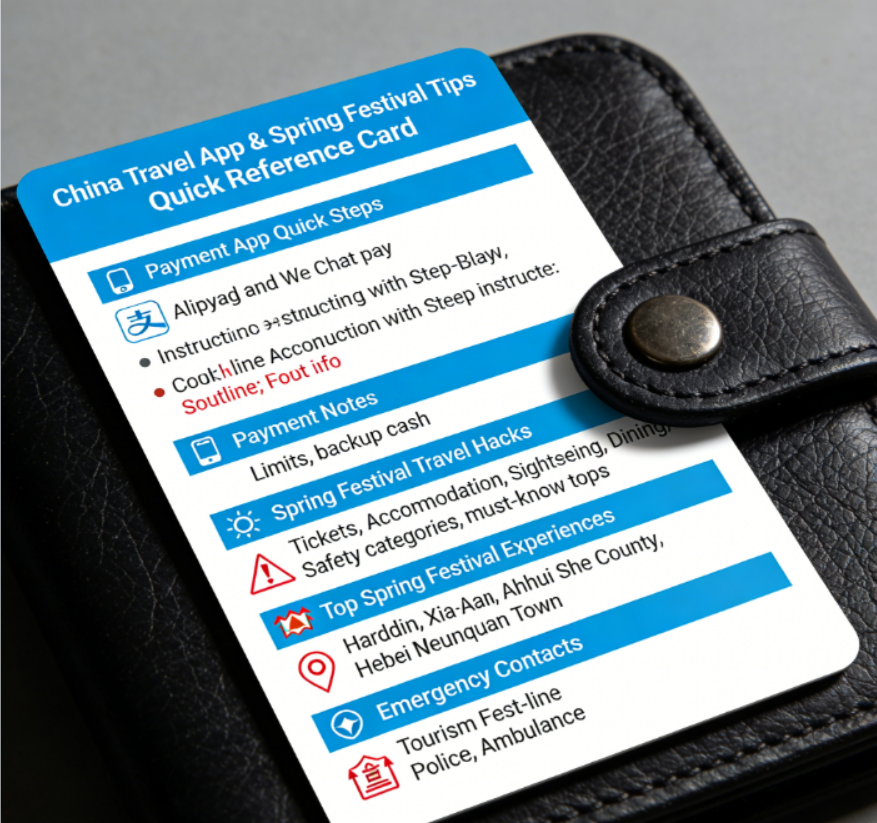
Part 1: Core Payment App Guide – Binding Overseas Credit Cards to Alipay & WeChat Pay
In China, Alipay and WeChat Pay are ubiquitous mobile payment tools, accepted everywhere from large shopping malls and hotels to street food stalls. Both platforms now support overseas-issued international credit cards. Once bound, you can pay with a simple scan, eliminating the need to carry large amounts of cash and greatly enhancing travel convenience. Below is a detailed binding process, supported card types, and solutions to common problems.
1. Alipay Overseas Credit Card Binding Tutorial
Preparations
- Device: A smartphone (iOS or Android) with a stable internet connection (use hotel WiFi or purchase a local China SIM card with data).
- Documents: Your passport (including the personal information page + entry stamp page); Hong Kong, Macau, and Taiwan travelers can use their Mainland Travel Permits for Hong Kong, Macau, and Taiwan Residents.
- Bank Card: Supports major international credit cards such as VISA, Mastercard, Diners Club, Discover, and American Express.
Step-by-Step Binding Process
- 1. Download & Register
Search for “Alipay” in your app store to download and install the app. Register using your overseas mobile phone number (you will need to receive a SMS verification code).
- 2. Complete Real-Name Authentication (Mandatory for Card Binding)
- After logging in, tap Me at the bottom of the screen, then go to Account Settings → Basic Information → Verify Now.
- Select your country/region, and fill in your full name, passport number, passport expiration date, and date of birth.
- Upload photos of your passport (personal info page + entry stamp page). Wait for system verification (usually takes 1–3 business days; instant approval is possible in some cases).
- 3. Add Overseas Credit Card
- After passing authentication, return to the Me page, select Bank Cards → Add Bank Card.
- Enter your credit card number, expiration date (format: MM/YYYY, e.g., 02/2028), and CVV security code (the 3-digit number on the back of the card).
- Set a 6-digit payment password (for future payment verification).
- Wait for the “Binding Successful” prompt to finish the process.
- 4. How to Make Payments
- Scan to Pay: Tap Scan on the Alipay homepage, scan the merchant’s Alipay QR code, and enter your payment password to complete the transaction.
- Show QR Code to Pay: Tap Pay/Receive Money on the homepage, present your payment QR code for the merchant to scan. You can enable “small-amount password-free payment” for quick transactions.
Important Notes
- Spending Limits: Annual cumulative spending is capped at $50,000 USD, with a single transaction limit of $5,000 USD.
- Service Fees: No extra fees for using overseas credit cards on Alipay; exchange rates are based on real-time rates at the time of payment.
- Assistance Services: Volunteer service counters at major hubs like Beijing Daxing International Airport and Shanghai Pudong International Airport offer on-site help with card binding.
- Customer Support: For binding failures or payment issues, call Alipay’s international customer service hotline: +86-571-2688-6000.
2. WeChat Pay Overseas Credit Card Binding Tutorial
Preparations
- Device: A smartphone with the latest version of WeChat installed.
- Documents: Supports passports, Mainland Travel Permits for Hong Kong, Macau, and Taiwan Residents, and 4 other types of valid IDs.
- Bank Card: Supports a wider range of international cards than Alipay, including VISA, Mastercard, Diners Club, Discover, JCB, and American Express.
Step-by-Step Binding Process
- 1. Download & Register
Search for “WeChat” in your app store to download and install the app. Register and log in using your overseas mobile phone number (via SMS verification).
- 2. Access the Payment Portal
Tap Me at the bottom of the screen → Services → Wallet (some versions show Pay directly).
- 3. Add Overseas Credit Card
- In the Wallet page, tap Add Bank Card.
- Select your ID type, fill in your name, ID number, and ID expiration date, then submit for verification.
- Enter your credit card number, expiration date, and CVV code, then tap Next.
- Set or verify your 6-digit payment password to complete binding.
- 4. How to Make Payments
- Scan to Pay: Go to Services → Scan, scan the merchant’s WeChat Pay QR code, and enter your password to pay.
- Show QR Code to Pay: Go to Services → Pay, present your QR code for the merchant to scan. Password-free payment is supported (adjust the limit in settings).
Important Notes
- Phone Number Requirement: The mobile number used for registration does not need to be a Chinese local number—it just needs to receive SMS verification codes.
- Usage Scenarios: Bound cards can be used at most domestic merchants, including restaurants, transportation, hotels, and supermarkets. It also supports payments on mini-programs and in-app purchases.
- Customer Support: For help, call WeChat Pay’s customer service hotline: +86-571-95017.
3. Additional Payment Options
- UnionPay App: Suitable for users with UnionPay cards issued in Hong Kong, Macau, and other regions. Download the UnionPay App and follow the prompts to bind your card. Customer service: +86-95516.
- Cash Backup: While mobile payments are widespread, some small vendors in remote areas only accept cash. Exchange foreign currency for RMB at airport ATMs (supporting international credit card withdrawals) or currency exchange counters. Bank of China supports 38 foreign currencies, and self-service exchange machines handle 20 currencies.
- Digital RMB: Available in pilot cities (Beijing, Shanghai, Guangzhou, Xi’an, etc.). Download the Digital RMB (Pilot Version) App, register with an overseas mobile number, and bind an international credit card to top up. It supports “tap-and-pay” and QR code payments.
Part 2: Spring Festival Travel Tips – Avoid Pitfalls & Enjoy the Holiday
The 2026 Spring Festival holiday runs from February 15 to 23 (9 days total). As China’s biggest traditional festival, this period sees a massive surge in tourist numbers, price fluctuations, and peak crowds at scenic spots, transportation hubs, and restaurants. Below are essential tips for transportation, accommodation, sightseeing, shopping, and safety to help you experience the true “Chinese New Year vibe” hassle-free.
1. Transportation Tips: Plan Ahead & Avoid Peak Hours
Flight & Train Ticket Booking
- Off-Peak Travel: Book flights before February 15 or after February 20 to save 30%–50% on fares. If peak travel is unavoidable, book tickets 7–10 days in advance.
- Train Ticket Tips: Tickets for popular routes (e.g., Beijing→Harbin, Shanghai→Xi’an) sell out quickly. Use the 12306 App (China Railway’s official platform) and its “waitlist” feature. Check for last-minute tickets 45 minutes after release, 24 hours before departure, and 1 hour before departure—these are prime “ticket restock” windows.
- Airport/Station Arrival Time: Crowds are huge during Spring Festival. Arrive at the airport 2–3 hours early for check-in, and at the train station 1 hour early for security checks. Avoid peak-hour taxi rides; opt for subways instead (some cities extend subway hours—e.g., Harbin Metro Line 2 runs until 1:30 AM).
- Local Transportation: In tourist cities like Sanya and Xiamen, renting an electric scooter (≈¥50/day) is cost-effective and flexible. In northern snowy regions (Harbin, Changchun), choose licensed taxis with snow chains—avoid unlicensed “black taxis”.
Self-Driving Tips
- Vehicle Check: Northern China has extreme cold and snow—check antifreeze levels and tire traction, and pack snow chains and heating pads. Southern China may have rainy weather; watch for slippery roads.
- Traffic Updates: Use Amap or Baidu Maps to check real-time traffic and avoid congested routes. Drive cautiously on winding mountain roads (e.g., Huangshan, Zhangjiajie).
- Parking Tips: Parking is scarce near popular attractions (e.g., Xi’an Datang Everbright City, Harbin Central Street). Choose public parking lots nearby and take shuttle buses to the scenic spot—avoid driving directly to the entrance (traffic jams and no parking spaces are guaranteed).
2. Accommodation Tips: Compare Prices & Read Fine Print
Price Fluctuation Avoidance
- Lock in Prices Early: Hotel prices in hot destinations (Sanya, Harbin, Xi’an) can surge 3–5 times higher than usual during Spring Festival. Book 2–4 weeks in advance and choose “free cancellation” rates to avoid losses if your plans change.
- Use Price Comparison Tools: Use apps like Ctrip or Fliggy to compare prices across platforms. For homestays, prioritize listings with a rating of 4.9+ and 500+ reviews to avoid “misleading photos”.
- Watch for Hidden Fees: Read booking terms carefully to confirm if breakfast, heating/air conditioning, and parking are included. Some homestays charge a “Spring Festival service fee”—confirm this in advance.
Location Tips
- Stay Near Attractions (But Not Too Near): For spots like Xi’an Datang Everbright City or Harbin Central Street, choose accommodation a 15–20 minute walk away. Prices are 20%–30% cheaper than hotels right at the entrance, and it’s quieter.
- Choose Off-the-Beaten-Path Destinations: To avoid crowds, opt for small towns with strong New Year traditions—e.g., She County (Anhui) or Nuanquan Town (Hebei). Homestays cost only ¥200–400/night, and you can experience authentic folk activities like Wangmantian fish lantern parades or “tree flower” iron fireworks.
3. Scenic Spot Tips: Book Tickets in Advance & Visit Off-Peak
Ticket Booking Avoidance
- Mandatory Reservations: Most popular attractions (e.g., Harbin Ice-Snow World, Forbidden City, Huangshan) require real-name reservations. Book tickets 1–3 days in advance via official WeChat accounts or apps like Ctrip. Some attractions (e.g., Harbin Ice-Snow World) open bookings 1 month early—lock in your spot as soon as possible.
- Avoid Scalpers: Never buy overpriced scalper tickets at the entrance—they may be fake or invalid. If tickets sell out, check the attraction’s official WeChat account for “ticket restock notices” (usually released 1 day before the visit).
- Optimal Visiting Times: Peak hours are 9–11 AM and 3–5 PM. Visit early (before 8 AM) or late (after 4 PM) for a better experience. Don’t miss night light shows (e.g., Xi’an City Wall, Ice-Snow World)—adjust your itinerary to catch these off-peak.
On-Site Spending Tips
- Food Prices: Food at scenic spots is overpriced. Pack snacks and water from downtown supermarkets. For local cuisine, eat at restaurants in residential areas (e.g., Xi’an Dongmutou Market, Harbin Laodaowai District)—better taste, lower prices.
- Souvenir Shopping: Skip overpriced souvenir shops near attraction entrances. Buy local specialties at farmers’ markets or old streets (e.g., Suzhou Pingjiang Road, Chengdu Kuanzhai Alley outer streets) for better deals and authentic products.
- Paid Activities: Check if sightseeing buses, boat rides, or guided tours are included in your ticket price. Some “Internet-famous check-in spots” charge extra—choose only what you’re interested in, and avoid forced purchases.
4. Shopping & Dining Tips: Spend Wisely & Stay Informed
Dining Avoidance
- Skip Overhyped “Internet-Famous” Restaurants: Queues can exceed 2 hours during Spring Festival, and the food may not live up to the hype. Use Dianping App to find local restaurants with a 4.5+ rating—better value for money.
- Seafood Market Tips: At seafood markets like Sanya First Market or Qingdao Taidong Market, always ask vendors to weigh seafood in front of you to avoid being short-changed. Confirm processing fees (per catty or per dish) in advance to prevent price hikes. Avoid buying seafood on New Year’s Eve to the 2nd day of the lunar new year—prices drop significantly after the 3rd day.
- Try Traditional New Year Foods: Sample local Spring Festival treats (e.g., Beijing dumplings, Xi’an rice cakes, Huizhou sticky rice cakes)—but eat in moderation to avoid stomach upset.
Shopping Avoidance
- Check Price Tags: Always confirm prices before buying to avoid “unit price vs. bulk price” scams. “Specialty shops” near scenic spots often inflate prices—buy souvenirs at large supermarkets (e.g., CR Vanguard, Yonghui Supermarket) for transparent pricing.
- Tax Refund for Departure: When buying luxury goods or cosmetics, choose malls with a “tax refund for departure” sign. With your passport and shopping receipt, claim a tax refund at the airport (refund rate ≈11%). Bank of China has tax refund counters at major airports.
5. Safety & Cultural Etiquette Tips: Respect Traditions & Stay Safe
Safety Tips
- Weather Protection: Northern China (Harbin, Changchun) can drop below -20°C—wear fleece-lined jackets, thermal underwear, heated insoles, gloves, and hats for full-body warmth. Southern China (Sanya, Xiamen) has strong UV rays—pack sunscreen, sunglasses, and a sunhat.
- High-Risk Activities: For helicopter tours, snowmobile rides, or water sports, choose licensed operators. Read safety instructions carefully and wear protective gear. Know your limits—don’t take unnecessary risks.
- Property Safety: Keep phones, wallets, and passports secure in crowded areas like scenic spots and train stations. When using mobile payments, avoid scanning unknown QR codes to prevent fraud.
- Health Preparation: Pack basic medications (cold medicine, stomach medicine, band-aids). Northern China’s dry air can cause chapped skin—bring moisturizer and lip balm. For medical help, use Alipay to search for “nearby hospitals”.
Cultural Etiquette Tips
- Folk Activity Manners: When visiting events like Pingyao Ancient City’s Confucius worship ceremony or Chaozhou ancestral hall tours, stay quiet. Ask permission before taking photos. For dragon dances, lion dances, or folk parades, don’t touch props—follow staff instructions.
- Public Etiquette: Smoking and loud talking are prohibited in public places (subways, buses, scenic spots). Wait in line—no cutting. Dispose of trash in designated bins.
- Table Manners: When dining with locals, avoid tapping bowls with chopsticks or wasting food. If you have dietary restrictions (e.g., vegetarian, food allergies), inform your host in advance.
6. Recommended Spring Festival Experiences
- Harbin: The 42nd Ice-Snow World “Golden Saddle New Year” theme event—don’t miss the New Year’s Eve fireworks show at 8:30 PM and AR/VR interactive ice sculptures. Try local snacks like Madeleva ice cream and Laochujia sweet and sour pork.
- Xi’an: Datang Everbright City’s “Ice and Snow Tang Dynasty” theme street—dress in Hanfu and join the “Tang Dynasty Secret Box” interactive show. Watch folk performances on the city wall from the 1st to the 15th day of the lunar new year, and enjoy the night light show.
- She County, Anhui: Wangmantian fish lantern parades (2nd to 15th day of the lunar new year)—thousands of fish lanterns wind through mountains like a starry river. Join the “Huizhou Fish Lantern Intangible Cultural Heritage Workshop” to make your own lantern.
- Nuanquan Town, Hebei: “Tree Flower” iron fireworks shows (7:30 PM daily)—molten iron is splashed against city walls to create a shower of sparks. Pair it with local snacks like Yuxian dried tofu and yellow rice cakes with sugar.
Part 3: Essential Travel Apps for China
| Category | Recommended Apps |
| Payment | Alipay, WeChat Pay, UnionPay |
| Transportation | 12306 (train tickets), Amap/Baidu Maps (navigation), Ctrip/Fliggy (flights/hotels) |
| Sightseeing & Dining | Dianping (restaurant reviews, attraction ratings), Official WeChat Accounts of Scenic Spots (ticket reservations) |
| Convenience | Bank of China “BOC Compass” Mini-Program (multilingual financial guide), Digital RMB App, Alipay “Overseas Visitor Service” Section (translation, emergency help) |
💡 Final Tip
Spring Festival travel success boils down to planning ahead, choosing off-peak times, and spending wisely. If you encounter problems, call China’s 24/7 multilingual tourism hotline: 12301, or ask your hotel front desk for assistance. Wishing you an unforgettable Spring Festival trip in China!