By Maya, an Indian spice research scholar specializing in Sino-Indian culinary exchanges
As someone who’s spent a decade studying the chemistry of chili peppers and the history of spice trade between India and China, Chengdu has always been my “holy grail.” This city, known as the “Spice Capital of China,” gave birth to Sichuan cuisine—where “ma la” (numbing-spicy) isn’t just a flavor, but a way of life. My 3-hour high-speed train from Xi’an glided into Chengdu East Railway Station at dawn, and the first scent that greeted me was a faint, familiar tingle: Sichuan peppercorns, their citrusy numbing aroma mixing with the misty morning air. My local friend, Lin Xiao, was waiting with a paper bag of “san xian jian bing” (three-delicacy savory crepe). “Welcome to Chengdu,” she said, handing me the warm snack. “Let’s start with something mild—your taste buds need to acclimate.”
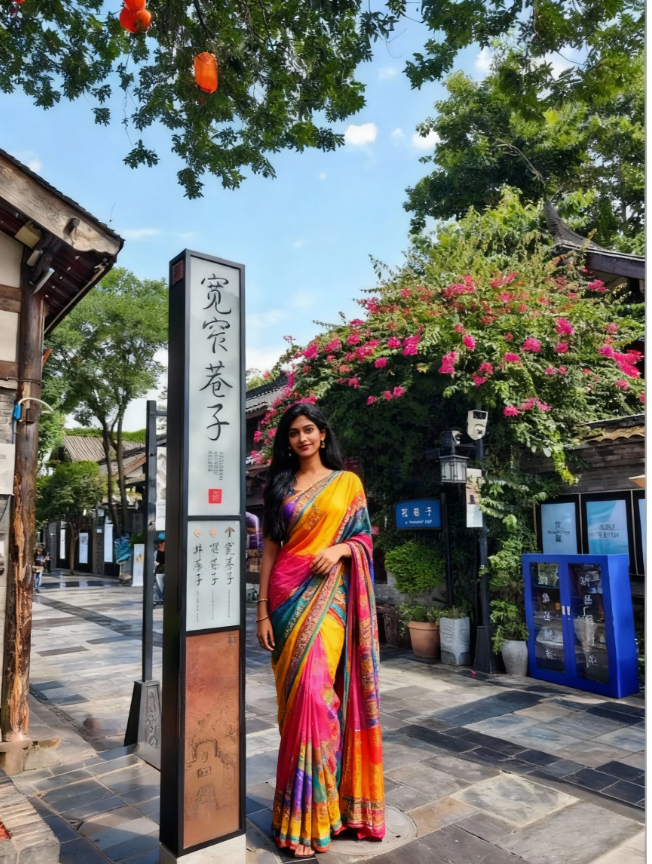
My first stop, after checking into a boutique hotel in Kuanzhai Alley, was the Sichuan Cuisine Museum—the only museum in China dedicated to a single cuisine. As I walked through the exhibition halls, I traced the history of Sichuan spices: how chili peppers arrived in China via the Silk Road in the 16th century, merging with local Sichuan peppercorns to create the iconic “ma la” flavor; how soy sauce and fermented broad bean paste (doubanjiang) became the backbone of Sichuan cooking. In the interactive kitchen, a master chef named Chef Wang taught me to make “gong bao ji ding” (Kung Pao chicken). “The key is balance,” he said, as I stirred chili peppers, Sichuan peppercorns, and peanuts in a wok. “Spice shouldn’t overpower—each ingredient should sing.” When I took the first bite, my tongue tingled from the peppercorns, warmed from the chili, and sweetened by the peanuts. It was a symphony of flavors, far more complex than the versions I’d tasted in India. “This is Sichuan cuisine,” Chef Wang said. “Hot, numbing, sweet, sour—all at once.”
By noon, Lin Xiao took me to Kuanzhai Alley—three parallel hutongs restored to their Qing Dynasty glory, lined with teahouses, restaurants, and handicraft shops. We ate at “Lao Cheng Du” (Old Chengdu Restaurant), a family-run spot where the walls were covered in black-and-white photos of old Chengdu. Lin Xiao ordered “fu qi feipian” (Husband and Wife Lung Slices)—thinly sliced beef and tripe tossed in a sauce of chili oil, Sichuan peppercorn powder, and sesame paste. “Don’t worry, there’s no lung,” she laughed. “It’s a mistranslation.” The first bite made my eyes water—not from heat, but from sheer depth of flavor. The numbing sensation of the peppercorns spread across my tongue, while the chili oil added a warm kick, and the sesame paste smoothed it all out. We also tried “yu xiang qie zi” (fish-fragrant eggplant), cooked with garlic, ginger, and pickled vegetables, and “dan dan mian” (spicy noodles) with minced pork and scallions. Every dish was a lesson in spice balance—something I, as a spice scholar, deeply appreciated.
After lunch, we wandered into a small teahouse in the back of Kuanzhai Alley, where elderly locals were playing mahjong and sipping “gaiwan cha” (lid bowl tea). The teahouse owner, Granny Li, served us jasmine tea in small porcelain gaiwans. “In Chengdu, tea isn’t just a drink—it’s a way to slow down,” she said, demonstrating how to lift the lid to smell the tea before sipping. As we sat, a “xi shuai” (Sichuan opera) performer stopped by our table, offering to do a “bian lian” (face-changing) show. With a flick of his sleeve, his face changed from red (courage) to black (justice) to white (treachery), and the locals cheered. “Sichuan opera is like Sichuan food,” Lin Xiao whispered. “Loud, colorful, and full of surprises.” I pulled out my notebook, jotting down notes on the connection between spice and culture—how both Sichuan cuisine and opera embrace boldness and complexity.
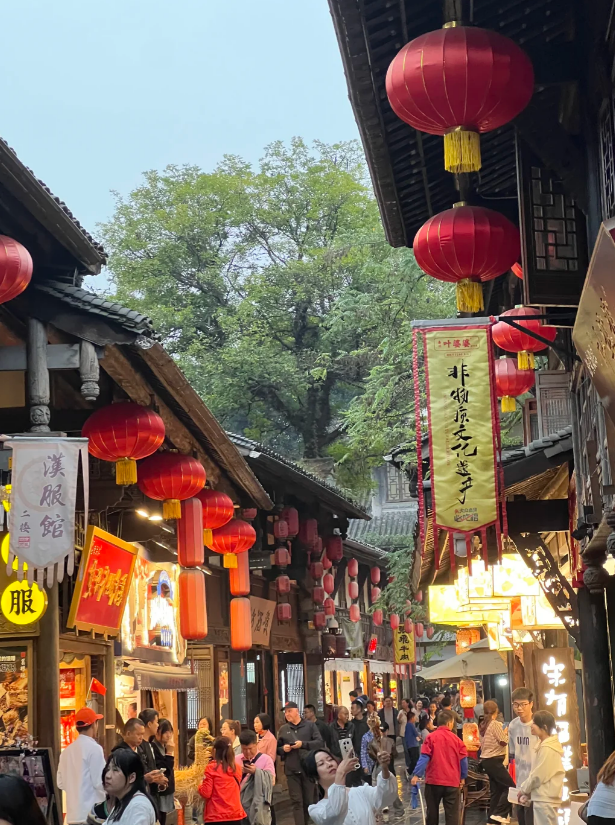
That evening, we visited Jinli Ancient Street, a pedestrian street modeled after a Song Dynasty town, lit up with red lanterns as the sun set. The street was filled with food stalls selling Chengdu snacks: “long chao shou” (Sichuan wontons) with spicy soup, “jiaozi” (dumplings) filled with pork and chives, and “tang yuan” (glutinous rice balls) with black sesame filling. We stopped at a stall run by a young woman named Xiao Yu, who was making “spicy rabbit head”—a Chengdu delicacy I’d read about but never tried. “It’s an acquired taste,” Lin Xiao warned, but I was curious. Xiao Yu handed me a rabbit head, seasoned with chili, Sichuan peppercorns, and five-spice powder. I took a small bite, and was surprised by how tender the meat was, with a rich, savory flavor that masked any gaminess. “Locals eat rabbit head while chatting or watching TV,” Xiao Yu said. “It’s our version of popcorn.” As we walked, we passed a shadow puppet show, where performers told stories of the Three Kingdoms using leather puppets and lantern light. The music was lively, the puppets danced, and the crowd clapped along—another example of Chengdu’s love for joy and leisure.
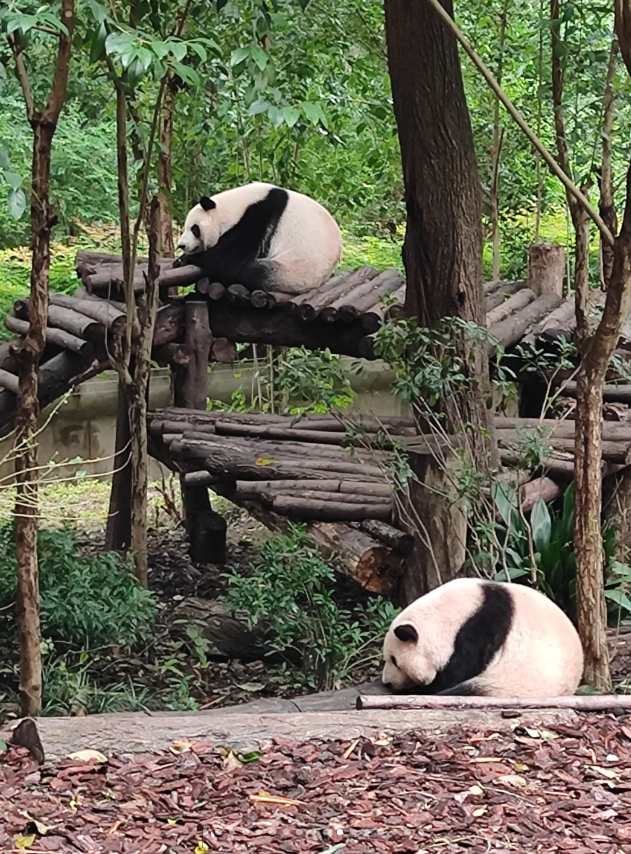
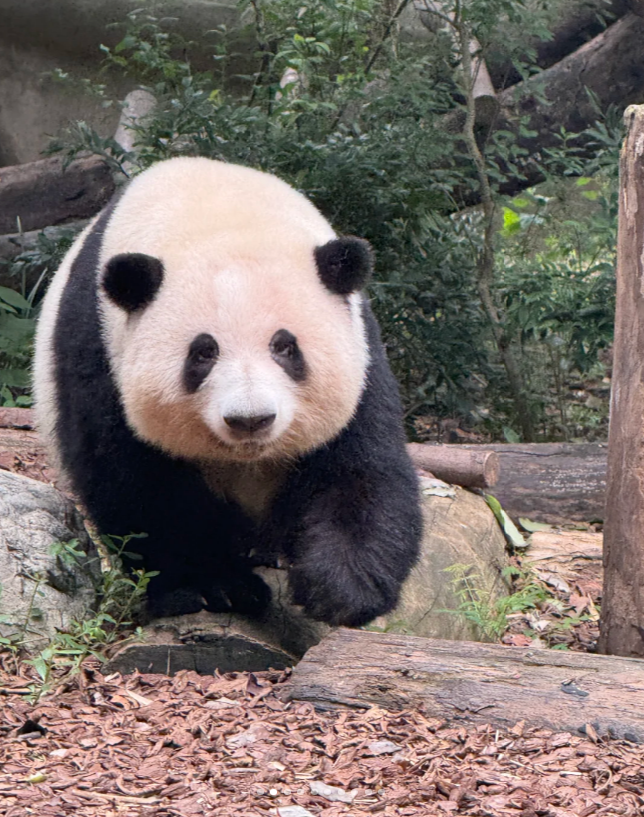
The next morning, we woke up early to visit the Chengdu Research Base of Giant Panda Breeding—a 1,000-acre park where over 150 giant pandas live. As we walked through the bamboo forests, we spotted a mother panda and her cub napping on a rock, and another panda munching on bamboo with slow, deliberate bites. “Pandas and Sichuan cuisine have something in common,” Lin Xiao said. “They’re both unique to this land. The bamboo here is perfect for pandas, and the climate is perfect for growing Sichuan peppercorns and chili peppers.” We watched a keeper feed the pandas “panda cake”—a mix of bamboo, rice, and vitamins—and learned that the base is dedicated to panda conservation, reintroducing some pandas to the wild. I took a photo of a panda holding a bamboo stalk, its black eyes peeking out from white fur, and thought about how Chengdu balances tradition and conservation, spice and serenity.
After the panda base, we drove 60 kilometers north to Dujiangyan—an ancient irrigation system built over 2,200 years ago by Li Bing, a Qin Dynasty engineer. The system, which still irrigates over 10 million acres of farmland in Sichuan, is a masterpiece of engineering: it diverts water from the Minjiang River into canals, preventing floods and providing water for crops. As we walked along the Anlan Cable Bridge— a wooden bridge suspended by bamboo ropes—Lin Xiao explained how the system works. “Li Bing didn’t block the river—he worked with it,” she said. “He divided the river into two parts: one for irrigation, one for flood control. It’s a lesson in harmony between humans and nature.” We visited the Erwang Temple, dedicated to Li Bing and his son, where locals burned incense and left offerings. A monk at the temple served us herbal tea, made with local plants. “This tea helps with the spice,” he said, smiling. “Chengdu’s land gives us spice, and it gives us remedies too.”
For lunch, we ate at a small restaurant near Dujiangyan, where we tried “river fish hot pot”—fresh fish from the Minjiang River cooked in a spicy broth with bamboo shoots and mushrooms. The broth was made with doubanjiang, chili oil, and Sichuan peppercorns, and the fish was so tender it melted in my mouth. “This is rural Sichuan cuisine,” Lin Xiao said. “Simpler than city food, but more focused on fresh ingredients.” We also tried “bamboo shoot salad,” made with young bamboo shoots picked that morning, tossed in vinegar and chili. It was crisp, tangy, and a perfect contrast to the rich hot pot.
In the afternoon, we returned to Chengdu and visited the Wuhou Temple—dedicated to Zhuge Liang, a famous strategist from the Three Kingdoms period. The temple is a peaceful complex of gardens, pavilions, and stone tablets, with cypress trees that are over 1,000 years old. Lin Xiao told me stories of Zhuge Liang’s wisdom—how he invented new weapons, planned military campaigns, and governed Sichuan with fairness. “Chengdu has always been a city of thinkers and creators,” she said. “From Li Bing’s irrigation system to Zhuge Liang’s strategies to today’s chefs inventing new Sichuan dishes.” We walked through the Hall of Zhuge Liang, where a statue of the strategist sits, flanked by his advisors. The air was quiet, filled with the scent of incense and cypress. It was a stark contrast to the bustling streets of Kuanzhai Alley, but equally representative of Chengdu— a city that honors both its lively present and its profound past.
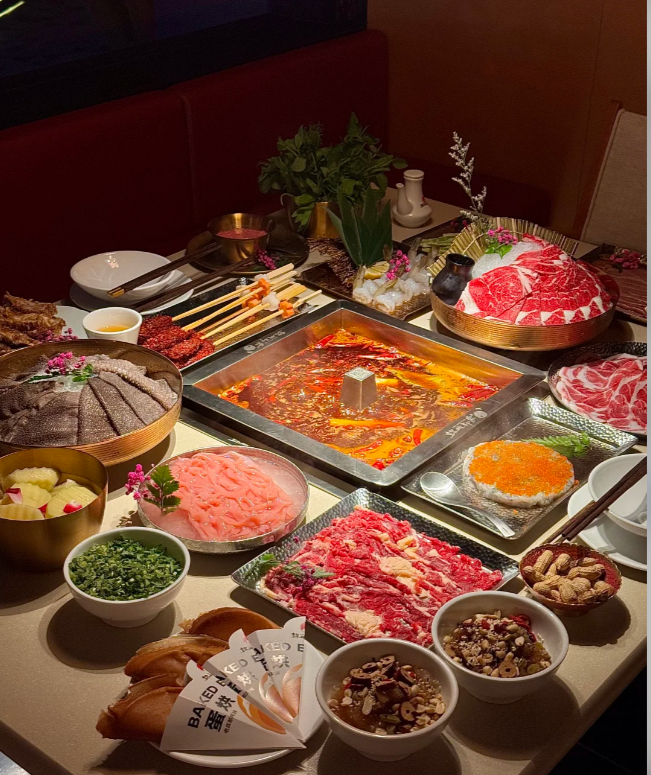
That evening, we went to “Hai Di Lao Hot Pot”—a famous Chengdu hot pot chain known for its exceptional service. As we sat down, a server brought us aprons to protect our clothes, hair ties for me, and even a phone cover to keep our phones from getting greasy. “Hai Di Lao is famous for ‘service that surprises,’” Lin Xiao said. We ordered a “yuan yang” (two-flavor) hot pot: one side spicy broth, one side clear chicken broth. We dipped fresh ingredients into the broth: beef slices, shrimp balls, lotus root, and “duck intestines”—a Chengdu favorite. “Duck intestines need to be cooked for exactly 7 seconds,” Lin Xiao said, demonstrating how to swish them in the hot broth. “Too long, and they’re tough; too short, and they’re raw.” The spicy broth was intense—hotter than anything I’d tasted so far—but the clear broth and a side of “mung bean soup” helped cool my tongue. As we ate, servers danced between tables, refilling bowls and offering snacks. It was a celebration of food and service, quintessentially Chengdu.
On my last day in Chengdu, Lin Xiao took me to a local market in the Chenghua District, where vendors sold fresh produce, spices, and handicrafts. We walked through stalls piled high with red chili peppers, dried Sichuan peppercorns, and jars of doubanjiang. A spice vendor named Mr. Zhang let me smell different varieties of Sichuan peppercorns—some mild, some with a strong citrus aroma, some with a numbing kick. “The best Sichuan peppercorns come from Hanyuan County,” he said, handing me a small bag. “Take them back to India—tell your friends about Chengdu’s spice.” We also bought fresh bamboo shoots, lotus root, and a jar of homemade chili oil. As we walked, we passed a group of elders doing “tai chi” in a small park, and a street performer playing the “erhu” (two-stringed fiddle). The market was noisy, colorful, and full of life—exactly how I’d imagined Chengdu.
That evening, we ate at Lin Xiao’s home, where her mother cooked a traditional Sichuan dinner. We sat around a small table, eating “mapo tofu” (spicy tofu with minced pork), “braised pork ribs with taro,” and “stir-fried green beans with garlic.” Lin Xiao’s mother told me stories of growing up in Chengdu, how she learned to cook from her grandmother, and how Sichuan cuisine has changed over the years. “When I was young, we didn’t have so many chili peppers,” she said. “But as transportation got better, spices became more available, and the food got spicier.” After dinner, we drank jasmine tea and watched a Sichuan opera performance on TV. Lin Xiao’s little nephew, who was 5 years old, did a terrible impression of the face-changing performer, making us all laugh. As I looked around the table—warm lights, good food, laughter—I realized that Chengdu’s true magic isn’t just its spice or its pandas or its ancient sites. It’s the people: their love for food, their respect for tradition, their joy in life. As a spice scholar, I’d come to Chengdu to study flavors. But I left with something far more valuable—a understanding of how spice connects people, how food tells stories, and how a city can be both bold and gentle, spicy and sweet.
Travel Guide: Savor Chengdu’s Spice & Culture
1. Transportation: Getting to & Around Chengdu
- Getting to Chengdu: By High-Speed Train: The most convenient way from major Chinese cities. From Xi’an (3 hours, 263 yuan for second class), Beijing (7 hours, 650 yuan for second class), Shanghai (7.5 hours, 600 yuan for second class). Chengdu has two main stations: Chengdu East Railway Station (high-speed trains) and Chengdu Railway Station (ordinary trains).
- By Plane: Chengdu Tianfu International Airport (TFU) and Chengdu Shuangliu International Airport (CTU) are the two major airports. Direct flights to worldwide cities: Delhi (6 hours), Bangkok (3 hours), London (12 hours), New York (15 hours). From Tianfu Airport to downtown: Metro Line 18 (1 hour, 10 yuan) or taxi (150-200 yuan, 40 minutes). From Shuangliu Airport to downtown: Metro Line 10 (40 minutes, 5 yuan) or taxi (60-80 yuan, 30 minutes).
Getting Around Chengdu: Subway: 13 lines cover all major attractions (Kuanzhai Alley, Jinli, Panda Base). Download the “Chengdu Metro” app or use Alipay/WeChat Pay for QR codes. Single rides cost 2-10 yuan. Operating hours: 6:00 AM-11:30 PM.
Taxi: Green taxis (downtown) and blue taxis (suburbs) with meters. Starting fare: 8 yuan for first 2 kilometers, 1.9 yuan per additional kilometer. Drivers speak limited English—have destinations written in Chinese.
Ride-Hailing: Didi Chuxing (English version available) is cheaper than taxis. Enter destinations in English, and the app shows fares upfront. Perfect for late nights or traveling to Dujiangyan.
Bus: Bus Line 902 goes directly to Jinli and Kuanzhai Alley. Bus Line 198 goes to the Panda Base (2 yuan, 1 hour). Buy a “Chengdu Public Transport Card” (20 yuan deposit) for easy payments.
To Dujiangyan: Take a high-speed train from Chengdu East Railway Station to Dujiangyan Railway Station (30 minutes, 10 yuan), then take bus 4 or 9 to the scenic area (1 yuan, 15 minutes).
2. Top Attractions: Spice, Pandas & History
- Chengdu Research Base of Giant Panda BreedingHighlights: Panda enclosures, baby panda nursery (peak season: June-August), bamboo forests. Don’t miss the “Panda Science Museum” to learn about conservation.
- Tickets: 55 yuan (peak season, March-November), 45 yuan (off-season, December-February). Book online via “Chengdu Panda Base” official website (English available).
- Hours: 7:30 AM-6:00 PM (peak season), 8:00 AM-5:30 PM (off-season). Pandas are most active in the morning (7:30-10:00 AM) and late afternoon (3:00-5:00 PM).
- Pro Tip: Arrive at 7:30 AM to avoid crowds and see pandas eating breakfast. Take the shuttle bus inside the base (10 yuan) to save walking. Don’t feed the pandas—they have a strict diet!
Kuanzhai Alley (Kuan Alley, Zhai Alley, Jing Alley)Highlights: Qing Dynasty-style hutongs, teahouses, Sichuan restaurants, handicraft shops. Watch Sichuan opera and face-changing shows at “Shu Yin Teahouse.”
Tickets: Free (alley entry), 80 yuan (Sichuan opera show with tea).
Hours: Alleys open 24/7, shops and restaurants 10:00 AM-10:00 PM.
Pro Tip: Visit on weekdays to avoid crowds. Eat at “Lao Cheng Du” for authentic Sichuan dishes, and try “gaiwan cha” at Shu Yin Teahouse.
Jinli Ancient StreetHighlights: Song Dynasty-style street, food stalls (long chao shou, spicy rabbit head), shadow puppet shows, souvenir shops. Don’t miss the “Three Kingdoms Cultural Street” for historical artifacts.
Tickets: Free (street entry), 30 yuan (shadow puppet show).
Hours: 9:00 AM-10:00 PM (peak season), 9:00 AM-9:00 PM (off-season).
Pro Tip: Visit at dusk when lanterns are lit—most scenic time. Try Xiao Yu’s Spicy Rabbit Head stall (near the east entrance) for authentic snacks.
Dujiangyan Irrigation SystemHighlights: Anlan Cable Bridge, Erwang Temple, Fish Mouth (the core of the irrigation system). Take a boat tour on the Minjiang River for panoramic views.
Tickets: 80 yuan (peak season), 60 yuan (off-season). Boat tour: 60 yuan per person.
Hours: 8:00 AM-6:00 PM (peak season), 8:30 AM-5:30 PM (off-season).
Pro Tip: Hire a local guide (100 yuan for 2 hours) to understand the engineering genius of the system. Wear comfortable shoes—lots of walking on stone paths.
Sichuan Cuisine MuseumHighlights: Spice exhibitions, cooking classes (gong bao ji ding, mapo tofu), ancient kitchen utensils. Taste over 20 Sichuan snacks at the “Snack Street.”
Tickets: 60 yuan (entry only), 198 yuan (entry + cooking class + snack tasting).
Hours: 9:00 AM-5:00 PM (Tuesday-Sunday), closed on Mondays.
Pro Tip: Book the cooking class in advance (via their website). Chef Wang is the best instructor—ask for him specifically.
3. Food: Must-Try Sichuan Dishes & Where to Eat
Sichuan cuisine (Chuan cai) is one of China’s eight major cuisines, famous for “ma la” (numbing-spicy) flavor, fermented ingredients, and bold seasonings. Here are the essentials:
| Dish Name (Pinyin) | Description | Where to Eat | Price (Yuan) |
| Fu Qi Fei Pian (Husband & Wife Lung Slices) | Sliced beef/tripe tossed in chili oil, Sichuan peppercorns, and sesame paste | Lao Cheng Du (Kuanzhai Alley—authentic since 1950) | 45-60 per plate |
| Gong Bao Ji Ding (Kung Pao Chicken) | Diced chicken with peanuts, chili peppers, and Sichuan peppercorns | Sichuan Cuisine Museum (cook it yourself!) or Tianfu Restaurant (downtown) | 35-50 per plate |
| Hai Di Lao Hot Pot | Yuan yang (two-flavor) broth with fresh ingredients (beef, duck intestines, lotus root) | Hai Di Lao (multiple locations—try Chunxi Road branch) | 150-200 per person |
| Long Chao Shou (Sichuan Wontons) | Wontons filled with pork, served in spicy or clear broth | Jinli Ancient Street (Xiao Wang’s Wonton Stall) | 15-20 per bowl |
| Spicy Rabbit Head | Rabbit head seasoned with chili, Sichuan peppercorns, and five-spice | Xiao Yu’s Stall (Jinli Ancient Street—east entrance) | 10-15 per head |
4. Accommodation: Where to Stay
- Kuanzhai Alley Area: Perfect for culture and food. “Chengdu Kuanzhai Alley Boutique Hotel” (mid-range, 600-800 yuan/night)—restored Qing Dynasty courtyard with wooden furniture and rooftop terrace. For budget: “Kuanzhai Youth Hostel” (200-300 yuan/night), clean dorms with cooking facilities.
- Chunxi Road Area: Great for shopping and nightlife. “InterContinental Chengdu Global Center” (luxury, 1,800+ yuan/night)—connected to the world’s largest standalone building, with a spa and indoor water park. “Home Inn (Chunxi Road Branch)” (budget, 300-400 yuan/night)—steps from subway and shopping malls.
- Panda Base Area: Convenient for early-morning panda visits. “Chengdu Panda Garden Hotel” (mid-range, 500-700 yuan/night)—garden-style hotel with panda-themed decor. Free shuttle to the Panda Base. “7 Days Inn (Panda Base Branch)” (budget, 250-350 yuan/night)—affordable and close to the base.
5. Cultural Etiquette & Practical Tips
- Panda Base Etiquette: No loud talking or tapping on enclosures. Don’t use flash when taking photos— it scares the pandas. Stay on designated paths—don’t enter restricted areas.
- Teahouse Etiquette: When someone pours you tea, tap the table twice with your index and middle fingers to say “thank you” (a Chengdu tradition). Don’t stand up or bow—this is the local way to show gratitude.
- Hot Pot Etiquette: Don’t put too many ingredients in the pot at once— it makes the broth cloudy. Use separate chopsticks for raw and cooked food (most restaurants provide two pairs). Don’t blow on hot food—wait for it to cool down.
- Spice Tips: If you can’t handle spicy food, ask for “qing la” (mild spicy) or “bu la” (no spicy). Order mung bean soup or cold noodles to cool your tongue. Avoid drinking ice water—it makes the spice worse; drink warm tea instead.
- Payment: Most shops, restaurants, and attractions accept Alipay/WeChat Pay. Carry 200-300 yuan in cash for small food stalls and markets. ATMs are widely available (Visa/Mastercard accepted).
- Weather & Clothing: Spring (March-May): Mild (10-22°C), rainy. Bring a light jacket and umbrella.
- Summer (June-August): Hot and humid (25-35°C), frequent rain. Bring sunscreen, hat, and breathable clothes.
- Autumn (September-November): Cool and dry (12-25°C)—best time to visit. Bring a sweater and jacket.
- Winter (December-February): Cool and damp (5-12°C), rare snow. Pack a warm jacket, scarf, and waterproof shoes.
Language: Tourist areas have English signs. Hotel staff and young people speak basic English. Download “Google Translate” with offline Chinese pack—useful for ordering food (take photos of menus for translation).
Safety: Chengdu is a safe city, but watch for pickpockets in crowded areas (Jinli, Chunxi Road). Keep your valuables in a crossbody bag. Drink bottled water—tap water is not safe to drink.
6. Three-Day Itinerary for Chengdu
Day 1: Pandas & Spice
- 1. 7:30 AM: Take Metro Line 3 to Chengdu Panda Base (arrive early for active pandas).
- 2. 8:00 AM: Tour Panda Base, visit baby panda nursery and science museum.
- 3. 11:30 AM: Take bus 198 to Sichuan Cuisine Museum.
- 4. 12:30 PM: Lunch at the museum’s snack street (try long chao shou and spicy tofu).
- 5. 2:00 PM: Join a cooking class to make gong bao ji ding.
- 6. 4:30 PM: Take subway to Kuanzhai Alley, explore the hutongs.
- 7. 7:00 PM: Dinner at Lao Cheng Du (try fu qi feipian and yu xiang qie zi).
- 8. 9:00 PM: Watch Sichuan opera at Shu Yin Teahouse.
Day 2: Ancient History & Hot Pot
- 9. 8:00 AM: Take high-speed train to Dujiangyan (30 minutes).
- 10. 9:00 AM: Tour Dujiangyan Irrigation System (hire a guide), walk Anlan Cable Bridge.
- 11. 12:30 PM: Lunch at local restaurant near Dujiangyan (try river fish hot pot).
- 12. 2:30 PM: Visit Erwang Temple, learn about Li Bing’s engineering.
- 13. 4:00 PM: Take high-speed train back to Chengdu.
- 14. 5:30 PM: Explore Jinli Ancient Street, try spicy rabbit head and tang yuan.
- 15. 7:30 PM: Dinner at Hai Di Lao Hot Pot (Chunxi Road branch).
Day 3: Local Life & Souvenirs
- 16. 9:00 AM: Breakfast at local stall (try san xian jian bing and soybean milk).
- 17. 10:00 AM: Visit Wuhou Temple, learn about Three Kingdoms history.
- 18. 12:30 PM: Lunch at Tianfu Restaurant (try mapo tofu and dan dan mian).
- 19. 2:00 PM: Explore Chenghua District Market, buy Sichuan peppercorns and chili oil.
- 20. 4:00 PM: Visit Chunxi Road Shopping Mall, buy panda-themed souvenirs.
- 21. 6:30 PM: Farewell dinner at Lin Xiao’s Home (if you have local friends) or Tianfu Restaurant.
- 22. 8:30 PM: Take subway to airport/train station for departure.